Oh, I see! moments
Travel Cultures Language

Recovering Our Awe of Nature

by Joyce McGreevy on May 11, 2020

A sunrise in Ireland is awe-inspiring, a reminder that noticing nature every day reflects a cultural attitude of valuing the environment. (Image © Joyce McGreevy)

When had we last watched the sunrise?
© Joyce McGreevy

What Does Nature Need Us to Notice?

Have you noticed it? While life in self-quarantine has restricted our movements, it has also unleashed our senses. As the range of our territory has contracted, our attention to the environment has enlarged.

We’ve had to slow down to the speed at which a flower grows, and now, something has begun to blossom. In moment by “oh, I see” moment: we’re regaining our instinct for the awe of nature.

A sapling in blossom in Ireland is an awe-inspiring sign of spring. a reminder of our instinctive need to notice the beauty of nature. (Image © Joyce McGreevy)

In Ireland, a moment of attention blossomed into awe.
© Joyce McGreevy

Who We Were

How dramatically can cultural attitudes toward nature shift? Consider this. Shortly before  lockdown went global, researchers published a report that highlighted an overwhelming lack of connection between people and the natural world.

The report is British, but surely reflects many of us circa 2020 “BC”—Before COVID-19. For example, of the children questioned:

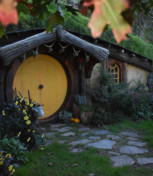
A doorframe beside a shed in rural Ireland offers a different perspective for noticing the awe-inspiring beauty of nature. (Image © Joyce McGreevy)

How would we re-frame our focus?
© Joyce McGreevy

• 90% rarely or never watched sunrises.

• 83% rarely or never smelled wildflowers.

• 77% rarely or never listened to birdsong.

Findings among adults weren’t much better:

• Around 57–79% rarely or never noticed sunrises, wildflowers, or birdsong.

• Likewise, few adults or children celebrated natural events, such as the longest day of the year, autumn harvest, and so on.

• Only 25–33% watched clouds, or stopped to appreciate the stars or the moon in the sky.

How We Were Changed

Nature certainly has our attention now. For evidence of this, look no further than our recent personal communications.

Social media pages once dominated by selfies and humblebrags are blooming with hollyhocks and supermoons.  Brash videos give way to whispered narratives as wild creatures amble down driverless roads at rush hour. Snarky memes yield to quotes from nature poets.

Wherever we call home—urban, suburban, or rural—our online connections are trending toward awe in nature.

A postbox overgrown with native plants in Ireland is an awe-inspiring reminder that as the world went into lockdown during the pandemic, nature reasserted its power. (Image © Joyce McGreevy)

What we had forgotten, nature reasserted.
© Joyce McGreevy

One day I receive a text message from a relative who lives in a California suburb. Usually we’re rushed. Tapping out terse logistics even as we plan family gatherings. Ending messages with “xo” to cover all that we never say. But today, he observes:

“. .  . Just by being home most of the time I have seen things I probably wouldn’t have otherwise.  A bright yellow bird. A field mouse that I only noticed because I could see the flowers move . . . a lizard with feet like no other lizard in this environment . . . Silver linings, indeed.  What would I notice if I wasn’t constantly doing so much?”

Sea stones and kelp on a beach in County Cork, Ireland evokes the idea that the smallest details in the environment can inspire us with awe and strengthen our connectedness to nature. (Image © Joyce McGreevy)

What emerged was always there, waiting for us to see.
© Joyce McGreevy

What Difference Does Noticing Make?

Research shows that “noticing nature” and “nature connectedness” are strongly linked to practicing  conservation. According to the British study, conducted by the University of Derby and the National Trust, the influence of these two factors is far greater than even the influence of time spent outdoors or knowledge and study of the environment.

As for one’s level of nature connectedness, a study at Ohio’s Oberlin College says it depends on three elements:

  • How we think about nature. Do we see ourselves as sharing the great tree of life, or as positioned separately atop a pyramid of life?
  • How we relate to nature.  Do we consider nature as part of us, or as apart from us?
  • How we feel about nature. Do we experience a sense of wonder, concern, calm, curiosity, gratitude, reverence, or other such responses to nature?
A chair outdoors under the moon on the Irish coast is an invitation to notice and connect with the awe-inspiring beauty of nature, which in turn can influence our cultural attitude toward the environment, (Image © Joyce McGreevy)

We relearned patience, and the importance of presence.
© Joyce McGreevy

Noticing Details

Suddenly, we have time to ask ourselves such questions. We may even be discovering that we’ve always had time. Time to wriggle fingers in loamy soil, to take that morning walk, to notice the violet underside of a rain cloud. Time to hang laundry on a clothesline, trading the whir of machinery for the chirp of a meadowlark. Time to notice the movement of a field mouse among flowers.

A collage of Irish roadside ferns and sea shells is a reminder that noticing nature’s patterns fosters a cultural attitude of wanting to protect the environment and preserve its awe-inspiring beauty. (Image © Joyce McGreevy)

The small details became visible again.
© Joyce McGreevy

We’re remembering how one living thing connects to another, and it’s prompting us to weigh costs and consequences. If I choose this instead of that, who and what are affected?  What’s harmful, what’s helpful?

We’re revisiting priorities. What do I want my time to grow into? Do I really need all those items that go from store to storage?

We’re realizing we can only buy so much, wear so much, eat so much, do so much. Oh, I see: We’re re-encountering what truly sustains us.

A sign for a preserve on the gate to a field in rural Ireland evokes the importance of protecting nature, which is both awe-inspiring and fragile. (Image © Joyce McGreevy)

We remembered what mattered to us.
© Joyce McGreevy

Putting Ourselves on Notice

Meanwhile, the call of our old lives is echoing. After lockdown, the moon will still be passing over us.  Will we look up? After lockdown, the song of the smallest bird will still be richer than the loudest “tweet” online. Will we hear it? After lockdown, the sunrise will still illuminate Earth, revealing both what’s wonderful and what’s wounded. Will we attend to it?

How will our cultural attitudes toward nature shift? What notice will we take of our environment when the old distractions come clamoring? What, then, will we make of our rediscovered awe of nature? A pleasant but fading memory or an attentive new journey?

A sunset glimmering through a grove of sycamore trees in Ireland is awe-inspiring, a reminder to notice nature every day and night . (Image © Joyce McGreevy)

When is the next sunset you will notice?
© Joyce McGreevy

To see more of this area, visit @BallyshaneStays on Instagram.

Download “Noticing Nature,” the report, here.

Comment on the post below, or inspire insight with your own OIC Moment here.

We’ll Always Have Paris

by Meredith Mullins on May 4, 2020

We’ll always have Paris.
© Meredith Mullins

Travel Inspiration in Times of Change

“We’ll always have Paris,” said Humphrey Bogart, melting hearts as he stood on the Casablanca tarmac and said a final goodbye to Ingrid Bergman.

That memorable film line became a metaphor for a cherished time that remains in memory no matter what the future brings. Such a thought seems particularly relevant now . . . in times of COVID.

Those of us who live in Paris—or who seek travel inspiration from the City of Light—take these words literally and metaphorically. We will always have Paris.

As Hemingway said, Paris stays with you.
© Meredith Mullins

We have its history, monuments, artistic pulse, café charms, fine cuisine, lush gardens, haute couture, open markets, cobblestone streets, romantic bridges, and delicate light. The memories are alive.

Visions of Paris stay in our memory.
© Meredith Mullins

But change is one of those life constants. At the moment, for our own health and the safety and health of our fellow humans, we in Paris are in confinement. We are allowed to venture out for one hour a day, and our path is limited within one kilometer of home.

These regulations, now in the seventh week, inspire self-reflection and a change of life rhythms, with almost-daily “Oh, I See” moments.

Two questions rise to prominence.

  • What do I miss about Paris during confinement, even though I’m here?
  • What new discoveries have I made because I have had to change my way of life?

The magnificence of Paris gardens in years past (Jardins des Bagatelles)
© Meredith Mullins

Five Things I Miss About Paris During Confinement


1. The Arrival of Spring

The confinement orders came just as spring was beginning its burst. No matter what the winter weather, spring always arrives right on schedule at the end of March. Buds open and fill the air with remembrances of past springs. Barren trees become leafy in a visible fast-motion timelapse.

Memories of past springs, with vibrant color in all parts of the city
© Meredith Mullins

This year, the famed Paris gardens and parks were off limits, so my vision of spring was realized with the few blossoming trees or sprouting flowers within my Île Saint-Louis neighborhood.

A purple paulownia peeks through from the closed Square Barye
on the Île Saint-Louis—a reminder that spring is here.
© Meredith Mullins

Still, with so many sunny days in a row, there was no doubt that spring had arrived.

A moment of spring on the west end of the Île Saint-Louis
© Meredith Mullins

2. Music . . . Everywhere

On most days in pre-COVID Paris, I didn’t have to walk far before I heard a musician. The street artists are in the long metro tunnels, under historic arches, and on the romantic bridges.

Musicians are part of the fabric of street life in Paris.
© Meredith Mullins

Now, the streets are silent, except for an occasional balcony musician, decibel-heightened radio, or pianist practicing at home, the sound muffled through the walls.

An echo of muted music
© Meredith Mullins

The world is eerily quiet. Don’t get me wrong, I love the quiet. But the world needs the universal power of music.

Missing music in the streets of Paris
© Meredith Mullins

3. The Cast of Characters

Who would have thought that I would miss the crowded metros and buses of daily life in Paris? But I do.

Could I really be missing the crowded metros and buses?
© Meredith Mullins

The long rides were my time for random thoughts and endless character study. The cast of characters is diverse—every face holds a story.

The fascinating faces of the Paris metro
© Meredith Mullins

Now, I just watch the empty buses zooming by, keeping to their schedules. And, for reasons I can’t quite explain, I try to remember the varied (mostly less than noble) smells of the metro since I haven’t been underground for months.

Bus drivers are well protected on the nearly empty buses.
© Meredith Mullins

4. Café Life

Café life is the heartbeat of Paris. You meet friends. You stop at undiscovered cafés when you’re wandering. You dash in for coffee at a zinc counter or linger at a terrasse table while reading Proust or writing poetry. It’s just what you do.

Café life—the heartbeat of Paris
© Meredith Mullins

Now, I look at the stacked chairs and the closed curtains and wonder  . . . when.

Le Lutetia on the Île Saint-Louis: temporarily closed for business
© Meredith Mullins

5. The Art of the Flâneur

The concept of aimless wandering is a part of Paris culture. Many writers have mentioned its infinite rewards. Getting lost to find new paths and hidden treasures is one of the best ways to explore Paris.

The art of Paris wandering offers endless treasures.
© Meredith Mullins

At the moment, we cannot wander too far. Next week, we will be given more range to roam, but any kind of expedition must still be done with caution, not with full-fledged freedom. It will be a while before the art of the flâneur will return in free-spirited form.

Many undiscovered paths await the flâneur.
© Meredith Mullins

Five Things I Discovered During Confinement

Even living within the one kilometer confinement radius, the world continues to expand. Not just with the tsunami of internet culture, but with the new discoveries on the daily one-hour walk. Little by little, the world presents itself in new ways.

1. Taking the Time to See

I have discovered more about my Île Saint-Louis neighborhood during confinement than I have in the 15 years I have lived here.

Detail at #51 rue St Louis en l’Ile, one of the historic Hôtel Particuliers
© Meredith Mullins

Confinement time warp is a luxury. I have stopped to look at the door carvings, the plaques proclaiming personalities past who lived in this building or that, the historic streets and 400-year-old buildings, and the hidden courtyards and sculptures.

The St Genevieve statue on Pont de la Tournelle (by Paul Landowski, who was also the sculptor of the Rio de Janeiro Christ statue)
© Meredith Mullins

I had walked by these things many times, but I had never really stopped to see.

2. The Rhythms of the Neighborhood

Since I have spent every day at home, I have become more in tune with the rhythms of the neighborhood. I feel like an ancient settler, trying to predict the path of the moon or the movement of the tides by repetitive observation.


The regular rounds of the Republican Guard . . . but now on empty streets
© Meredith Mullins

Now, I know what times of day the Republican Guard clip clops along the island streets. I know when the grocers take their breaks. And I see the empty buses cruising by at the same times each day, since there is nothing to deter their schedule (no traffic and no delays for people climbing aboard).

Our ultra-safe Île Saint-Louis grocer Abdel
© Meredith Mullins

3. The Peace of Empty Streets

The cityscape changes when people are removed from the equation. Now, everything can be seen in its purest form . . . and in solitude.

The quiet of empty streets
© Meredith Mullins

4. Reflections on the Seine

The Seine river has been very quiet. There are few boats, so the surface is calm. The water so clean, you can see bottom.

It seems no one has ever seen the bottom of the Seine before.
It can be done.
© Meredith Mullins

As a result, the reflections dance in a whole new way.

Pont Louis-Philippe: Reflections on the Seine
© Meredith Mullins

5. The Taste of Berthillon

Last, but not least, I admit that I am slightly addicted to Berthillon ice cream, which is a tradition of the Île Saint-Louis. The main Berthillon store has been closed—deemed “nonessential” by the city.

However, last week, a window opened offering Berthillon ice cream cones. It was an odd sign that “normal” might not be too far away.

Berthillon is back! The light at the end of the tunnel.
© Meredith Mullins

To all the OIC Moments readers, stay safe, healthy, and sane. Travel inspiration can come in many forms during these challenging times. And, as you see . . . we’ll always have Paris.

Comment on this post below, or inspire insight with your own OIC Moment here.

Virtual Traveler— A Journey of Note

by Meredith Mullins on April 13, 2020

The New York Philharmonic pays tribute to front-line healthcare workers. (Watch below.)
(Courtesy of New York Philharmonic/YouTube)

The Healing Power of Music and the Performing Arts

Much of the world has been “sheltering in place” for a while now. Some of us have lost count of the days, and, in fact, might not even be sure what day of the week it is.

Our exotic travel consists of taking the garbage out or exploring a closet that we haven’t visited for years.

As a result of this change in our daily life, we are becoming expert virtual travelers—happily wandering the rabbit hole of the Internet.

The arts find a way to build community in times of struggle.
© Meredith Mullins (in collaboration with Opera Fuoco)

The good news is that artists and arts organizations are providing a rich offering of music and theatre when we most need it. (See also last week’s OIC for the opportunities offered in visual arts.)

More importantly, the arts seem to be bringing us closer together (metaphorically speaking, of course) in a time when the spirit of community has never been more important.

Music Gives a Soul to the Universe (Plato)

The power of music, whether at home or in the concert halls of the world, is a universal force. In these “stay-at-home” times, distance has not stopped the music. The virtual traveler is invited to just sit back and open ears, eyes, and heart.

The virtual traveler can be transported from the comfort of home.
© iStock/Martin DM

Musicians and orchestras around the world are performing . . . from their homes. The virtual performances show how much music means to the musicians . . . and how much it can mean to us, the audience—a message straight to the soul.

Bolero was a popular choice among orchestras, as the New York Philharmonic (watch below) and the National Orchestra of France (watch here) both chose this dramatic Ravel piece for their first virtual performance (a good steady rhythm to keep everyone in sync).

The New York Philharmonic dedicated their performance to the front-line healthcare workers who are risking their lives every day.

If video does not display, watch it here.

The Toronto Symphony Orchestra reminded us that spring is here, even if we can’t breathe it in, with Copland’s Appalachian Spring (watch it here).

The Norwegian Arctic Orchestra paid tribute to their native son, Edvard Grieg, with a Praeludium from the Holberg Suite (watch it here).

A rare look at each musician’s part in the whole
© iStock/bizou_n

And the Dayton Philharmonic Orchestra brings it home with Hang on Sloopy, the official rock song of Ohio (watch it here). Let’s all hang on.

With all of these virtual orchestras, it is a rare privilege to see the musicians highlighted as individuals. We better understand how they play their instruments and how each instrument’s part is interwoven into the whole.

Music is a unique art, where much can be layered in each moment. This new form of performance helps us to feel that special quality.

Virtual Voices

Choirs and choruses around the world are reinventing their way of performing during this time when physical concerts are not possible.

The Camden Voices, a choir from the U.K., found a new way to stay in touch with a virtual performance of Cyndi Lauper’s True Colors. Their celestial harmony and song lyrics like “Show me your smile” and “Just call me up cause I will always be there” are particularly meaningful in these times of isolation and stress.

If video does not display, watch it here.

We are also serenaded by singers around the world, who have taken advantage of YouTube and Instagram to provide a song a day to keep our spirits up or a live mini-concert from home.

For example, listen to Rufus Wainwright (watch his quarantunes here) or Keith Urban (watch here). And if you’re a New Yorker missing one of the iconic Washington Square Park street musicians, know that Colin Huggins, a regular in that park, has moved his mobile piano indoors to continue to provide his music (watch him here).

For that often-needed humor, creative musicians and YouTube masters are offering some lockdown parodies.

If video doesn’t display, watch it here.

If video does not display, watch it here.

The Digital Stage

The Kennedy Center is streaming performances from the archives on the corona-safe digital stages of YouTube, Instagram, and Facebook. Don’t miss:

If video does not display, watch it here.

Lincoln Center’s online offerings include concerts, pop-up classrooms, dance, songs, puppetry, and paper weaving.

The center is also sharing a selection of master classes from female filmmakers, including Agnès Varda, Ava DuVernay, Jane Campion, Sofia Coppola, Greta Gerwig and more.

The Magic of Performing Arts During Corona

For the virtual traveler in search of culture, here is a sampling of organizations providing solace for the soul.

If video does not display, watch it here.

A Grand Finale

As with any good musical composition, we end this collection of culture with a flourish. Beethoven’s Ninth Symphony (Ode to Joy) is a perfect way to lift the spirits. The Rotterdam Philharmonic Orchestra finds a way to reach our souls from a socially acceptable distance . . . and somehow gives us strength.

For me, it was as if the whole planet lent voice to that final chorus.  Oh, I see. In these tumultuous times, the virtual traveler can seek solace, connection, and inspiration through arts and culture.

We will get through this together . . . with a little help from our friends.

If video does not display, watch it here. 

Comment on this post below, or inspire insight with your own OIC Moment here.

Copyright © 2011-2025 OIC Books   |   All Rights Reserved   |   Privacy Policy