Oh, I see! moments
Travel Cultures Language

Travel Tip: Savvy Travelers Hire Tour Guides

by Joyce McGreevy on October 23, 2018

A tour guide with travelers in Athens, Greece provides the cultural context that elevates travel into a life-changing experience. Image © Joyce McGreevy

In Athens, tour guide Constantin Kalafakakos decodes an array
of native herbs and their traditional uses.
© Joyce McGreevy

It’s All About Cultural Context

Who needs a tour guide?  Today 48-59% of U.S., European, and Asian smartphone users research and plan their entire trip to a new destination using only a mobile device. “I get all the travel tips I need online for free” is standard operating procedure.

Trouble is, the top research sites comprise brief impressions by first-time, short-term visitors—folks who arrived a few weeks before you.

So, who needs a tour guide? Travelers who value cultural context, accuracy, and certified training. Today’s tour guide typically has a degree in a specialized field, ranging from culinary or visual arts and history to environmental science.

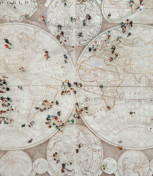
A hand tracing a route on a map suggests how local guides provide cultural context and elevates travel into a life-changing experience. Image © Keven A. Seaver

You know where you’re going; a great local guide knows why it matters.
© Keven A. Seaver

Oh, I see: A private local tour guide can make the world of difference.

Beyond the Scenic

In Bruges, Belgium, tour guides Filip Bil and Annemieke Demuynck gave me insights into language, economic history, culinary traditions, and artistic innovation—all conveyed with humor and depth. They revealed a city that has vastly more to offer than pretty backdrops for selfies.

They also shared insights only locals know: What time a popular (read “overcrowded”) footbridge turns back into an oasis of contemplation.  Why the history of Bruges’ canals and lace-making are far more dramatic than their charm suggests. How to pay less for mussels than the average visitor does—for mussels that aren’t merely average.

Local tour guides Filip Bil and Annemieke Demuynck provide cultural context that turns travel to Bruges, Belgium into a life-changing experience. Image © Joyce McGreevy

At a neighborhood gem I’d never have found on my own, local guides Filip Bil and
Annemieke Demuynck swap travel stories with my family.
© Joyce McGreevy

“As a person who actually lives there,” says Demuynck, “you have the opportunity to show what is really important and interesting.  [Guides] can make it personal, showing you their favorite places that locals visit. Those are mostly far away from the tourist traps.”

By contrast, when we deprive ourselves of opportunities to learn from knowledgeable local guides, we’re left with the “glance-and-go” effect: We see places, but we don’t see into them.

“I Don’t Want to Seem Like a Tourist.”

One misconception about hiring tour guides is that it reduces one’s credibility as an “authentic” traveler. Tell that to travel experts like Rick Steves or National Geographic Explorers, who all depend on local guides.

Another reason travelers hesitate: Low expectations. They imagine trudging through towns en masse, herded by someone with a big flag. Or they’ve encountered a cynical operator: The bargain that wasn’t. The “cheesy” commentary. The “tour” designed to propel them toward the gift shop.

Julie Cason offers an important clarification. A former publisher and intrepid traveler, Cason has photographed all 50 states and many points abroad, from St. Petersburg to Sao Paolo and Samarkand to Salzburg.

“A personally hired guide,” says Cason, “is distinctly different than the guide one gets with [for example,] a commercial bus tour, where the guide gives canned commentary and makes bad jokes. On a trip of a lifetime—one that is not likely to be repeated—it’s invaluable to have a personal guide at least occasionally to show and tell about the most relevant aspects of what you’ve come to see.”

A travel book with portrait of Jeffrey, a safari guide at Notten’s Bush Camp, South Africa pays tribute to the way local guides provide cultural context. Image ©Julie Cason

In a commemorative travel book, Cason paid tribute to the
important work of  local guides.
© Julie Cason

Life-Changing Experiences

In 2010,  Cason, her wife, and three friends, including photographer Keven A. Seaver, traveled through southern Africa. The five women made a point of hiring local tour guides, rangers for safaris and cultural guides for other sites.  They wanted to make the most of their time, stay safe, and gain insight into each country’s history and cultures.

“Everyone—books, people, websites—warned us away from touring Joberg,” recalls Cason. Have I mentioned that she is an avid scholar of history and a dedicated advocate for human rights? And that the sprawling Soweto township of Johannesburg was once home to human rights heroes  President Nelson Mandela and Archbishop Desmond Tutu?

“We felt as if we needed a guide, since we thought it important to visit the capital city.”

There they met historian and tour guide Robin Binckes. As a Boer who had come of age during Apartheid, he quickly become committed to ending it. Binckes guided Cason’s group through the apartheid sites in Johannesburg.

A portrait of South African historian and renowned local guide Robin Binckes suggests how hiring a private tour guide provides cultural context to a travel experience. Image © Keven A. Seaver

“[Meeting] Binckes was the highlight of my trip,” says Keven Seaver, who
documented the Soweto and Alexandra townships in her book Streets of Hope.
© Keven A. Seaver

“We not only got first-hand stories,” Cason recalls, “but also well-researched historical background as we visited the incredible Supreme Court building, the Apartheid Museum—still one of the best museums I’ve been to anywhere in the world—and the township of Soweto, including meeting children who attended Robin’s own preschool.”

A portrait of Ntando Mbatha, formerly a prisoner at Robben Island, now a tour guide there, signifies how hiring a local guide provides cultural context to travelers in South Africa. Image © Keven A. Seaver

Like many local guides at Robben Island, Ntando Mbatha had
formerly been a prisoner there with Nelson Mandela.
© Keven A. Seaver

“Experiencing a township with a local who knows, and is loved by, so many residents was something that we’d never have experienced on our own.” Eight years later, says Cason, “We still talk about the personal and moving stories he told us.”

“Shouldn’t We Wait Until the Kids Grow Up?”

No! Josephine was 7, her brother Adji was 10 when they, their mother, Honor Teoudoussia, and 21 other relatives traveled to the Okavango Delta of Botswana.

“Unlike most rivers, it doesn’t reach the sea,” says Teoudoussia. “It spills into the sands of the Kalahari Basin and creates an incredible mosaic of channels, islands, lagoons, and forests that are full of inter-related animal and plant life.”

Two children fascinated by the Okavago Delta, Botswana, suggest why the cultural context that local guides provide elevates travel into a life-changing experience. Image © Honor Teoudoussia

Emma  Ward and her cousin Adji Teoudoussia were fascinated by the
the world’s largest inland delta.
© Honor Teoudoussia

As experts on this complex ecosystem, the guides were also attuned to the way children learn. Josephine and Adji’s favorite guide was Tumeletso Setlabosha, better known as Water. His mother had reportedly given birth to him in a lagoon.

For kids, the opportunities to explore a vast outdoor classroom proved riveting. Water shared spellbinding lessons, many from his childhood or about animals they saw. These were no Disney tales.

Like the story of two antelope who fought so fiercely their horns locked. One fell prey to a lion, while the “survivor” succumbed to the stress of dragging around the remains of a rival. If that isn’t the most memorable argument for working with, instead of against, one another, I don’t know what is.

Animals in the complex ecosystem of the Okavango Delta, Botswana, remind the photographer why the cultural context that local guides provide elevates travel into a life-changing experience. Image © Honor Teoudoussia

“The delta is complex and intricate,” says Teoudoussia. “Every animal, insect, grass blade,
and dust swirl has its own story, and the Botswana bush camp guides know them all.”
© Honor Teoudoussia

Working with, and teaching about, the ecosystem has made Water one of the most respected guides in Botswana. Years later, Teoudoussia who is a National Geographic Learning executive, saw Water in a National Geographic documentary about efforts to save the delta. It did not surprise her to learn that he had managed logistics and navigation for the expedition.

A portrait of happy children and local guide Tumeletso Setlabosha, also known as Water, shows that visiting Okavago Delta, Botswana, is a life-changing experience at any age. Image © Honor Teoudoussia

Josephine (back left), Adji (right), and cousins loved attending “safari school”
with Tumeletso “Water” Setlabosha (center).
© Honor Teoudoussia

Says Josephine, “Guides know a lot of stuff because they’ve been doing it a long time. You meet this new person, someone you will remember.” Adji agrees. “You get information you would [otherwise] never have known.”

“Isn’t Hiring a Personal Tour Guide Expensive?”

Yes and no. Some organizations make it possible to spend a few hours to all day with a licensed guide starting at $35-$100 per person. These guides may have other careers but are passionate about local culture.

Other organizations charge significantly more, as the scope and challenges ramp up, particularly when the local guide is an internationally recognized expert. But “expensive”?  A better question might be: Which will contribute more to your travel experience, upgrading your hotel room, or gaining insights you’ll always remember?

Travel Tip: Costs vary, but certification and training are essential criteria.

Local tour guides Annemieke Demuynck and Filip Bil provide cultural context that turns travel to Bruges, Belgium into a life-changing experience. Image © Joyce McGreevy

“At home with Annemieke and Filip.” With local guides, you’re not among strangers,
but neighbors and new friends.
© Joyce McGreevy

 “You Get to Meet Inspiring People”

When I ask Demuynck what is one of the best things about conducting tours, her response applies equally to guide and traveler: “You get a very interesting view of the world and different cultures. It broadens your view . . . and you get to meet very inspiring people. You only have a short time together, but sometimes you end up being friends at the end of the tour . . . and that is really great.”

Next time you travel, remember: Souvenirs end up at thrift stores. Fancy hotels wreak havoc on your credit. But the cultural context you gain by meeting local tour guides can change your whole life for the better.

Heartfelt thanks to our contributors: award-winning, internationally acclaimed photographer /author Keven A. Seaver; global citizen Julie Cason; the Teoudoussia family; Filip Bil and Annemieke Demuynck. In the interests of full disclosure, Cason and Teoudoussia are my former colleagues. Click the links to learn more.

Comment on this post below, or inspire insight with your own OIC Moment here.

Grand Openings

by Joyce McGreevy on October 9, 2018

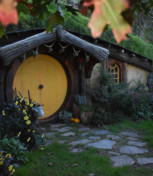
A facade in Hobbiton, New Zealand evokes the cross-cultural stories of doors and windows. (Image © Joyce McGreevy)

What’s behind doors and windows? In Hobbiton, New Zealand, that’s a trick question!
© Joyce McGreevy

A Cross-Cultural Tour of Doors and Windows Around the World

With more than 12 million posts and counting, doors and windows around the world are among the most shared objects on Instagram. Clearly, doors can be adorable and windows wonderful. But beyond pretty pictures, what cross-cultural stories do doors and windows tell?

A window in Lismore, Ireland evokes the cross-cultural stories of doors and windows. (Image © Joyce McGreevy)

In Lismore, Ireland, a medieval window has been silent witness to both
Sir Walter Raleigh and John F. Kennedy.
© Joyce McGreevy

A facade in Zagreb, Croatia evokes the cross-cultural stories of doors and windows. (Image © Joyce McGreevy)

In Zagreb, Croatia, a post-Civil War window showcases the city’s renaissance.
© Joyce McGreevy

When Is a Door Ajar?

Doors can seem ordinary; their job, after all, is to hang around the house. But doors are also sentinels between opposite worlds:  the private and the public, the inside and the outside, the secular and the sacred.

Some doors are instantly recognizable even if one has never stood before them. The door at 10 Downing Street, London (despite numerous replacements since 1735). The circular doors of Hobbiton  (located in Middle Earth or on a movie set, depending on your level of devotion to Lord of the Rings). 

Other doors make you slow your step and wonder, “Now what’s in here?”

A door in Plovdiv, Bulgaria evokes the cross-cultural stories of doors and windows. (Image © Joyce McGreevy)

In Plovdiv, Bulgaria, butterflies, flowers, and a glimpse of snail mail
turn an ordinary door into visual poetry.
© Joyce McGreevy

Some ancient doors, like the imun of Changdeokgung Palace, declared one’s status. An imun is a set of double doors, but of different heights.  In 15th century Korea, only royalty could walk through the taller door.

Some doors are false doors, carved in stone on Egyptian tombs and temples. They can only be passed through in the afterlife.

Doors can have the blues.  From the Cycladic islands of Greece to the high deserts of New Mexico, blue doors project complex layers of cultural symbolism, protective yet calm,  local yet ethereal.


A collage of entryways in New Zealand, Greece, New Mexico, and Norway evokes the cross-cultural appeal of blue doors. (Image © Joyce McGreevy)

Clockwise: From Greece to New Mexico, Norway to New Zealand, blue doors enchant us.
© Joyce McGreevy

Doors can be downright contrary with signs like, “This door to remain closed and locked at all times.” At ALL times? But what if we need to—oh, never mind. We’ll just climb out through the window.

Keleti Train Station in Budapest, Hungary evokes the cross-cultural stories of doors and windows. (Image © Joyce McGreevy)

At Keleti Train Station, Budapest, windows evoke grand visions of travel.
© Joyce McGreevy

Open Your Wind-Eyes

The origin of the word windows is a doorway into poetry. It comes from Old Norse and Frisian phrases that mean “wind-eye” and “breath-door.” Contained in those words is the history of the window, from unglazed hole in the roof, a way to draw breath into your body, to grand portal, a way to inspire, or “draw spirit into” your soul.

Oh, I see: The most basic objects can be storehouses of cultural history.

A crumbling old house Siletz Bay Wildlife Refuge Center, Oregon evokes the cross-cultural stories of doors and windows. (Image © Carolyn McGreevy)

A former home in Siletz Bay Wildlife Refuge Center, Oregon opens the door to nature.
© Carolyn McGreevy

Breaking (or Bricking) Glass

Ever heard the expression “daylight robbery”? In the late 1600s, new technology was making it easier to produce glass windows. Soon windows were opening up a whole new world for homeowners.

English King William III saw this as his window of opportunity.

In 1696, he levied a window tax. The more glass windows one had, the more tax one paid, with rates increasing exponentially. Some people registered their protests— and avoided the higher rate—by bricking up a strategic number of windows.

A glass wall in Copenhagen, Denmark evokes the cross-cultural stories of doors and windows. (Image © Joyce McGreevy)

What would King William III have thought of this window-wall in Copenhagen? 
© Joyce McGreevy

These Cross-Cultural Traditions Hinge on Doors

  • In the Chinese custom of men shén, images of the Door Gods Shen Shu and Yu Lei are displayed on doors as guardians of all within.
  • Some door customs come with door prizes. In Finland, the custom was for brides to go door-to-door collecting wedding gifts in a pillowcase.
  • In Poland, if you can’t find something in your house, go to the nearest closed door and speak through it to the Skrzaty, friendly elves who live in nooks and crannies.
  • Skeptical? Next time you lose your reading glasses, tell the Skrzaty, “Play and put away!” Then prepare to be amazed when you find your specs right on top of your head.
A winter street scene in Bend, Oregon evokes the cross-cultural stories of doors and windows. (Image © Joyce McGreevy)

Windows in Bend, Oregon keep winter outside.
© Joyce McGreevy

A living room in Evanston, Illinois evokes the cross-cultural stories of doors and windows. (Image © Joyce McGreevy)

Windows in Evanston, Illinois invite summer inside. 
©Joyce McGreevy

Word Windows, Discovery Doors

Doors and windows give us many cross-cultural idioms and sayings.

  • In Turkey, “Kind words unlock an iron door” and “Create a window from one heart to another.”
  • In China, “Teachers open the door; you enter by yourself,” and “Learning a language is like having another window from which to see the world.”
  • In France,  “Everyone sees noon from his own door” (Chacun voit midi à sa porte). We each have our own perspective, our personal window on life.
  • Speaking of unique perspective, an early “life hack” from my own Irish culture reminds us, “Never bolt your door with a boiled carrot.” Especially if you’ve buttered it.
A street scene in Co. Cork, Ireland evokes the cross-cultural stories of doors and windows. (Image © Joyce McGreevy)

In the Ireland of my youth a knock at the door meant
“Sounds like visitors. Put the kettle on!” 
© Joyce McGreevy

In Closing, Stay Open

Doors and windows can open up new worlds, or reframe and transform a world we thought we knew. As you close the door on this modest cross-cultural tour, hold fast to the key of observation.  For doors and windows around the world have stories to tell and wonders to reveal.

An exterior view of the Nobel Peace Center, Oslo, Norway evokes the cross-cultural stories of doors and windows. (Image © Joyce McGreevy)

In Oslo, Norway, windows bring the light of hope when the world seems dark. 
© Joyce McGreevy

Comment on this post below. 

A Secret World of Discovery

by Meredith Mullins on October 1, 2018

Colorful historical scene from a Costa Rican banknote, showing the cultural heritage and traditions of a country. (Image © Meredith Mullins.)

What can we learn from this work of art?
Image photo by Meredith Mullins

Cultural Heritage and Traditions Revealed

Countries reveal their cultural heritage and traditions through art, dress, storytelling, history, heroes, architecture, monuments, museums, language, music, products, and leaders.

They are also proud to present their natural treasures such as flora, fauna, and other gifts of nature.

Great wall of China on Chinese banknote, showing cultural heritage and traditions of China. (Image © Meredith Mullins.)

Natural and human-made treasures
Image photo by Meredith Mullins

What do these two images have in common?

Copyright © 2011-2025 OIC Books   |   All Rights Reserved   |   Privacy Policy