Oh, I see! moments
Travel Cultures Language

Storytelling in Miniature

by Meredith Mullins on November 5, 2018

Giant Panda eating peaches on a postage stamp from Mongolia, proving postage stamps show something about a country's cultural heritage and traditions. (Image © Gingwa/iStock.)

What does a postage stamp say about its country?
© Gingwa/iStock

Cultural Heritage and Traditions of the Mighty (Yet Tiny) Postage Stamp

As the popularity of “snail mail” dwindles in our digital age, it seems sadly plausible that some people today have never used a postage stamp. And that’s a pity.

Postage stamps of the world tell fascinating stories. And stamps—like the design of paper currency noted in an OIC Moments story last month—reveal much about a country’s cultural heritage and traditions.

Postal services have exploded with creativity to offer stamps that people look forward to adding to their letters and cards—like an artistic bow on a heartfelt package.

Chinese stamp with two blue birds, showing that postage stamps can reveal the cultural heritage and traditions of a country. (Image © zjzpp163/iStock.)

Chinese postage stamp artistry
© zjzpp163/iStock

These tiny works of art and historical significance also generate revenue and inspire collectors who value the documentation of a country’s artistic style, heroes, leaders, icons, symbols, natural and manmade treasures, national brand, hobbies, holiday themes, and important moments—as well as creative ingenuity.

As The Philatelic Database says in their mission statement, postage stamps are a pictorial history of human progress.

As set of U.S. stamps showing the signing of the U.S. Declaration of Independence. (Image © DMT.)

A panoramic set of stamps showing the signing of the U.S. Declaration of Independence
Photo by DMT

The Penny Black . . . And Beyond

Stamps come in all shapes and sizes, all colors, all materials, and often push the boundaries of media, with offerings that are holograms, tiny phonograph records, CD-ROMs, and motionstamps.

Who would have imagined that when the first stamp—The Penny Black—was invented in the U.K. in 1840, stamps would become a true art form.

The Penny Black postage stamp from the U.K., showing how postage stamps can reveal the cultural heritage and traditions of a country. (Image in Public Domain).

The first postage stamp—The Penny Black
(Image in Public Domain)

It should also be noted that, because of the innovation and elegance of The Penny Black and the popularity of sending a message for only one penny, this original stamp set in motion a significant increase in people sending messages by mail.

The most interesting thing about a postage stamp is the persistence with which it sticks to its job.
—Napoleon Hill

While this quote is meant to inspire sticking with any job until its done, it is an apt use of the postage stamp as a central idea. Stamps get a letter, card, or package from one end of the planet to the other, for not much money in the grand scheme of things.

Two Cuban bird stamps, showing that postage stamps can reveal the cultural heritage and traditions of a country. (Image © DMT.)

Native flora and fauna are a common postage stamp theme.
Photo by DMT

Who Nose What’s Next

Over the years, the postal path has been filled with interesting smells. Many countries issue flora-scented stamps.

Bhutan created the first scented stamp in 1973—a series of rose stamps infused with rose essence. India has jasmine- and sandalwood-scented stamps. South Korea issued a set of four endangered flowers that smelled of violets.

German Postage stamp with strawberry, showing that postage stamps can reveal cultural heritage and traditions of a country.

The German strawberry-scented postage stamp

And Germany, known for its scented stamps, has a popular series featuring fruit (strawberry, apple, lemon, and blueberry).

Often, a country issues a scented stamp that tells a cultural or commemorative story. Switzerland has a chocolate-scented stamp. Brazil promotes its coffee trade with a stamp that wafts the aroma of fresh brewed coffee. A Hong Kong stamp series emits the subtle fragrance of jasmine tea.

The U.K issued a healing eucalyptus-scented stamp in honor of its medical Nobel Prize in 2001. And China issued a sweet-and-sour-pork infused stamp for the Year of the Pig in 2007.

The U.S.—a little slow to the world scented-stamp stage—just issued its first scratch-and-sniff stamp this year. The popsicle series smells like the frozen treats of summer. (I get notes of sweet red fruit and a hint of pink cotton candy on the finish.)

U.S. scratch and sniff summer popsicle stamps, showing that postage stamps can show the cultural heritage and traditions of a country. (Image courtesy of the U.S. Post Office.)

The U.S. released its first scratch-and-sniff stamps in the summer of 2018.
Image courtesy of the U.S. Post Office.

Sometimes, it’s not all chocolate and roses. Brazil issued a set of stamps in 1999 with the smell of burnt wood to remind people of the risk of forest fires and deforestation to the environment.

A postage stamp showing Monpazier France in gold, showing that postage stamps can reveal the cultural heritage and traditions of a country. (Image © DMT.)

France features its architectural history in this panoramic postage stamp.
Photo by DMT

A Stamp-ede of Creativity

Several countries stand out as creative stamp designers.

Dutch triangular stamp, showing that postage stamps can reveal the cultural heritage and traditions of a country. (Image © Kaato/iStock.)

Stamps come in all shapes and sizes.
© Kaato/iStock

Bhutan seems to lead the pack for its originality and series of “firsts.” As a small country in need of revenue, there was a royal push for stamps that would interest the world of philately. With the help of American Burt Todd, the Bhutan Stamp Agency was founded.

The agency started conventionally with the Bhutanese royal crest, a yak, a monastery, and a soldier from the royal bodyguard force.

CD-ROM postage stamp from Bhutan, showing that postage stamps can reveal the cultural heritage and traditions of a country.

Bhutanese postage stamp that doubles as a CD-ROM history of the kingdom

Their artistry began to bloom as they created the first scented stamp (the aforementioned roses), stamps printed on silk and steel, and, finally, stamps that also served as tiny phonograph records, playing the Bhutanese national anthem and traditional folk songs.

Most recently, stamps have been produced that are CD-ROMs presenting a history of the country.

Austria has also been innovative in its postal approach. The country created an embroidered stamp, a stamp made out of soccer ball material to commemorate a 2008 UEFA soccer tournament, a stamp of a crystal swan with actual crystal particles attached, and a stamp picturing a meteorite that actually has embedded particles of meteorite dust (promoted as “mail from another world”).

Malaysia has a series of stamps featuring its exotic nocturnal animals. Their eyes glow in the dark. Finland also has a glow-in-the-dark series celebrating its lighthouses.

Jerboa on a triangular Mongolian postage stamp, showing that postage stamps can reveal the cultural heritage and traditions of a country. (Image © Alexander Zam/iStock.)

Mongolia celebrates the Long-Eared Jerboa in a creative triangular stamp.
Image © Alexander Zam/iStock

Canada honors it culture with a range of offerings—from a stamp with its national symbol, the maple leaf, to a motionstamp showing their ice hockey heroes scoring goals via lenticular magic.

Maple leaves on canadian postage stamp, showing that postage stamps can reveal the cultural heritage and traditions of a country. (Image © Manakin/iStock.)

From iconic symbols to moving pictures, Canada is a creative force
in the postage stamp world.
© Manakin/iStock

The Netherlands has a stamp with hidden flower seeds. And Portugal, the world’s leading manufacturer of cork, promotes its product with stamps made entirely of cork (each one unique because of the nature of the material).

The U.S. set of circular ball stamps, showing that postage stamps can reveal the cultural heritage and traditions of a country. (Image © DMT.)

The U.S. goes circular with this series of sports balls.
Photo by DMT

Postal Poetry


Imagination will take you everywhere.
—Einstein

The “Oh, I see” moment in the postage stamp world reflects Einstein’s sentiment. The creation of postage stamps thrives on artistic imagination that has no limits.

A group of postage stamps, showing that postage stamps can reveal the cultural heritage and traditions of countries. (Image © Meredith Mullins.)

No limits to the artistry of the postage stamp
© Meredith Mullins

The Penny Black was elegant . . . and perfect for the cultural heritage and traditions of the time. However, we’ve come a long way since that innovative moment. There are no boundaries.

I imagine we will continue to be surprised by the artistry of postage stamps . . . and the stories they tell. And, hopefully, we will continue to send letters and cards to friends and family all over the world.

Long live the postage stamp!

A set of U.S. stamps commemorating the total eclipse of the sun, showing that postage stamps can reveal the cultural heritage and traditions of a country. (Image © DMT.)

The U.S. issued a set of heat sensitive stamps to commemorate the 2017 total eclipse of the sun.
Photo by DMT

Comment on this post below, or inspire insight with your own OIC Moment here.

Grand Openings

by Joyce McGreevy on October 9, 2018

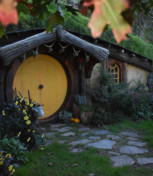
A facade in Hobbiton, New Zealand evokes the cross-cultural stories of doors and windows. (Image © Joyce McGreevy)

What’s behind doors and windows? In Hobbiton, New Zealand, that’s a trick question!
© Joyce McGreevy

A Cross-Cultural Tour of Doors and Windows Around the World

With more than 12 million posts and counting, doors and windows around the world are among the most shared objects on Instagram. Clearly, doors can be adorable and windows wonderful. But beyond pretty pictures, what cross-cultural stories do doors and windows tell?

A window in Lismore, Ireland evokes the cross-cultural stories of doors and windows. (Image © Joyce McGreevy)

In Lismore, Ireland, a medieval window has been silent witness to both
Sir Walter Raleigh and John F. Kennedy.
© Joyce McGreevy

A facade in Zagreb, Croatia evokes the cross-cultural stories of doors and windows. (Image © Joyce McGreevy)

In Zagreb, Croatia, a post-Civil War window showcases the city’s renaissance.
© Joyce McGreevy

When Is a Door Ajar?

Doors can seem ordinary; their job, after all, is to hang around the house. But doors are also sentinels between opposite worlds:  the private and the public, the inside and the outside, the secular and the sacred.

Some doors are instantly recognizable even if one has never stood before them. The door at 10 Downing Street, London (despite numerous replacements since 1735). The circular doors of Hobbiton  (located in Middle Earth or on a movie set, depending on your level of devotion to Lord of the Rings). 

Other doors make you slow your step and wonder, “Now what’s in here?”

A door in Plovdiv, Bulgaria evokes the cross-cultural stories of doors and windows. (Image © Joyce McGreevy)

In Plovdiv, Bulgaria, butterflies, flowers, and a glimpse of snail mail
turn an ordinary door into visual poetry.
© Joyce McGreevy

Some ancient doors, like the imun of Changdeokgung Palace, declared one’s status. An imun is a set of double doors, but of different heights.  In 15th century Korea, only royalty could walk through the taller door.

Some doors are false doors, carved in stone on Egyptian tombs and temples. They can only be passed through in the afterlife.

Doors can have the blues.  From the Cycladic islands of Greece to the high deserts of New Mexico, blue doors project complex layers of cultural symbolism, protective yet calm,  local yet ethereal.


A collage of entryways in New Zealand, Greece, New Mexico, and Norway evokes the cross-cultural appeal of blue doors. (Image © Joyce McGreevy)

Clockwise: From Greece to New Mexico, Norway to New Zealand, blue doors enchant us.
© Joyce McGreevy

Doors can be downright contrary with signs like, “This door to remain closed and locked at all times.” At ALL times? But what if we need to—oh, never mind. We’ll just climb out through the window.

Keleti Train Station in Budapest, Hungary evokes the cross-cultural stories of doors and windows. (Image © Joyce McGreevy)

At Keleti Train Station, Budapest, windows evoke grand visions of travel.
© Joyce McGreevy

Open Your Wind-Eyes

The origin of the word windows is a doorway into poetry. It comes from Old Norse and Frisian phrases that mean “wind-eye” and “breath-door.” Contained in those words is the history of the window, from unglazed hole in the roof, a way to draw breath into your body, to grand portal, a way to inspire, or “draw spirit into” your soul.

Oh, I see: The most basic objects can be storehouses of cultural history.

A crumbling old house Siletz Bay Wildlife Refuge Center, Oregon evokes the cross-cultural stories of doors and windows. (Image © Carolyn McGreevy)

A former home in Siletz Bay Wildlife Refuge Center, Oregon opens the door to nature.
© Carolyn McGreevy

Breaking (or Bricking) Glass

Ever heard the expression “daylight robbery”? In the late 1600s, new technology was making it easier to produce glass windows. Soon windows were opening up a whole new world for homeowners.

English King William III saw this as his window of opportunity.

In 1696, he levied a window tax. The more glass windows one had, the more tax one paid, with rates increasing exponentially. Some people registered their protests— and avoided the higher rate—by bricking up a strategic number of windows.

A glass wall in Copenhagen, Denmark evokes the cross-cultural stories of doors and windows. (Image © Joyce McGreevy)

What would King William III have thought of this window-wall in Copenhagen? 
© Joyce McGreevy

These Cross-Cultural Traditions Hinge on Doors

  • In the Chinese custom of men shén, images of the Door Gods Shen Shu and Yu Lei are displayed on doors as guardians of all within.
  • Some door customs come with door prizes. In Finland, the custom was for brides to go door-to-door collecting wedding gifts in a pillowcase.
  • In Poland, if you can’t find something in your house, go to the nearest closed door and speak through it to the Skrzaty, friendly elves who live in nooks and crannies.
  • Skeptical? Next time you lose your reading glasses, tell the Skrzaty, “Play and put away!” Then prepare to be amazed when you find your specs right on top of your head.
A winter street scene in Bend, Oregon evokes the cross-cultural stories of doors and windows. (Image © Joyce McGreevy)

Windows in Bend, Oregon keep winter outside.
© Joyce McGreevy

A living room in Evanston, Illinois evokes the cross-cultural stories of doors and windows. (Image © Joyce McGreevy)

Windows in Evanston, Illinois invite summer inside. 
©Joyce McGreevy

Word Windows, Discovery Doors

Doors and windows give us many cross-cultural idioms and sayings.

  • In Turkey, “Kind words unlock an iron door” and “Create a window from one heart to another.”
  • In China, “Teachers open the door; you enter by yourself,” and “Learning a language is like having another window from which to see the world.”
  • In France,  “Everyone sees noon from his own door” (Chacun voit midi à sa porte). We each have our own perspective, our personal window on life.
  • Speaking of unique perspective, an early “life hack” from my own Irish culture reminds us, “Never bolt your door with a boiled carrot.” Especially if you’ve buttered it.
A street scene in Co. Cork, Ireland evokes the cross-cultural stories of doors and windows. (Image © Joyce McGreevy)

In the Ireland of my youth a knock at the door meant
“Sounds like visitors. Put the kettle on!” 
© Joyce McGreevy

In Closing, Stay Open

Doors and windows can open up new worlds, or reframe and transform a world we thought we knew. As you close the door on this modest cross-cultural tour, hold fast to the key of observation.  For doors and windows around the world have stories to tell and wonders to reveal.

An exterior view of the Nobel Peace Center, Oslo, Norway evokes the cross-cultural stories of doors and windows. (Image © Joyce McGreevy)

In Oslo, Norway, windows bring the light of hope when the world seems dark. 
© Joyce McGreevy

Comment on this post below. 

Angels of Paris

by Meredith Mullins on December 18, 2017

Angel on the Church of Saint-Jean-de-Montmartre in Paris, one of the angels of Paris that serves as a cultural symbol. (Image © Rosemary Flannery.)

The angels of Paris are abundant (from the Church of Saint-Jean-de-Montmartre).
© Rosemary Flannery

The Most Celestial of Cultural Symbols

Happy holidays to all! This festive season surrounds us with sparkling lights, fir trees of all shapes and sizes, menorahs, wish lists, santas, elves, mangers, jingling bells, and heralding angels. We celebrate with a variety of cultural symbols at this time of year.

One of these symbols, however, has more than just a holiday presence. Angels can be full-time residents, finding a home in history and architectural design, especially in a city such as Paris.

Take a closer look, often toward the sky. Oh, I see. Angels are everywhere—in plain view and in some magically surprising places.

An armored angel against a blue sky in Paris, one of the angels of Paris that serves as a cultural symbol. (Image © Hemera/Ablestock.com.)

An armored angel at the Louvre
© Hemera Technologies/Ablestock.com

Angels of Paris

In Paris, these celestial spirits play many roles. They are protectors, guardians, caretakers, defenders, messengers, musicians, frolickers, celebrants, warriors, religious heralds, and just plain rejoicers. Some are serious. Some are whimsical.

The name “angel” comes from the Greek word “angelos,” which means messenger. Angels are thought to be a link between heaven and earth. Thus, they are usually in high places, reaching toward the sky.

Two gold creatures atop the Petit Palais in Paris, some of the angels of Paris that serve as a cultural symbol. (Image © Meredith Mullins.)

Not all winged creatures are angels. These graceful figures atop the Petit Palais,
represent Fame and Victory.
© Meredith Mullins

They are diverse, beautiful, and, as Paris angel expert Rosemary Flannery says, “They reflect the spirit of their times”—from the Middle Ages to the 21st Century.

They live on monuments, churches, mansions, theatres, museums, palaces, and in parks, fountains, and on street corners.

There are so many Paris angels that Ms. Flannery had the challenging task of narrowing the field for her book “Angels in Paris”—a difficult job when so many stories begged to be told.

Now, OIC is being even more selective as we feature our six favorite angels from Ms. Flannery’s elite group.

Red door with grill work of an angel and a dove in Paris, one of the Paris angels that serves as a cultural symbol. (Image © Rosemary Flannery.)

Intricate grill work on the door of #66 Rue Greneta
© Rosemary Flannery

The Angel and the Dove

Cast-iron door grills in Paris were an architectural decoration that became popular from the 1830s to 1850s.

Here, at #66 Rue Greneta in the second arrondissement, everyone who passes through the bright red door is greeted by this intricately designed angel and dove—a constant reminder of protection, peace, and harmony. What a wonderful welcome to the building.

Close up of the angel and the dove at #66 Rue Greneta in Paris, one of the Paris angels that serves as a cultural symbol. (Image © Rosemary Flannery.)

The angel and the dove
© Rosemary Flannery

The Working Angels of the Theatre de Châtelet

“Why not put the angels to work?” thought one building designer in 1862.

And so the angels on the rooftop of the Theatre de Châtelet steady a spire made of lead that serves as a lightning rod. Thus, the building is protected against a strike during one of the Paris thunderstorms (thank you Benjamin Franklin for the 1752 invention).

Two angels and a spire atop the Theatre de Châtelet in Paris, one of the Paris angels that serves as a cultural symbol. (Image © Rosemary Flannery.)

Theatre de Châtelet angels, protecting against lightning strikes
© Rosemary Flannery

Two pairs of muscular, curly-haired angels, with wisps of wings, hold tight and avert their gaze (although someone should mention the old adage: never turn your back on a lightning strike).

One angel pair is on the eastern façade of the theatre and one pair is on the west.

Guardian angel on the side of the Church of the Madeleine in Paris, one of the Paris angles that serves as a cultural symbol. (Image © Rosemary Flannery.)

“Don’t mess with me,” says the guardian angel on the Church of the Madeleine.
© Rosemary Flannery

A Guardian of the Church of the Madeleine

Some say that each of us has a guardian angel, to guide us when times are challenging. Whether this is true or not, a guardian angel is clearly present on the northwest corner of the Church of the Madeleine.

She has a “Don’t mess with me,” look about her, with muscular wings to add to her powerful stature. She also, oddly, carries a crosier (usually carried by bishops).

She was carved in stone by Theophile Bra, an eccentric considered by his friends George Sand and Balzac to be a genius. He was also prone to hallucinations and mystical experiences, some of which can perhaps be sensed in this angel’s gaze.

Gold-painted angels at the Sorbonne sundial, angels of Paris that serve a cultural symbols. (Image © Rosemary Flannery.)

The sundial angels of the Sorbonne
© Rosemary Flannery

Passing Time with the Angels

Angels often serve an important function when they appear in historic stories. At the Sorbonne, a sundial created in 1676 (and moved to the Galerie Robert de Sorbon in the honor courtyard in 1899) hosts two angels, painted in gold, assisting in marking the passing of time.

One holds a compass to measure the dimensions of the earth. The other stands ready to record notes on a stone tablet. High above the engraved markings of the sundial, the Greek god of the sun races against time in his horse-drawn chariot, celebrating each new day and passing hours.

A tall angel on Rue Turbigo, one of the Paris angels that serve as cultural symbols. (Image © Rosemary Flannery.)

An angel on Rue Turbigo that commands attention
© Rosemary Flannery

The Tallest Angel in Town?

Many of the angels of Paris are tucked away in hidden corners or so high on building tops that a significant backward head tilt is necessary to see them. Not so with the angel of #57 Rue Turbigo, which rises three stories on a busy street corner to watch over the neighborhood.

This well-dressed angel is there to be seen as it smiles over its palais collectif (shared palace), which is now an apartment building.

The architect, Eugène Demangeat, of the 1850s Haussmann building period, had an interesting artistic challenge—to soften the edge of this building to fit the oblique angle of the street.

He remembered a lighthouse design by Emile-August Delange, a student at the Ecole des Beaux-Arts et Architecture, that featured an angel and had been recognized for “poetic artistry.” (It didn’t hurt that the name Delange translates to “of the angel.” Hmmm.) It was the perfect solution for the structure.

The final sculpture was flat enough to fit the building codes, which prohibited projections. And, its wings support the fourth floor balcony with grace.

The archangel Michael in the Place de St Michel fountain in Paris, one of the Paris angels who serve as a cultural symbol. (Image © wjarek/iStock.)

The archangel Michael (Michel) in the Place St-Michel
© W. Jarek/iStock

A King of Archangels

Another high-profile angel lives in the grand fountain of Place St. Michel. This warrior angel—Michael— is seen by millions of people every year and has the honor of having a square, boulevard, fountain, and bridge all named after him.

It’s a deserved accolade since he fights a valiant battle against evil . . . and he edged out Napoleon Bonaparte for this coveted fountain position.

His theatrical pose is inspired by Raphael’s painting of Michael and the dragon at the Louvre museum.

A portal of the cathedral of Notre-Dame, showing angels of Paris that serve as cultural symbols. (Image © Meredith Mullins.)

The angels, interspersed among other historic notables on the portals of the
Cathedral of Notre-Dame, are the oldest in Paris.
© Meredith Mullins

Paris: A City of Light, Love . . . and Angels

Paris has thousands of angels watching over the city or going about their daily angel business in their historically layered architectural worlds.

As cultural symbols, the interpretations of angels are diverse. However, The “Oh, I see” moments come when we take the time to discover . . . to really look at the details of the world . . . and to look in places where we might least expect to find an angel.

Happy holidays to all, and may the new year bring you angels in whatever form works best for you.

Stone carving of an angel playing a mandolin, one of the angels of Paris who serve as a cultural symbol. (Image © Rosemary Flannery.)

One of Nicolas Flamel’s medieval angel musicians, who bring the heavenly harmony
of music to the stone house at 51, Rue de Montmorency.
© Rosemary Flannery

Many thanks to Rosemary Flannery and her excellently researched book “Angels in Paris.” She studied her subject for years—reading historic documents, wandering the Paris streets on “angel alert,” and working in libraries most people don’t even know exist.


The French and English books "Angels in Paris," showing angels as a cultural symbol in Paris. (Image © Meredith Mullins.)

Rosemary Flannery’s “Angels of Paris”
© Meredith Mullins

The English version of “Angels in Paris” is published by The Little Bookroom. The French version is published by Editions Guy Tredaniel/Editions Exergue. You can also find more angel-related material here.

Comment on this post below, or inspire insight with your own OIC Moment here.

Copyright © 2011-2025 OIC Books   |   All Rights Reserved   |   Privacy Policy