Oh, I see! moments
Travel Cultures Language

The Corn Tortilla: A Mexican Superhero

by Eva Boynton on January 11, 2016

A mural of a maize plant used to make corn tortillas illustrates the connection of corn to Mexico's cultural heritage and traditions. (Image © Eva Boynton)

A kernel of corn at the heart of a Mexican corn plant; the corn plant at the heart
of the corn tortilla; the corn tortilla at the heart of Mexican culture
photo © Eva Boynton

The Delicious Taste of Cultural Heritage

I’ll be the first to admit, I’m a corn tortilla addict. At first I was skeptical.

My travel companions from Mexico would let loose disappointed sighs when a beautiful meal lacked their favorite flying saucers made of corn. I would think to myself, “What’s the hubbub over tortillas?” After my first weeks in Mexico, though, I was hooked.

Corn tortillas are the superheroes of a Mexican meal. They can magically expand a few morsels of food into a full meal. They add flavor and richness to daily life. And the process of making delicious tortillas connects people to Mexico’s cultural heritage and traditions as well as to each other.

Born in a Tortillería

The life of this Mexican superhero begins in the tortillería (tortilla shop). Found in every neighborhood, the bustling shops spice up the streets with sound, smell, and flavor. They are a place of congregation, a daily interaction between neighbors.

Tortilla shop in a small Mexican town, showing how the daily practice of making corn tortillas connects to Mexico's cultural heritage and traditions. (Image © Eva Boynton)

It is impossible to walk through the streets of a town in Mexico without running into a tortilla shop.
© Eva Boynton

If the tortillas are made by machine, the crunch and whine of turning gears can be heard from several blocks away. If they are made by hand, the rhythmic pat-patting of hands flattening the dough fills the street. Each method douses the air with a corn perfume.

City or small town, life in Mexico is life with tortillas.

A Family Affair

One such tortillería is Tortijocha in Huatulco, a city in the Mexican state of Oaxaca. José Alfredo Lavariega Canseco (or Jocha, for short) began the business in his home, selling tortillas handmade by his wife.

Jocha and his family standing in front of their tortilla shop, illustrating the connection between corn tortillas and Mexico's cultural heritage and traditions. (Image © Eva Boynton).

Jocha (second from the left) stands proudly in front of his tortilla shop
with his workers and family.
© Eva Boynton

The more they sold, the more Jocha recognized the possibility of a larger enterprise. The front of his house transformed into Tortijocha.

Close-up of the Fausto Celorio brand on a tortilla-making machine, illustrating how tortilla making connected to Mexico's cultural heritage and traditions, is still prominent in modern Mexican culture. (Image © Eva Boynton)

Jocha’s tortilla machine carries the name of
Fausto Celorio, who mechanized the
tortilla-making process in the late 1940’s.
© Eva Boynton

But selling handmade tortillas is not always profitable since they cannot be mass produced.

Jocha explains, “They are very tasty, handmade tortillas, but I was interested in doing business.”

Consequently, someone else was introduced into the family business. Her name—Máquina Celorio.

The early days of using the machine were pure experimentation. Jocha’s first tortillas were a tad crispy, but that did not spoil the family’s excitement. They celebrated around the dinner table with a stack of charred, machine-made tortillas and a home-cooked meal.

A man working the tortilla machine, showing the daily practice of making corn tortillas that connects to Mexico's cultural heritage and traditions. (Image © Eva Boynton)

Man and machine at work.
The dough—a mixture of ground-up corn kernels soaked in limewater—is pushed
through a funnel, sliced into tortillas, and moved along three griddles to cook.
© Eva Boynton

Once again, the tortilla showed its superpowers, bringing a family together in a common enterprise. Tortijocha quickly began producing and selling stacks of identically cut and cooked tortillas that brought other families together in communal feasts.

The Cultural Connection

“Is there a difference between your tortillas and those from other tortilla shops?” I asked.

Jocha replied, “Our tortillas are the best because we make tortillas with real corn. . . .We try to have flavor and texture in the tortillas. We want to have quality.”

The real corn Jocha is talking about comes from using maíz (corn) purchased from local farmers in Huatulco. Tortijocha soaks and grinds the corn instead of buying a pre-made mixture from a store.

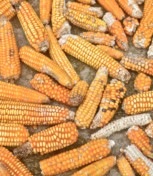
Spread out on the floor, a pile of corn is ready for use in making corn tortillas, a food connected to Mexico's cultural heritage and traditions. (Image © Gabriela Díaz Cortez)

Ears of corn, soon to become tasty tortillas
© Gabriela Díaz Cortez

Jocha claims that the taste of “100% pure maíz” (found on their store sign) creates stronger connections among land, plant, farmer, and city customer. The connections date back to the ancestors of Mexico’s modern culture who grew some 59 types of indigenous corn.

Mountains with corn plant growing in the foreground, showing an ingredient for making corn tortillas, a food still connected today to Mexico's cultural heritage and traditions. (Image © Gabriela Díaz Cortez)

Maíz grows throughout the mountains and valleys of Mexico.
© Gabriela Díaz Cortez

Corn tortillas are ingrained in Mexico’s identity for reasons beyond the ingredients—the patting together of dough is part of Mexico’s cultural heritage that has been passed down across centuries.

A Mexican woman making corn tortillas by hand, showing an ongoing connection to Mexico's cultural heritage and traditions (Image © Frank Kolvachek)

Many families and tortillerías make tortillas by hand today.
© Frank Kolvachek

Why does this traditional way of making tortillas continue? Perhaps because it is tradition, or perhaps it is because handmade tortillas are more delicious, crafted and cooked on a different kind of grill—crafted by a person rather than sliced and delivered by a machine.

Whether made by machine or by hand, however, the corn tortilla maintains its superhero status, connecting a modern-day culture to its roots.

Oh, I See the Superpowers of the Corn Tortilla

Maintaining traditions across centuries. Bringing people together. As if these superpowers weren’t sufficient, I discover the daily power of tortillas. They go with almost every meal in Mexico, serving as the main ingredient, utensil, or sponge to soak up the rich flavors of a dish.

Dinner plate filled with tasty tortillas topped with queso fresco and avocado, illustrating the ongoing connection between tortillas eaten today and Mexico's cultural heritage and traditions. (Image © Eva Boynton)

Dig in!
© Eva Boynton

I imagine myself traveling with a utility belt full of tortillas for every occasion. Need silverware? Pull out a tortilla. Missing a napkin, tablecloth, meal extender, flavor enhancer, or community builder? Look to the little tortilla.

As Jocha told me, “The corn tortilla is the most important thing on the table.” That’s because it’s a Mexican superhero, full of good taste and cultural heritage, connected to Mexico’s rich history and ancestral cuisine.

Thank you, Jocha, for the interview and the delicious tortillas.

Comment on this post below. 

The Seasonal Sparkle of Cultural Differences

by Meredith Mullins on December 21, 2015

Christmas tree at the Galeries Lafayette in Paris, one of the holiday traditions around the world that shows the beauty of cultural differences. (Image © Meredith Mullins.)

The always-surprising tree at the Galeries Lafayette department store in Paris
© Meredith Mullins

Holiday Traditions Around the World

The streets are strung with lights. The store windows are full of color, sparkle, and animated figures made to mesmerize the young and the young at heart. There are scents of evergreens, mulled wine, and cinnamon in the air.

Whether you’re celebrating Christmas, Hanukkah, or Epiphany. Whether you’re commemorating Père Noêl, Santa Claus, Saint Nicholas, the Three Wisemen, Sinterklaas, Befana, or the miracle of light. ‘Tis the season to be festive.

In the Wake of the Paris Attacks

by Meredith Mullins on November 23, 2015

Le Carillon, one of the sites of Paris attacks of 13 November, with flowers and messages showing the spirit of French cultural beliefs. (Image © Meredith Mullins)

Flowers and messages surround Le Carillon, one of the restaurants attacked on November 13.
© Meredith Mullins

French Spirit and Cultural Beliefs Are Woven with Strength and Courage

We don’t usually foresee danger in our daily routines—in restaurants, bars, sports stadiums, or concert halls. We expect to be safe in movie theatres, office buildings, trains, churches, airplanes, and schools—even with past history embedded in our memory.

Sadly, at this time in a world where hatred, violence, guns, and insanity are more common than we could have ever imagined, the risk of danger becomes hauntingly familiar. The possibility plants itself at the edges of our consciousness.

And then the unthinkable happens. Terrorists attack the very essence of everyday rhythms. They assault innocent people—people eating, laughing, cheering their team, drinking, dancing to heavy metal, talking with friends and neighbors.

Flags and flowers for the Paris attacks at the Lion in the Place de la République in Paris, showing the cultural beliefs of the French. (Image © Meredith Mullins.)

Commemorating the victims of the attacks at the Place de la République
© Meredith Mullins

The Paris Attacks

Paris suffered such attacks on 13 November, 2015. A night of shock and terror, endless sirens, confusion, and tragedy hanging heavy in the air.

A night that brought to light the fact that there is much we do not know about the terrorist underworld. A night that exposed the weaknesses in many of the systems built to keep us safe. A night that was followed by police raids, more attacks (Mali), and threats of attacks (Belgium). A night that reverberates around the world.

French soldiers guard Notre Dame after the Paris attacks, which brought out the best of French cultural beliefs in the aftermath. (Image © Meredith Mullins.)

French soldiers guard Notre Dame Cathedral.
© Meredith Mullins

French President Hollande declared a state of emergency. The police went into overdrive, putting pieces of the puzzle together and doing everything possible to identify those responsible and shut down future attacks.

Museums and monuments closed. Soldiers patrolled the streets. The country and the world mourned the dead and prayed for the wounded.

Man lighting candles after the Paris attacks, showing the spirit of French cultural beliefs. (Image © Jerry Fielder.)

Moments of silence
© Jerry Fielder

The Spirit of France

These dramatic events were filled with “Oh, I see” moments. The most meaningful, for me was the immediate emotional and heartfelt stance for the values and cultural beliefs that are at the heart of the character of France.

Sign showing the spirit of French cultural beliefs after the Paris attacks. (Image © Meredith Mullins)

The spirit of Paris
© Meredith Mullins

Liberté. Egalité. Fraternité. Strength. Resilience. Defiance. Solidarity. Love. Desire for peace. Courage to overcome fear. Respect for life.

Place de la République was transformed into an impromptu memorial to commemorate the victims and pledge allegiance to freedom. The words même pas peur (not afraid) became not just a headline, but a mantra.

Place de la République after the Paris attacks showing the spirit of French cultural beliefs. (Image © Meredith Mullins.)

Même Pas Peur (Not Afraid)
© Meredith Mullins

The Eiffel Tower shimmered with the proud blue, white, and red of the French flag.

The motto for the city of Paris “Fluctuat nec mergitur” emerged as a cry of defiance. The French national anthem (La Marseillaise) burst forth spontaneously in small crowds of patriots.

The Paris Coat of Arms shows the spirit of French cultural beliefs after the Paris attacks. (Image courtesy of the City of Paris.)

The Paris Coat of Arms
Image Courtesy of the City of Paris

Drawing of Eiffel Tower by Stefan Kaufmann, showing the spirit of French cultural beliefs after the Paris attacks. (Image © Stefan Kaufmann.)

Fluctuat nec mergitur (“She is tossed by the waves but does not sink.”)
Image © Stefan Kaufmann

People paid tribute to the victims of each attack site, with silent prayers and reflection, candles, bouquets, and messages of sadness and hope. Flowers filled bullet holes.

Bullet holes at one of the restaurants in the Paris attacks, with flowers showing the spirit of French cultural beliefs. (Image © Meredith Mullins.)

Flowers filled some of the bullet holes at one of the targeted restaurants.
© Meredith Mullins

Signs of solace and solidarity covered the closed-up buildings and hung from police tape that circled the once lively terraces.

Signs on Le Petit Cambodge showing French cultural beliefs in the wake of the Paris attacks. (Image © Meredith Mullins.)

Messages on the shuttered wall of Le Petit Cambodge, including “Love is stronger than hate.”
© Meredith Mullins

As the names of victims were released and news spread through their neighborhoods, more prayers, flowers, and messages were offered for the 130 people who lost their lives—at their homes, businesses, and places of worship.

Child's drawing showing French cultural beliefs after the Paris attacks. (Image © Fiona Kemp-Griffin.)

A child speaks from her heart, drawing her tears and her sadness.
Image courtesy of Fiona

The Power of Tears and Flowers

Our lives have changed forever. France sheds tears for the loss of life and the affront to freedom. We are sad, but as many of the messages read, “We will not succumb to hate.”

With a response of courage and the conviction of core cultural beliefs, there is a glimmer of light and hope—especially when a child (in the video below) believes that les méchants of the Paris attacks (“the bad guys”) can be overpowered by the warmth of candles and the beauty of flowers.

(If video does not display, watch it here.)

Vive la France.

Comment on this post below, or inspire insight with your own OIC Moment here.

Copyright © 2011-2025 OIC Books   |   All Rights Reserved   |   Privacy Policy