Oh, I see! moments
Travel Cultures Language

Carry Where You Came From With You

by Joyce McGreevy on July 23, 2019

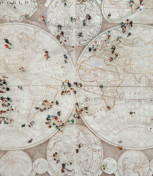
People walking on global map evoke the idea of crossing cultures as we travel through life together. (Image © iStock/ Orbon Alija

We come from everywhere, crossing cultures to build new communities
and enrich each other’s lives.
© Orbon Alija / iStock

Crossing Cultures: A Perspective on Traveling Through Life

Ever since I opened my first “big kid” textbook in third grade, I’ve been fascinated by one of history’s earliest, ongoing events—the ways we the people of Earth are perpetually crossing cultures and coming together again in shared places.

In airports and train stations, the faces of those arriving and departing reflect every emotion—excitement and curiosity, exhaustion and confusion. Meanwhile, we’re all traveling through life.

Alongside the joys and challenges of this journey, we each carry the need for home, a place to come to and people who want us to be there.

People at an airport evoke the metaphor of carrying where you came from with you as you travel through life. (Image © Joyce McGreevy)

Coming or going, rooted or uprooted, we are all traveling through a world we share.
© Joyce McGreevy

Sometimes the place is a country, a state, or a city.  There’s a dance to these shared places that I love, a movement around and with each other that we can witness on any given day.

It’s in the way we share busy crosswalks without colliding, or make room for each other on a crowded subway.  It’s in the way we hold doors for one another, help someone carry a heavy suitcase, or ease a stroller safely over an obstacle.

I see it at times when we’ve absentmindedly left something behind, and someone rushes after us, waving our nearly-lost possession like a flag, relieved to restore it to us. And then? With or without a shared language, we share a smile.

In the back-and-forth of deeper conversations, we share more of where we came from. We reveal our attitudes and values.  We try out new ideas. We solve problems and work through conflicts. We discover, grow, and celebrate.

In such moments, we’re not just traveling through life, we’re traveling together. Without questioning where others come from, we create something important together—a sense of community that carries us all forward.

We All Come from Somewhere

For all of us in this world, life starts on a particular day in a particular place in a particular culture. Then we start that travel through life. Whether we move to Oregon from Texas or come to one country from another, the people and places we encounter add to our lives, expanding and enriching the culture that we came from.

These encounters are a little like a potluck where everybody brings something from their home  and there’s something new for everyone. New tastes, all kinds of food. And the way we share it with each other? That’s called community.

People gathered for a parade reminds the writer that each of us carries where we came from with us and all of us are traveling through life together. (Image © Joyce McGreevy)

We all come from somewhere to gather together in community.
© Joyce McGreevy

What We Carry Together

My extended family is daily created by people who carry where they came from. You wouldn’t guess it to look at just me, but collectively, we carry many languages, including Chinese, Spanish, Turkish, Irish, Hebrew, English, and Italian.

We cover all different faiths and none. We’re straight, gay, we live in big cities, small towns, and rural areas. We agree and disagree on everything from food to music to our perspectives and philosophies.

In short, we’re like many families today.

Factor in our friends, neighbors, and co-workers. Every time we get together, the circle widens. “We’re going to need more chairs!” someone says and somehow we always find enough.

We carry chairs, we carry food. We carry where we came from, the better to share it.

People at a community supper reflect how each of us can make a difference when we share with others. (Image © Joyce McGreevy)

We are better when we share what we carry, when we welcome each other to the table.
© Joyce McGreevy

The Journeys We Share

As humans, where we come from covers a vast array of differences: from our birth years to our personal appearances, from our histories to our hopes, our spoken languages and the unvoiced languages of our dreams—in our cultures and circumstances, our certainties and changes, our traumas and triumphs, our gifts and goals.

As humans, wherever we are, wherever we come from, we have the power to do something truly extraordinary. We can connect across cultures and strengthen each other’s sense of belonging.

Of course, that takes patience.

It takes getting to know one another. Uncrossing our arms and pulling our chairs closer together. Sharing our “travels” and discovering where these journeys of experience connect.  Using our words to welcome, our listening to understand.

A community mural labeled with personal values that cross cultures reflects the idea that "carrying where you came from with you" can make a difference to others. (Image © Joyce McGreevy)

In sharing our differences, we create solidarity through respect.
© Joyce McGreevy

The Essential Difference that Our Differences Make

Something remarkable happens when we say, “Thank goodness you’re here.” It’s an Oh, I see moment: We discover that the combination of our differences is exactly what’s needed for our worthiest endeavors to flourish.

So much is enriched when we carry where we came from and share the wisdom: a community garden, a classroom, a local business, a theater production, a life-saving surgery, an environmental effort, a country that comes closer to its ideals.

In those times, we find ourselves capable of crossing cultures and comfort zones. In those times, our differences make a positive difference together.

“Welcome,” our actions say. “Pull up a chair, there’s room for everyone at the table.”

In those times, wherever we come from, whatever we carry, we’re traveling through life together. In those times, we’re creating a shared place called home.

Comment on the post below. 

Summer Like a Local

by Joyce McGreevy on July 8, 2019

Public street art on Rue St-Famille, Montréal reflects the everyday pleasure of exploring the urban culture. (Image © Joyce McGreevy)

Wandering leads to discovery in Montréal. Murals enliven every neighborhood.
© Joyce McGreevy

The Widespread Pleasures of Montréal’s Urban Culture

No wonder jazz is a top attraction for visitors to Montréal. The largest city in eastern Canada doesn’t just reflect urban culture, it riffs on it, reinterpreting it in endless variations.

Since visiting Montréal as a child, I’ve returned numerous times, always encountering new layers to its creative nature.

Most first-time visitors stay within a compact area around the Vieux-Port (Old Port), where  cobblestone streets and picturesque buildings date to the 17th century.  Charming though it is, visiting in peak season can give  the impression that all 10 million annual visitors have shown up at once.

That’s why I encourage you to explore beyond the core. Oh, I see: Montréal’s summertime pleasures are generously sprinkled all over the city.

A zip line and Ferris wheel in Montréal suggest that slowing down and broadening your focus are additional ways to explore the urban culture. (Image © Joyce McGreevy)

Sure, zip around the Old Port, but broaden your circle, too.
© Joyce McGreevy

Here are five ways to celebrate Montréal’s urban culture. Eco-friendly, art-loving, and community-minded, they’ll make you feel right at home.

1. Do your reading in the park.

In many cities, cooling off on a summer’s day means cranking up the A/C. Montréalers keep cool by heading to the nearest green space. With 19 major parks and over 1,300 green squares, you won’t need a map to find one.

A park in Montréal reflects the everyday pleasure of exploring the urban culture. (Image © Joyce McGreevy)

Montréal is on track to increase its canopy cover to 25% by 2025.
© Joyce McGreevy

Montréalers’ love of green spaces was formalized in 1874 when Mount Royal became the first protected area in Québec. The design gig for Parc Mont-Royal went to Frederick Law Olmsted, who also designed the grounds of New York’s Central Park.

Now Montréal’s green space is on the verge of another growth spurt. Over the next three years, the city will build its largest park yet—four times the size of Parc Mont-Royal—on the urban island’s western tip.

A woman walking and a corner grocery reflect the everyday pleasures of exploring Montréal’s urban culture. (Image © Joyce McGreevy)

To shop like a local, buy only what you can carry, cook, and picnic on over 1-2 days.
© Joyce McGreevy

2. Hop to the shop, car-free.

With a dépanneur on virtually every block, shopping for food on foot is easy.  Come spring, Montréal’s oldest public markets take off their “winter coats.” Down come the walls that shelter shoppers from 82 inches of annual snowfall.

The Marché Jean-Talon suggests the everyday pleasure of shopping for Québécois products and exploring Montréal’s urban culture. (Image © Joyce McGreevy)

Marché Jean-Talon has fed Montréal families since 1933.
© Joyce McGreevy

Which market should you choose, Marché Jean-Talon or Atwater Market? Both—and don’t overlook Marché Maisonneuve:

  • Atwater Market: The tall clock tower makes it a cinch for newcomers to find, and you can work off that maple sugar pie with a run along the Lachine Canal.
  • Marché Maisonneuve: Test your French fluency, marvel at the 1910 Beaux-Arts building that started it all, and test-ride a self-driving shuttle to Montréal’s Olympic Stadium.
  • Marché Jean-Talon: Explore the neighborhood known locally as Petite-Italie.
 An Italian café in Petite-Italie reflects the everyday pleasure of exploring Montréal’s urban culture. (Image © Joyce McGreevy)

After all that grocery-shopping, you’ll surely need a treat in Little Italy.
© Joyce McGreevy

Don’t make a list. Just wander among artful displays of Québécois produce, charcuterie, wheels of cheese, fresh oysters from the Bay of Gaspé, handmade ices, fresh flowers, herbs, and more.

 3. Meet the neighbors.

Whatever your language, it’s easy to meet the neighbors in Montréal. I’ve enjoyed conversations in cafés, bookstores, the Segal Center Theatre, a local swimming pool, and while sitting on the curb of Rue St-Denis waiting for a parade to begin.

Even a short stroll can lead to memorable meet-and-greets. Last Saturday I went out for a newspaper. Two blocks later, I was dancing at a neighborhood barbecue. As for Sunday, I’m unlikely to forget meeting Antoine:

Circus artist Antoine Carabinier shows his sense of humor, another reminder of the fun of exploring Montréal’s urban culture. (Image © Joyce McGreevy)

Better known for balancing on the Russian bar in his family’s Cirque Alfonse,
Antoine Carabinier makes a genial barmaid at a Montréal street festival.
© Joyce McGreevy

4. Join the circus.

Every year, visitors flock to Montréal’s Jazz Festival, Cirque du Soleil, the “Just for Laughs” Comedy Festival, and other hot-ticket events.

No ticket? No worries.

Montréal’s creativity spills onto neighborhood streets, spreads across parks, and splashes across walls.  Every summer, the roving Repercussion Theatre makes Shakespeare-in-the-Park accessible to all. Murals have a festival of their own. Meanwhile, Montréal Complètement Cirque scatters magic all around the city.

A circus artist performs for an audience on the Rue Maisonneuve, embodying the festive side of Montréal’s urban culture. (Image © Joyce McGreevy)

A graduate from Montreal’s École Nationale de Cirque runs rings around his audience.
© Joyce McGreevy

5. Debate a local hot topic.

Montréalers have strong opinions about which is better, Fairmount Bagel or St-Viateur Bagel. Thus, it behooves you to “research” both.

But don’t just grab and gobble. Savor the “hole” truth with a lesson from local baker Will Paquet. As my Toronto classmates agree, his bagel-baking class is enriched by culinary science, seeded with local tips, and leavened with humor.

Bagel baker Will Paquet describes an everyday culinary pleasure of Montréal’s urban culture. (Image © Joyce McGreevy)

Paquet’s not out to “schmear” NY bagels, just passionate about Montréal methods.
© Joyce McGreevy

As Paquet guides us through the steps, we learn what makes Montréal bagels distinctive. Smaller and thinner than NY bagels, and with a faster transition between proofing and kneading, they are hand-rolled and poached in honey-water. Unlike NY bagels, they’re also flipped halfway through the baking.

Traditionally, Montréal bagels were baked in a wood-fired oven, but the city is phasing this out for environmental reasons. Even so, under Paquet’s tutelage the results are thrilling—a toothsome crunch followed by soul-transporting, soft-as-a-cloud sweetness.

Bagels in various stage of preparation evoke an everyday culinary pleasure of Montréal’s urban culture. (Image © Joyce McGreevy)

Making bagels delivers a taste of Montréal’s urban culture.
© Joyce McGreevy

To buy bagels like a local, says Paquet, order “Sesame, still warm,” consume your bagel within 30 minutes, and don’t bury it under a mound of sandwich fillers. In Montréal, the bagel itself is the star, not the stage.

Extend your urban boundaries

This 377-year old city embraces over two dozen neighborhoods, each with its own personality, flavors, and festivities. Factor in Canadian friendliness, convenient public transport, and a summer sun that stays up late, and you’ve got the perfect excuse to get neighborly with Montréal’s urban culture.

Learn more about Will Paquet’s bagel-making classes here.

Comment on the post below, or inspire insight with your own OIC Moment here.

Everyday Aha Moments in Italy

by Joyce McGreevy on January 21, 2019

Santa Croce and passing trucks in Florence inspire an aha moment about everyday Italian rituals. (Image © Joyce McGreevy)

Santa Croce inspires. So do the delivery-truck drivers on their daily predawn rounds.
© Joyce McGreevy

Discovering Beauty in Life’s Little Rituals

It’s no revelation to say that icons of awe-inspiring beauty are everywhere in Florence. For some visitors,  the rarified aha moments induced by a surfeit of grandeur can even become physically overwhelming.

But as Italian psychologist Piero Ferrucci writes, we can also “discover [beauty] in everyday life: a song heard on the street, a crumbling old wall, the reflections in a puddle.”

The Arno at sunset in Florence Italy inspires an aha moment about life’s little rituals. (Image © Joyce McGreevy)

A walk along the Arno at sunset is glorious, but . . .
© Joyce McGreevy

A little dog and its human in Florence, Italy reflect the piaceri piccoli (small pleasures) of everyday life. (Image © Joyce McGreevy)

. . . a walk home from the local grocery can also be good for the soul.
© Joyce McGreevy

These are the piaceri piccoli, small pleasures, the everyday aha moments that balance “the exasperating vicissitudes of daily life.” My piaceri piccoli include everyday Italian rituals. Come, I’ll show you.

Let us begin at the end, on an evening when the sky exhibits a variety of blues, like someone choosing among silk scarves. Imagine you are returning from work, expecting to open the door, toss the key, and turn on the news.

Not So Fast—This is Florence

The towering double doors, i portoni, conceal a smaller door, una porta. Extract the proper key, enter the vestibule, and pause to admire the wrought-iron cancello, or gate.

An exterior and interioA portone (grand door) seen from both sides inspires an aha moment about the small pleasures of everyday life in Florence, Italy. (Image © Joyce McGreevy)

Now you see it, now you don’t: the porta within the portone.
© Joyce McGreevy

It is a sentinel, this cancello. One passes around it, not through, by means of swinging doors. Spingere, says the first door. Tirare, replies the next. This means only “Push, Pull.” But the joy-inducing rhythm makes your mind sing Spingere, tirare. Girare è volare! “Push, pull. To turn is to fly!”

A cancello, or wrought-iron gate in Florence Italy inspires an aha moment about small pleasures and life's little rituals. (Image © Joyce McGreevy)

Cancello (Italian) and cancel (English) share a common origin. To cancel written text,
one crossed it with a latticework of lines.
© Joyce McGreevy

Now you are in the cortile, a courtyard, where an advisor to Anna di Medici once walked. The apartment complex was formerly one magnificent home, and its beauty includes ancient frescoes. Just as beautiful is how the layout guides you to take steps mindfully.

If you are laden with groceries from Mercato Sant’Ambrogio, a second key opens the narrow elevator. If not, insert a third key into the next cancello. It opens with a satisfying pop.

Press a button to light the lantern. Then mount stone steps that bear the imprint of centuries. At your apartment, brass lions guard the door. Never mind that Florence is one of the safest cities in the world.

A post box and a door knocker in Florence Italy inspire an aha moment about the small pleasures of life's little rituals. (Image © Joyce McGreevy)

Everyday rituals: it’s not what you do, it’s the way that you do it.
© Joyce McGreevy

Extract two more keys. The lock that lifts an interior metal bar likes to challenge you. When you succeed in turning it, it spits the key upon the floor to keep you humble. The smaller lock is kindly and ushers you in to coziness.

Life’s little ritual of homecoming is now complete. Sei qui—you are here. The world of offices and schedules, traffic and to-do lists is there. And there it stays.

A fresco inspires an aha moment about the pleasures of everyday life in Florence, Italy. (Image © Joyce McGreevy)

There’s beauty in the rituals of accomplishment (above), but also
in the rituals of learning one’s craft (below).
© Joyce McGreevy

A young man sketching as a boy looks on inspires an aha moment about everyday Italian rituals in Florence. (Image © Joyce McGreevy)

© Joyce McGreevy

The Daily Dance of Adaptation

A change of environment disrupts our automatic routines. Our response reveals whether we feel invited—or put upon—to try something new. Says Ferrucci, “We can proceed according to the planned itinerary, strenuously trying to make life conform to our expectations, or we can adapt to whatever we meet, and flow without effort.”

Oh, I see: Everyday Italian rituals shed light on life’s little rituals in our own localities. They make us more attentive to the piaceri piccoli that punctuate a day.

Via de' Tornabuoni, Firenze festooned in gold decorations inspires an aha moments Italian rituals of celebration. (Image © Joyce McGreevy)

There’s beauty in our special occasions (above, Via de’ Tornabuoni), but also
in our times of solitary effort (below, Via del Moro).
© Joyce McGreevy

A man cleaning a restaurant kitchen in Florence, Italy inspires an aha moment about life's little rituals. (Image © Joyce McGreevy)

© Joyce McGreevy

The Choreography of Chores

Emptying the spazzatura has its rituals. (Yes, even “garbage” becomes beautiful in Italian.) You sort the spazzatura by type, then deliver each type to the correct municipal cassonétto. (That’s Italy’s poetic upgrade for “dumpster.”)

This takes time, because leaving the apartment for anything less than a fire means putting on polished boots, a colorful scarf, and gloves di buona qualità. The sporting element kicks in as you arrive at the receptacles. Let the games begin!

  • Don’t let the bin’s exterior muss your clothing, because to be Florentine is to be impeccable.
  • Do protect your posterior from  vehicles rushing by like the Arno at flood tide. To be Florentine means appreciating life, and it helps if one is alive to do so.
  • Urrah! Celebrate with another Italian ritual, la passegiata, the walk taken for pleasure, always at evening.
A woman taking out the garbage in Florence, Italy inspires an aha moment about everyday life and life's little rituals. (Image © Victoria Lyons)

Taking out the garbage in Firenze is a satisfying ritual for the street-smart.
© Victoria Lyons

All in Good Time

Other everyday Italian rituals have their timing, too: Drinking cappuccino before 10:30am only.  Knowing when to cede the narrow sidewalk to a fellow pedestrian. Anticipating when they’ll courteously jump off the curb for you. Stowing away cellphones to enjoy the pleasure of conversation.

Even sneezing involves ritual. In Italy, the proper response is: Felicità! “Happiness!”

“If we live in the here and now,” says Ferrucci, “each moment is a surprise, every instant a new wonder.”

Aha Moments at the Laundromat

A laundromat in Florence, Italy inspires an aha moment about everyday life and life's little rituals. (Image © Joyce McGreevy)

While not the storied “room with a view,” a laundromat offers you
the pleasure of Italian conversations with your neighbors.
© Joyce McGreevy

It’s true, even at the lavanderia, where you help each other fold double sheets and discuss the weather and the books you’ve brought. But what about the sockless teenage customers, who pass the time hunched over video games, or elbowing each other and chortling at in-jokes?

Each time somebody enters or departs—no matter who they are—the boys pause, look up, and say Buongiorno or Ciao.

And there it is, the aha moment in an everyday Italian ritual: Acknowledging one another is essential. In this city of awe-inspiring art and grandeur, life’s little rituals reveal the true beauty of Florence.

The Calvacata, an annual procession in Florence Italy, inspires an aha moment about Italian celebrations and everyday life. (Image © Joyce McGreevy)

Our rituals honor grand epochs (above, Piazza della Repubblica)
and everyday aha moments (below, Lungarno delle Grazie).
© Joyce McGreevy

Shadows of passersby across a foyer in Florence, Italy inspire an aha moment about small pleasures and life's little rituals. (Image © Joyce McGreevy)

© Joyce McGreevy

Explore Piero Ferrucci’s lyrical analyses of the human condition here.

Comment on the post below, or inspire insight with your own OIC Moment here.

Copyright © 2011-2025 OIC Books   |   All Rights Reserved   |   Privacy Policy