Oh, I see! moments
Travel Cultures Language

What IS That Thing?

by Meredith Mullins on July 29, 2019

It’s beautiful . . . but what IS that thing?
© Meredith Mullins

The Nyckelharpa: Rooted in Swedish Cultural Traditions

On Olov Johansson’s first journey to America, he remembers clearly that he stared into the eyes of wildness.

The Swedish musician was on his way to teach in a music camp in Mendocino— winding his way on a dusty, dark, dirt road in the California hills.

Suddenly the driver stopped the car. A mountain lion was commanding the center of the road.

Caught in the headlights, the animal stared curiously into the car for what seemed like, on this moonless night, a very long time.

“What IS that?” the mountain lion wondered.
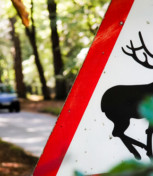
© iStock/Ben Masters

Olov was certain that it was because the creature had never seen a nyckelharpist before. (In fact, surprisingly few people—or animals—have ever encountered a nyckelharpa.)

The mountain lion held his gaze into the car until, as Olov tells it, he had mentally checked off the nyckelharpa box. Then he wandered away, presumably to the next thing on his bucket list.

Olav Johansson with his nyckelharpa, showing the cultural traditions of Sweden. (Image © Sarah Thorén.)

Olov Johansson
© Sarah Thorén

The Art of Introducing the Nyckelharpa

Olov is a nyckelharpist—one of the contemporary Swedish masters of this medieval stringed instrument.

The instrument is not yet well known, as it is deeply rooted in Swedish cultural traditions. Only within the last 40 years has it become better known outside of Sweden.

Artistry and craftsmanship at its best
© Meredith Mullins

Olov brought the nyckelharpa to this year’s summer Bach Festival in Carmel, California, performing in two concerts featuring Nordic music.

At each event, even with a musically sophisticated audience, the phrase of the moment was “What IS that thing?”

Olov says that response is common. His band, Väsen, calls it the five-legged dog syndrome. They even thought of naming one of their tours the “What is that thing?” tour.

Oh, I see. Sometimes instruments steeped in local tradition take time to reach the rest of the world.

A 1350 stone carving of the nyckelharpa at the Källunge Church in Gotland, Sweden
© Olov Johansson

Cultural Traditions

The nyckelharpa story begins in the Uppland region of Sweden. The folk instrument is even pictured in a stone carving from 1350 on the Källunge Church in Gotland and in a painting from 1498 in a church outside of Uppsala.

Other early pictures have been found in countries outside of Sweden, but historians seem to agree that the instrument’s heritage is in Uppland. Nyckelharpas have been played and built in this region for the past 300 years.

The instrument was a central part of the dances, celebrations, and ceremonies, especially the Midsummer Festival.

Its lilting music was an integral part of the popular polska dances in the late 1600s and early 1700s, a tradition that continues into today’s Sweden.

Traditional dancing to the nyckelharpa at the Midsummer Festival in Sweden
© iStock/Falun

Careful Crafting Makes for Beautiful Music

This odd looking folk instrument has many names besides nyckelharpa. The simple name is keyed fiddle— to give people a visual clue— (or, literally translated, key harp).

The body of the instrument is made of spruce wood, often with fast and slow growing trees for different parts of the body (for softer and harder wood). The keys are made of birch, and the sides and pegs are maple. Each type of wood provides special characteristics for the sound and for the performance of the instrument.

Swedish spruce, birch, and maple are used in the construction of the nyckelharpa.
© Meredith Mullins

There are also sympathetic strings, which resonate when their melody string is played. The same frequency vibrates in the bridge, and the sympathetic strings say “Hey, that’s me. I’ll join in.” This provides a resonance or reverberation that makes the nyckelharpa sound unique.

The keys, played with the left hand, operate like the frets of a guitar to change the pitch of the melody strings.

The keys change the pitch of the melody strings.
© Meredith Mullins

A Nyckelharpa World Champion

So, how does a young musician get interested in playing such an unlikely instrument?

For Olov Johansson, it was the clever work of a musical family. Everyone was a musician. “Family gatherings always turned into jam sessions,” Olov remembers.

When his uncle, a nyckelharpa player, had to go to the hospital for surgery, he loaned his nyckelharpa to the Johansson household. Shortly thereafter, a permanent nyckelharpa became part of the family. Olov was 14, but he knew he had found his instrument.

In 1990, the first Nyckelharpa World Championship took place in Sweden, and Olov was invited to compete. He was young and not favored to win, but the jury was awed by his talent. He became the first World Champion Nyckelharpa Player.

At the same time, his band Väsen was becoming known. It was a good start to his musical dream.

The band Väsen, Swedish folk musicians integrating modern with traditional
© Sarah Thorén

Another chapter in that dream was to find the best nyckelharpa sound.

Olov had worked in a nyckelharpa museum and had been able to play many of the historic instruments, studying what specific designs and materials worked best.

He made drawings, did research, and ultimately requested the “perfect” instrument from an expert maker in the region, Esbjörn Hogmark.

The sympathetic strings vibrate when their melody string is played.
© Meredith Mullins

Esbjörn rose to the challenge, even selecting and chopping the trees himself for the wood and creating a prototype first to make sure the design fit Olov’s body, hands, and playing style.

The new nyckelharpa takes “the best of old knowledge and traditional design together with function, modern ideas, needs, and desires,” says Olov.

He was very moved when it was completed and presented to him. Inside, there was a tiny note that said it was a gift for his 50th birthday.

The birthday note stays inside the nyckelharpa as a reminder of the maker’s generosity and talent.
© Meredith Mullins

The Importance of Music

Music is an important part of any culture. It tells the story of a place in a way that can be understood universally. Listening to the music of a country or a region or a city forges a connection that resonates within.

Because music is so universal, it is rare that an instrument and its origins are connected strongly to one country.

The bagpipes are part of Scottish culture. The harp is part of Irish culture. The balalaika is part of Russian culture.  And the nyckelharpa is part of Swedish culture.

What countries have their own “national” instrument?
© iStock/Maria Avvakumova

Even though there is little debate about the nyckelharpa’s cultural traditions, it is difficult to describe its personality.

Some say its sound is haunting and celebratory at the same time. Some say it merges the past and the future.

For me, there is a Celtic feeling, with a touch of bluegrass, blending distant cultures in a modern way.

Olov says the timbre is bright and deep at the same time. The nyckelharpa has a wide sound . . . that reaches out, as if you are playing in a cathedral (when it’s in tune, he jokes).

But, most of all, especially if you are in Uppland, it sounds like Sweden.

Listen . . . and decide for yourself.

If video does not display, watch it here.

For further information, visit he websites of Olov Johansson, Väsen, the Bach Festival, and the American Nyckelharpa Association.

Comment on this post below, or inspire insight with your own OIC Moment here.


Carry Where You Came From With You

by Joyce McGreevy on July 23, 2019

People walking on global map evoke the idea of crossing cultures as we travel through life together. (Image © iStock/ Orbon Alija

We come from everywhere, crossing cultures to build new communities
and enrich each other’s lives.
© Orbon Alija / iStock

Crossing Cultures: A Perspective on Traveling Through Life

Ever since I opened my first “big kid” textbook in third grade, I’ve been fascinated by one of history’s earliest, ongoing events—the ways we the people of Earth are perpetually crossing cultures and coming together again in shared places.

In airports and train stations, the faces of those arriving and departing reflect every emotion—excitement and curiosity, exhaustion and confusion. Meanwhile, we’re all traveling through life.

Alongside the joys and challenges of this journey, we each carry the need for home, a place to come to and people who want us to be there.

People at an airport evoke the metaphor of carrying where you came from with you as you travel through life. (Image © Joyce McGreevy)

Coming or going, rooted or uprooted, we are all traveling through a world we share.
© Joyce McGreevy

Sometimes the place is a country, a state, or a city.  There’s a dance to these shared places that I love, a movement around and with each other that we can witness on any given day.

It’s in the way we share busy crosswalks without colliding, or make room for each other on a crowded subway.  It’s in the way we hold doors for one another, help someone carry a heavy suitcase, or ease a stroller safely over an obstacle.

I see it at times when we’ve absentmindedly left something behind, and someone rushes after us, waving our nearly-lost possession like a flag, relieved to restore it to us. And then? With or without a shared language, we share a smile.

In the back-and-forth of deeper conversations, we share more of where we came from. We reveal our attitudes and values.  We try out new ideas. We solve problems and work through conflicts. We discover, grow, and celebrate.

In such moments, we’re not just traveling through life, we’re traveling together. Without questioning where others come from, we create something important together—a sense of community that carries us all forward.

We All Come from Somewhere

For all of us in this world, life starts on a particular day in a particular place in a particular culture. Then we start that travel through life. Whether we move to Oregon from Texas or come to one country from another, the people and places we encounter add to our lives, expanding and enriching the culture that we came from.

These encounters are a little like a potluck where everybody brings something from their home  and there’s something new for everyone. New tastes, all kinds of food. And the way we share it with each other? That’s called community.

People gathered for a parade reminds the writer that each of us carries where we came from with us and all of us are traveling through life together. (Image © Joyce McGreevy)

We all come from somewhere to gather together in community.
© Joyce McGreevy

What We Carry Together

My extended family is daily created by people who carry where they came from. You wouldn’t guess it to look at just me, but collectively, we carry many languages, including Chinese, Spanish, Turkish, Irish, Hebrew, English, and Italian.

We cover all different faiths and none. We’re straight, gay, we live in big cities, small towns, and rural areas. We agree and disagree on everything from food to music to our perspectives and philosophies.

In short, we’re like many families today.

Factor in our friends, neighbors, and co-workers. Every time we get together, the circle widens. “We’re going to need more chairs!” someone says and somehow we always find enough.

We carry chairs, we carry food. We carry where we came from, the better to share it.

People at a community supper reflect how each of us can make a difference when we share with others. (Image © Joyce McGreevy)

We are better when we share what we carry, when we welcome each other to the table.
© Joyce McGreevy

The Journeys We Share

As humans, where we come from covers a vast array of differences: from our birth years to our personal appearances, from our histories to our hopes, our spoken languages and the unvoiced languages of our dreams—in our cultures and circumstances, our certainties and changes, our traumas and triumphs, our gifts and goals.

As humans, wherever we are, wherever we come from, we have the power to do something truly extraordinary. We can connect across cultures and strengthen each other’s sense of belonging.

Of course, that takes patience.

It takes getting to know one another. Uncrossing our arms and pulling our chairs closer together. Sharing our “travels” and discovering where these journeys of experience connect.  Using our words to welcome, our listening to understand.

A community mural labeled with personal values that cross cultures reflects the idea that "carrying where you came from with you" can make a difference to others. (Image © Joyce McGreevy)

In sharing our differences, we create solidarity through respect.
© Joyce McGreevy

The Essential Difference that Our Differences Make

Something remarkable happens when we say, “Thank goodness you’re here.” It’s an Oh, I see moment: We discover that the combination of our differences is exactly what’s needed for our worthiest endeavors to flourish.

So much is enriched when we carry where we came from and share the wisdom: a community garden, a classroom, a local business, a theater production, a life-saving surgery, an environmental effort, a country that comes closer to its ideals.

In those times, we find ourselves capable of crossing cultures and comfort zones. In those times, our differences make a positive difference together.

“Welcome,” our actions say. “Pull up a chair, there’s room for everyone at the table.”

In those times, wherever we come from, whatever we carry, we’re traveling through life together. In those times, we’re creating a shared place called home.

Comment on the post below. 

Cultural Traditions: Kushti Wrestling in India

by Meredith Mullins on July 15, 2019

The ancient art of Kushti wrestling
© Meredith Mullins

An Art “Of the Earth”

If you have run five miles, completed hundreds of pushups and squats, finished a long distance swim, and lifted a few sand bags and giant stones—all before your 6 am training session begins—you might have some of what it takes to become a Kushti wrestler.

You would also have to embrace the idea of showing your strength, endurance, and agility in a mud/clay pit that is the traditional sacred arena of this sport. This is gritty work . . . “of the earth.”

Grace, strength, agility, and endurance: a powerful combination
© Meredith Mullins

And you would, by the way, have to dedicate yourself to a life of discipline and austerity.

Does this sound appealing? Perhaps. Challenging? Definitely.

You would not find these tools at World Wrestling Entertainment (WWE) training.
© Meredith Mullins

The ancient art of Indian wrestling—called Kushti or Pehlwani—is a different approach to wrestling than the images that come to mind in America when “mud wrestling” is mentioned (bikini-clad mudwomen?).

It has more artistry than the WWE vision of superstars like Hulk Hogan or Dwayne “The Rock” Johnson throwing their opponents to the mat with a thud.

Kushti wrestling is about strength, stamina, and agility. But it is also a way of life connected to India’s cultural traditions.

A graceful dance of strength and strategy
© Meredith Mullins

The Philosophy of Kushti Wrestling

For thousands of years, the Kushti training centers in India, called akharas or akhadas, have attracted boys and men from all castes. It is one of the few places where everyone is equal.

Often, the call to be a wrestler is passed down from generation to generation. A boy as young as six can start training.

Early training for children who want a path to a better life
© Meredith Mullins

For some, it is a way out of poverty, a path to becoming a professional wrestler or securing a good job.

For some, it is a way to stay fit and take pride in the power of the body and a life of discipline.

For some, it is a way to pay tribute to the god Hanuman, the god of strength and energy.

The god Hanuman keeps watch over the akhara.
© Meredith Mullins

For all who are in training, it is not an easy life. The training is not just physical, but also requires discipline in all aspects of being. Alcohol, tobacco, drugs, and paan (beetle leaves that have psychoactive properties) are all forbidden.

The Kushti diet is restrictive and protein rich—almonds, milk, eggs, butter, fruit, vegetables, and sometimes mutton (although many wrestlers are vegetarian to further purify the body).

The Kushti diet must be rich in protein to support the physicality of the sport.
© Meredith Mullins

These kinds of foods are also expensive in India, which requires a real commitment from a Kushti wrestler (and often a “day job”).

Although it is not a requirement in the contemporary world of Kushti, most of the wrestlers are celibate, so that they can focus on the training. Many live in monastery-like space at the akharas. A simple life, with sleep at 8 pm.

Kushti training takes many forms.
© Meredith Mullins

The Training

Training begins early with a run, swim, and calisthenics. At the akhara, the training tools look like medieval weapons—all designed to build strength and flexibility.

Weapons or training tools? Only the Kushti wrestler knows for sure.
© Meredith Mullins

The heavy wooden clubs, called mugdars, build arm and shoulder muscles. The gada, a stone attached to a bamboo stick, is also a weapon of the god Hanuman. Although it is a muscle builder as well, it is intimidating just as it is. It can weigh from 10 to 130 pounds.

The gada can weigh up to 130 pounds—a tool that can definitely build upper body strength.
© Meredith Mullins

The nar is a hollow stone with a handle inside that gets lifted like an ancient trophy above the head.

None of these tools would be found in a modern gym, which makes the visual story of the akhara so rich with cultural traditions.

In addition, rope climbing, weightlifting, and work on the parallel bars are all part of the daily routine.

Rope climbing builds upper body strength.
© Meredith Mullins

The Wrestling

The rounds of Kushti in the hallowed pit begin at around 6 am, with wrestlers pairing off in practice rounds of about 25 minutes, under the watchful eye of their guru.

The arena is a spiritual place, and no one but the wrestlers are allowed in. The soil (from the banks of the Ganges) is mixed like a cake with Ayurvedic oils, buttermilk, turmeric, clay, ghee (butter), neem leaf, and red ochre.

The soil needs to be soft enough to avoid injury for the wrestlers.
© Meredith Mullins

Water is added to make sure the soil is soft enough to avoid injury to the wrestlers but gritty enough to give them traction in movement.

For the wrestlers, the soil is sacred. They begin their match by rubbing some on themselves and their opponent as a blessing. It is also thought to have healing properties.

The akhara soil has spiritual and healing powers.
© Meredith Mullins

No hitting, kicking, or slapping is allowed in Kushti. The goal is to take down the opponent and pin his shoulders and hips to the ground. There are no partial points, as in some forms of wrestling. It is all about the pin. Strength. Strategy. Agility. Endurance.

The akhara guru watches to give advice on technique.
© Meredith Mullins

After the morning training, the wrestlers often cool off in the soil and get an all-important body massage from fellow wrestlers or trainees.

A cold water shower after training
© Meredith Mullins

They then wash, brush their teeth with neem branches, and, more often than not, go off to work so that they can continue to support their quest as a modern-day warrior.

Brushing the teeth with neem tree branches
© Meredith Mullins

A Dying Heritage: The Somber “Oh, I See” Moment

Despite the graceful beauty and primal energy of Kushti wrestling—as well as its practice for nearly 3000 years—this art/sport is losing popularity among the young. Contemporary forms of wrestling and modern gyms are gaining ground.

The government also has reduced funding for Kushti akharas. The few remaining training centers are struggling to survive.

A dying heritage?
© Meredith Mullins

The spirituality and grace of Kushti raise it to levels beyond just a sport. It is a mysterious, unintentionally sensual dance, punctuated with feats of strength.

It is a way of life that incorporates mind, body, and spirit in the best possible way.

Guru Jwala Tiwari of the Siyaram Akhara
© Meredith Mullins

It is national heritage . . . on the brink of being lost forever.

I, for one, am hopeful that this cultural tradition lives on.

Thank you to Guru Jwala Tiwari of the Siyaram Akhara at Mullick Ghat in Kolkata and the gurus of the Cotton Street Akhara in Kolkata.

Comment on this post below, or inspire insight with your own OIC Moment here.  

Copyright © 2011-2025 OIC Books   |   All Rights Reserved   |   Privacy Policy