Oh, I see! moments
Travel Cultures Language

Culture Smart: How Do I Love Thee in French?

by Sheron Long on September 15, 2013

Girl playing daisy love game that varies across different cultures

Looking for answers in the daisy love game

Daisy Love Game in Different Cultures

In the USA, when wondering about the chance of love, people pull petals and alternate outcomes: He loves me. / He loves me not. It’s not that clear-cut in France, where the choices are recited like this:

Il m’aime un peu,               He loves me a little, 

beaucoup,                           a lot,

passionnément,                passionately,

à la folie,                           madly,

pas du tout!                      not at all!

Clearly, different cultures come at the language of love in different ways. Personally, I like the odds in France better—only 20% chance of no love at all!

Daisy

See how much French you may already know in this post on Bilingual Brain Power. For free French language learning resources, visit Français Interactif and Bonjour de France.

Comment on this post below. 

Image © iStockphoto

Aha Moment Maker: The Potato Chips Are Down

by Your friends at OIC on September 14, 2013

Angry chef illustrating the birth of the potato chip, an opportunity for readers to have their own aha moment

SARATOGA SPRINGS, 1853—Hotel chef George Crum was just trying to get through another dinner service at Moon’s Lake House. But a cranky guest kept sending back plate after plate of Crum’s fried potatoes, insisting that they were too thick, too soggy, and too bland. As an insult, the chef sliced the next batch paper-thin, fried them until they were brittle, and purposely over-salted.

Cultural Heritage Below the Water Line

by Sheron Long on September 12, 2013

An iceberg above and below the water line, serving as a metaphor for the cultural iceberg in which the visible tip of surface culture belies the "deep culture" vastness hidden below the surface.

Culture is like an iceberg where the visible tip belies the vastness hidden below the surface.

What’s a Cultural Iceberg?

The culture or cultures you grow up in affect your deepest attitudes and beliefs, giving you your sense of what’s good or right, what feels comfortable, what behavior is acceptable, and conversely what’s not. What other people see may be only those things “on the surface”—for example, the way you talk or act, what you eat and how you dress.

That’s why culture is often represented as an iceberg. Ten percent is the “surface culture” that shows above the water line and 90%, known as “deep culture, ” is hidden below.

The Cultural Iceberg, showing aspects of surface culture and deep culture that stem from your cultural heritage. (Image © OIC Books)

The attitudes and beliefs in deep culture affect what shows on the surface.
© OIC Books

The hidden part of the iceberg influences everything you do and yet you may not even realize it. Ask yourself, for example, “Does it feel right when things come in threes or fours?

The Rule of 3

If you are from western cultures, the threes probably have it:

  • You get three wishes.
  • The third time’s the charm.
  • Speeches are written to make three points.
  • Favorite characters in fairy tales and songs come in threes—the three little pigs, the three blind mice.
  • Races start with “Get ready. Get set. Go!” Slogans are more memorable to westerners when they’re in threes: “Snap! Crackle! Pop!”

The Significance of 4

To native peoples of the Americas, however, the natural world matters most. There is sacred significance in the Four Directions—North, South, East, and West, and the number four is culturally ingrained:

  • The medicine wheel used for health and healing is divided into the Four Directions.
  • Things come in fours, such as the elements of nature (fire, air, water, earth) or aspects of life (spiritual, emotional, intellectual, physical).
  • Many native legends and creation myths, passed from generation to generation, tell of four brothers or four winds or four ancestors.
  • In ceremonies, the number four and its multiples figure prominently. For example, historical records and accounts show that, in the initiation ceremony of the Chipeway magicians, candidates entered a lodge of four poles where four stones lay before the fire. They stayed there for four days and participated in four feasts.

Comfort based on certain numbers is just one of countless ways that cultural heritage influences your approach to daily life.

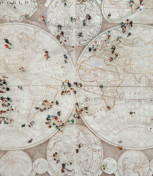
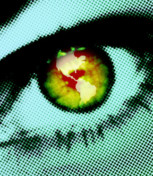
Globes showing different cultures with diverse cultural heritage

Look into the “deep culture” part of the cultural iceberg above and find some attitudes and beliefs you hold. How do these aspects of your cultural heritage affect what you do “on the surface”? For example:

  • Consider your concept of time and how it affects when you arrive at appointments and events.
  • How prompt do you feel you have to be to be considered on time?
  • Would people from other cultures agree?

Try a few more examples. Did anything make you say, “Oh, I see”?

Comment on this post below.

Image © iStockphoto

Copyright © 2011-2025 OIC Books   |   All Rights Reserved   |   Privacy Policy