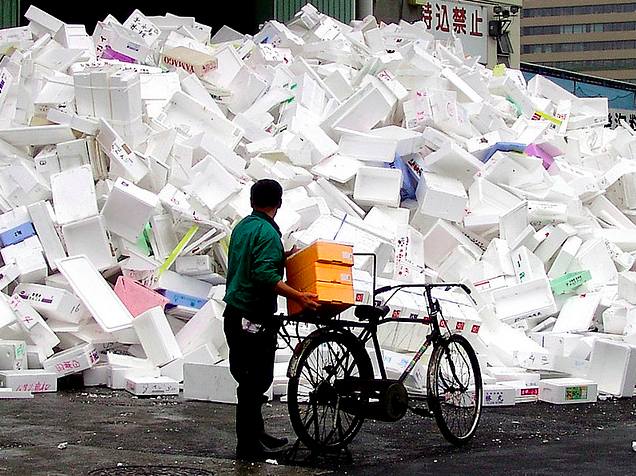
<div id="attachment_9544" style="width: 646px" class="wp-caption aligncenter"><img loading="lazy" decoding="async" aria-describedby="caption-attachment-9544" class="size-full wp-image-9544  " alt="pile of Styrofoam outside the Tokyo Fish Market, showing the need for innovative ideas to create plastic alternatives" src="https://www.oh-i-see.com/blog/wp-content/uploads/2013/06/Screen-Shot-2013-06-13-at-8.31.35-PM.png" width="636" height="476" srcset="https://www.oh-i-see.com/blog/wp-content/uploads/2013/06/Screen-Shot-2013-06-13-at-8.31.35-PM.png 636w, https://www.oh-i-see.com/blog/wp-content/uploads/2013/06/Screen-Shot-2013-06-13-at-8.31.35-PM-300x224.png 300w, https://www.oh-i-see.com/blog/wp-content/uploads/2013/06/Screen-Shot-2013-06-13-at-8.31.35-PM-207x154.png 207w" sizes="auto, (max-width: 636px) 100vw, 636px" /><p id="caption-attachment-9544" class="wp-caption-text">Pile of discarded polystyrene outside the Tokyo Fish Market<br />© <span style="text-decoration: underline; color: #0000ff;"><span style="color: #0000ff; text-decoration: underline;"><a href="http://www.flickr.com/photos/25508895@N00/191259946/in/set-72157594183106906/" target="_blank" rel="noopener">Daniel Calonge</a></span></span></p></div>
<h2>Innovative Ideas for Biodegradable Plastic</h2>
<p>Our world has become dependent on plastic. It&#8217;s in my toothbrush, my shoes, my sunglasses, and even the keys I type on.</p>
<p>And it won&#8217;t go away.</p>
<p>For decades, plastic has been made from petroleum, and, once formed into a plastic cup, packing material, grocery bag, or toothbrush, the plastic is here to stay.</p>
<p>Lucky bits of plastic may get recycled into new products, but no matter its shape, petroleum-based plastic does not biodegrade. That means, in some form, that plastic will be on this planet long after every single one of us reading this post is gone.</p>
<p>In addition, according to the <a href="http://www.alphagalileo.org/ViewItem.aspx?ItemId=126542&amp;CultureCode=en" target="_blank" rel="noopener">Technical Research Center of Finland</a>, petroleum-based plastic annually consumes about 5% of the world&#8217;s oil. And of all the plastics used, about 40% of it goes into packaging.</p>
<p><strong>Oh, I see</strong>&#8212;we can&#8217;t sustain this!</p>
<p>Thankfully, innovators are developing biodegradable plastic alternatives, and they are turning to some surprising sources.</p>
<h4>Fungus</h4>
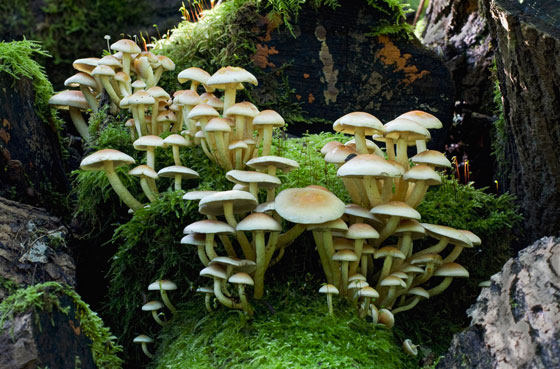
<p>College classmates <a href="http://www.mushroompackaging.com/home/about-us" target="_blank" rel="noopener">Eben Bayer and Gavin McIntyre</a> were fascinated with fungal mycelium, the network of tiny tube-like filaments from which mushrooms grow and get nutrients. They noticed how, when mycelium grows, it is so intertwined that it bonds things together.</p>
<div id="attachment_9542" style="width: 570px" class="wp-caption aligncenter"><img loading="lazy" decoding="async" aria-describedby="caption-attachment-9542" class="size-full wp-image-9542" alt="mushrooms, illustrating a source of innovative ideas for plastic alternatives" src="https://www.oh-i-see.com/blog/wp-content/uploads/2013/06/155039465sized.jpg" width="560" height="369" srcset="https://www.oh-i-see.com/blog/wp-content/uploads/2013/06/155039465sized.jpg 560w, https://www.oh-i-see.com/blog/wp-content/uploads/2013/06/155039465sized-300x197.jpg 300w, https://www.oh-i-see.com/blog/wp-content/uploads/2013/06/155039465sized-207x136.jpg 207w" sizes="auto, (max-width: 560px) 100vw, 560px" /><p id="caption-attachment-9542" class="wp-caption-text">Networks of mushroom filaments called mycelium help decompose plant materials.<br />© Thinkstock</p></div>
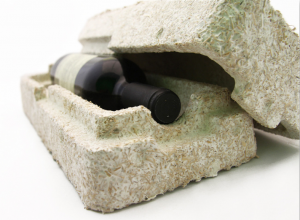
<p>Now several years later, their company, Ecovative Designs, develops packaging materials with mycelium.</p>
<div id="attachment_9584" style="width: 310px" class="wp-caption alignright"><img loading="lazy" decoding="async" aria-describedby="caption-attachment-9584" class="size-medium wp-image-9584" alt="mushroom packaging, illustrating innovative ideas for plastic alternatives" src="https://www.oh-i-see.com/blog/wp-content/uploads/2013/06/Screen-Shot-2013-06-13-at-9.53.22-PM-300x220.png" width="300" height="220" srcset="https://www.oh-i-see.com/blog/wp-content/uploads/2013/06/Screen-Shot-2013-06-13-at-9.53.22-PM-300x220.png 300w, https://www.oh-i-see.com/blog/wp-content/uploads/2013/06/Screen-Shot-2013-06-13-at-9.53.22-PM-207x152.png 207w, https://www.oh-i-see.com/blog/wp-content/uploads/2013/06/Screen-Shot-2013-06-13-at-9.53.22-PM.png 788w" sizes="auto, (max-width: 300px) 100vw, 300px" /><p id="caption-attachment-9584" class="wp-caption-text">Mushroom packaging<br />© Ecovative</p></div>
<ul>
<li>First they grind up local agricultural waste like stalks and husks.</li>
<li>Then they mix the ground material with water and mycelium and put it into forms, or molds, to shape it.</li>
<li>In five days, the mycelium grows around the waste in the shape of the mold.</li>
<li>Next, they dry out the newly-formed material so it no longer grows.</li>
<li>And then it&#8217;s ready for packing and shipping!</li>
</ul>
<p>This alternative to polystyrene is not only strong and light, but it is fire retardant. And, once the materials have served their purpose, they can be easily composted.</p>
<p>This short documentary tells a bit more of their story.</p>
<p><iframe loading="lazy" title="Grow | Vladimir Druts" src="https://player.vimeo.com/video/51884523?dnt=1&amp;app_id=122963" width="560" height="315" frameborder="0" allow="autoplay; fullscreen; picture-in-picture; clipboard-write"></iframe></p>
<p style="text-align: center;"><em>If the video does not display, watch it <a href="http://vimeo.com/51884523" target="_blank" rel="noopener">here</a>.  </em><em>Also, you can see Bayer give a longer TED talk <a href="http://www.ted.com/talks/eben_bayer_are_mushrooms_the_new_plastic.html" target="_blank" rel="noopener">here</a>.</em></p>
<h4>Chicken Feathers</h4>
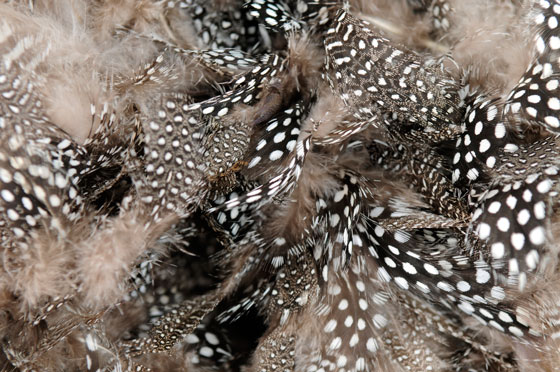
<p>People eat a lot of chicken. One by-product of this, whether we want to think about it or not, is billions of pounds of chicken feathers.</p>
<p>Chicken feathers are made of keratin, just like fingernails, hooves, and hair. And they are strong.</p>
<div id="attachment_9540" style="width: 570px" class="wp-caption aligncenter"><img loading="lazy" decoding="async" aria-describedby="caption-attachment-9540" class="size-full wp-image-9540" alt="chicken feathers, illustrating an innovative idea for plastic alternatives" src="https://www.oh-i-see.com/blog/wp-content/uploads/2013/06/147290106sized.jpg" width="560" height="372" srcset="https://www.oh-i-see.com/blog/wp-content/uploads/2013/06/147290106sized.jpg 560w, https://www.oh-i-see.com/blog/wp-content/uploads/2013/06/147290106sized-300x199.jpg 300w, https://www.oh-i-see.com/blog/wp-content/uploads/2013/06/147290106sized-207x137.jpg 207w" sizes="auto, (max-width: 560px) 100vw, 560px" /><p id="caption-attachment-9540" class="wp-caption-text">Chickens constantly shed their feathers, just like cats and dogs shed fur.<br />© Thinkstock</p></div>
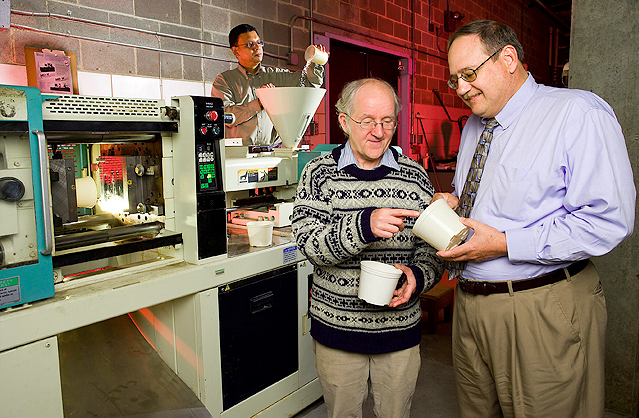
<p>Walter Schmidt has spent decades thinking about how to use those feathers to make useful products.</p>
<p>And one product he&#8217;s been working on is an everyday <a href="http://wamu.org/programs/metro_connection/13/01/11/building_the_next_big_thing_with_chicken_feathers" target="_blank" rel="noopener">biodegradable flowerpot</a>.</p>
<p>How do feathers become flowerpots?</p>
<ul>
<li>First the hard central quill shaft of the feather is separated from the softer fibers.</li>
<li>The fibers are ground into powder and combined with a naturally-occurring polymer.</li>
<li>The resulting combination is then formed into plastic pots.</li>
</ul>
<p>The benefits are many! This chicken-feather plastic is light, can be heated and reshaped, and will not instantly dissolve in water. But it is also strong and biodegradable.</p>
<p>Best of all, the flowerpots can be planted into the ground where they will decompose and provide nutrients for the soil.</p>
<p><a href="http://phys.org/news/2011-04-chicken-feathers-biodegradable-plastic.html" target="_blank" rel="noopener">Schmidt</a> notes, &#8220;Stuff floats around in the ocean [or] is mixed in landfills that stay there for generations. A far better solution is to make less mess in the first place and to have that material naturally recycle in a reasonable amount of time.&#8221;</p>
<div id="attachment_9572" style="width: 649px" class="wp-caption aligncenter"><img loading="lazy" decoding="async" aria-describedby="caption-attachment-9572" class="size-full wp-image-9572  " alt="chicken feather flowerpots, illustrating innovative ideas for plastic alternatives" src="https://www.oh-i-see.com/blog/wp-content/uploads/2013/06/Screen-Shot-2013-06-13-at-10.28.43-PM.png" width="639" height="418" srcset="https://www.oh-i-see.com/blog/wp-content/uploads/2013/06/Screen-Shot-2013-06-13-at-10.28.43-PM.png 639w, https://www.oh-i-see.com/blog/wp-content/uploads/2013/06/Screen-Shot-2013-06-13-at-10.28.43-PM-300x196.png 300w, https://www.oh-i-see.com/blog/wp-content/uploads/2013/06/Screen-Shot-2013-06-13-at-10.28.43-PM-207x135.png 207w" sizes="auto, (max-width: 639px) 100vw, 639px" /><p id="caption-attachment-9572" class="wp-caption-text">Chemist Masud Huda (background), chemist Walter Schmidt (center),<br />and Marc Teffeau, (right), produce biodegradable flowerpots from chicken feathers.<br />Photo by Stephen Ausmus</p></div>
<h4>Tree Resin</h4>
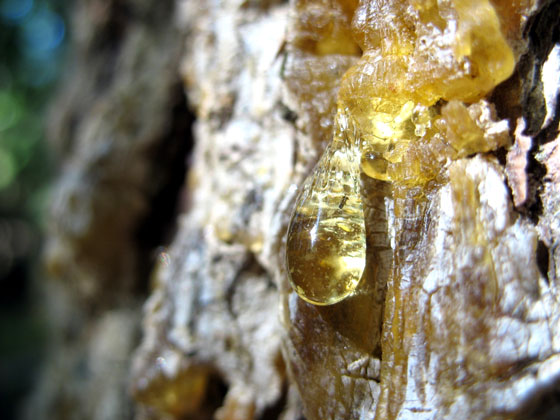
<p><a href="http://www.sc.edu/news/newsarticle.php?nid=5945#.Ublbwvb8mTU" target="_blank" rel="noopener">Chuanbing Tang</a> is turning to the trees for his inspiration. He and his team are experimenting with evergreen tree resin to produce a plastic.</p>
<div id="attachment_9541" style="width: 570px" class="wp-caption aligncenter"><img loading="lazy" decoding="async" aria-describedby="caption-attachment-9541" class="size-full wp-image-9541 " alt="resin, illustrating an innovative idea for potential biodegradable plastic" src="https://www.oh-i-see.com/blog/wp-content/uploads/2013/06/99270147sized.jpg" width="560" height="420" srcset="https://www.oh-i-see.com/blog/wp-content/uploads/2013/06/99270147sized.jpg 560w, https://www.oh-i-see.com/blog/wp-content/uploads/2013/06/99270147sized-300x225.jpg 300w, https://www.oh-i-see.com/blog/wp-content/uploads/2013/06/99270147sized-207x155.jpg 207w" sizes="auto, (max-width: 560px) 100vw, 560px" /><p id="caption-attachment-9541" class="wp-caption-text">When a conifer tree is wounded, it produces liquid resin that hardens and protects the damage.<br />© Thinkstock</p></div>
<p>Resin has been used for ages as a protective seal. Artifacts from ancient Egypt, Greece, and Rome have been found with resin-based finishes. Today, it is used in varnishes and adhesives. But using it to form plastic is a newer idea.</p>
<p>&#8220;Most plastics from non-renewable resources are generally not biodegradable,” Tang said. &#8220;With a polymer framework derived from renewable sources, we’re able to make materials that should break down more readily in the environment.”</p>
<h4>Hope for the Future</h4>
<p><strong>Oh, I see.</strong>  Plastic alternatives, created from mushrooms, feathers, and tree resin, will biodegrade, or break down, making these innovative ideas sustainable.</p>
<p>Sounds like my toothbrush doesn&#8217;t have to be around for my great grandchildren after all.</p>
<p><em>To hear scientist <a href="http://www.fungi.com/about-paul-stamets.html" target="_blank" rel="noopener">Paul Stamets</a> discuss six ways mushrooms can save the world and to see a mycelium network, visit <a href="http://scienceblogs.com/universe/2011/07/17/living-in-a-mycelial-world/" target="_blank" rel="noopener">&#8220;Livin&#8217; in a Mycelia World.&#8221;</a></em></p>
<p><a title="Creative Inspiration Flows In Underwater Photographs" href="#comments">Comment</a><em><em> </em>on this post below, or inspire insight with your own OIC Moment </em><a href="https://www.oh-i-see.com/blog/your-oic-moments/"><em>here</em></a><em>.</em></p>
{"id":9516,"date":"2013-06-17T03:00:38","date_gmt":"2013-06-17T10:00:38","guid":{"rendered":"http:\/\/ohisee.genweb.site\/blog\/?p=9516"},"modified":"2021-07-20T07:46:13","modified_gmt":"2021-07-20T14:46:13","slug":"plastic-alternatives-yep-they-grow-on-trees","status":"publish","type":"post","link":"https:\/\/www.oh-i-see.com\/blog\/plastic-alternatives-yep-they-grow-on-trees\/","title":{"rendered":"Plastic Alternatives&#8212; Yep, They Grow on Trees!"},"content":{"rendered":"<div id=\"attachment_9544\" style=\"width: 646px\" class=\"wp-caption aligncenter\"><img loading=\"lazy\" decoding=\"async\" aria-describedby=\"caption-attachment-9544\" class=\"size-full wp-image-9544  \" alt=\"pile of Styrofoam outside the Tokyo Fish Market, showing the need for innovative ideas to create plastic alternatives\" src=\"https:\/\/www.oh-i-see.com\/blog\/wp-content\/uploads\/2013\/06\/Screen-Shot-2013-06-13-at-8.31.35-PM.png\" width=\"636\" height=\"476\" srcset=\"https:\/\/www.oh-i-see.com\/blog\/wp-content\/uploads\/2013\/06\/Screen-Shot-2013-06-13-at-8.31.35-PM.png 636w, https:\/\/www.oh-i-see.com\/blog\/wp-content\/uploads\/2013\/06\/Screen-Shot-2013-06-13-at-8.31.35-PM-300x224.png 300w, https:\/\/www.oh-i-see.com\/blog\/wp-content\/uploads\/2013\/06\/Screen-Shot-2013-06-13-at-8.31.35-PM-207x154.png 207w\" sizes=\"auto, (max-width: 636px) 100vw, 636px\" \/><p id=\"caption-attachment-9544\" class=\"wp-caption-text\">Pile of discarded polystyrene outside the Tokyo Fish Market<br \/>\u00a9 <span style=\"text-decoration: underline; color: #0000ff;\"><span style=\"color: #0000ff; text-decoration: underline;\"><a href=\"http:\/\/www.flickr.com\/photos\/25508895@N00\/191259946\/in\/set-72157594183106906\/\" target=\"_blank\" rel=\"noopener\">Daniel Calonge<\/a><\/span><\/span><\/p><\/div>\n<h2>Innovative Ideas for Biodegradable Plastic<\/h2>\n<p>Our world has become dependent on plastic. It&#8217;s in my toothbrush, my shoes, my sunglasses, and even the keys I type on.<\/p>\n<p>And it won&#8217;t go away.<\/p>\n<p>For decades, plastic has been made from petroleum, and, once formed into a plastic cup, packing material, grocery bag, or toothbrush, the plastic is here to stay.<\/p>\n<p>Lucky bits of plastic may get recycled into new products, but no matter its shape, petroleum-based plastic does not biodegrade. That means, in some form, that plastic will be on this planet long after every single one of us reading this post is gone.<\/p>\n<p>In addition, according to the <a href=\"http:\/\/www.alphagalileo.org\/ViewItem.aspx?ItemId=126542&amp;CultureCode=en\" target=\"_blank\" rel=\"noopener\">Technical Research Center of Finland<\/a>, petroleum-based plastic annually consumes about 5% of the world&#8217;s oil. And of all the plastics used, about 40% of it goes into packaging.<\/p>\n<p><strong>Oh, I see<\/strong>&#8212;we can&#8217;t sustain this!<\/p>\n<p>Thankfully, innovators are developing biodegradable plastic alternatives, and they are turning to some surprising sources.<\/p>\n<h4>Fungus<\/h4>\n<p>College classmates\u00a0<a href=\"http:\/\/www.mushroompackaging.com\/home\/about-us\" target=\"_blank\" rel=\"noopener\">Eben Bayer and Gavin McIntyre<\/a>\u00a0were fascinated with fungal mycelium, the network of tiny tube-like filaments from which mushrooms grow and get nutrients. They noticed how, when mycelium grows, it is so intertwined that it bonds things together.<\/p>\n<div id=\"attachment_9542\" style=\"width: 570px\" class=\"wp-caption aligncenter\"><img loading=\"lazy\" decoding=\"async\" aria-describedby=\"caption-attachment-9542\" class=\"size-full wp-image-9542\" alt=\"mushrooms, illustrating a source of innovative ideas for plastic alternatives\" src=\"https:\/\/www.oh-i-see.com\/blog\/wp-content\/uploads\/2013\/06\/155039465sized.jpg\" width=\"560\" height=\"369\" srcset=\"https:\/\/www.oh-i-see.com\/blog\/wp-content\/uploads\/2013\/06\/155039465sized.jpg 560w, https:\/\/www.oh-i-see.com\/blog\/wp-content\/uploads\/2013\/06\/155039465sized-300x197.jpg 300w, https:\/\/www.oh-i-see.com\/blog\/wp-content\/uploads\/2013\/06\/155039465sized-207x136.jpg 207w\" sizes=\"auto, (max-width: 560px) 100vw, 560px\" \/><p id=\"caption-attachment-9542\" class=\"wp-caption-text\">Networks of mushroom filaments called mycelium help decompose plant materials.<br \/>\u00a9 Thinkstock<\/p><\/div>\n<p>Now several years later, their company, Ecovative Designs, develops packaging materials with mycelium.<\/p>\n<div id=\"attachment_9584\" style=\"width: 310px\" class=\"wp-caption alignright\"><img loading=\"lazy\" decoding=\"async\" aria-describedby=\"caption-attachment-9584\" class=\"size-medium wp-image-9584\" alt=\"mushroom packaging, illustrating innovative ideas for plastic alternatives\" src=\"https:\/\/www.oh-i-see.com\/blog\/wp-content\/uploads\/2013\/06\/Screen-Shot-2013-06-13-at-9.53.22-PM-300x220.png\" width=\"300\" height=\"220\" srcset=\"https:\/\/www.oh-i-see.com\/blog\/wp-content\/uploads\/2013\/06\/Screen-Shot-2013-06-13-at-9.53.22-PM-300x220.png 300w, https:\/\/www.oh-i-see.com\/blog\/wp-content\/uploads\/2013\/06\/Screen-Shot-2013-06-13-at-9.53.22-PM-207x152.png 207w, https:\/\/www.oh-i-see.com\/blog\/wp-content\/uploads\/2013\/06\/Screen-Shot-2013-06-13-at-9.53.22-PM.png 788w\" sizes=\"auto, (max-width: 300px) 100vw, 300px\" \/><p id=\"caption-attachment-9584\" class=\"wp-caption-text\">Mushroom packaging<br \/>\u00a9 Ecovative<\/p><\/div>\n<ul>\n<li>First they grind up local agricultural waste like stalks and husks.<\/li>\n<li>Then they mix the ground material with water and mycelium and put it into forms, or molds, to shape it.<\/li>\n<li>In five days, the mycelium grows around the waste in the shape of the mold.<\/li>\n<li>Next, they dry out the newly-formed material so it no longer grows.<\/li>\n<li>And then it&#8217;s ready for packing and shipping!<\/li>\n<\/ul>\n<p>This alternative to polystyrene is not only strong and light, but it is fire retardant. And, once the materials have served their purpose, they can be easily composted.<\/p>\n<p>This short documentary tells a bit more of their story.<\/p>\n<p><iframe loading=\"lazy\" title=\"Grow | Vladimir Druts\" src=\"https:\/\/player.vimeo.com\/video\/51884523?dnt=1&amp;app_id=122963\" width=\"560\" height=\"315\" frameborder=\"0\" allow=\"autoplay; fullscreen; picture-in-picture; clipboard-write\"><\/iframe><\/p>\n<p style=\"text-align: center;\"><em>If the video does not display, watch it <a href=\"http:\/\/vimeo.com\/51884523\" target=\"_blank\" rel=\"noopener\">here<\/a>. \u00a0<\/em><em>Also, you can see Bayer give a longer TED talk <a href=\"http:\/\/www.ted.com\/talks\/eben_bayer_are_mushrooms_the_new_plastic.html\" target=\"_blank\" rel=\"noopener\">here<\/a>.<\/em><\/p>\n<h4>Chicken Feathers<\/h4>\n<p>People eat a lot of chicken. One by-product of this, whether we want to think about it or not, is billions of pounds of chicken feathers.<\/p>\n<p>Chicken feathers are made of keratin, just like fingernails, hooves, and hair. And they are strong.<\/p>\n<div id=\"attachment_9540\" style=\"width: 570px\" class=\"wp-caption aligncenter\"><img loading=\"lazy\" decoding=\"async\" aria-describedby=\"caption-attachment-9540\" class=\"size-full wp-image-9540\" alt=\"chicken feathers, illustrating an innovative idea for plastic alternatives\" src=\"https:\/\/www.oh-i-see.com\/blog\/wp-content\/uploads\/2013\/06\/147290106sized.jpg\" width=\"560\" height=\"372\" srcset=\"https:\/\/www.oh-i-see.com\/blog\/wp-content\/uploads\/2013\/06\/147290106sized.jpg 560w, https:\/\/www.oh-i-see.com\/blog\/wp-content\/uploads\/2013\/06\/147290106sized-300x199.jpg 300w, https:\/\/www.oh-i-see.com\/blog\/wp-content\/uploads\/2013\/06\/147290106sized-207x137.jpg 207w\" sizes=\"auto, (max-width: 560px) 100vw, 560px\" \/><p id=\"caption-attachment-9540\" class=\"wp-caption-text\">Chickens constantly shed their feathers, just like cats and dogs shed fur.<br \/>\u00a9 Thinkstock<\/p><\/div>\n<p>Walter Schmidt has spent decades thinking about how to use those feathers to make useful products.<\/p>\n<p>And one product he&#8217;s been working on is an everyday\u00a0<a href=\"http:\/\/wamu.org\/programs\/metro_connection\/13\/01\/11\/building_the_next_big_thing_with_chicken_feathers\" target=\"_blank\" rel=\"noopener\">biodegradable flowerpot<\/a>.<\/p>\n<p>How do feathers become flowerpots?<\/p>\n<ul>\n<li>First the hard central quill shaft of the feather is separated from the softer fibers.<\/li>\n<li>The fibers are ground into powder and combined with a naturally-occurring polymer.<\/li>\n<li>The resulting combination is then formed into plastic pots.<\/li>\n<\/ul>\n<p>The benefits are many! This chicken-feather plastic is light, can be heated and reshaped, and will not instantly dissolve in water. But it is also strong and biodegradable.<\/p>\n<p>Best of all, the flowerpots can be planted into the ground where they will decompose and provide nutrients for the soil.<\/p>\n<p><a href=\"http:\/\/phys.org\/news\/2011-04-chicken-feathers-biodegradable-plastic.html\" target=\"_blank\" rel=\"noopener\">Schmidt<\/a> notes, &#8220;Stuff floats around in the ocean [or] is mixed in landfills that stay there for generations. A far better solution is to make less mess in the first place and to have that material naturally recycle in a reasonable amount of time.&#8221;<\/p>\n<div id=\"attachment_9572\" style=\"width: 649px\" class=\"wp-caption aligncenter\"><img loading=\"lazy\" decoding=\"async\" aria-describedby=\"caption-attachment-9572\" class=\"size-full wp-image-9572  \" alt=\"chicken feather flowerpots, illustrating innovative ideas for plastic alternatives\" src=\"https:\/\/www.oh-i-see.com\/blog\/wp-content\/uploads\/2013\/06\/Screen-Shot-2013-06-13-at-10.28.43-PM.png\" width=\"639\" height=\"418\" srcset=\"https:\/\/www.oh-i-see.com\/blog\/wp-content\/uploads\/2013\/06\/Screen-Shot-2013-06-13-at-10.28.43-PM.png 639w, https:\/\/www.oh-i-see.com\/blog\/wp-content\/uploads\/2013\/06\/Screen-Shot-2013-06-13-at-10.28.43-PM-300x196.png 300w, https:\/\/www.oh-i-see.com\/blog\/wp-content\/uploads\/2013\/06\/Screen-Shot-2013-06-13-at-10.28.43-PM-207x135.png 207w\" sizes=\"auto, (max-width: 639px) 100vw, 639px\" \/><p id=\"caption-attachment-9572\" class=\"wp-caption-text\">Chemist Masud Huda (background), chemist Walter Schmidt (center),<br \/>and Marc Teffeau, (right), produce biodegradable flowerpots from chicken feathers.<br \/>Photo by Stephen Ausmus<\/p><\/div>\n<h4>Tree Resin<\/h4>\n<p><a href=\"http:\/\/www.sc.edu\/news\/newsarticle.php?nid=5945#.Ublbwvb8mTU\" target=\"_blank\" rel=\"noopener\">Chuanbing Tang<\/a>\u00a0is turning to the trees for his inspiration. He and his team are experimenting with evergreen tree resin to produce a plastic.<\/p>\n<div id=\"attachment_9541\" style=\"width: 570px\" class=\"wp-caption aligncenter\"><img loading=\"lazy\" decoding=\"async\" aria-describedby=\"caption-attachment-9541\" class=\"size-full wp-image-9541 \" alt=\"resin, illustrating an innovative idea for potential biodegradable plastic\" src=\"https:\/\/www.oh-i-see.com\/blog\/wp-content\/uploads\/2013\/06\/99270147sized.jpg\" width=\"560\" height=\"420\" srcset=\"https:\/\/www.oh-i-see.com\/blog\/wp-content\/uploads\/2013\/06\/99270147sized.jpg 560w, https:\/\/www.oh-i-see.com\/blog\/wp-content\/uploads\/2013\/06\/99270147sized-300x225.jpg 300w, https:\/\/www.oh-i-see.com\/blog\/wp-content\/uploads\/2013\/06\/99270147sized-207x155.jpg 207w\" sizes=\"auto, (max-width: 560px) 100vw, 560px\" \/><p id=\"caption-attachment-9541\" class=\"wp-caption-text\">When a conifer tree is wounded, it produces liquid resin that hardens and protects the damage.<br \/>\u00a9 Thinkstock<\/p><\/div>\n<p>Resin has been used for ages as a protective seal. Artifacts from ancient Egypt, Greece, and Rome have been found with resin-based finishes. Today, it is used in varnishes and adhesives. But using it to form plastic is a newer idea.<\/p>\n<p>&#8220;Most plastics from non-renewable resources are generally not biodegradable,\u201d Tang said. &#8220;With a polymer framework derived from renewable sources, we\u2019re able to make materials that should break down more readily in the environment.\u201d<\/p>\n<h4>Hope for the Future<\/h4>\n<p><strong>Oh, I see.<\/strong>\u00a0 Plastic alternatives, created from mushrooms, feathers, and tree resin, will biodegrade, or break down, making these innovative ideas sustainable.<\/p>\n<p>Sounds like my toothbrush doesn&#8217;t have to be around for my great grandchildren after all.<\/p>\n<p><em>To hear scientist <a href=\"http:\/\/www.fungi.com\/about-paul-stamets.html\" target=\"_blank\" rel=\"noopener\">Paul Stamets<\/a> discuss six ways mushrooms can save the world and to see a mycelium network, visit <a href=\"http:\/\/scienceblogs.com\/universe\/2011\/07\/17\/living-in-a-mycelial-world\/\" target=\"_blank\" rel=\"noopener\">&#8220;Livin&#8217; in a Mycelia World.&#8221;<\/a><\/em><\/p>\n<p><a title=\"Creative Inspiration Flows In Underwater Photographs\" href=\"#comments\">Comment<\/a><em><em>\u00a0<\/em>on this post below, or inspire insight with your own\u00a0OIC Moment\u00a0<\/em><a href=\"https:\/\/www.oh-i-see.com\/blog\/your-oic-moments\/\"><em>here<\/em><\/a><em>.<\/em><\/p>\n","protected":false},"excerpt":{"rendered":null,"protected":false},"author":6,"featured_media":9544,"comment_status":"closed","ping_status":"open","sticky":false,"template":"","format":"standard","meta":{"footnotes":""},"categories":[157,248,228],"tags":[],"class_list":["post-9516","post","type-post","status-publish","format-standard","has-post-thumbnail","hentry","category-innovations-creative","category-makingadifference-life","category-entrepreneurs-creative"],"aioseo_notices":[],"_links":{"self":[{"href":"https:\/\/www.oh-i-see.com\/blog\/wp-json\/wp\/v2\/posts\/9516","targetHints":{"allow":["GET"]}}],"collection":[{"href":"https:\/\/www.oh-i-see.com\/blog\/wp-json\/wp\/v2\/posts"}],"about":[{"href":"https:\/\/www.oh-i-see.com\/blog\/wp-json\/wp\/v2\/types\/post"}],"author":[{"embeddable":true,"href":"https:\/\/www.oh-i-see.com\/blog\/wp-json\/wp\/v2\/users\/6"}],"replies":[{"embeddable":true,"href":"https:\/\/www.oh-i-see.com\/blog\/wp-json\/wp\/v2\/comments?post=9516"}],"version-history":[{"count":1,"href":"https:\/\/www.oh-i-see.com\/blog\/wp-json\/wp\/v2\/posts\/9516\/revisions"}],"predecessor-version":[{"id":40600,"href":"https:\/\/www.oh-i-see.com\/blog\/wp-json\/wp\/v2\/posts\/9516\/revisions\/40600"}],"wp:featuredmedia":[{"embeddable":true,"href":"https:\/\/www.oh-i-see.com\/blog\/wp-json\/wp\/v2\/media\/9544"}],"wp:attachment":[{"href":"https:\/\/www.oh-i-see.com\/blog\/wp-json\/wp\/v2\/media?parent=9516"}],"wp:term":[{"taxonomy":"category","embeddable":true,"href":"https:\/\/www.oh-i-see.com\/blog\/wp-json\/wp\/v2\/categories?post=9516"},{"taxonomy":"post_tag","embeddable":true,"href":"https:\/\/www.oh-i-see.com\/blog\/wp-json\/wp\/v2\/tags?post=9516"}],"curies":[{"name":"wp","href":"https:\/\/api.w.org\/{rel}","templated":true}]}}