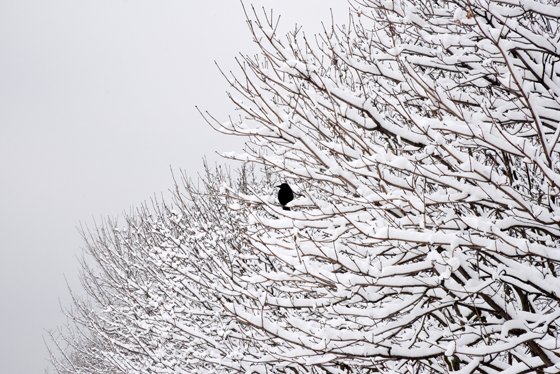
Linguistic trivia says that the Inuits have 50 words for snow. But how, in languages,
do you find the one perfect word to describe something—le mot juste?
© Meredith Mullins
Linguistic trivia says that the Inuits have 50 words for snow. But how, in languages,
do you find the one perfect word to describe something—le mot juste?
© Meredith Mullins
We live in challenging times. We have had to become super-adaptable beings, asking ourselves every day how to cope with the multitude of new normals.
What changes emerge?
Have you, like most of the world, savored hyggelig and gezelligheid?
Have you searched for moments of beauty in komorebi, mångata, and psithurism?
Have you had the urge to commit to jijivisha and to integrate firgun and merak into life rhythms?
Wait a minute, you’re saying to yourself. What language are we speaking here? We’re not that adaptable. What do these cryptic words mean?
Has OIC Moments lapsed into a world of jabberwocky—wordplay with nonsense words that have no meaning? No . . . we are just taking a moment to appreciate the elegance of untranslatable words.
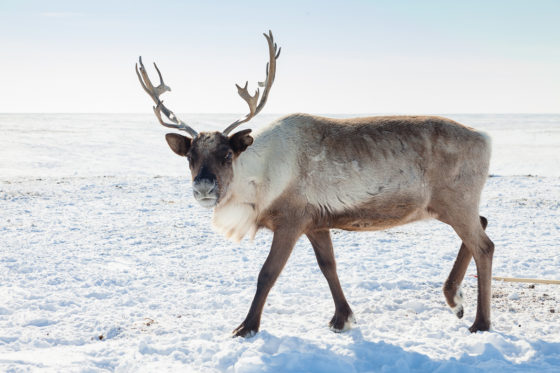
How many untranslatable words about reindeer are there in Finnish?
Read on for the best one.
© iStock/Artpilot
This “Oh, I see” moment is about words in different languages that have no direct translation in English.
Almost all of the 7000+ languages in the world have words that cannot be succinctly translated. They are such a perfect poetic reflection of the people and lifestyle of their own culture that it takes several English words to convey their meaning. More often than not, the translations fall short of the more insightful meaning that has evolved within the culture.
Many of the untranslatable words describe feelings of home.
Hyggelig (Danish/Norwegian)
The Danish/Norwegian hyggelig conjures a picture of contentment and coziness. You feel warm just hearing the word.
It’s about friendship, comfort, security, good times, and all the important things in life. A translation of “nice” doesn’t begin to describe what this word means to these cultures, although the entymological similarity to the English word “hug” provides some hint to the underlying meaning.
The Dutch word gezelligheid and the German word gemütlichkeit also allude to this kind of comfortable feeling.

We could all use a little hyggelig in our life.
© iStock/Solovyova
Depaysement (French)
The French word depaysement means feeling apart from your world of origin. It can occur when you are in another country and you sense that you don’t quite belong. This unfamiliar feeling might cause a longing for your home country or general unease at being away.
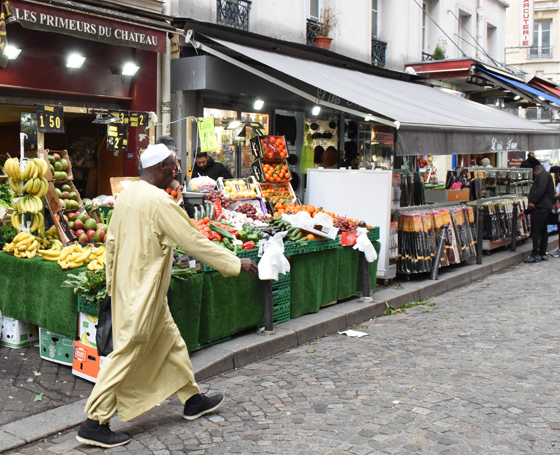
As cultures integrate, most visitors find a way to connect—to avoid depaysement.
© Meredith Mullins
Hiraeth (Welsh)
The Welsh word hiraeth also refers to a longing for the homeland, but includes a sadness for anything that has been lost. It is a wistfulness for lost friends and a regret that the past is the past and cannot be relived. It could be translated into an interweaving of three words: yearning, nostalgia, and homesickness.
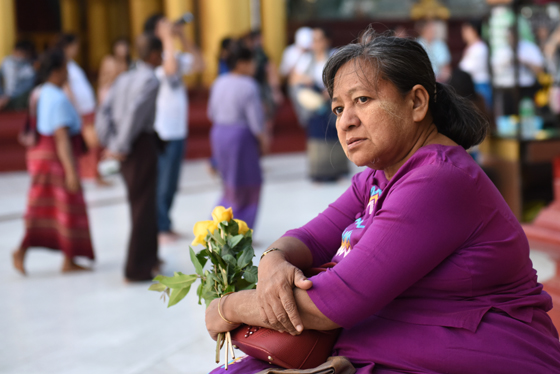
The wistful longing of hiraeth or saudade
© Meredith Mullins
Saudade (Portuguese)
Saudade in Portuguese is similar to hiraeth. It is a longing for something or someone that is lost. The love still burns strong for this missing link.
Moving on from the words that linger on nostalgia and yearning, we find solace in the beauty and peace of nature.

In search of beauty . . . komorebi meets the challenge.
© iStock/Thekopmylife
Komorebi (Japanese)
The Japanese word komorebi invokes an image of sunlight filtering through trees. The translation includes “tree,” “escape,” and “light,” but what arrives in the imagination far exceeds the words. The scene that comes to mind includes rays of sunlight that take on a spiritual quality when finding their way through a silent forest.
Mångata (Swedish)
Mångata is a visual story. This Swedish word describes the reflection of the moon on water as it seems to create a shimmering path. Yakamoz in Turkish has a similar meaning. These cultures clearly have romantic reverence for the moon . . . and a single lyrical word to honor its magic.

A mangata that captures the beauty of the universe
© iStock/jakkapan21
Psithurism (Greek)
Why shouldn’t a language have a word for the sound of leaves rustling in the wind? The word psithurism is adapted from the ancient Greek word meaning “whisper” and offers yet another sensory path to connect with nature.
Waldeinsamkeit (German)
The German word waldeinsamkeit describes the feeling of being connected to nature when you’re alone in the woods. The literal translation includes “wald” which means forest, and “einsamkeit,” which means loneliness or solitude.
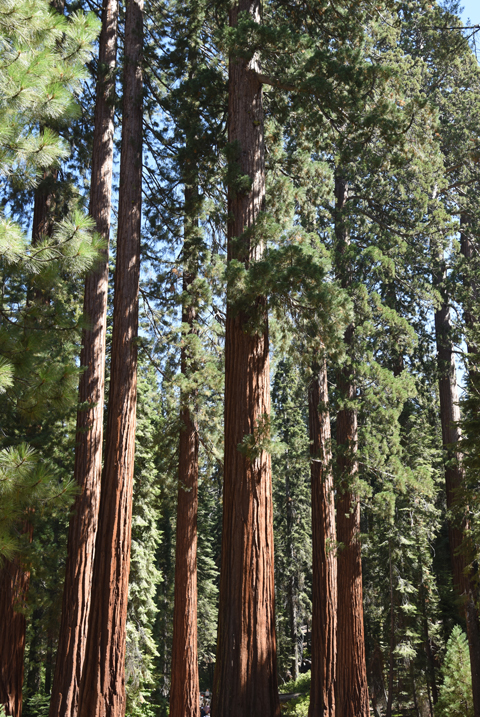
Finding solitude in the forest—looking outward and inward (and upward)
© Meredith Mullins
For Germans, the word is more than a description. It is a philosophy that focuses on finding the beauty of nature in a quiet setting and looking both outward and inward. Several poets, including Ralph Waldo Emerson, have used this word in their poetry.
Another German word, waldbaden, has a similar meaning. It translates to bathing in the forest—opening your senses while in the woods and letting nature flow over and in you.
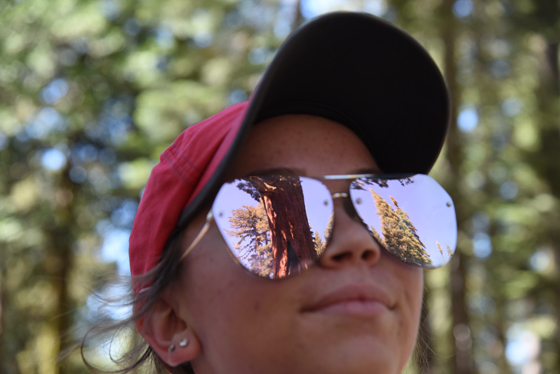
Waldeinsamkeit and waldbaren—a connection to nature
© Meredith Mullins
Gökotta (Swedish)
This word inspires a life change that seems to bring happiness to those who embrace it (although you have to be a morning person). It means to rise at dawn to go outside and listen to the birds’ first songs of the day.
Gluggaveður (Icelandic)
Not all interaction with nature is so intimate and meditative. The word gluggaveður in Icelandic is a prime example of needing to have a front row, warm, indoor seat to observe nature. It translates to “windowweather.”

Sometimes the best way to enjoy the beauty of inclement weather is through the window,
a nod to gluggaveður in Icelandic.
© iStock/Sveti
There are also untranslatable words that are practical, referring to the mundane tasks and challenges of daily life, especially the elements that are specific to the culture.
Tsundoku (Japanese)
The Japanese word tsundoku means to buy a book and leave it unread, piling it with the other unread books in your home. (How many of us need to add this word to our vocabulary?)
Schilderwald (German)
This word brings a smile as it means a maze or jungle of traffic signs—a street crowded with so many road signs that you can’t find your way out. The more literal translation is “a forest of signs.”
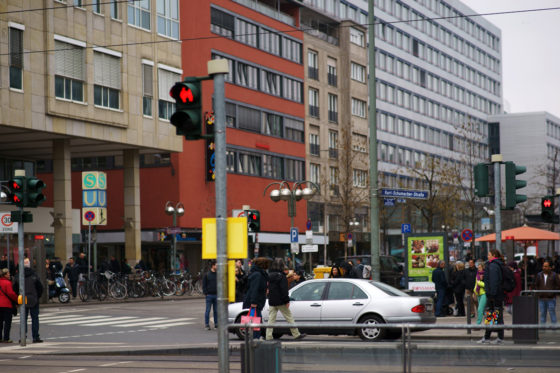
Lost in schilderwald—a forest of street signs.
© iStock/Ginton
Gigil (Tagalog)
The Filipinos have a word that captures the irresistible urge to hug or pinch something cute.
Pana po’o (Hawaiian)
The Hawaiians have a special word to describe the act of scratching your head to try to remember something—pana po’o.

Are you scratching your head trying to remember what hyggelig means?
© iStock/Shironosov
Poronkusema (Finnish)
Finland has introduced a unit of measure that all can understand. Poronkusema means the distance a reindeer can comfortably travel before taking a break.
Pisanzapra (Malaysian)
Malaysia uses some specific measures of time. The pinsanzapra equals the minutes needed to eat a banana.

The next time you have the irresistible urge to hug something cute,
there IS a word for it (in Tagalog)—gigil.
© iStock/BichoRaro
The wordplay that we find in untranslatable words tells us much about the cultures of the world. As we think about which of these words we would like to incorporate into our own life, we find out more about ourselves.
I have embraced all these words (yes, even reindeer distance). There are hundreds more worthy of study. But I add to the vocabulary three additional words that shouldn’t be missed.
The Hindi word jijivisha means a strong wish to live life intensely. Add to that the Serbian word merak and the Hebrew word firgun and there can be purpose in these challenging times.
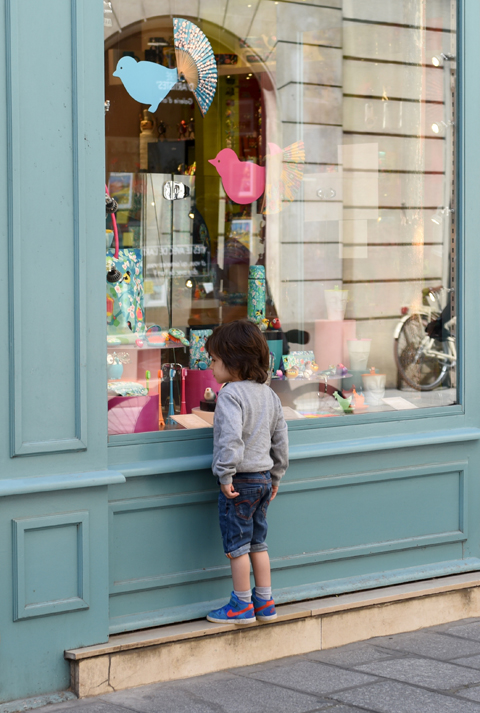
A merak kind of day—enjoying the simplest of pleasures
© Meredith Mullins
Merak translates to happiness and a feeling of connection to the universe with the simplest of pleasures.
Firgun tells the story of unselfish joy for someone or something and a true generosity of spirit.
Words to live by.
Comment on this post below, or inspire insight with your own OIC Moment here.
{"id":38519,"date":"2020-09-28T03:00:33","date_gmt":"2020-09-28T10:00:33","guid":{"rendered":"https:\/\/www.oh-i-see.com\/blog\/?p=38519"},"modified":"2021-07-28T10:53:40","modified_gmt":"2021-07-28T17:53:40","slug":"voila-the-poetry-of-untranslatable-words","status":"publish","type":"post","link":"https:\/\/www.oh-i-see.com\/blog\/voila-the-poetry-of-untranslatable-words\/","title":{"rendered":"Voil\u00e0! The Poetry of Untranslatable Words"},"content":{"rendered":"
Linguistic trivia says that the Inuits have 50 words for snow. But how, in languages,
do you find the one perfect word to describe something\u2014le mot juste?
\u00a9 Meredith Mullins<\/p><\/div>\n
We live in challenging times. We have had to become super-adaptable beings, asking ourselves every day how to cope with the multitude of new normals.<\/p>\n
What changes emerge?<\/p>\n
Have you, like most of the world, savored hyggelig<\/em> and gezelligheid?<\/em><\/p>\n Have you searched for moments of beauty in komorebi, m\u00e5ngata<\/em>, <\/i>and psithurism<\/i>?<\/em><\/p>\n Have you had the urge to commit to jijivisha<\/em> and to integrate firgun<\/em> and merak<\/em> into life rhythms?<\/p>\n Wait a minute, you\u2019re saying to yourself. What language are we speaking here? We\u2019re not that\u00a0<\/em>adaptable. What do these cryptic words mean?<\/p>\n Has OIC Moments<\/strong> lapsed into a world of jabberwocky\u2014wordplay with nonsense words that have no meaning? No . . . we are just taking a moment to appreciate the elegance of untranslatable words.<\/p>\n How many untranslatable words about reindeer are there in Finnish? This \u201cOh, I see\u201d moment\u00a0<\/strong>is about words in different languages that have no direct translation in English.<\/p>\n Almost all of the 7000+ languages in the world have words that cannot be succinctly translated. They are such a perfect poetic reflection of the people and lifestyle of their own culture that it takes several English words to convey their meaning. More often than not, the translations fall short of the more insightful meaning that has evolved within the culture.<\/p>\n Many of the untranslatable words describe feelings of home.<\/p>\n Hyggelig (Danish\/Norwegian)<\/strong><\/p>\n The Danish\/Norwegian hyggeli<\/em>g conjures a picture of contentment and coziness. You feel warm just hearing the word.<\/p>\n It\u2019s about friendship, comfort, security, good times, and all the important things in life. A translation of \u201cnice\u201d doesn\u2019t begin to describe what this word means to these cultures, although the entymological similarity to the English word \u201chug\u201d provides some hint to the underlying meaning.<\/p>\n The Dutch word gezelligheid<\/em> and the German word gem\u00fctlichkeit<\/em> also allude to this kind of comfortable feeling.<\/p>\n We could all use a little hyggelig in our life. Depaysement (French)<\/strong><\/p>\n The French word depaysement<\/em> means feeling apart from your world of origin. It can occur when you are in another country and you sense that you don\u2019t quite belong. This unfamiliar feeling might cause a longing for your home country or general unease at being away.<\/p>\n As cultures integrate, most visitors find a way to connect\u2014to avoid depaysement. Hiraeth (Welsh)<\/strong><\/p>\n The Welsh word hiraeth<\/em> also refers to a longing for the homeland, but includes a sadness for anything that has been lost. It is a wistfulness for lost friends and a regret that the past is the past and cannot be relived. It could be translated into an interweaving of three words: yearning, nostalgia, and homesickness.<\/p>\n The wistful longing of hiraeth or saudade Saudade (Portuguese)<\/strong><\/p>\n Saudade<\/em> in Portuguese is similar to hiraeth.<\/em> It is a longing for something or someone that is lost. The love still burns strong for this missing link.<\/p>\n Moving on from the words that linger on nostalgia and yearning, we find solace in the beauty and peace of nature.<\/p>\n In search of beauty . . . komorebi meets the challenge. Komorebi (Japanese)<\/strong><\/p>\n The Japanese word komorebi<\/em> invokes an image of sunlight filtering through trees. The translation includes \u201ctree,\u201d \u201cescape,\u201d and \u201clight,\u201d but what arrives in the imagination far exceeds the words. The scene that comes to mind includes rays of sunlight that take on a spiritual quality when finding their way through a silent forest.<\/p>\n M\u00e5ngata (Swedish)<\/strong><\/p>\n M\u00e5ngata<\/em> is a visual story. This Swedish word describes the reflection of the moon on water as it seems to create a shimmering path. Yakamoz<\/em> in Turkish has a similar meaning. These cultures clearly have romantic reverence for the moon . . . and a single lyrical word to honor its magic.<\/p>\n A mangata that captures the beauty of the universe Psithurism (Greek)<\/strong><\/p>\n Why shouldn\u2019t a language have a word for the sound of leaves rustling in the wind? The word psithurism<\/em> is adapted from the ancient Greek word meaning “whisper” and offers yet another sensory path to connect with nature.<\/p>\n Waldeinsamkeit (German)<\/strong><\/p>\n The German word waldeinsamkeit<\/em> describes the feeling of being connected to nature when you\u2019re alone in the woods. The literal translation includes \u201cwald\u201d which means forest, and \u201ceinsamkeit,\u201d which means loneliness or solitude.<\/p>\n Finding solitude in the forest\u2014looking outward and inward (and upward) For Germans, the word is more than a description. It is a philosophy that focuses on finding the beauty of nature in a quiet setting and looking both outward and inward. Several poets, including Ralph Waldo Emerson, have used this word in their poetry.<\/p>\n Another German word, waldbaden,<\/em> has a similar meaning. It translates to bathing in the forest\u2014opening your senses while in the woods and letting nature flow over and in you.<\/p>\n Waldeinsamkeit and waldbaren\u2014a connection to nature G\u00f6kotta (Swedish)<\/strong><\/p>\n This word inspires a life change that seems to bring happiness to those who embrace it (although you have to be a morning person). It means to rise at dawn to go outside and listen to the birds\u2019 first songs of the day.<\/p>\n Gluggave\u00f0ur (Icelandic)<\/strong><\/p>\n Not all interaction with nature is so intimate and meditative. The word gluggave\u00f0ur<\/em>\u00a0in Icelandic is a prime example of needing to have a front row, warm, indoor seat to observe nature. It translates to \u201cwindowweather.\u201d<\/p>\n Sometimes the best way to enjoy the beauty of inclement weather is through the window, There are also untranslatable words that are practical, referring to the mundane tasks and challenges of daily life, especially the elements that are specific to the culture.<\/p>\n Tsundoku (Japanese)<\/strong><\/p>\n The Japanese word tsundoku<\/em> means to buy a book and leave it unread, piling it with the other unread books in your home. (How many of us need to add this word to our vocabulary?)<\/p>\n Schilderwald (German)<\/strong><\/p>\n This word brings a smile as it means a maze or jungle of traffic signs\u2014a street crowded with so many road signs that you can\u2019t find your way out. The more literal translation is \u201ca forest of signs.\u201d<\/p>\n Lost in schilderwald\u2014a forest of street signs. Gigil (Tagalog)<\/strong><\/p>\n The Filipinos have a word that captures the irresistible urge to hug or pinch something cute.<\/p>\n Pana po\u2019o (Hawaiian)<\/strong><\/p>\n The Hawaiians have a special word to describe the act of scratching your head to try to remember something\u2014pana po\u2019o.<\/em><\/p>\n Are you scratching your head trying to remember what hyggelig means? Poronkusema (Finnish)<\/strong><\/p>\n Finland has introduced a unit of measure that all can understand. Poronkusema<\/em> means the distance a reindeer can comfortably travel before taking a break.<\/p>\n Pisanzapra (Malaysian)<\/strong><\/p>\n Malaysia uses some specific measures of time. The pinsanzapra<\/em> equals the minutes needed to eat a banana.<\/p>\n The next time you have the irresistible urge to hug something cute, The wordplay that we find in untranslatable words tells us much about the cultures of the world. As we think about which of these words we would like to incorporate into our own life, we find out more about ourselves.<\/p>\n I have embraced all these words (yes, even reindeer distance). There are hundreds more worthy of study. But I add to the vocabulary three additional words that shouldn\u2019t be missed.<\/p>\n The Hindi word jijivisha<\/em> means a strong wish to live life intensely. Add to that the Serbian word merak<\/em> and the Hebrew word firgun<\/em> and there can be purpose in these challenging times.<\/p>\n A merak kind of day\u2014enjoying the simplest of pleasures Merak<\/em> translates to happiness and a feeling of connection to the universe with the simplest of pleasures.<\/p>\n Firgun<\/i>\u00a0tells the story of unselfish joy for someone or something and a true generosity of spirit.<\/p>\n Words to live by.<\/p>\n Comment<\/a><\/i>\u00a0on this post below, or inspire insight with your own\u00a0OIC Moment\u00a0here<\/a>.<\/em><\/p>\n","protected":false},"excerpt":{"rendered":null,"protected":false},"author":5,"featured_media":38516,"comment_status":"closed","ping_status":"open","sticky":false,"template":"","format":"standard","meta":{"footnotes":""},"categories":[102,95,227],"tags":[],"class_list":["post-38519","post","type-post","status-publish","format-standard","has-post-thumbnail","hentry","category-culture-language","category-wordplay-language","category-worldwide-mappoints"],"aioseo_notices":[],"_links":{"self":[{"href":"https:\/\/www.oh-i-see.com\/blog\/wp-json\/wp\/v2\/posts\/38519","targetHints":{"allow":["GET"]}}],"collection":[{"href":"https:\/\/www.oh-i-see.com\/blog\/wp-json\/wp\/v2\/posts"}],"about":[{"href":"https:\/\/www.oh-i-see.com\/blog\/wp-json\/wp\/v2\/types\/post"}],"author":[{"embeddable":true,"href":"https:\/\/www.oh-i-see.com\/blog\/wp-json\/wp\/v2\/users\/5"}],"replies":[{"embeddable":true,"href":"https:\/\/www.oh-i-see.com\/blog\/wp-json\/wp\/v2\/comments?post=38519"}],"version-history":[{"count":30,"href":"https:\/\/www.oh-i-see.com\/blog\/wp-json\/wp\/v2\/posts\/38519\/revisions"}],"predecessor-version":[{"id":38558,"href":"https:\/\/www.oh-i-see.com\/blog\/wp-json\/wp\/v2\/posts\/38519\/revisions\/38558"}],"wp:featuredmedia":[{"embeddable":true,"href":"https:\/\/www.oh-i-see.com\/blog\/wp-json\/wp\/v2\/media\/38516"}],"wp:attachment":[{"href":"https:\/\/www.oh-i-see.com\/blog\/wp-json\/wp\/v2\/media?parent=38519"}],"wp:term":[{"taxonomy":"category","embeddable":true,"href":"https:\/\/www.oh-i-see.com\/blog\/wp-json\/wp\/v2\/categories?post=38519"},{"taxonomy":"post_tag","embeddable":true,"href":"https:\/\/www.oh-i-see.com\/blog\/wp-json\/wp\/v2\/tags?post=38519"}],"curies":[{"name":"wp","href":"https:\/\/api.w.org\/{rel}","templated":true}]}}
Read on for the best one.
\u00a9 iStock\/Artpilot<\/p><\/div>\nTales of the Untranslatable<\/h4>\n
There\u2019s No Place Like Home<\/h4>\n

\u00a9 iStock\/Solovyova<\/p><\/div>\n
\u00a9 Meredith Mullins<\/p><\/div>\n
\u00a9 Meredith Mullins<\/p><\/div>\nA Search for Beauty<\/h4>\n

\u00a9 iStock\/Thekopmylife<\/p><\/div>\n
\u00a9 iStock\/jakkapan21<\/p><\/div>\n
\u00a9 Meredith Mullins<\/p><\/div>\n
\u00a9 Meredith Mullins<\/p><\/div>\n
a nod to gluggave\u00f0ur in Icelandic.
\u00a9 iStock\/Sveti<\/p><\/div>\nMore Practical Than Poetic<\/h4>\n

\u00a9 iStock\/Ginton<\/p><\/div>\n
\u00a9 iStock\/Shironosov<\/p><\/div>\n
there IS a word for it (in Tagalog)\u2014gigil.
\u00a9 iStock\/BichoRaro<\/p><\/div>\nLife Resolutions<\/h4>\n

\u00a9 Meredith Mullins<\/p><\/div>\n