<div id="attachment_40428" style="width: 570px" class="wp-caption aligncenter"><img loading="lazy" decoding="async" aria-describedby="caption-attachment-40428" class="wp-image-40428 size-full" src="https://www.oh-i-see.com/blog/wp-content/uploads/2021/06/Airport.jpg" alt="A female traveler looking at the electronic board of departures in an airport, symbolizing an opportunity for crossing cultures (Image © Jan Vašek/Pixabay)" width="560" height="360" srcset="https://www.oh-i-see.com/blog/wp-content/uploads/2021/06/Airport.jpg 560w, https://www.oh-i-see.com/blog/wp-content/uploads/2021/06/Airport-300x193.jpg 300w, https://www.oh-i-see.com/blog/wp-content/uploads/2021/06/Airport-207x133.jpg 207w" sizes="auto, (max-width: 560px) 100vw, 560px" /><p id="caption-attachment-40428" class="wp-caption-text">Do you ticket travel only to countries that speak your language? <br />© Jan Vašek/Pixabay</p></div>
<h2>Why Crossing Cultures Always Means Learning a Second Language</h2>
<p>Most English speakers who travel internationally and enjoy crossing cultures have, at one time or another, depended on people in other countries to also speak English.  Such moments may arise because</p>
<ul>
<li>even a polyglot is bound to miss one or two of the world’s 6800 languages.</li>
<li>your language learning app doesn’t cover how to say, “Could someone help me retrieve my cellphone from the hotel swimming pool?”</li>
<li>long-haul flights, long layovers, lost luggage, jet lag, and an unfamiliar environment have temporarily stalled your progress in speaking a second language.</li>
</ul>
<p>Or as a public speaker once said, “It’s cool that people Over There are all multilingual and stuff, but me, I just travel where people speak English.”</p>
<div id="attachment_36248" style="width: 570px" class="wp-caption aligncenter"><img loading="lazy" decoding="async" aria-describedby="caption-attachment-36248" class="wp-image-36248 size-large" src="https://www.oh-i-see.com/blog/wp-content/uploads/2020/02/american-1209605_1920-1024x683.jpg" alt="British English and American English dictionaries suggest that crossing cultures is like learning a second language. (Public domain image by Pixabay)" width="560" height="374" srcset="https://www.oh-i-see.com/blog/wp-content/uploads/2020/02/american-1209605_1920-1024x683.jpg 1024w, https://www.oh-i-see.com/blog/wp-content/uploads/2020/02/american-1209605_1920-300x200.jpg 300w, https://www.oh-i-see.com/blog/wp-content/uploads/2020/02/american-1209605_1920-768x512.jpg 768w, https://www.oh-i-see.com/blog/wp-content/uploads/2020/02/american-1209605_1920-1536x1024.jpg 1536w, https://www.oh-i-see.com/blog/wp-content/uploads/2020/02/american-1209605_1920-207x138.jpg 207w, https://www.oh-i-see.com/blog/wp-content/uploads/2020/02/american-1209605_1920.jpg 1920w" sizes="auto, (max-width: 560px) 100vw, 560px" /><p id="caption-attachment-36248" class="wp-caption-text">Humorist Stephen Leacock wrote, &#8220;In Canada we . . . use English for literature, <br />Scots for sermons, and American for conversation.&#8221; <br />Photo by Pixabay</p></div>
<h4><strong>The Universal Language?</strong></h4>
<p>OK, the “public speaker” was actually a fellow airline passenger talking on his cellphone, but clearly, he intended everyone onboard to have the benefit of his perspective. As a flight attendant approached him, he delivered one last insight: “More people speak English than any other language.”</p>
<p>Did anyone correct our talkative traveler?  I’ll never know. We were all retreating into our headphones by this stage. But more than 1.2 billion speakers of Mandarin Chinese might beg to differ.</p>
<h4><strong>“We’re Number Two!”</strong></h4>
<p>English actually comes in second, with 983 million speakers. That includes people who speak English as a second or third language.</p>
<p>Still, it got me wondering. What if the man in Seat 37-B keeps his word—his English word, apparently—only visiting countries where English is an official language?</p>
<p>He will be in for a surprise. Because while millions of us around the world speak English, we don’t all speak it the same way.</p>
<p>Imagine our traveler in another English-speaking country. He puts down his cellphone long enough to hear a local say . . .</p>
<ol>
<li>I could murder a cuppa. (British English)</li>
<li>Shall I be Mother? (ditto)</li>
<li>Strong enough to trot a mouse across. (Irish English)</li>
<li>Let’s grab a capp! (Australian English)</li>
<li>One double-double. (Canadian English)</li>
</ol>
<div id="attachment_36249" style="width: 570px" class="wp-caption aligncenter"><img loading="lazy" decoding="async" aria-describedby="caption-attachment-36249" class="wp-image-36249 size-large" src="https://www.oh-i-see.com/blog/wp-content/uploads/2020/02/mouse-1708177_1920-1024x683.jpg" alt="A mouse on a fence evokes a common expression in Irish English that might baffle American English speakers, suggesting that crossing cultures is like learning a second language. (Public domain image by Pixabay)" width="560" height="374" srcset="https://www.oh-i-see.com/blog/wp-content/uploads/2020/02/mouse-1708177_1920-1024x683.jpg 1024w, https://www.oh-i-see.com/blog/wp-content/uploads/2020/02/mouse-1708177_1920-300x200.jpg 300w, https://www.oh-i-see.com/blog/wp-content/uploads/2020/02/mouse-1708177_1920-768x512.jpg 768w, https://www.oh-i-see.com/blog/wp-content/uploads/2020/02/mouse-1708177_1920-1536x1024.jpg 1536w, https://www.oh-i-see.com/blog/wp-content/uploads/2020/02/mouse-1708177_1920-207x138.jpg 207w, https://www.oh-i-see.com/blog/wp-content/uploads/2020/02/mouse-1708177_1920.jpg 1920w" sizes="auto, (max-width: 560px) 100vw, 560px" /><p id="caption-attachment-36249" class="wp-caption-text">In Ireland, what&#8217;s &#8220;strong enough to trot a mouse across?&#8221;<br />Photo by Pixabay</p></div>
<p>None of these English speakers is engaged in foul play, role play, building a bridge for rodents, stealing a hat, or placing a bet.  The first three are discussing tea— craving it, pouring it, or brewing it—while the other two prefer coffee.</p>
<p><strong>Oh, I see</strong>:  English, the universal language, spans a universe of languages.</p>
<h4><strong>Opposite World</strong></h4>
<p>Even when English speakers use the same words, they don’t always have the same meaning:</p>
<ul>
<li>In Canada, <em>to table a motion</em> means to consider a proposal. In the U.S., it means to set it aside. When Canadians <em>write a test</em>, they’re the ones taking it.</li>
<li>In England, <em>public school</em> is what Americans call <em>private school</em>, and vice versa.</li>
<li>In Ireland, being called <em>bold</em> or <em>cute</em> is not a compliment. The former means you’re acting out, the latter means you’re sneaky.</li>
</ul>
<h4><strong>Like Day and Night</strong></h4>
<p>Something as simple as daily routine highlights differences among the worlds of English:</p>
<ul>
<li>In Ireland, wearing a <em>vest</em> to work would mean showing up in your undershirt.  A <em>waistcoat</em> completes that three-piece suit. Putting on <em>pants</em>? Do add <em>trousers</em>, or you’ll get chilly legs and chillier looks.</li>
</ul>
<div id="attachment_36251" style="width: 310px" class="wp-caption aligncenter"><img loading="lazy" decoding="async" aria-describedby="caption-attachment-36251" class="wp-image-36251 size-medium" src="https://www.oh-i-see.com/blog/wp-content/uploads/2020/02/shoe-leather-boot-spring-red-collection-488226-pxhere.com_-300x200.jpg" alt="A brogue, or shoe, highlights the differences in American, Irish, British, and other English language words. (Public domain image by Pxhere)" width="300" height="200" srcset="https://www.oh-i-see.com/blog/wp-content/uploads/2020/02/shoe-leather-boot-spring-red-collection-488226-pxhere.com_-300x200.jpg 300w, https://www.oh-i-see.com/blog/wp-content/uploads/2020/02/shoe-leather-boot-spring-red-collection-488226-pxhere.com_-1024x683.jpg 1024w, https://www.oh-i-see.com/blog/wp-content/uploads/2020/02/shoe-leather-boot-spring-red-collection-488226-pxhere.com_-768x512.jpg 768w, https://www.oh-i-see.com/blog/wp-content/uploads/2020/02/shoe-leather-boot-spring-red-collection-488226-pxhere.com_-1536x1024.jpg 1536w, https://www.oh-i-see.com/blog/wp-content/uploads/2020/02/shoe-leather-boot-spring-red-collection-488226-pxhere.com_-2048x1365.jpg 2048w, https://www.oh-i-see.com/blog/wp-content/uploads/2020/02/shoe-leather-boot-spring-red-collection-488226-pxhere.com_-207x138.jpg 207w" sizes="auto, (max-width: 300px) 100vw, 300px" /><p id="caption-attachment-36251" class="wp-caption-text">No one in Ireland “speaks with a brogue,” <br />but some wear <em>brogues</em> on their feet.<br />Photo by Pxhere</p></div>
<ul>
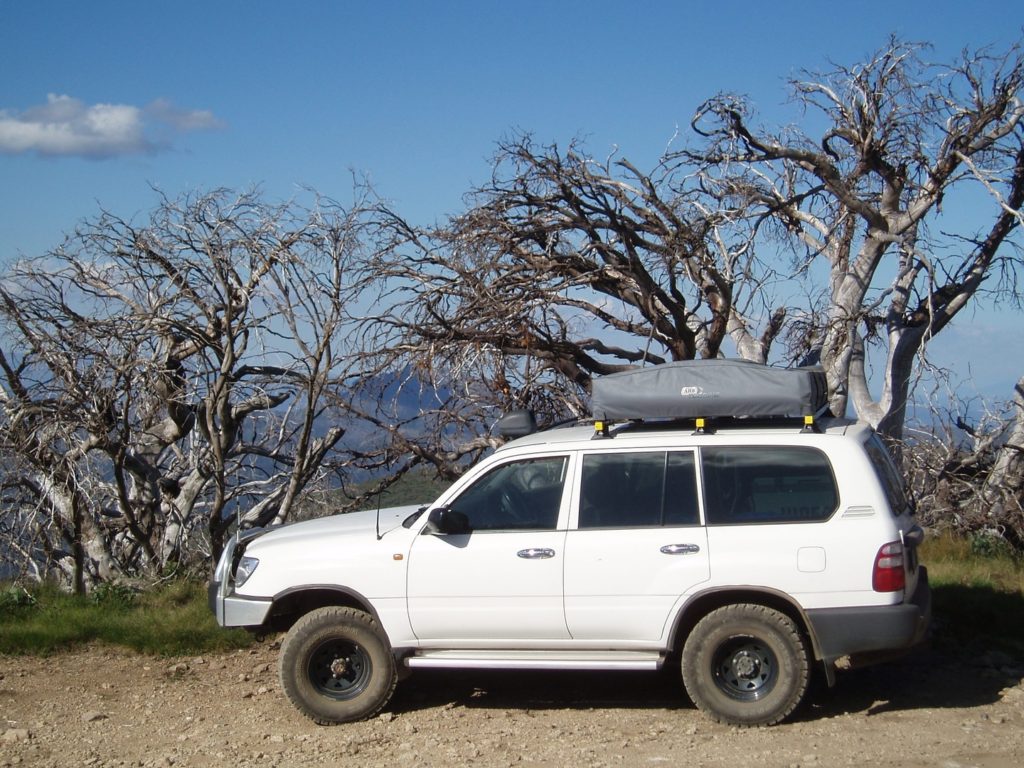
<li>In many English-speaking countries, drivers check under the <em>bonnet</em> and stow belongings in the <em>boot</em> before <em>motoring</em> to the company <em>car park</em> (or in Canada, the <em>parkade</em>). They <em>top up</em> <em>the petrol</em>, too. But if the car is <em>munted</em> (NZ), <em>goosed</em> (Scotland), or <em>banjaxed</em> (Ireland), they may <em>ring </em>a taxicab or <em>cadge a lift</em> from a friend.</li>
</ul>
<div id="attachment_36252" style="width: 510px" class="wp-caption aligncenter"><img loading="lazy" decoding="async" aria-describedby="caption-attachment-36252" class="wp-image-36252" src="https://www.oh-i-see.com/blog/wp-content/uploads/2020/02/tree-nature-outdoor-car-travel-remote-831796-pxhere.com_-1024x768.jpg" alt="A utility vehicle, or ute, evokes a common expression in Australian English that might baffle American English speakers, suggesting that crossing cultures is like learning a second language. (Public domain image by Pxhere)" width="500" height="375" srcset="https://www.oh-i-see.com/blog/wp-content/uploads/2020/02/tree-nature-outdoor-car-travel-remote-831796-pxhere.com_-1024x768.jpg 1024w, https://www.oh-i-see.com/blog/wp-content/uploads/2020/02/tree-nature-outdoor-car-travel-remote-831796-pxhere.com_-300x225.jpg 300w, https://www.oh-i-see.com/blog/wp-content/uploads/2020/02/tree-nature-outdoor-car-travel-remote-831796-pxhere.com_-768x576.jpg 768w, https://www.oh-i-see.com/blog/wp-content/uploads/2020/02/tree-nature-outdoor-car-travel-remote-831796-pxhere.com_-207x155.jpg 207w, https://www.oh-i-see.com/blog/wp-content/uploads/2020/02/tree-nature-outdoor-car-travel-remote-831796-pxhere.com_.jpg 1440w" sizes="auto, (max-width: 500px) 100vw, 500px" /><p id="caption-attachment-36252" class="wp-caption-text">Fear not the <em>deadly ute!</em> That&#8217;s Australian English for &#8220;impressive SUV!&#8221;<br />Photo by Pxhere</p></div>
<h4><strong>Eating Your Words</strong></h4>
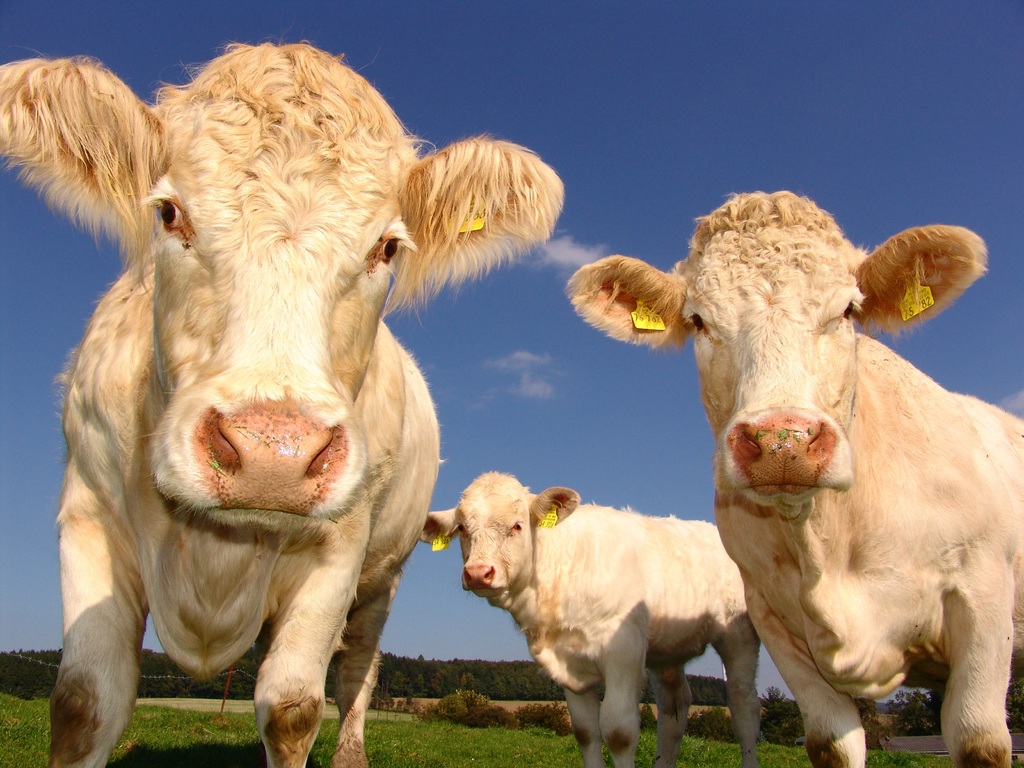
<p>After work, <em>do the messages</em> (shop for groceries). In a hurry? In England, order a <em>bacon sarni</em> (sandwich) or other <em>takeaway</em> from the <em>chippy</em>. Wash it down with a <em>bevvy</em>. Don’t need much? In New Zealand, pop into the convenient corner <a href="https://theculturetrip.com/pacific/new-zealand/articles/a-brief-history-of-new-zealands-dairy-shops/" target="_blank" rel="noopener noreferrer"><em>dairy</em></a>.</p>
<div id="attachment_36254" style="width: 510px" class="wp-caption aligncenter"><img loading="lazy" decoding="async" aria-describedby="caption-attachment-36254" class="wp-image-36254" src="https://www.oh-i-see.com/blog/wp-content/uploads/2020/02/field-meadow-cattle-pasture-grazing-mammal-676673-pxhere.com_.jpg" alt="Dairy cows evoke a common word in New Zealand Kiwi English that might baffle American English speakers, suggesting that crossing cultures is like learning a second language. (Public domain image by Pixabay)" width="500" height="375" srcset="https://www.oh-i-see.com/blog/wp-content/uploads/2020/02/field-meadow-cattle-pasture-grazing-mammal-676673-pxhere.com_.jpg 1024w, https://www.oh-i-see.com/blog/wp-content/uploads/2020/02/field-meadow-cattle-pasture-grazing-mammal-676673-pxhere.com_-300x225.jpg 300w, https://www.oh-i-see.com/blog/wp-content/uploads/2020/02/field-meadow-cattle-pasture-grazing-mammal-676673-pxhere.com_-768x576.jpg 768w, https://www.oh-i-see.com/blog/wp-content/uploads/2020/02/field-meadow-cattle-pasture-grazing-mammal-676673-pxhere.com_-207x155.jpg 207w" sizes="auto, (max-width: 500px) 100vw, 500px" /><p id="caption-attachment-36254" class="wp-caption-text">You won&#8217;t find cows at a New Zealand dairy—just grocery staples.<br />Photo by Pxhere</p></div>
<p>Prefer home <em>cookery?</em> American English speakers might puzzle over a shopping list of common words like <em>rocket, capsicum, courgette, aubergine</em>—or arugula, peppers, zucchini, eggplant. A <a href="https://www.scottish-at-heart.com/scottish-sayings.html" target="_blank" rel="noopener noreferrer">Scottish English</a> list might include <em>brambles,</em> <em>tatties</em>, and<em> ‘neeps</em>—berries, potatoes, and turnips or <a href="https://www.theguardian.com/lifeandstyle/wordofmouth/2010/jan/25/neeps-swede-or-turnip" target="_blank" rel="noopener noreferrer">swedes</a>.</p>
<p>Set the table with <em>cutlery, crockery</em>, and <em>serviettes</em>. Afterward, serve <em>afters</em>—dessert. During the  <em>washing-up</em>, don’t be a silly <em>eejit</em> (Ireland) who overloads the <em>garburetor</em> (Canada) with food scraps.</p>
<h4><strong>Give Me a Break!</strong></h4>
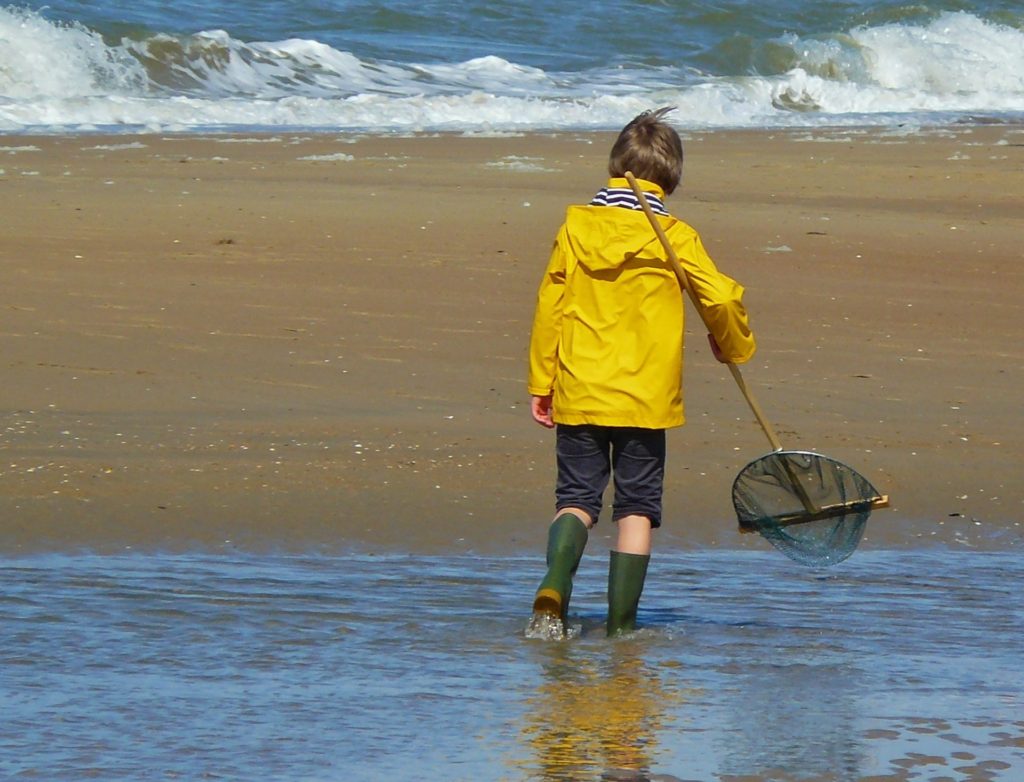
<p>While Americans take vacations, many English speakers go <em>on holiday</em>. In New Zealand, Kiwi English speakers head to a <a href="https://www.newzealand.com/us/feature/new-zealand-bach/" target="_blank" rel="noopener noreferrer"><em>bach</em></a>, or holiday home, pack <em>togs</em> for swimming, and wear <em>sunnies</em> to protect their eyes. They take off their <em>trainers</em>, slip their feet into <em>jandals</em>, and sip cold <em>stubbies</em> from the <em>chilly bin</em>. But if the weather suddenly <em>turns, </em>they&#8217;ll don a pair of <em>gum boots, </em>a.k.a. <em>wellies</em>.</p>
<div id="attachment_36256" style="width: 570px" class="wp-caption aligncenter"><img loading="lazy" decoding="async" aria-describedby="caption-attachment-36256" class="wp-image-36256 size-large" src="https://www.oh-i-see.com/blog/wp-content/uploads/2020/02/human-327129_1920-1024x782.jpg" alt="A boy at the beach wearing gum boots, wellies, or rain boots shows that English word meanings differ in different cultures, suggesting that crossing cultures is like learning a second language. (Public domain image by Pixabay)" width="560" height="428" srcset="https://www.oh-i-see.com/blog/wp-content/uploads/2020/02/human-327129_1920-1024x782.jpg 1024w, https://www.oh-i-see.com/blog/wp-content/uploads/2020/02/human-327129_1920-300x229.jpg 300w, https://www.oh-i-see.com/blog/wp-content/uploads/2020/02/human-327129_1920-768x586.jpg 768w, https://www.oh-i-see.com/blog/wp-content/uploads/2020/02/human-327129_1920-1536x1173.jpg 1536w, https://www.oh-i-see.com/blog/wp-content/uploads/2020/02/human-327129_1920-207x158.jpg 207w, https://www.oh-i-see.com/blog/wp-content/uploads/2020/02/human-327129_1920.jpg 1920w" sizes="auto, (max-width: 560px) 100vw, 560px" /><p id="caption-attachment-36256" class="wp-caption-text">Wade into any language and you&#8217;ll net fascinating finds.<br />Photo by Pixabay</p></div>
<h4><strong>Wading into a World of Words</strong></h4>
<p>As you can see, English, like all languages, is dynamic, forever exploring the multilingual. On almost every continent, different cultures shape English to suit their own needs, influences, and sense of place.</p>
<p>So where does this leave our traveler from Seat 37-B?</p>
<p>I’m hoping that as he explores the worlds of English,  talking with people in new places, he’ll discover that differences enliven communication. That differences are, interestingly, something we all have in common. That crossing cultures and delighting in differences can even lead to the <a href="https://www.worddive.com/blog/5-reasons-why-language-learning-is-more-fun-as-an-adult/" target="_blank" rel="noopener noreferrer">fun</a>—and <a href="https://www.globalcitizen.org/en/content/7-benefits-of-learning-another-language/" target="_blank" rel="noopener noreferrer">benefits</a>—of learning a second language.</p>
<div id="attachment_36257" style="width: 410px" class="wp-caption aligncenter"><img loading="lazy" decoding="async" aria-describedby="caption-attachment-36257" class="wp-image-36257" src="https://www.oh-i-see.com/blog/wp-content/uploads/2020/02/american-best-buds-buddy-caucasian-cellphone-cheerful-1433937-pxhere.com_-1024x683.jpg" alt="Two men enjoying conversation evoke the fun of learning a second language. (Public domain image by Pxhere)" width="400" height="267" srcset="https://www.oh-i-see.com/blog/wp-content/uploads/2020/02/american-best-buds-buddy-caucasian-cellphone-cheerful-1433937-pxhere.com_-1024x683.jpg 1024w, https://www.oh-i-see.com/blog/wp-content/uploads/2020/02/american-best-buds-buddy-caucasian-cellphone-cheerful-1433937-pxhere.com_-300x200.jpg 300w, https://www.oh-i-see.com/blog/wp-content/uploads/2020/02/american-best-buds-buddy-caucasian-cellphone-cheerful-1433937-pxhere.com_-768x512.jpg 768w, https://www.oh-i-see.com/blog/wp-content/uploads/2020/02/american-best-buds-buddy-caucasian-cellphone-cheerful-1433937-pxhere.com_-1536x1024.jpg 1536w, https://www.oh-i-see.com/blog/wp-content/uploads/2020/02/american-best-buds-buddy-caucasian-cellphone-cheerful-1433937-pxhere.com_-2048x1365.jpg 2048w, https://www.oh-i-see.com/blog/wp-content/uploads/2020/02/american-best-buds-buddy-caucasian-cellphone-cheerful-1433937-pxhere.com_-207x138.jpg 207w" sizes="auto, (max-width: 400px) 100vw, 400px" /><p id="caption-attachment-36257" class="wp-caption-text">Why <em>blather</em> on your <em>mobile</em>?  Wherever you travel, <br />a <em>proper natter</em> with <em>chums</em> is much more fun!<br />Photo by Pxhere</p></div>
<p><em>See John McWhorter&#8217;s TedTalk on reasons to learn a second language <a href="https://www.ted.com/talks/john_mcwhorter_4_reasons_to_learn_a_new_language/discussion" target="_blank" rel="noopener noreferrer">here</a>.</em></p>
<p><a href="http://comments#"><em>Comment</em></a> <em>on the post below. </em></p>
{"id":36244,"date":"2020-02-18T03:00:23","date_gmt":"2020-02-18T11:00:23","guid":{"rendered":"https:\/\/www.oh-i-see.com\/blog\/?p=36244"},"modified":"2021-07-20T08:08:41","modified_gmt":"2021-07-20T15:08:41","slug":"the-many-worlds-of-english","status":"publish","type":"post","link":"https:\/\/www.oh-i-see.com\/blog\/the-many-worlds-of-english\/","title":{"rendered":"The Many Worlds of English"},"content":{"rendered":"<div id=\"attachment_40428\" style=\"width: 570px\" class=\"wp-caption aligncenter\"><img loading=\"lazy\" decoding=\"async\" aria-describedby=\"caption-attachment-40428\" class=\"wp-image-40428 size-full\" src=\"https:\/\/www.oh-i-see.com\/blog\/wp-content\/uploads\/2021\/06\/Airport.jpg\" alt=\"A female traveler looking at the electronic board of departures in an airport, symbolizing an opportunity for crossing cultures (Image \u00a9 Jan Va\u0161ek\/Pixabay)\" width=\"560\" height=\"360\" srcset=\"https:\/\/www.oh-i-see.com\/blog\/wp-content\/uploads\/2021\/06\/Airport.jpg 560w, https:\/\/www.oh-i-see.com\/blog\/wp-content\/uploads\/2021\/06\/Airport-300x193.jpg 300w, https:\/\/www.oh-i-see.com\/blog\/wp-content\/uploads\/2021\/06\/Airport-207x133.jpg 207w\" sizes=\"auto, (max-width: 560px) 100vw, 560px\" \/><p id=\"caption-attachment-40428\" class=\"wp-caption-text\">Do you ticket travel only to countries that speak your language? <br \/>\u00a9 Jan Va\u0161ek\/Pixabay<\/p><\/div>\n<h2>Why Crossing Cultures Always Means Learning a Second Language<\/h2>\n<p>Most English speakers who travel internationally and enjoy crossing cultures have, at one time or another, depended on people in other countries to also speak English.\u00a0 Such moments may arise because<\/p>\n<ul>\n<li>even a polyglot is bound to miss one or two of the world\u2019s 6800 languages.<\/li>\n<li>your language learning app doesn\u2019t cover how to say, \u201cCould someone help me retrieve my cellphone from the hotel swimming pool?\u201d<\/li>\n<li>long-haul flights, long layovers, lost luggage, jet lag, and an unfamiliar environment have temporarily stalled your progress in speaking a second language.<\/li>\n<\/ul>\n<p>Or as a public speaker once said, \u201cIt\u2019s cool that people Over There are all multilingual and stuff, but me, I just travel where people speak English.\u201d<\/p>\n<div id=\"attachment_36248\" style=\"width: 570px\" class=\"wp-caption aligncenter\"><img loading=\"lazy\" decoding=\"async\" aria-describedby=\"caption-attachment-36248\" class=\"wp-image-36248 size-large\" src=\"https:\/\/www.oh-i-see.com\/blog\/wp-content\/uploads\/2020\/02\/american-1209605_1920-1024x683.jpg\" alt=\"British English and American English dictionaries suggest that crossing cultures is like learning a second language. (Public domain image by Pixabay)\" width=\"560\" height=\"374\" srcset=\"https:\/\/www.oh-i-see.com\/blog\/wp-content\/uploads\/2020\/02\/american-1209605_1920-1024x683.jpg 1024w, https:\/\/www.oh-i-see.com\/blog\/wp-content\/uploads\/2020\/02\/american-1209605_1920-300x200.jpg 300w, https:\/\/www.oh-i-see.com\/blog\/wp-content\/uploads\/2020\/02\/american-1209605_1920-768x512.jpg 768w, https:\/\/www.oh-i-see.com\/blog\/wp-content\/uploads\/2020\/02\/american-1209605_1920-1536x1024.jpg 1536w, https:\/\/www.oh-i-see.com\/blog\/wp-content\/uploads\/2020\/02\/american-1209605_1920-207x138.jpg 207w, https:\/\/www.oh-i-see.com\/blog\/wp-content\/uploads\/2020\/02\/american-1209605_1920.jpg 1920w\" sizes=\"auto, (max-width: 560px) 100vw, 560px\" \/><p id=\"caption-attachment-36248\" class=\"wp-caption-text\">Humorist Stephen Leacock wrote, &#8220;In Canada we . . . use English for literature, <br \/>Scots for sermons, and American for conversation.&#8221; <br \/>Photo by Pixabay<\/p><\/div>\n<h4><strong>The Universal Language?<\/strong><\/h4>\n<p>OK, the \u201cpublic speaker\u201d was actually a fellow airline passenger talking on his cellphone, but clearly, he intended everyone onboard to have the benefit of his perspective. As a flight attendant approached him, he delivered one last insight: \u201cMore people speak English than any other language.\u201d<\/p>\n<p>Did anyone correct our talkative traveler? \u00a0I\u2019ll never know. We were all retreating into our headphones by this stage. But more than 1.2 billion speakers of Mandarin Chinese might beg to differ.<\/p>\n<h4><strong>\u201cWe\u2019re Number Two!\u201d<\/strong><\/h4>\n<p>English actually comes in second, with 983 million speakers. That includes people who speak English as a second or third language.<\/p>\n<p>Still, it got me wondering. What if the man in Seat 37-B keeps his word\u2014his English word, apparently\u2014only visiting countries where English is an official language?<\/p>\n<p>He will be in for a surprise. Because while millions of us around the world speak English, we don\u2019t all speak it the same way.<\/p>\n<p>Imagine our traveler in another English-speaking country. He puts down his cellphone long enough to hear a local say . . .<\/p>\n<ol>\n<li>I could murder a cuppa. (British English)<\/li>\n<li>Shall I be Mother? (ditto)<\/li>\n<li>Strong enough to trot a mouse across. (Irish English)<\/li>\n<li>Let\u2019s grab a capp! (Australian English)<\/li>\n<li>One double-double. (Canadian English)<\/li>\n<\/ol>\n<div id=\"attachment_36249\" style=\"width: 570px\" class=\"wp-caption aligncenter\"><img loading=\"lazy\" decoding=\"async\" aria-describedby=\"caption-attachment-36249\" class=\"wp-image-36249 size-large\" src=\"https:\/\/www.oh-i-see.com\/blog\/wp-content\/uploads\/2020\/02\/mouse-1708177_1920-1024x683.jpg\" alt=\"A mouse on a fence evokes a common expression in Irish English that might baffle American English speakers, suggesting that crossing cultures is like learning a second language. (Public domain image by Pixabay)\" width=\"560\" height=\"374\" srcset=\"https:\/\/www.oh-i-see.com\/blog\/wp-content\/uploads\/2020\/02\/mouse-1708177_1920-1024x683.jpg 1024w, https:\/\/www.oh-i-see.com\/blog\/wp-content\/uploads\/2020\/02\/mouse-1708177_1920-300x200.jpg 300w, https:\/\/www.oh-i-see.com\/blog\/wp-content\/uploads\/2020\/02\/mouse-1708177_1920-768x512.jpg 768w, https:\/\/www.oh-i-see.com\/blog\/wp-content\/uploads\/2020\/02\/mouse-1708177_1920-1536x1024.jpg 1536w, https:\/\/www.oh-i-see.com\/blog\/wp-content\/uploads\/2020\/02\/mouse-1708177_1920-207x138.jpg 207w, https:\/\/www.oh-i-see.com\/blog\/wp-content\/uploads\/2020\/02\/mouse-1708177_1920.jpg 1920w\" sizes=\"auto, (max-width: 560px) 100vw, 560px\" \/><p id=\"caption-attachment-36249\" class=\"wp-caption-text\">In Ireland, what&#8217;s &#8220;strong enough to trot a mouse across?&#8221;<br \/>Photo by Pixabay<\/p><\/div>\n<p>None of these English speakers is engaged in foul play, role play, building a bridge for rodents, stealing a hat, or placing a bet.\u00a0 The first three are discussing tea\u2014 craving it, pouring it, or brewing it\u2014while the other two prefer coffee.<\/p>\n<p><strong>Oh, I see<\/strong>:\u00a0 English, the universal language, spans a universe of languages.<\/p>\n<h4><strong>Opposite World<\/strong><\/h4>\n<p>Even when English speakers use the same words, they don\u2019t always have the same meaning:<\/p>\n<ul>\n<li>In Canada, <em>to table a motion<\/em> means to consider a proposal. In the U.S., it means to set it aside. When Canadians <em>write a test<\/em>, they\u2019re the ones taking it.<\/li>\n<li>In England, <em>public school<\/em> is what Americans call <em>private school<\/em>, and vice versa.<\/li>\n<li>In Ireland, being called <em>bold<\/em> or <em>cute<\/em> is not a compliment. The former means you\u2019re acting out, the latter means you\u2019re sneaky.<\/li>\n<\/ul>\n<h4><strong>Like Day and Night<\/strong><\/h4>\n<p>Something as simple as daily routine highlights differences among the worlds of English:<\/p>\n<ul>\n<li>In Ireland, wearing a <em>vest<\/em> to work would mean showing up in your undershirt.\u00a0 A <em>waistcoat<\/em> completes that three-piece suit. Putting on <em>pants<\/em>? Do add <em>trousers<\/em>, or you\u2019ll get chilly legs and chillier looks.<\/li>\n<\/ul>\n<div id=\"attachment_36251\" style=\"width: 310px\" class=\"wp-caption aligncenter\"><img loading=\"lazy\" decoding=\"async\" aria-describedby=\"caption-attachment-36251\" class=\"wp-image-36251 size-medium\" src=\"https:\/\/www.oh-i-see.com\/blog\/wp-content\/uploads\/2020\/02\/shoe-leather-boot-spring-red-collection-488226-pxhere.com_-300x200.jpg\" alt=\"A brogue, or shoe, highlights the differences in American, Irish, British, and other English language words. (Public domain image by Pxhere)\" width=\"300\" height=\"200\" srcset=\"https:\/\/www.oh-i-see.com\/blog\/wp-content\/uploads\/2020\/02\/shoe-leather-boot-spring-red-collection-488226-pxhere.com_-300x200.jpg 300w, https:\/\/www.oh-i-see.com\/blog\/wp-content\/uploads\/2020\/02\/shoe-leather-boot-spring-red-collection-488226-pxhere.com_-1024x683.jpg 1024w, https:\/\/www.oh-i-see.com\/blog\/wp-content\/uploads\/2020\/02\/shoe-leather-boot-spring-red-collection-488226-pxhere.com_-768x512.jpg 768w, https:\/\/www.oh-i-see.com\/blog\/wp-content\/uploads\/2020\/02\/shoe-leather-boot-spring-red-collection-488226-pxhere.com_-1536x1024.jpg 1536w, https:\/\/www.oh-i-see.com\/blog\/wp-content\/uploads\/2020\/02\/shoe-leather-boot-spring-red-collection-488226-pxhere.com_-2048x1365.jpg 2048w, https:\/\/www.oh-i-see.com\/blog\/wp-content\/uploads\/2020\/02\/shoe-leather-boot-spring-red-collection-488226-pxhere.com_-207x138.jpg 207w\" sizes=\"auto, (max-width: 300px) 100vw, 300px\" \/><p id=\"caption-attachment-36251\" class=\"wp-caption-text\">No one in Ireland \u201cspeaks with a brogue,\u201d <br \/>but some wear <em>brogues<\/em> on their feet.<br \/>Photo by Pxhere<\/p><\/div>\n<ul>\n<li>In many English-speaking countries, drivers check under the <em>bonnet<\/em> and stow belongings in the <em>boot<\/em> before <em>motoring<\/em> to the company <em>car park<\/em> (or in Canada, the <em>parkade<\/em>). They <em>top up<\/em> <em>the petrol<\/em>, too. But if the car is <em>munted<\/em> (NZ), <em>goosed<\/em> (Scotland), or <em>banjaxed<\/em> (Ireland), they may <em>ring <\/em>a taxicab or <em>cadge a lift<\/em> from a friend.<\/li>\n<\/ul>\n<div id=\"attachment_36252\" style=\"width: 510px\" class=\"wp-caption aligncenter\"><img loading=\"lazy\" decoding=\"async\" aria-describedby=\"caption-attachment-36252\" class=\"wp-image-36252\" src=\"https:\/\/www.oh-i-see.com\/blog\/wp-content\/uploads\/2020\/02\/tree-nature-outdoor-car-travel-remote-831796-pxhere.com_-1024x768.jpg\" alt=\"A utility vehicle, or ute, evokes a common expression in Australian English that might baffle American English speakers, suggesting that crossing cultures is like learning a second language. (Public domain image by Pxhere)\" width=\"500\" height=\"375\" srcset=\"https:\/\/www.oh-i-see.com\/blog\/wp-content\/uploads\/2020\/02\/tree-nature-outdoor-car-travel-remote-831796-pxhere.com_-1024x768.jpg 1024w, https:\/\/www.oh-i-see.com\/blog\/wp-content\/uploads\/2020\/02\/tree-nature-outdoor-car-travel-remote-831796-pxhere.com_-300x225.jpg 300w, https:\/\/www.oh-i-see.com\/blog\/wp-content\/uploads\/2020\/02\/tree-nature-outdoor-car-travel-remote-831796-pxhere.com_-768x576.jpg 768w, https:\/\/www.oh-i-see.com\/blog\/wp-content\/uploads\/2020\/02\/tree-nature-outdoor-car-travel-remote-831796-pxhere.com_-207x155.jpg 207w, https:\/\/www.oh-i-see.com\/blog\/wp-content\/uploads\/2020\/02\/tree-nature-outdoor-car-travel-remote-831796-pxhere.com_.jpg 1440w\" sizes=\"auto, (max-width: 500px) 100vw, 500px\" \/><p id=\"caption-attachment-36252\" class=\"wp-caption-text\">Fear not the <em>deadly ute!<\/em> That&#8217;s Australian English for &#8220;impressive SUV!&#8221;<br \/>Photo by Pxhere<\/p><\/div>\n<h4><strong>Eating Your Words<\/strong><\/h4>\n<p>After work, <em>do the messages<\/em> (shop for groceries). In a hurry? In England, order a <em>bacon sarni<\/em> (sandwich) or other <em>takeaway<\/em> from the <em>chippy<\/em>. Wash it down with a <em>bevvy<\/em>. Don\u2019t need much? In New Zealand, pop into the convenient corner <a href=\"https:\/\/theculturetrip.com\/pacific\/new-zealand\/articles\/a-brief-history-of-new-zealands-dairy-shops\/\" target=\"_blank\" rel=\"noopener noreferrer\"><em>dairy<\/em><\/a>.<\/p>\n<div id=\"attachment_36254\" style=\"width: 510px\" class=\"wp-caption aligncenter\"><img loading=\"lazy\" decoding=\"async\" aria-describedby=\"caption-attachment-36254\" class=\"wp-image-36254\" src=\"https:\/\/www.oh-i-see.com\/blog\/wp-content\/uploads\/2020\/02\/field-meadow-cattle-pasture-grazing-mammal-676673-pxhere.com_.jpg\" alt=\"Dairy cows evoke a common word in New Zealand Kiwi English that might baffle American English speakers, suggesting that crossing cultures is like learning a second language. (Public domain image by Pixabay)\" width=\"500\" height=\"375\" srcset=\"https:\/\/www.oh-i-see.com\/blog\/wp-content\/uploads\/2020\/02\/field-meadow-cattle-pasture-grazing-mammal-676673-pxhere.com_.jpg 1024w, https:\/\/www.oh-i-see.com\/blog\/wp-content\/uploads\/2020\/02\/field-meadow-cattle-pasture-grazing-mammal-676673-pxhere.com_-300x225.jpg 300w, https:\/\/www.oh-i-see.com\/blog\/wp-content\/uploads\/2020\/02\/field-meadow-cattle-pasture-grazing-mammal-676673-pxhere.com_-768x576.jpg 768w, https:\/\/www.oh-i-see.com\/blog\/wp-content\/uploads\/2020\/02\/field-meadow-cattle-pasture-grazing-mammal-676673-pxhere.com_-207x155.jpg 207w\" sizes=\"auto, (max-width: 500px) 100vw, 500px\" \/><p id=\"caption-attachment-36254\" class=\"wp-caption-text\">You won&#8217;t find cows at a New Zealand dairy\u2014just grocery staples.<br \/>Photo by Pxhere<\/p><\/div>\n<p>Prefer home <em>cookery?<\/em> American English speakers might puzzle over a shopping list of common words like <em>rocket, capsicum, courgette, aubergine<\/em>\u2014or arugula, peppers, zucchini, eggplant. A <a href=\"https:\/\/www.scottish-at-heart.com\/scottish-sayings.html\" target=\"_blank\" rel=\"noopener noreferrer\">Scottish English<\/a> list might include <em>brambles,<\/em> <em>tatties<\/em>, and<em> \u2018neeps<\/em>\u2014berries, potatoes, and turnips or <a href=\"https:\/\/www.theguardian.com\/lifeandstyle\/wordofmouth\/2010\/jan\/25\/neeps-swede-or-turnip\" target=\"_blank\" rel=\"noopener noreferrer\">swedes<\/a>.<\/p>\n<p>Set the table with <em>cutlery, crockery<\/em>, and <em>serviettes<\/em>. Afterward, serve <em>afters<\/em>\u2014dessert. During the\u00a0 <em>washing-up<\/em>, don\u2019t be a silly <em>eejit<\/em> (Ireland) who overloads the <em>garburetor<\/em> (Canada) with food scraps.<\/p>\n<h4><strong>Give Me a Break!<\/strong><\/h4>\n<p>While Americans take vacations, many English speakers go <em>on holiday<\/em>. In New Zealand, Kiwi English speakers head to a <a href=\"https:\/\/www.newzealand.com\/us\/feature\/new-zealand-bach\/\" target=\"_blank\" rel=\"noopener noreferrer\"><em>bach<\/em><\/a>, or holiday home, pack <em>togs<\/em> for swimming, and wear <em>sunnies<\/em> to protect their eyes. They take off their <em>trainers<\/em>, slip their feet into <em>jandals<\/em>, and sip cold <em>stubbies<\/em> from the <em>chilly bin<\/em>. But if the weather suddenly <em>turns, <\/em>they&#8217;ll don a pair of <em>gum boots, <\/em>a.k.a. <em>wellies<\/em>.<\/p>\n<div id=\"attachment_36256\" style=\"width: 570px\" class=\"wp-caption aligncenter\"><img loading=\"lazy\" decoding=\"async\" aria-describedby=\"caption-attachment-36256\" class=\"wp-image-36256 size-large\" src=\"https:\/\/www.oh-i-see.com\/blog\/wp-content\/uploads\/2020\/02\/human-327129_1920-1024x782.jpg\" alt=\"A boy at the beach wearing gum boots, wellies, or rain boots shows that English word meanings differ in different cultures, suggesting that crossing cultures is like learning a second language. (Public domain image by Pixabay)\" width=\"560\" height=\"428\" srcset=\"https:\/\/www.oh-i-see.com\/blog\/wp-content\/uploads\/2020\/02\/human-327129_1920-1024x782.jpg 1024w, https:\/\/www.oh-i-see.com\/blog\/wp-content\/uploads\/2020\/02\/human-327129_1920-300x229.jpg 300w, https:\/\/www.oh-i-see.com\/blog\/wp-content\/uploads\/2020\/02\/human-327129_1920-768x586.jpg 768w, https:\/\/www.oh-i-see.com\/blog\/wp-content\/uploads\/2020\/02\/human-327129_1920-1536x1173.jpg 1536w, https:\/\/www.oh-i-see.com\/blog\/wp-content\/uploads\/2020\/02\/human-327129_1920-207x158.jpg 207w, https:\/\/www.oh-i-see.com\/blog\/wp-content\/uploads\/2020\/02\/human-327129_1920.jpg 1920w\" sizes=\"auto, (max-width: 560px) 100vw, 560px\" \/><p id=\"caption-attachment-36256\" class=\"wp-caption-text\">Wade into any language and you&#8217;ll net fascinating finds.<br \/>Photo by Pixabay<\/p><\/div>\n<h4><strong>Wading into a World of Words<\/strong><\/h4>\n<p>As you can see, English, like all languages, is dynamic, forever exploring the multilingual. On almost every continent, different cultures shape English to suit their own needs, influences, and sense of place.<\/p>\n<p>So where does this leave our traveler from Seat 37-B?<\/p>\n<p>I\u2019m hoping that as he explores the worlds of English, \u00a0talking with people in new places, he\u2019ll discover that differences enliven communication. That differences are, interestingly, something we all have in common. That crossing cultures and delighting in differences can even lead to the <a href=\"https:\/\/www.worddive.com\/blog\/5-reasons-why-language-learning-is-more-fun-as-an-adult\/\" target=\"_blank\" rel=\"noopener noreferrer\">fun<\/a>\u2014and <a href=\"https:\/\/www.globalcitizen.org\/en\/content\/7-benefits-of-learning-another-language\/\" target=\"_blank\" rel=\"noopener noreferrer\">benefits<\/a>\u2014of learning a second language.<\/p>\n<div id=\"attachment_36257\" style=\"width: 410px\" class=\"wp-caption aligncenter\"><img loading=\"lazy\" decoding=\"async\" aria-describedby=\"caption-attachment-36257\" class=\"wp-image-36257\" src=\"https:\/\/www.oh-i-see.com\/blog\/wp-content\/uploads\/2020\/02\/american-best-buds-buddy-caucasian-cellphone-cheerful-1433937-pxhere.com_-1024x683.jpg\" alt=\"Two men enjoying conversation evoke the fun of learning a second language. (Public domain image by Pxhere)\" width=\"400\" height=\"267\" srcset=\"https:\/\/www.oh-i-see.com\/blog\/wp-content\/uploads\/2020\/02\/american-best-buds-buddy-caucasian-cellphone-cheerful-1433937-pxhere.com_-1024x683.jpg 1024w, https:\/\/www.oh-i-see.com\/blog\/wp-content\/uploads\/2020\/02\/american-best-buds-buddy-caucasian-cellphone-cheerful-1433937-pxhere.com_-300x200.jpg 300w, https:\/\/www.oh-i-see.com\/blog\/wp-content\/uploads\/2020\/02\/american-best-buds-buddy-caucasian-cellphone-cheerful-1433937-pxhere.com_-768x512.jpg 768w, https:\/\/www.oh-i-see.com\/blog\/wp-content\/uploads\/2020\/02\/american-best-buds-buddy-caucasian-cellphone-cheerful-1433937-pxhere.com_-1536x1024.jpg 1536w, https:\/\/www.oh-i-see.com\/blog\/wp-content\/uploads\/2020\/02\/american-best-buds-buddy-caucasian-cellphone-cheerful-1433937-pxhere.com_-2048x1365.jpg 2048w, https:\/\/www.oh-i-see.com\/blog\/wp-content\/uploads\/2020\/02\/american-best-buds-buddy-caucasian-cellphone-cheerful-1433937-pxhere.com_-207x138.jpg 207w\" sizes=\"auto, (max-width: 400px) 100vw, 400px\" \/><p id=\"caption-attachment-36257\" class=\"wp-caption-text\">Why <em>blather<\/em> on your <em>mobile<\/em>?\u00a0 Wherever you travel, <br \/>a <em>proper natter<\/em> with <em>chums<\/em> is much more fun!<br \/>Photo by Pxhere<\/p><\/div>\n<p><em>See John McWhorter&#8217;s TedTalk on reasons to learn a second language\u00a0<a href=\"https:\/\/www.ted.com\/talks\/john_mcwhorter_4_reasons_to_learn_a_new_language\/discussion\" target=\"_blank\" rel=\"noopener noreferrer\">here<\/a>.<\/em><\/p>\n<p><a href=\"http:\/\/comments#\"><em>Comment<\/em><\/a> <em>on the post below.\u00a0<\/em><\/p>\n","protected":false},"excerpt":{"rendered":null,"protected":false},"author":15,"featured_media":36248,"comment_status":"closed","ping_status":"open","sticky":false,"template":"","format":"standard","meta":{"footnotes":""},"categories":[98,102,227],"tags":[],"class_list":["post-36244","post","type-post","status-publish","format-standard","has-post-thumbnail","hentry","category-crossing-culture","category-culture-language","category-worldwide-mappoints"],"aioseo_notices":[],"_links":{"self":[{"href":"https:\/\/www.oh-i-see.com\/blog\/wp-json\/wp\/v2\/posts\/36244","targetHints":{"allow":["GET"]}}],"collection":[{"href":"https:\/\/www.oh-i-see.com\/blog\/wp-json\/wp\/v2\/posts"}],"about":[{"href":"https:\/\/www.oh-i-see.com\/blog\/wp-json\/wp\/v2\/types\/post"}],"author":[{"embeddable":true,"href":"https:\/\/www.oh-i-see.com\/blog\/wp-json\/wp\/v2\/users\/15"}],"replies":[{"embeddable":true,"href":"https:\/\/www.oh-i-see.com\/blog\/wp-json\/wp\/v2\/comments?post=36244"}],"version-history":[{"count":28,"href":"https:\/\/www.oh-i-see.com\/blog\/wp-json\/wp\/v2\/posts\/36244\/revisions"}],"predecessor-version":[{"id":40462,"href":"https:\/\/www.oh-i-see.com\/blog\/wp-json\/wp\/v2\/posts\/36244\/revisions\/40462"}],"wp:featuredmedia":[{"embeddable":true,"href":"https:\/\/www.oh-i-see.com\/blog\/wp-json\/wp\/v2\/media\/36248"}],"wp:attachment":[{"href":"https:\/\/www.oh-i-see.com\/blog\/wp-json\/wp\/v2\/media?parent=36244"}],"wp:term":[{"taxonomy":"category","embeddable":true,"href":"https:\/\/www.oh-i-see.com\/blog\/wp-json\/wp\/v2\/categories?post=36244"},{"taxonomy":"post_tag","embeddable":true,"href":"https:\/\/www.oh-i-see.com\/blog\/wp-json\/wp\/v2\/tags?post=36244"}],"curies":[{"name":"wp","href":"https:\/\/api.w.org\/{rel}","templated":true}]}}