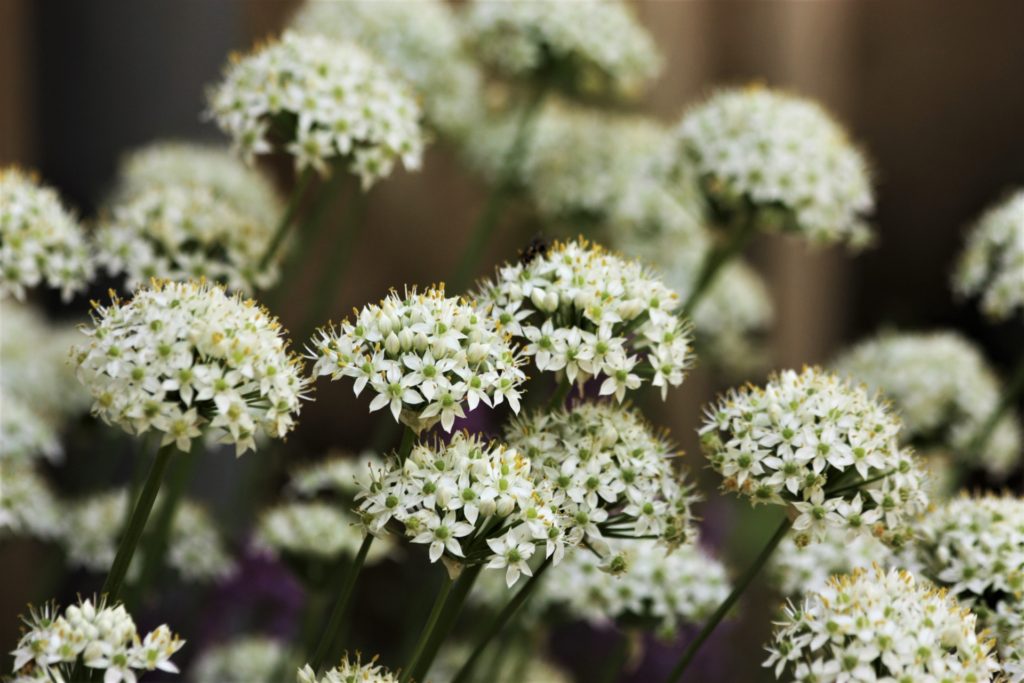
<div id="attachment_35652" style="width: 570px" class="wp-caption aligncenter"><img loading="lazy" decoding="async" aria-describedby="caption-attachment-35652" class="wp-image-35652 size-large" src="https://www.oh-i-see.com/blog/wp-content/uploads/2019/11/wild-onion-blossoms-close-up-1024x683.jpg" alt="Allium flowers reflect the surprising beauty of a staple of every world cuisine, onions. (Image by Sheila Brown, CCO Public Domain)" width="560" height="374" srcset="https://www.oh-i-see.com/blog/wp-content/uploads/2019/11/wild-onion-blossoms-close-up-1024x683.jpg 1024w, https://www.oh-i-see.com/blog/wp-content/uploads/2019/11/wild-onion-blossoms-close-up-300x200.jpg 300w, https://www.oh-i-see.com/blog/wp-content/uploads/2019/11/wild-onion-blossoms-close-up-768x512.jpg 768w, https://www.oh-i-see.com/blog/wp-content/uploads/2019/11/wild-onion-blossoms-close-up-1536x1024.jpg 1536w, https://www.oh-i-see.com/blog/wp-content/uploads/2019/11/wild-onion-blossoms-close-up-207x138.jpg 207w, https://www.oh-i-see.com/blog/wp-content/uploads/2019/11/wild-onion-blossoms-close-up.jpg 1920w" sizes="auto, (max-width: 560px) 100vw, 560px" /><p id="caption-attachment-35652" class="wp-caption-text">Take time to smell the . . . onions? <br />Sheila Brown CCO Public Domain</p></div>
<h2>Crossing Cultures: Peeling the Layers of a Truly Global Food</h2>
<p>Quick—what food is a staple of every global cuisine?</p>
<p><em>Wheat?</em> Nope.  <em>Rice?</em> Guess again. <em>Uh,</em> <em>potatoes?</em> B-z-z-z! Game over!</p>
<p>It&#8217;s the onion.</p>
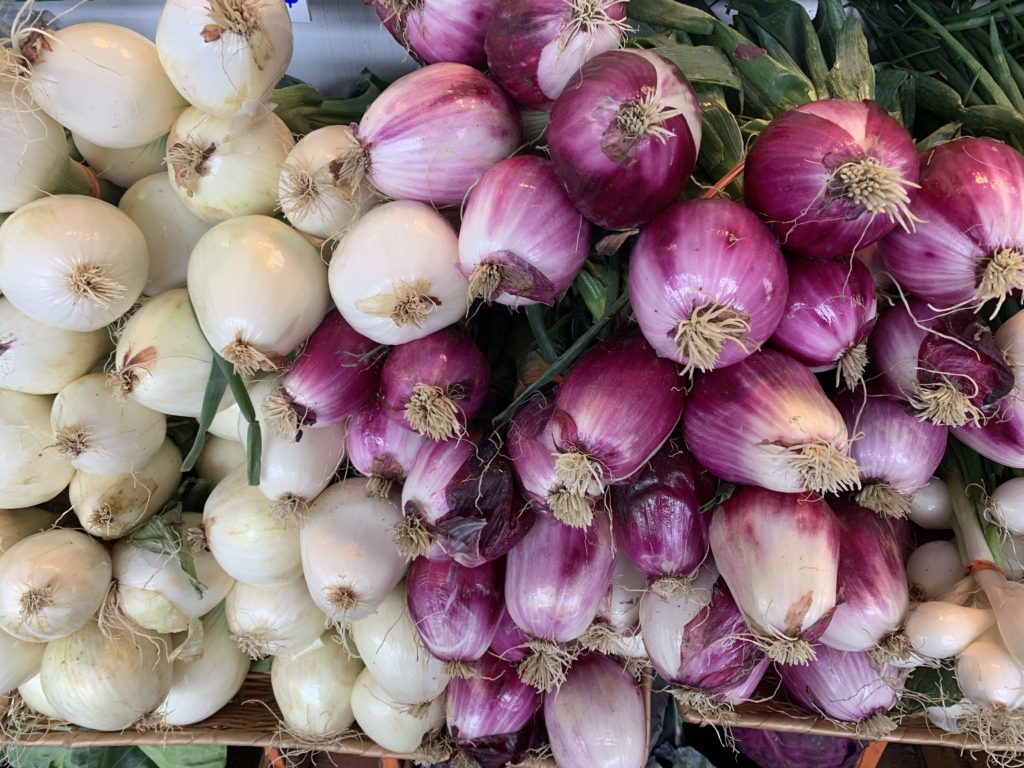
<div id="attachment_35653" style="width: 570px" class="wp-caption aligncenter"><img loading="lazy" decoding="async" aria-describedby="caption-attachment-35653" class="wp-image-35653 size-large" src="https://www.oh-i-see.com/blog/wp-content/uploads/2019/11/IMG_9019-1024x768.jpeg" alt="Piles of fresh onions, a food known for crossing cultures, showcase the appeal of this staple of global cuisine. (Image © Joyce McGreevy)" width="560" height="420" srcset="https://www.oh-i-see.com/blog/wp-content/uploads/2019/11/IMG_9019-1024x768.jpeg 1024w, https://www.oh-i-see.com/blog/wp-content/uploads/2019/11/IMG_9019-300x225.jpeg 300w, https://www.oh-i-see.com/blog/wp-content/uploads/2019/11/IMG_9019-768x576.jpeg 768w, https://www.oh-i-see.com/blog/wp-content/uploads/2019/11/IMG_9019-1536x1152.jpeg 1536w, https://www.oh-i-see.com/blog/wp-content/uploads/2019/11/IMG_9019-2048x1536.jpeg 2048w, https://www.oh-i-see.com/blog/wp-content/uploads/2019/11/IMG_9019-207x155.jpeg 207w" sizes="auto, (max-width: 560px) 100vw, 560px" /><p id="caption-attachment-35653" class="wp-caption-text">Americans eat 22 lbs. of onions per person per year, placing 5th after Libya (66 lbs).<br />© Joyce McGreevy</p></div>
<p>It&#8217;s grown in over 175 countries—twice as many as wheat, according to United Nations estimates. The UN Food and Agriculture Organization lists China as the world’s largest producer of onions, followed by India, the United States, Turkey, and Pakistan.</p>
<p><strong>Oh, I see: </strong>The vegetable that makes eyes water also makes mouths water across cultures.</p>
<p>Put on your goggles as we peel away the layers to see why onions are the apple of every culture&#8217;s eye.</p>
<h4><strong>Older Than Thyme?</strong></h4>
<p>Onions have been cropping up in recipes for more than 5,000 years. Originating between present-day Iran and Pakistan, they could be grown in all kinds of soil and stored for long periods. As a result, onion farming spread quickly around the world.</p>
<p>How quickly? So quickly that when European explorers ‘”introduced” onions to the Americas, they discovered that onions were already there.</p>
<div id="attachment_35655" style="width: 570px" class="wp-caption aligncenter"><img loading="lazy" decoding="async" aria-describedby="caption-attachment-35655" class="wp-image-35655 size-large" src="https://www.oh-i-see.com/blog/wp-content/uploads/2019/11/chicago-4085251_1920-1024x683.jpg" alt="The Chicago River reminds a writer that the city’s name derived from the river’s wild onions, one of many varieties crossing cultures as a staple of global cuisine. (Public domain image by Image by bk_advtravir/Pixabay)" width="560" height="374" srcset="https://www.oh-i-see.com/blog/wp-content/uploads/2019/11/chicago-4085251_1920-1024x683.jpg 1024w, https://www.oh-i-see.com/blog/wp-content/uploads/2019/11/chicago-4085251_1920-300x200.jpg 300w, https://www.oh-i-see.com/blog/wp-content/uploads/2019/11/chicago-4085251_1920-768x512.jpg 768w, https://www.oh-i-see.com/blog/wp-content/uploads/2019/11/chicago-4085251_1920-1536x1024.jpg 1536w, https://www.oh-i-see.com/blog/wp-content/uploads/2019/11/chicago-4085251_1920-207x138.jpg 207w, https://www.oh-i-see.com/blog/wp-content/uploads/2019/11/chicago-4085251_1920.jpg 1920w" sizes="auto, (max-width: 560px) 100vw, 560px" /><p id="caption-attachment-35655" class="wp-caption-text">Chicago&#8217;s name derives from a Native American word for wild onions that grew along its river.<br />Image by bk_advtravir/Pixabay</p></div>
<h4><strong>Nature’s Ninja</strong></h4>
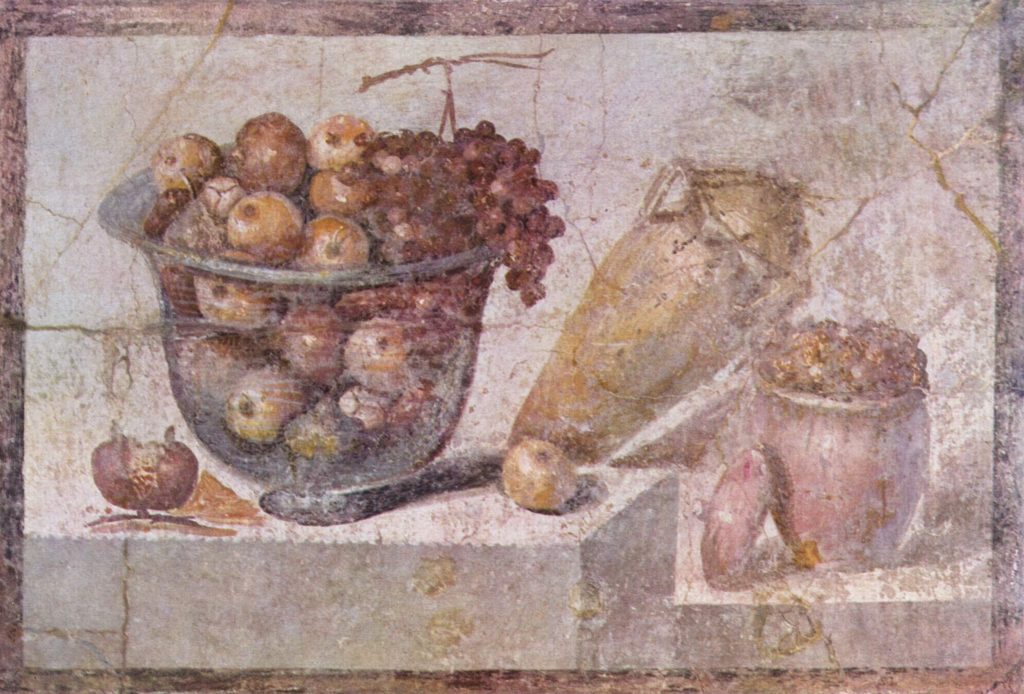
<p>Experts recently declared <a href="https://time.com/5566916/are-garlic-and-onions-healthy/" target="_blank" rel="noopener noreferrer">onions</a> “nutritional powerhouses,” but many world cultures have known that for thousands of years. Egypt’s pyramid builders ate them every day. So did the armies of Alexander the Great.</p>
<p>Onions also crossed cultures as an early form of medicine. From ancient Rome to early India, onions became a cure-all for everything from blisters to battle wounds.</p>
<p>According to Dioscorides, a first-century Greek physician, Olympian athletes fortified themselves by eating onions, drinking onion juice, and rubbing onions all over their bodies. That’s one way to keep the competition—and everyone else—at bay.</p>
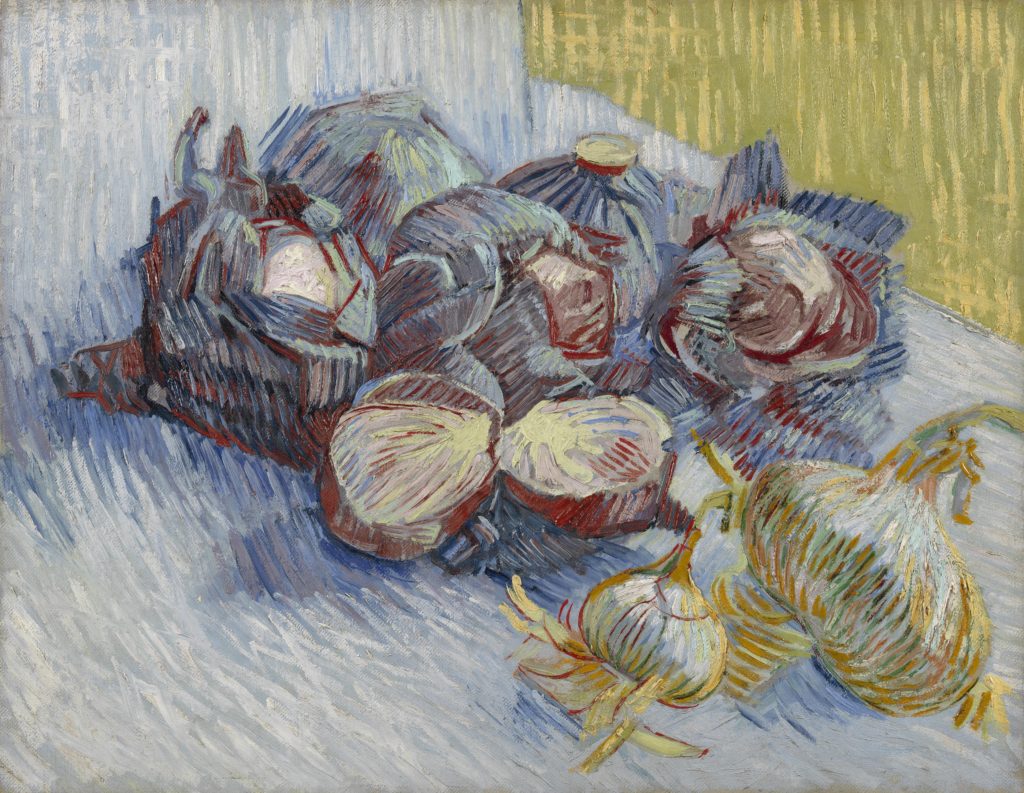
<p><div id="attachment_35660" style="width: 570px" class="wp-caption aligncenter"><img loading="lazy" decoding="async" aria-describedby="caption-attachment-35660" class="wp-image-35660 size-large" src="https://www.oh-i-see.com/blog/wp-content/uploads/2019/11/Pompejanischer_Maler_um_70_001-1024x694.jpg" alt="A fresco from Pompeii shows that onions, originally from Asia, have been crossing cultures to become a staple of global cuisine since ancient times. (public domain image)" width="560" height="380" srcset="https://www.oh-i-see.com/blog/wp-content/uploads/2019/11/Pompejanischer_Maler_um_70_001-1024x694.jpg 1024w, https://www.oh-i-see.com/blog/wp-content/uploads/2019/11/Pompejanischer_Maler_um_70_001-300x203.jpg 300w, https://www.oh-i-see.com/blog/wp-content/uploads/2019/11/Pompejanischer_Maler_um_70_001-768x520.jpg 768w, https://www.oh-i-see.com/blog/wp-content/uploads/2019/11/Pompejanischer_Maler_um_70_001-1536x1040.jpg 1536w, https://www.oh-i-see.com/blog/wp-content/uploads/2019/11/Pompejanischer_Maler_um_70_001-2048x1387.jpg 2048w, https://www.oh-i-see.com/blog/wp-content/uploads/2019/11/Pompejanischer_Maler_um_70_001-207x140.jpg 207w" sizes="auto, (max-width: 560px) 100vw, 560px" /><p id="caption-attachment-35660" class="wp-caption-text">A fresco from Pompeii reflects onions&#8217; prominence in Roman cuisine.<br />[public domain]</p></div><div id="attachment_35659" style="width: 570px" class="wp-caption aligncenter"><img loading="lazy" decoding="async" aria-describedby="caption-attachment-35659" class="wp-image-35659 size-large" src="https://www.oh-i-see.com/blog/wp-content/uploads/2019/11/Rode_kolen_en_uien_-_s0082V1962_-_Van_Gogh_Museum-1024x793.jpg" alt="A faded painting by Vincent van Gogh shows that onions, even aside from being a staple of global cuisines, have inspired art across cultures. (public domain image from Van Gogh Museum, Amsterdam (Vincent van Gogh Foundation))" width="560" height="434" srcset="https://www.oh-i-see.com/blog/wp-content/uploads/2019/11/Rode_kolen_en_uien_-_s0082V1962_-_Van_Gogh_Museum-1024x793.jpg 1024w, https://www.oh-i-see.com/blog/wp-content/uploads/2019/11/Rode_kolen_en_uien_-_s0082V1962_-_Van_Gogh_Museum-300x232.jpg 300w, https://www.oh-i-see.com/blog/wp-content/uploads/2019/11/Rode_kolen_en_uien_-_s0082V1962_-_Van_Gogh_Museum-768x595.jpg 768w, https://www.oh-i-see.com/blog/wp-content/uploads/2019/11/Rode_kolen_en_uien_-_s0082V1962_-_Van_Gogh_Museum-1536x1190.jpg 1536w, https://www.oh-i-see.com/blog/wp-content/uploads/2019/11/Rode_kolen_en_uien_-_s0082V1962_-_Van_Gogh_Museum-2048x1587.jpg 2048w, https://www.oh-i-see.com/blog/wp-content/uploads/2019/11/Rode_kolen_en_uien_-_s0082V1962_-_Van_Gogh_Museum-207x160.jpg 207w" sizes="auto, (max-width: 560px) 100vw, 560px" /><p id="caption-attachment-35659" class="wp-caption-text">In 1887, onions and cabbages inspired this now-faded still life by Vincent van Gogh.<br />Van Gogh Museum, Amsterdam (Vincent van Gogh Foundation) [public domain]</p></div></p>
<h4><strong>Speaking of Onions<br />
</strong></h4>
<p>Onions have rooted themselves across cultures, sometimes in surprising ways. Take food idioms, for instance:</p>
<ul>
<li>In Britain, &#8220;You know your onions&#8221; praises someone&#8217;s expertise.</li>
<li>But in France, <em>S&#8217;occupe-toi tes oignons</em> (&#8220;Take care of your onions&#8221;) means &#8220;Mind your own business!&#8221;</li>
<li>And in Iran, <em>Mam na sar-e piâzam na tah-e piâz</em> (&#8220;I&#8217;m neither the top nor the bottom of the onion&#8221;) means &#8220;It doesn&#8217;t concern me at all!&#8221;</li>
</ul>
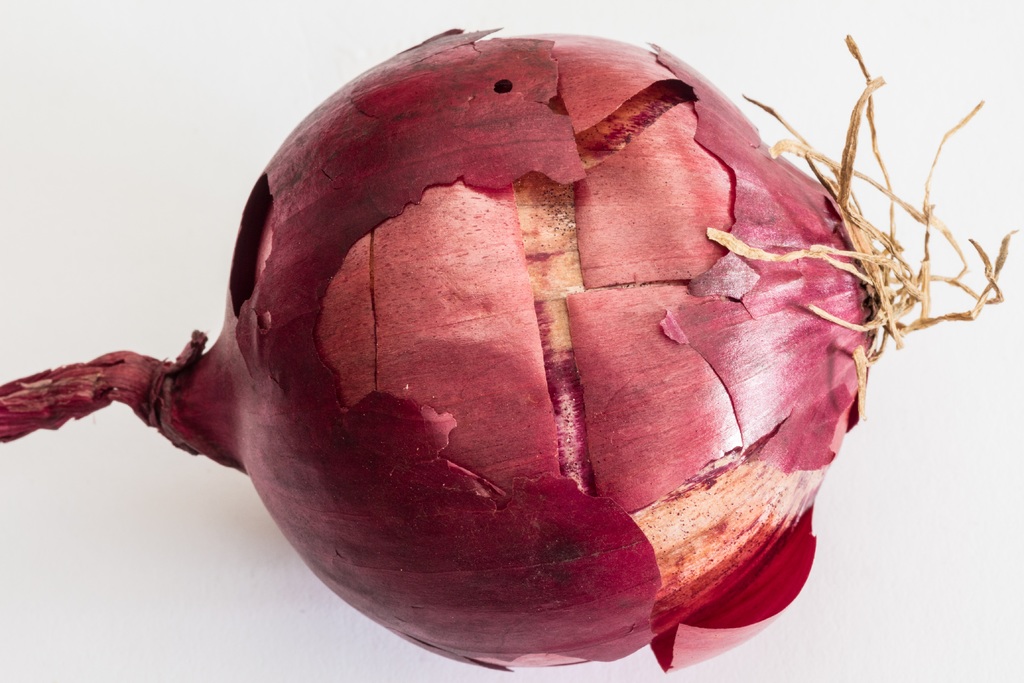
<div id="attachment_35665" style="width: 560px" class="wp-caption aligncenter"><img loading="lazy" decoding="async" aria-describedby="caption-attachment-35665" class="wp-image-35665" src="https://www.oh-i-see.com/blog/wp-content/uploads/2019/11/plant-fruit-flower-food-produce-vegetable-1069428-pxhere.com_.jpg" alt="A thick-skinned red onion, believed to predict weather, signifies that, even aside from being a staple of global cuisine, alliums have influenced ideas across cultures. (public domain image from Pxhere)" width="550" height="367" srcset="https://www.oh-i-see.com/blog/wp-content/uploads/2019/11/plant-fruit-flower-food-produce-vegetable-1069428-pxhere.com_.jpg 1024w, https://www.oh-i-see.com/blog/wp-content/uploads/2019/11/plant-fruit-flower-food-produce-vegetable-1069428-pxhere.com_-300x200.jpg 300w, https://www.oh-i-see.com/blog/wp-content/uploads/2019/11/plant-fruit-flower-food-produce-vegetable-1069428-pxhere.com_-768x512.jpg 768w, https://www.oh-i-see.com/blog/wp-content/uploads/2019/11/plant-fruit-flower-food-produce-vegetable-1069428-pxhere.com_-207x138.jpg 207w" sizes="auto, (max-width: 550px) 100vw, 550px" /><p id="caption-attachment-35665" class="wp-caption-text">Can onions predict weather? An old English rhyme says yes: “Onion skins very thin, <br />/Mild winter coming in./Onion skins very tough,/ Coming winter very rough.”</p></div>
<h4><strong>The Global Prime Ingredient</strong></h4>
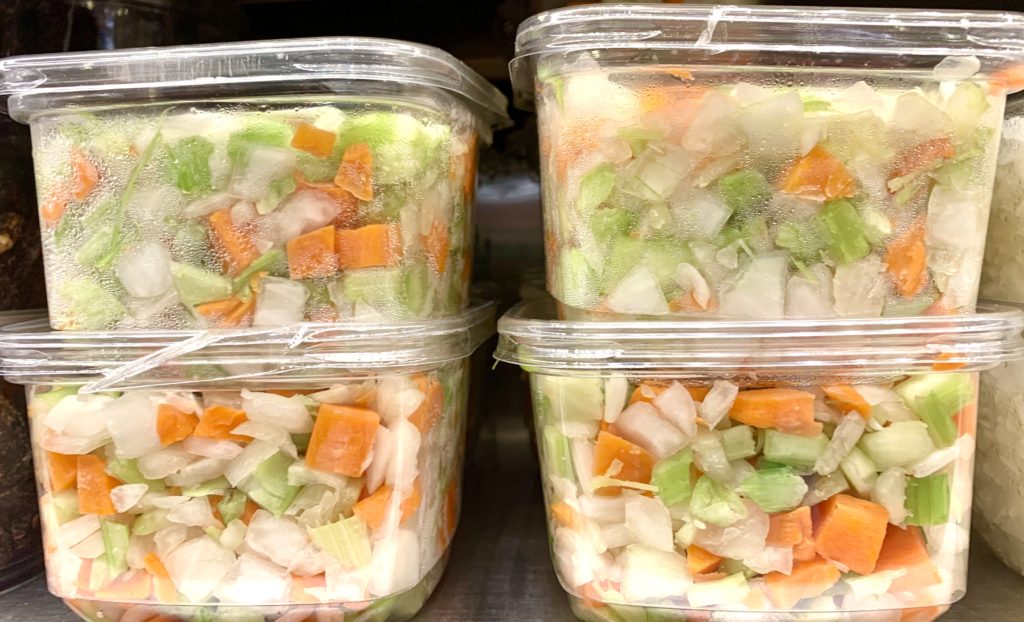
<p>Today, most world cuisines are built on a base of onions.  Several countries feature their own distinctive version of a “culinary trinity”—a three-ingredient combination used to establish a culture’s signature flavor. Now check out the common denominator:</p>
<ul>
<li><strong>Italian Battuto:</strong> onion, garlic, parsley</li>
<li><strong>Lousiana Cajun base:</strong> onions, bell peppers, and celery</li>
<li><strong>Spain’s Sofrito:</strong> onions, tomatoes, garlic</li>
<li><strong>Portugal’s </strong><strong>Refogado: </strong>onions, peppers, tomatoes</li>
<li><strong>Hungary’s top trio:</strong> onion, paprika, lard</li>
<li><strong>India’s top trio:</strong> onion, garlic, ginger</li>
<li><strong>West Africa’s top trio</strong><strong>:</strong> onions, chili peppers, tomatoes</li>
<li><strong>Chinese Xiang Cong base:</strong> green onions, ginger, garlic</li>
<li><strong>French Mirepoix:</strong> onions, carrots, celery</li>
</ul>
<div id="attachment_35668" style="width: 570px" class="wp-caption aligncenter"><img loading="lazy" decoding="async" aria-describedby="caption-attachment-35668" class="wp-image-35668 size-large" src="https://www.oh-i-see.com/blog/wp-content/uploads/2019/11/IMG_2965-2-1024x622.jpeg" alt="Containers of French mire-poix is one example of a “culinary trinity” with onions, a global food base crossing cultures in a variety of ways. (Image © Joyce McGreevy)" width="560" height="340" srcset="https://www.oh-i-see.com/blog/wp-content/uploads/2019/11/IMG_2965-2-1024x622.jpeg 1024w, https://www.oh-i-see.com/blog/wp-content/uploads/2019/11/IMG_2965-2-300x182.jpeg 300w, https://www.oh-i-see.com/blog/wp-content/uploads/2019/11/IMG_2965-2-768x467.jpeg 768w, https://www.oh-i-see.com/blog/wp-content/uploads/2019/11/IMG_2965-2-1536x933.jpeg 1536w, https://www.oh-i-see.com/blog/wp-content/uploads/2019/11/IMG_2965-2-2048x1245.jpeg 2048w, https://www.oh-i-see.com/blog/wp-content/uploads/2019/11/IMG_2965-2-207x126.jpeg 207w, https://www.oh-i-see.com/blog/wp-content/uploads/2019/11/IMG_2965-2-165x100.jpeg 165w" sizes="auto, (max-width: 560px) 100vw, 560px" /><p id="caption-attachment-35668" class="wp-caption-text">It&#8217;s my mire-poix and I&#8217;ll cry if I want to! But tear-free options are easy to find.<br />© Joyce McGreevy</p></div>
<h4><strong>A Gallivanting Globe</strong></h4>
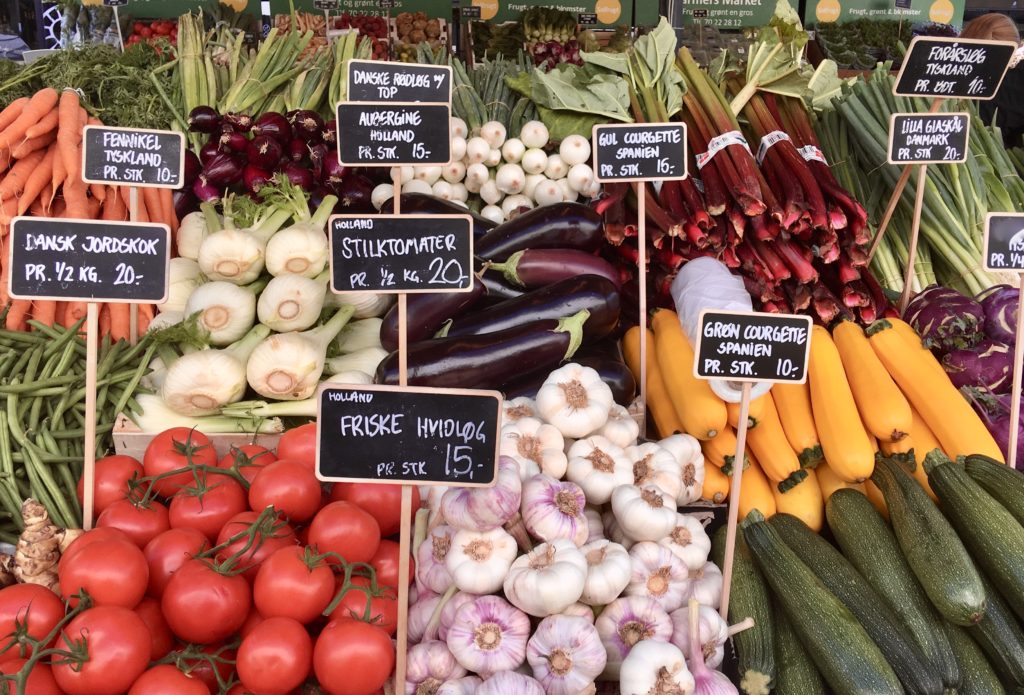
<p>For travelers who love to cook, onions at farmers markets offer the affordable pleasure of broadening one’s palate.</p>
<div id="attachment_35696" style="width: 570px" class="wp-caption aligncenter"><img loading="lazy" decoding="async" aria-describedby="caption-attachment-35696" class="wp-image-35696 size-large" src="https://www.oh-i-see.com/blog/wp-content/uploads/2019/11/IMG_2715-1024x695.jpeg" alt="Produce at Copenhagen’s Torvehallerne market includes alliums like onions, a culture crossing staple of global cuisine. (Image © Joyce McGreevy)" width="560" height="380" srcset="https://www.oh-i-see.com/blog/wp-content/uploads/2019/11/IMG_2715-1024x695.jpeg 1024w, https://www.oh-i-see.com/blog/wp-content/uploads/2019/11/IMG_2715-300x204.jpeg 300w, https://www.oh-i-see.com/blog/wp-content/uploads/2019/11/IMG_2715-768x521.jpeg 768w, https://www.oh-i-see.com/blog/wp-content/uploads/2019/11/IMG_2715-1536x1042.jpeg 1536w, https://www.oh-i-see.com/blog/wp-content/uploads/2019/11/IMG_2715-2048x1390.jpeg 2048w, https://www.oh-i-see.com/blog/wp-content/uploads/2019/11/IMG_2715-207x140.jpeg 207w" sizes="auto, (max-width: 560px) 100vw, 560px" /><p id="caption-attachment-35696" class="wp-caption-text">Shop Copenhagen&#8217;s Torvehallerne market to cook Denmark&#8217;s famous <br /><a href="http://scandinavtoday.blogspot.com/2014/04/how-to-make-danish-fried-onions-amazing.html" target="_blank" rel="noopener noreferrer"><strong>Bløde Løg</strong></a>, pan-fried onions. <br />© Joyce McGreevy</p></div>
<p>From the Tokyo Long White to the golden German Stuttgart to India’s rosy Arka Bindhu, onions are edible globes that embody global cuisine&#8217;s <a href="https://www.saveur.com/article/Techniques/onion-guide/" target="_blank" rel="noopener noreferrer">variety</a>.</p>
<p>In Italy, <em>cipolline</em>, flat purple or white onions have a surprisingly buttery taste brought out by simmering or roasting. Cook them low and slow with a dash of espresso and a splash of Montepulciano to make rich gravy for an Italian-style pot roast.</p>
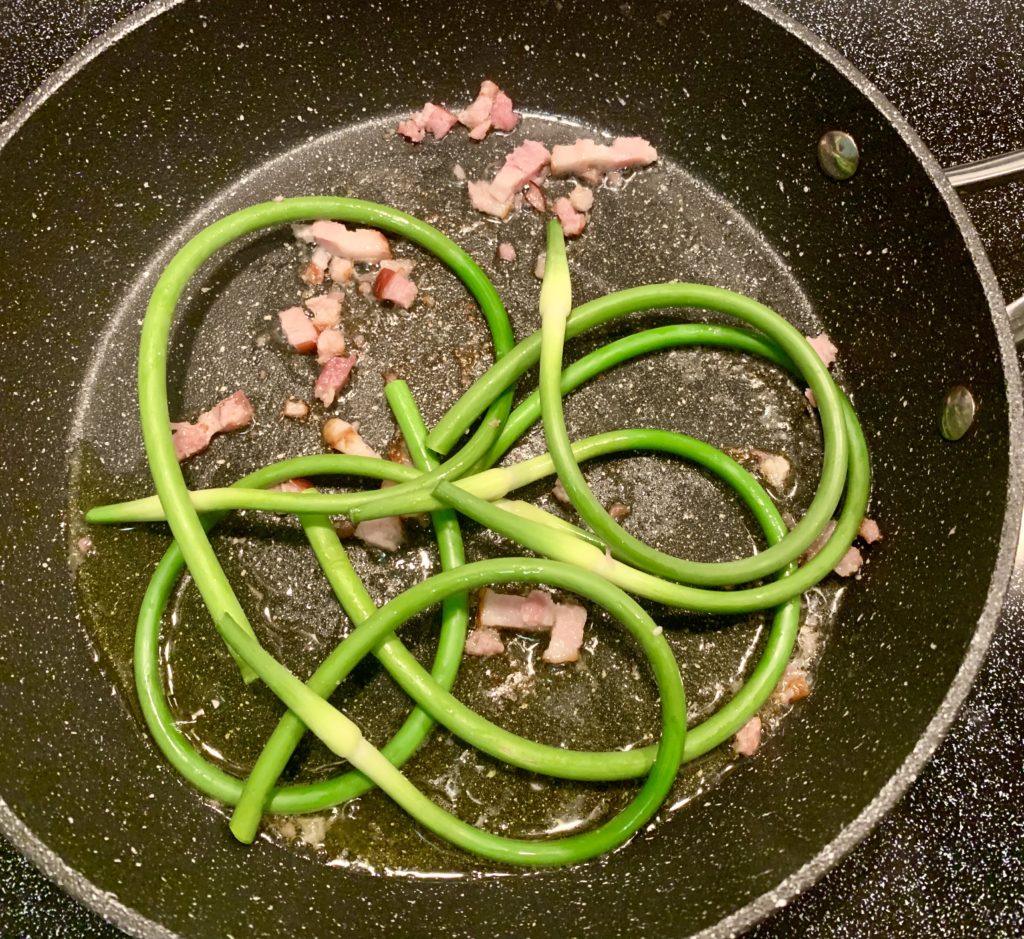
<div id="attachment_35682" style="width: 570px" class="wp-caption aligncenter"><img loading="lazy" decoding="async" aria-describedby="caption-attachment-35682" class="wp-image-35682 size-large" src="https://www.oh-i-see.com/blog/wp-content/uploads/2019/11/IMG_9042-1024x939.jpeg" alt="Sautéed ramps in a pan reflect the wide range of the allium family, which includes onions, a staple of global cuisine across cultures. (Image © Joyce McGreevy)" width="560" height="514" srcset="https://www.oh-i-see.com/blog/wp-content/uploads/2019/11/IMG_9042-1024x939.jpeg 1024w, https://www.oh-i-see.com/blog/wp-content/uploads/2019/11/IMG_9042-300x275.jpeg 300w, https://www.oh-i-see.com/blog/wp-content/uploads/2019/11/IMG_9042-768x704.jpeg 768w, https://www.oh-i-see.com/blog/wp-content/uploads/2019/11/IMG_9042-1536x1408.jpeg 1536w, https://www.oh-i-see.com/blog/wp-content/uploads/2019/11/IMG_9042-2048x1878.jpeg 2048w, https://www.oh-i-see.com/blog/wp-content/uploads/2019/11/IMG_9042-207x190.jpeg 207w" sizes="auto, (max-width: 560px) 100vw, 560px" /><p id="caption-attachment-35682" class="wp-caption-text">The Allium family includes the onion’s wild cousin, ramps (above), scallions, shallots, garlic, <br />leeks, and chives.<br />© Joyce McGreevy</p></div>
<p>In France, “gray” shallots, (<em>échalotes grises/griselles</em>) are more colorful than their name suggests. Count on them to add complexity to a creamy vinaigrette.</p>
<p>North American farmers markets are also rich in choices: New York’s potent “<a href="http://www.bbc.com/travel/story/20190822-new-yorks-beloved-black-dirt-onions" target="_blank" rel="noopener noreferrer">Black Dirt</a>” onions, Texan and Georgian Vidalias,  Washington’s Walla Walla and Siskiyou, Hawaii’s Maui onions.</p>
<h4><strong>Why Did the Onion Cross the Road?</strong></h4>
<p>For sheer global expansiveness, there’s the Egyptian Walking Onion, also known as the Welsh Onion, native to India or Pakistan, and introduced to Europe by the Romans. It’s also the world’s most <a href="https://wimastergardener.org/article/egyptian-walking-onions/" target="_blank" rel="noopener noreferrer">unusual onion</a>: Bulbs grow up top like fruit on a tree and then topple over, causing new plants to grow—hence the effect of &#8220;walking&#8221; across a field.</p>
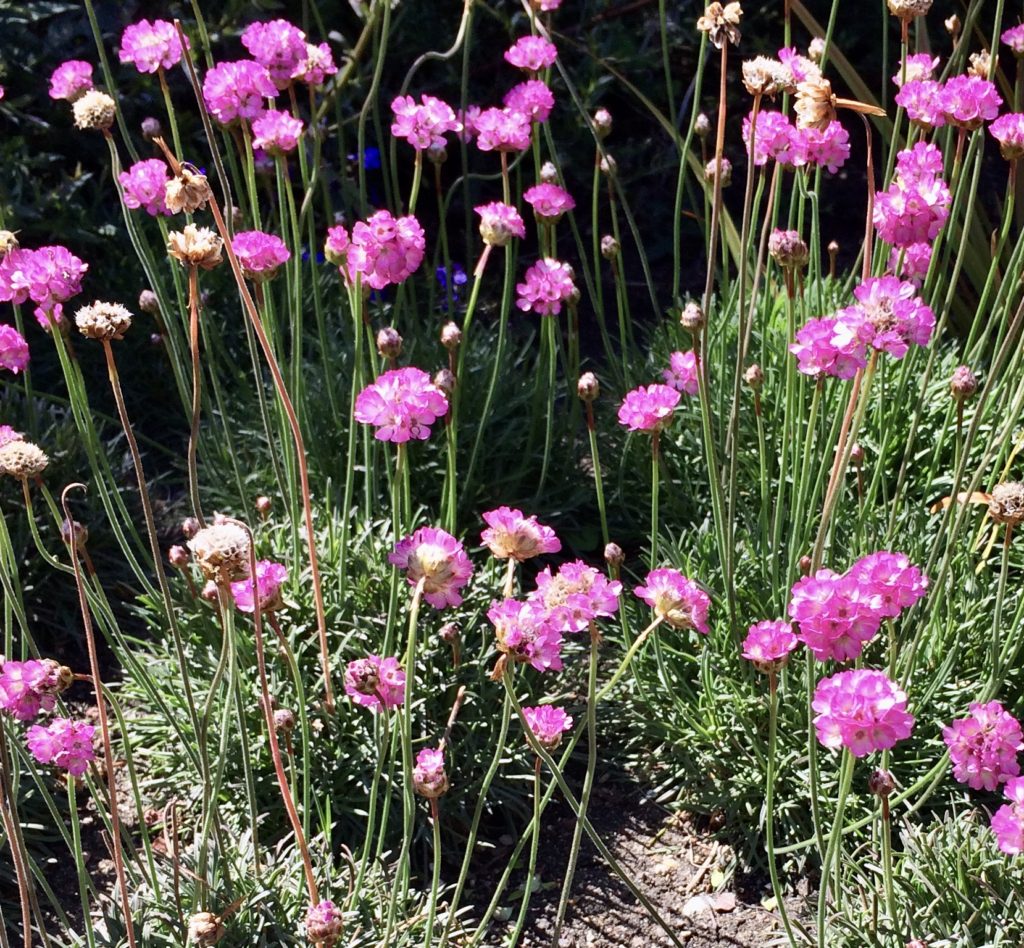
<div id="attachment_35689" style="width: 570px" class="wp-caption aligncenter"><img loading="lazy" decoding="async" aria-describedby="caption-attachment-35689" class="wp-image-35689 size-large" src="https://www.oh-i-see.com/blog/wp-content/uploads/2019/11/IMG_3838-1024x948.jpeg" alt="Chive blossoms reflect the delicate side of a pungent staple of world cuisine, onions. (Image © Joyce McGreevy)" width="560" height="518" srcset="https://www.oh-i-see.com/blog/wp-content/uploads/2019/11/IMG_3838-1024x948.jpeg 1024w, https://www.oh-i-see.com/blog/wp-content/uploads/2019/11/IMG_3838-300x278.jpeg 300w, https://www.oh-i-see.com/blog/wp-content/uploads/2019/11/IMG_3838-768x711.jpeg 768w, https://www.oh-i-see.com/blog/wp-content/uploads/2019/11/IMG_3838-1536x1422.jpeg 1536w, https://www.oh-i-see.com/blog/wp-content/uploads/2019/11/IMG_3838-207x192.jpeg 207w, https://www.oh-i-see.com/blog/wp-content/uploads/2019/11/IMG_3838.jpeg 1659w" sizes="auto, (max-width: 560px) 100vw, 560px" /><p id="caption-attachment-35689" class="wp-caption-text">These are <em>onions</em>? Edible chive blossoms show onions&#8217; more delicate side.<br />© Joyce McGreevy</p></div>
<h4>A Multi-Layered Experience</h4>
<p>Whether you chew it or eschew it, the humble onion has moved across cultures and earned worldwide recognition. It has even moved in and out of the food scene, obsessed over by <a href="https://www.bbc.com/news/magazine-30549150" target="_blank" rel="noopener noreferrer">ancient</a> Mesopotamian cooks, used as European <a href="http://britishonions.co.uk/essential-onion-facts/" target="_blank" rel="noopener noreferrer">currency</a>, and made into eco-friendly <a href="https://www.thespruce.com/diy-onion-skin-natural-dye-1835662" target="_blank" rel="noopener noreferrer">dyes</a> in many countries.</p>
<p>In <a href="https://www.nytimes.com/2019/10/01/world/asia/india-modi-onion-prices.html" target="_blank" rel="noopener noreferrer">India</a>, this staple of global cuisine has affected economic policy. In the U.S., onions figured into federal law—after two <em>rapscallions</em> cornered the onion market, causing a nationwide stink. Just listen to the wild, true &#8220;Tale of the <a href="https://www.npr.org/sections/money/2015/10/14/448718171/episode-657-the-tale-of-the-onion-king" target="_blank" rel="noopener noreferrer">Onion King</a>&#8221; and you&#8217;ll <em>really</em> know your onions.</p>
<p>In short, the onion dips into history, runs rings around other veggies, and really stands up to a grilling.</p>
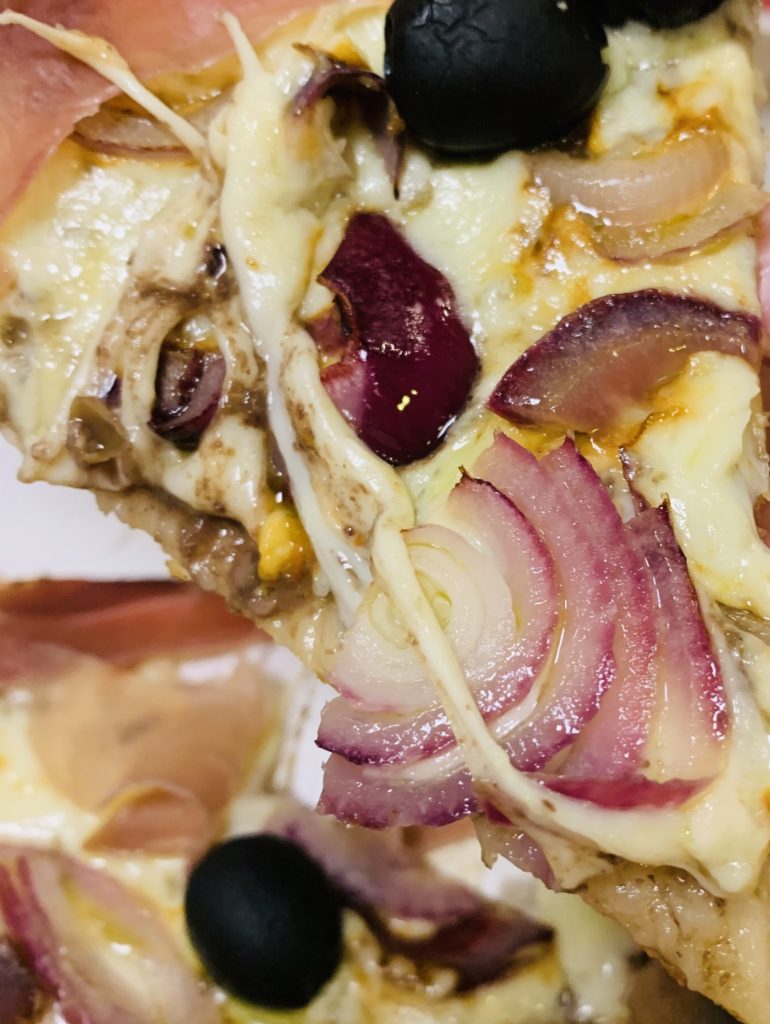
<div id="attachment_35687" style="width: 570px" class="wp-caption aligncenter"><img loading="lazy" decoding="async" aria-describedby="caption-attachment-35687" class="wp-image-35687 size-large" src="https://www.oh-i-see.com/blog/wp-content/uploads/2019/11/IMG_1987-2-770x1024.jpeg" alt="An onion-topped slice of Italian pizza shows why onions are a staple of global cuisine, crossing cultures from Italy to India. (Image © Joyce McGreevy)" width="560" height="745" srcset="https://www.oh-i-see.com/blog/wp-content/uploads/2019/11/IMG_1987-2-770x1024.jpeg 770w, https://www.oh-i-see.com/blog/wp-content/uploads/2019/11/IMG_1987-2-225x300.jpeg 225w, https://www.oh-i-see.com/blog/wp-content/uploads/2019/11/IMG_1987-2-768x1022.jpeg 768w, https://www.oh-i-see.com/blog/wp-content/uploads/2019/11/IMG_1987-2-1155x1536.jpeg 1155w, https://www.oh-i-see.com/blog/wp-content/uploads/2019/11/IMG_1987-2-1539x2048.jpeg 1539w, https://www.oh-i-see.com/blog/wp-content/uploads/2019/11/IMG_1987-2-156x207.jpeg 156w, https://www.oh-i-see.com/blog/wp-content/uploads/2019/11/IMG_1987-2-300x399.jpeg 300w, https://www.oh-i-see.com/blog/wp-content/uploads/2019/11/IMG_1987-2-scaled.jpeg 1924w" sizes="auto, (max-width: 560px) 100vw, 560px" /><p id="caption-attachment-35687" class="wp-caption-text">In Comacchio, Italy, onions add bite to a slice. How do <em>you</em> like onions? <br />© Joyce McGreevy</p></div>
<p><em>Ready to peel some onions? Our downloadable PDF offers a world tour of recipe ideas for using this most versatile vegetable.</em></p>
<p><a href="https://www.oh-i-see.com/blog/wp-content/uploads/2019/11/OnionRecipesGuide.pdf"><img loading="lazy" decoding="async" class="aligncenter size-full wp-image-35713" src="https://www.oh-i-see.com/blog/wp-content/uploads/2019/11/OnionRecipesGuide1-CTA.jpg" alt="" width="450" height="120" srcset="https://www.oh-i-see.com/blog/wp-content/uploads/2019/11/OnionRecipesGuide1-CTA.jpg 450w, https://www.oh-i-see.com/blog/wp-content/uploads/2019/11/OnionRecipesGuide1-CTA-300x80.jpg 300w, https://www.oh-i-see.com/blog/wp-content/uploads/2019/11/OnionRecipesGuide1-CTA-207x55.jpg 207w" sizes="auto, (max-width: 450px) 100vw, 450px" /></a></p>
<p>&nbsp;</p>
<p><a href="#comments"><em>Comme</em>nt</a> <em>on the post below.</em></p>
{"id":35645,"date":"2019-11-26T03:00:15","date_gmt":"2019-11-26T11:00:15","guid":{"rendered":"https:\/\/www.oh-i-see.com\/blog\/?p=35645"},"modified":"2021-07-21T07:25:14","modified_gmt":"2021-07-21T14:25:14","slug":"do-you-know-your-onions","status":"publish","type":"post","link":"https:\/\/www.oh-i-see.com\/blog\/do-you-know-your-onions\/","title":{"rendered":"Do You Know Your Onions?"},"content":{"rendered":"<div id=\"attachment_35652\" style=\"width: 570px\" class=\"wp-caption aligncenter\"><img loading=\"lazy\" decoding=\"async\" aria-describedby=\"caption-attachment-35652\" class=\"wp-image-35652 size-large\" src=\"https:\/\/www.oh-i-see.com\/blog\/wp-content\/uploads\/2019\/11\/wild-onion-blossoms-close-up-1024x683.jpg\" alt=\"Allium flowers reflect the surprising beauty of a staple of every world cuisine, onions. (Image by Sheila Brown, CCO Public Domain)\" width=\"560\" height=\"374\" srcset=\"https:\/\/www.oh-i-see.com\/blog\/wp-content\/uploads\/2019\/11\/wild-onion-blossoms-close-up-1024x683.jpg 1024w, https:\/\/www.oh-i-see.com\/blog\/wp-content\/uploads\/2019\/11\/wild-onion-blossoms-close-up-300x200.jpg 300w, https:\/\/www.oh-i-see.com\/blog\/wp-content\/uploads\/2019\/11\/wild-onion-blossoms-close-up-768x512.jpg 768w, https:\/\/www.oh-i-see.com\/blog\/wp-content\/uploads\/2019\/11\/wild-onion-blossoms-close-up-1536x1024.jpg 1536w, https:\/\/www.oh-i-see.com\/blog\/wp-content\/uploads\/2019\/11\/wild-onion-blossoms-close-up-207x138.jpg 207w, https:\/\/www.oh-i-see.com\/blog\/wp-content\/uploads\/2019\/11\/wild-onion-blossoms-close-up.jpg 1920w\" sizes=\"auto, (max-width: 560px) 100vw, 560px\" \/><p id=\"caption-attachment-35652\" class=\"wp-caption-text\">Take time to smell the . . . onions? <br \/>Sheila Brown CCO Public Domain<\/p><\/div>\n<h2>Crossing Cultures: Peeling the Layers of a Truly Global Food<\/h2>\n<p>Quick\u2014what food is a staple of every global cuisine?<\/p>\n<p><em>Wheat?<\/em> Nope.\u00a0 <em>Rice?<\/em> Guess again. <em>Uh,<\/em> <em>potatoes?<\/em> B-z-z-z! Game over!<\/p>\n<p>It&#8217;s the onion.<\/p>\n<div id=\"attachment_35653\" style=\"width: 570px\" class=\"wp-caption aligncenter\"><img loading=\"lazy\" decoding=\"async\" aria-describedby=\"caption-attachment-35653\" class=\"wp-image-35653 size-large\" src=\"https:\/\/www.oh-i-see.com\/blog\/wp-content\/uploads\/2019\/11\/IMG_9019-1024x768.jpeg\" alt=\"Piles of fresh onions, a food known for crossing cultures, showcase the appeal of this staple of global cuisine. (Image \u00a9 Joyce McGreevy)\" width=\"560\" height=\"420\" srcset=\"https:\/\/www.oh-i-see.com\/blog\/wp-content\/uploads\/2019\/11\/IMG_9019-1024x768.jpeg 1024w, https:\/\/www.oh-i-see.com\/blog\/wp-content\/uploads\/2019\/11\/IMG_9019-300x225.jpeg 300w, https:\/\/www.oh-i-see.com\/blog\/wp-content\/uploads\/2019\/11\/IMG_9019-768x576.jpeg 768w, https:\/\/www.oh-i-see.com\/blog\/wp-content\/uploads\/2019\/11\/IMG_9019-1536x1152.jpeg 1536w, https:\/\/www.oh-i-see.com\/blog\/wp-content\/uploads\/2019\/11\/IMG_9019-2048x1536.jpeg 2048w, https:\/\/www.oh-i-see.com\/blog\/wp-content\/uploads\/2019\/11\/IMG_9019-207x155.jpeg 207w\" sizes=\"auto, (max-width: 560px) 100vw, 560px\" \/><p id=\"caption-attachment-35653\" class=\"wp-caption-text\">Americans eat 22 lbs. of onions per person per year, placing 5th after Libya (66 lbs).<br \/>\u00a9 Joyce McGreevy<\/p><\/div>\n<p>It&#8217;s grown in over 175 countries\u2014twice as many as wheat, according to United Nations estimates. The UN Food and Agriculture Organization lists China as the world\u2019s largest producer of onions, followed by India, the United States, Turkey, and Pakistan.<\/p>\n<p><strong>Oh, I see: <\/strong>The vegetable that makes eyes water also makes mouths water across cultures.<\/p>\n<p>Put on your goggles as we peel away the layers to see why onions are the apple of every culture&#8217;s eye.<\/p>\n<h4><strong>Older Than Thyme?<\/strong><\/h4>\n<p>Onions have been cropping up in recipes for more than 5,000 years. Originating between present-day Iran and Pakistan, they could be grown in all kinds of soil and stored for long periods. As a result, onion farming spread quickly around the world.<\/p>\n<p>How quickly? So quickly that when European explorers \u2018\u201dintroduced\u201d onions to the Americas, they discovered that onions were already there.<\/p>\n<div id=\"attachment_35655\" style=\"width: 570px\" class=\"wp-caption aligncenter\"><img loading=\"lazy\" decoding=\"async\" aria-describedby=\"caption-attachment-35655\" class=\"wp-image-35655 size-large\" src=\"https:\/\/www.oh-i-see.com\/blog\/wp-content\/uploads\/2019\/11\/chicago-4085251_1920-1024x683.jpg\" alt=\"The Chicago River reminds a writer that the city\u2019s name derived from the river\u2019s wild onions, one of many varieties crossing cultures as a staple of global cuisine. (Public domain image by Image by bk_advtravir\/Pixabay)\" width=\"560\" height=\"374\" srcset=\"https:\/\/www.oh-i-see.com\/blog\/wp-content\/uploads\/2019\/11\/chicago-4085251_1920-1024x683.jpg 1024w, https:\/\/www.oh-i-see.com\/blog\/wp-content\/uploads\/2019\/11\/chicago-4085251_1920-300x200.jpg 300w, https:\/\/www.oh-i-see.com\/blog\/wp-content\/uploads\/2019\/11\/chicago-4085251_1920-768x512.jpg 768w, https:\/\/www.oh-i-see.com\/blog\/wp-content\/uploads\/2019\/11\/chicago-4085251_1920-1536x1024.jpg 1536w, https:\/\/www.oh-i-see.com\/blog\/wp-content\/uploads\/2019\/11\/chicago-4085251_1920-207x138.jpg 207w, https:\/\/www.oh-i-see.com\/blog\/wp-content\/uploads\/2019\/11\/chicago-4085251_1920.jpg 1920w\" sizes=\"auto, (max-width: 560px) 100vw, 560px\" \/><p id=\"caption-attachment-35655\" class=\"wp-caption-text\">Chicago&#8217;s name derives from a Native American word for wild onions that grew along its river.<br \/>Image by bk_advtravir\/Pixabay<\/p><\/div>\n<h4><strong>Nature\u2019s Ninja<\/strong><\/h4>\n<p>Experts recently declared <a href=\"https:\/\/time.com\/5566916\/are-garlic-and-onions-healthy\/\" target=\"_blank\" rel=\"noopener noreferrer\">onions<\/a> \u201cnutritional powerhouses,\u201d but many world cultures have known that for thousands of years. Egypt\u2019s pyramid builders ate them every day. So did the armies of Alexander the Great.<\/p>\n<p>Onions also crossed cultures as an early form of medicine. From ancient Rome to early India, onions became a cure-all for everything from blisters to battle wounds.<\/p>\n<p>According to Dioscorides, a first-century Greek physician, Olympian athletes fortified themselves by eating onions, drinking onion juice, and rubbing onions all over their bodies. That\u2019s one way to keep the competition\u2014and everyone else\u2014at bay.<\/p>\n<p><div id=\"attachment_35660\" style=\"width: 570px\" class=\"wp-caption aligncenter\"><img loading=\"lazy\" decoding=\"async\" aria-describedby=\"caption-attachment-35660\" class=\"wp-image-35660 size-large\" src=\"https:\/\/www.oh-i-see.com\/blog\/wp-content\/uploads\/2019\/11\/Pompejanischer_Maler_um_70_001-1024x694.jpg\" alt=\"A fresco from Pompeii shows that onions, originally from Asia, have been crossing cultures to become a staple of global cuisine since ancient times. (public domain image)\" width=\"560\" height=\"380\" srcset=\"https:\/\/www.oh-i-see.com\/blog\/wp-content\/uploads\/2019\/11\/Pompejanischer_Maler_um_70_001-1024x694.jpg 1024w, https:\/\/www.oh-i-see.com\/blog\/wp-content\/uploads\/2019\/11\/Pompejanischer_Maler_um_70_001-300x203.jpg 300w, https:\/\/www.oh-i-see.com\/blog\/wp-content\/uploads\/2019\/11\/Pompejanischer_Maler_um_70_001-768x520.jpg 768w, https:\/\/www.oh-i-see.com\/blog\/wp-content\/uploads\/2019\/11\/Pompejanischer_Maler_um_70_001-1536x1040.jpg 1536w, https:\/\/www.oh-i-see.com\/blog\/wp-content\/uploads\/2019\/11\/Pompejanischer_Maler_um_70_001-2048x1387.jpg 2048w, https:\/\/www.oh-i-see.com\/blog\/wp-content\/uploads\/2019\/11\/Pompejanischer_Maler_um_70_001-207x140.jpg 207w\" sizes=\"auto, (max-width: 560px) 100vw, 560px\" \/><p id=\"caption-attachment-35660\" class=\"wp-caption-text\">A fresco from Pompeii reflects onions&#8217; prominence in Roman cuisine.<br \/>[public domain]<\/p><\/div><div id=\"attachment_35659\" style=\"width: 570px\" class=\"wp-caption aligncenter\"><img loading=\"lazy\" decoding=\"async\" aria-describedby=\"caption-attachment-35659\" class=\"wp-image-35659 size-large\" src=\"https:\/\/www.oh-i-see.com\/blog\/wp-content\/uploads\/2019\/11\/Rode_kolen_en_uien_-_s0082V1962_-_Van_Gogh_Museum-1024x793.jpg\" alt=\"A faded painting by Vincent van Gogh shows that onions, even aside from being a staple of global cuisines, have inspired art across cultures. (public domain image from Van Gogh Museum, Amsterdam (Vincent van Gogh Foundation))\" width=\"560\" height=\"434\" srcset=\"https:\/\/www.oh-i-see.com\/blog\/wp-content\/uploads\/2019\/11\/Rode_kolen_en_uien_-_s0082V1962_-_Van_Gogh_Museum-1024x793.jpg 1024w, https:\/\/www.oh-i-see.com\/blog\/wp-content\/uploads\/2019\/11\/Rode_kolen_en_uien_-_s0082V1962_-_Van_Gogh_Museum-300x232.jpg 300w, https:\/\/www.oh-i-see.com\/blog\/wp-content\/uploads\/2019\/11\/Rode_kolen_en_uien_-_s0082V1962_-_Van_Gogh_Museum-768x595.jpg 768w, https:\/\/www.oh-i-see.com\/blog\/wp-content\/uploads\/2019\/11\/Rode_kolen_en_uien_-_s0082V1962_-_Van_Gogh_Museum-1536x1190.jpg 1536w, https:\/\/www.oh-i-see.com\/blog\/wp-content\/uploads\/2019\/11\/Rode_kolen_en_uien_-_s0082V1962_-_Van_Gogh_Museum-2048x1587.jpg 2048w, https:\/\/www.oh-i-see.com\/blog\/wp-content\/uploads\/2019\/11\/Rode_kolen_en_uien_-_s0082V1962_-_Van_Gogh_Museum-207x160.jpg 207w\" sizes=\"auto, (max-width: 560px) 100vw, 560px\" \/><p id=\"caption-attachment-35659\" class=\"wp-caption-text\">In 1887, onions and cabbages inspired this now-faded still life by Vincent van Gogh.<br \/>Van Gogh Museum, Amsterdam (Vincent van Gogh Foundation) [public domain]<\/p><\/div><\/p>\n<h4><strong>Speaking of Onions<br \/>\n<\/strong><\/h4>\n<p>Onions have rooted themselves across cultures, sometimes in surprising ways. Take food idioms, for instance:<\/p>\n<ul>\n<li>In Britain, &#8220;You know your onions&#8221; praises someone&#8217;s expertise.<\/li>\n<li>But in France, <em>S&#8217;occupe-toi tes oignons<\/em> (&#8220;Take care of your onions&#8221;) means &#8220;Mind your own business!&#8221;<\/li>\n<li>And in Iran, <em>Mam na sar-e pi\u00e2zam na tah-e pi\u00e2z<\/em> (&#8220;I&#8217;m neither the top nor the bottom of the onion&#8221;) means &#8220;It doesn&#8217;t concern me at all!&#8221;<\/li>\n<\/ul>\n<div id=\"attachment_35665\" style=\"width: 560px\" class=\"wp-caption aligncenter\"><img loading=\"lazy\" decoding=\"async\" aria-describedby=\"caption-attachment-35665\" class=\"wp-image-35665\" src=\"https:\/\/www.oh-i-see.com\/blog\/wp-content\/uploads\/2019\/11\/plant-fruit-flower-food-produce-vegetable-1069428-pxhere.com_.jpg\" alt=\"A thick-skinned red onion, believed to predict weather, signifies that, even aside from being a staple of global cuisine, alliums have influenced ideas across cultures. (public domain image from Pxhere)\" width=\"550\" height=\"367\" srcset=\"https:\/\/www.oh-i-see.com\/blog\/wp-content\/uploads\/2019\/11\/plant-fruit-flower-food-produce-vegetable-1069428-pxhere.com_.jpg 1024w, https:\/\/www.oh-i-see.com\/blog\/wp-content\/uploads\/2019\/11\/plant-fruit-flower-food-produce-vegetable-1069428-pxhere.com_-300x200.jpg 300w, https:\/\/www.oh-i-see.com\/blog\/wp-content\/uploads\/2019\/11\/plant-fruit-flower-food-produce-vegetable-1069428-pxhere.com_-768x512.jpg 768w, https:\/\/www.oh-i-see.com\/blog\/wp-content\/uploads\/2019\/11\/plant-fruit-flower-food-produce-vegetable-1069428-pxhere.com_-207x138.jpg 207w\" sizes=\"auto, (max-width: 550px) 100vw, 550px\" \/><p id=\"caption-attachment-35665\" class=\"wp-caption-text\">Can onions predict weather? An old English rhyme says yes: \u201cOnion skins very thin, <br \/>\/Mild winter coming in.\/Onion skins very tough,\/ Coming winter very rough.\u201d<\/p><\/div>\n<h4><strong>The Global Prime Ingredient<\/strong><\/h4>\n<p>Today, most world cuisines are built on a base of onions.\u00a0 Several countries feature their own distinctive version of a \u201cculinary trinity\u201d\u2014a three-ingredient combination used to establish a culture\u2019s signature flavor. Now check out the common denominator:<\/p>\n<ul>\n<li><strong>Italian Battuto:<\/strong> onion, garlic, parsley<\/li>\n<li><strong>Lousiana Cajun base:<\/strong> onions, bell peppers, and celery<\/li>\n<li><strong>Spain\u2019s Sofrito:<\/strong> onions, tomatoes, garlic<\/li>\n<li><strong>Portugal\u2019s <\/strong><strong>Refogado: <\/strong>onions, peppers, tomatoes<\/li>\n<li><strong>Hungary\u2019s top trio:<\/strong> onion, paprika, lard<\/li>\n<li><strong>India\u2019s top trio:<\/strong> onion, garlic, ginger<\/li>\n<li><strong>West Africa\u2019s top trio<\/strong><strong>:<\/strong> onions, chili peppers, tomatoes<\/li>\n<li><strong>Chinese Xiang Cong base:<\/strong> green onions, ginger, garlic<\/li>\n<li><strong>French Mirepoix:<\/strong> onions, carrots, celery<\/li>\n<\/ul>\n<div id=\"attachment_35668\" style=\"width: 570px\" class=\"wp-caption aligncenter\"><img loading=\"lazy\" decoding=\"async\" aria-describedby=\"caption-attachment-35668\" class=\"wp-image-35668 size-large\" src=\"https:\/\/www.oh-i-see.com\/blog\/wp-content\/uploads\/2019\/11\/IMG_2965-2-1024x622.jpeg\" alt=\"Containers of French mire-poix is one example of a \u201cculinary trinity\u201d with onions, a global food base crossing cultures in a variety of ways. (Image \u00a9 Joyce McGreevy)\" width=\"560\" height=\"340\" srcset=\"https:\/\/www.oh-i-see.com\/blog\/wp-content\/uploads\/2019\/11\/IMG_2965-2-1024x622.jpeg 1024w, https:\/\/www.oh-i-see.com\/blog\/wp-content\/uploads\/2019\/11\/IMG_2965-2-300x182.jpeg 300w, https:\/\/www.oh-i-see.com\/blog\/wp-content\/uploads\/2019\/11\/IMG_2965-2-768x467.jpeg 768w, https:\/\/www.oh-i-see.com\/blog\/wp-content\/uploads\/2019\/11\/IMG_2965-2-1536x933.jpeg 1536w, https:\/\/www.oh-i-see.com\/blog\/wp-content\/uploads\/2019\/11\/IMG_2965-2-2048x1245.jpeg 2048w, https:\/\/www.oh-i-see.com\/blog\/wp-content\/uploads\/2019\/11\/IMG_2965-2-207x126.jpeg 207w, https:\/\/www.oh-i-see.com\/blog\/wp-content\/uploads\/2019\/11\/IMG_2965-2-165x100.jpeg 165w\" sizes=\"auto, (max-width: 560px) 100vw, 560px\" \/><p id=\"caption-attachment-35668\" class=\"wp-caption-text\">It&#8217;s my mire-poix and I&#8217;ll cry if I want to! But tear-free options are easy to find.<br \/>\u00a9 Joyce McGreevy<\/p><\/div>\n<h4><strong>A Gallivanting Globe<\/strong><\/h4>\n<p>For travelers who love to cook, onions at farmers markets offer the affordable pleasure of broadening one\u2019s palate.<\/p>\n<div id=\"attachment_35696\" style=\"width: 570px\" class=\"wp-caption aligncenter\"><img loading=\"lazy\" decoding=\"async\" aria-describedby=\"caption-attachment-35696\" class=\"wp-image-35696 size-large\" src=\"https:\/\/www.oh-i-see.com\/blog\/wp-content\/uploads\/2019\/11\/IMG_2715-1024x695.jpeg\" alt=\"Produce at Copenhagen\u2019s Torvehallerne market includes alliums like onions, a culture crossing staple of global cuisine. (Image \u00a9 Joyce McGreevy)\" width=\"560\" height=\"380\" srcset=\"https:\/\/www.oh-i-see.com\/blog\/wp-content\/uploads\/2019\/11\/IMG_2715-1024x695.jpeg 1024w, https:\/\/www.oh-i-see.com\/blog\/wp-content\/uploads\/2019\/11\/IMG_2715-300x204.jpeg 300w, https:\/\/www.oh-i-see.com\/blog\/wp-content\/uploads\/2019\/11\/IMG_2715-768x521.jpeg 768w, https:\/\/www.oh-i-see.com\/blog\/wp-content\/uploads\/2019\/11\/IMG_2715-1536x1042.jpeg 1536w, https:\/\/www.oh-i-see.com\/blog\/wp-content\/uploads\/2019\/11\/IMG_2715-2048x1390.jpeg 2048w, https:\/\/www.oh-i-see.com\/blog\/wp-content\/uploads\/2019\/11\/IMG_2715-207x140.jpeg 207w\" sizes=\"auto, (max-width: 560px) 100vw, 560px\" \/><p id=\"caption-attachment-35696\" class=\"wp-caption-text\">Shop Copenhagen&#8217;s Torvehallerne market to cook Denmark&#8217;s famous <br \/><a href=\"http:\/\/scandinavtoday.blogspot.com\/2014\/04\/how-to-make-danish-fried-onions-amazing.html\" target=\"_blank\" rel=\"noopener noreferrer\"><strong>Bl\u00f8de L\u00f8g<\/strong><\/a>, pan-fried onions. <br \/>\u00a9 Joyce McGreevy<\/p><\/div>\n<p>From the Tokyo Long White to the golden German Stuttgart to India\u2019s rosy Arka Bindhu, onions are edible globes that embody global cuisine&#8217;s <a href=\"https:\/\/www.saveur.com\/article\/Techniques\/onion-guide\/\" target=\"_blank\" rel=\"noopener noreferrer\">variety<\/a>.<\/p>\n<p>In Italy, <em>cipolline<\/em>, flat purple or white onions have a surprisingly buttery taste brought out by simmering or roasting. Cook them low and slow with a dash of espresso and a splash of Montepulciano to make rich gravy for an Italian-style pot roast.<\/p>\n<div id=\"attachment_35682\" style=\"width: 570px\" class=\"wp-caption aligncenter\"><img loading=\"lazy\" decoding=\"async\" aria-describedby=\"caption-attachment-35682\" class=\"wp-image-35682 size-large\" src=\"https:\/\/www.oh-i-see.com\/blog\/wp-content\/uploads\/2019\/11\/IMG_9042-1024x939.jpeg\" alt=\"Saut\u00e9ed ramps in a pan reflect the wide range of the allium family, which includes onions, a staple of global cuisine across cultures. (Image \u00a9 Joyce McGreevy)\" width=\"560\" height=\"514\" srcset=\"https:\/\/www.oh-i-see.com\/blog\/wp-content\/uploads\/2019\/11\/IMG_9042-1024x939.jpeg 1024w, https:\/\/www.oh-i-see.com\/blog\/wp-content\/uploads\/2019\/11\/IMG_9042-300x275.jpeg 300w, https:\/\/www.oh-i-see.com\/blog\/wp-content\/uploads\/2019\/11\/IMG_9042-768x704.jpeg 768w, https:\/\/www.oh-i-see.com\/blog\/wp-content\/uploads\/2019\/11\/IMG_9042-1536x1408.jpeg 1536w, https:\/\/www.oh-i-see.com\/blog\/wp-content\/uploads\/2019\/11\/IMG_9042-2048x1878.jpeg 2048w, https:\/\/www.oh-i-see.com\/blog\/wp-content\/uploads\/2019\/11\/IMG_9042-207x190.jpeg 207w\" sizes=\"auto, (max-width: 560px) 100vw, 560px\" \/><p id=\"caption-attachment-35682\" class=\"wp-caption-text\">The Allium family includes the onion\u2019s wild cousin, ramps (above), scallions, shallots, garlic, <br \/>leeks, and chives.<br \/>\u00a9 Joyce McGreevy<\/p><\/div>\n<p>In France, \u201cgray\u201d shallots, (<em>\u00e9chalotes grises\/griselles<\/em>) are more colorful than their name suggests. Count on them to add complexity to a creamy vinaigrette.<\/p>\n<p>North American farmers markets are also rich in choices: New York\u2019s potent \u201c<a href=\"http:\/\/www.bbc.com\/travel\/story\/20190822-new-yorks-beloved-black-dirt-onions\" target=\"_blank\" rel=\"noopener noreferrer\">Black Dirt<\/a>\u201d onions, Texan and Georgian Vidalias,\u00a0 Washington\u2019s Walla Walla and Siskiyou, Hawaii\u2019s Maui onions.<\/p>\n<h4><strong>Why Did the Onion Cross the Road?<\/strong><\/h4>\n<p>For sheer global expansiveness, there\u2019s the Egyptian Walking Onion, also known as the Welsh Onion, native to India or Pakistan, and introduced to Europe by the Romans. It\u2019s also the world\u2019s most <a href=\"https:\/\/wimastergardener.org\/article\/egyptian-walking-onions\/\" target=\"_blank\" rel=\"noopener noreferrer\">unusual onion<\/a>: Bulbs grow up top like fruit on a tree and then topple over, causing new plants to grow\u2014hence the effect of &#8220;walking&#8221; across a field.<\/p>\n<div id=\"attachment_35689\" style=\"width: 570px\" class=\"wp-caption aligncenter\"><img loading=\"lazy\" decoding=\"async\" aria-describedby=\"caption-attachment-35689\" class=\"wp-image-35689 size-large\" src=\"https:\/\/www.oh-i-see.com\/blog\/wp-content\/uploads\/2019\/11\/IMG_3838-1024x948.jpeg\" alt=\"Chive blossoms reflect the delicate side of a pungent staple of world cuisine, onions. (Image \u00a9 Joyce McGreevy)\" width=\"560\" height=\"518\" srcset=\"https:\/\/www.oh-i-see.com\/blog\/wp-content\/uploads\/2019\/11\/IMG_3838-1024x948.jpeg 1024w, https:\/\/www.oh-i-see.com\/blog\/wp-content\/uploads\/2019\/11\/IMG_3838-300x278.jpeg 300w, https:\/\/www.oh-i-see.com\/blog\/wp-content\/uploads\/2019\/11\/IMG_3838-768x711.jpeg 768w, https:\/\/www.oh-i-see.com\/blog\/wp-content\/uploads\/2019\/11\/IMG_3838-1536x1422.jpeg 1536w, https:\/\/www.oh-i-see.com\/blog\/wp-content\/uploads\/2019\/11\/IMG_3838-207x192.jpeg 207w, https:\/\/www.oh-i-see.com\/blog\/wp-content\/uploads\/2019\/11\/IMG_3838.jpeg 1659w\" sizes=\"auto, (max-width: 560px) 100vw, 560px\" \/><p id=\"caption-attachment-35689\" class=\"wp-caption-text\">These are <em>onions<\/em>? Edible chive blossoms show onions&#8217; more delicate side.<br \/>\u00a9 Joyce McGreevy<\/p><\/div>\n<h4>A Multi-Layered Experience<\/h4>\n<p>Whether you chew it or eschew it, the humble onion has moved across cultures and earned worldwide recognition. It has even moved in and out of the food scene, obsessed over by <a href=\"https:\/\/www.bbc.com\/news\/magazine-30549150\" target=\"_blank\" rel=\"noopener noreferrer\">ancient<\/a> Mesopotamian cooks, used as European <a href=\"http:\/\/britishonions.co.uk\/essential-onion-facts\/\" target=\"_blank\" rel=\"noopener noreferrer\">currency<\/a>, and made into eco-friendly <a href=\"https:\/\/www.thespruce.com\/diy-onion-skin-natural-dye-1835662\" target=\"_blank\" rel=\"noopener noreferrer\">dyes<\/a> in many countries.<\/p>\n<p>In <a href=\"https:\/\/www.nytimes.com\/2019\/10\/01\/world\/asia\/india-modi-onion-prices.html\" target=\"_blank\" rel=\"noopener noreferrer\">India<\/a>, this staple of global cuisine has affected economic policy. In the U.S., onions figured into federal law\u2014after two <em>rapscallions<\/em> cornered the onion market, causing a nationwide stink. Just listen to the wild, true &#8220;Tale of the <a href=\"https:\/\/www.npr.org\/sections\/money\/2015\/10\/14\/448718171\/episode-657-the-tale-of-the-onion-king\" target=\"_blank\" rel=\"noopener noreferrer\">Onion King<\/a>&#8221; and you&#8217;ll <em>really<\/em> know your onions.<\/p>\n<p>In short, the onion dips into history, runs rings around other veggies, and really stands up to a grilling.<\/p>\n<div id=\"attachment_35687\" style=\"width: 570px\" class=\"wp-caption aligncenter\"><img loading=\"lazy\" decoding=\"async\" aria-describedby=\"caption-attachment-35687\" class=\"wp-image-35687 size-large\" src=\"https:\/\/www.oh-i-see.com\/blog\/wp-content\/uploads\/2019\/11\/IMG_1987-2-770x1024.jpeg\" alt=\"An onion-topped slice of Italian pizza shows why onions are a staple of global cuisine, crossing cultures from Italy to India. (Image \u00a9 Joyce McGreevy)\" width=\"560\" height=\"745\" srcset=\"https:\/\/www.oh-i-see.com\/blog\/wp-content\/uploads\/2019\/11\/IMG_1987-2-770x1024.jpeg 770w, https:\/\/www.oh-i-see.com\/blog\/wp-content\/uploads\/2019\/11\/IMG_1987-2-225x300.jpeg 225w, https:\/\/www.oh-i-see.com\/blog\/wp-content\/uploads\/2019\/11\/IMG_1987-2-768x1022.jpeg 768w, https:\/\/www.oh-i-see.com\/blog\/wp-content\/uploads\/2019\/11\/IMG_1987-2-1155x1536.jpeg 1155w, https:\/\/www.oh-i-see.com\/blog\/wp-content\/uploads\/2019\/11\/IMG_1987-2-1539x2048.jpeg 1539w, https:\/\/www.oh-i-see.com\/blog\/wp-content\/uploads\/2019\/11\/IMG_1987-2-156x207.jpeg 156w, https:\/\/www.oh-i-see.com\/blog\/wp-content\/uploads\/2019\/11\/IMG_1987-2-300x399.jpeg 300w, https:\/\/www.oh-i-see.com\/blog\/wp-content\/uploads\/2019\/11\/IMG_1987-2-scaled.jpeg 1924w\" sizes=\"auto, (max-width: 560px) 100vw, 560px\" \/><p id=\"caption-attachment-35687\" class=\"wp-caption-text\">In Comacchio, Italy, onions add bite to a slice. How do <em>you<\/em> like onions? <br \/>\u00a9 Joyce McGreevy<\/p><\/div>\n<p><em>Ready to peel some onions? Our downloadable PDF offers a world tour of recipe ideas for using this most versatile vegetable.<\/em><\/p>\n<p><a href=\"https:\/\/www.oh-i-see.com\/blog\/wp-content\/uploads\/2019\/11\/OnionRecipesGuide.pdf\"><img loading=\"lazy\" decoding=\"async\" class=\"aligncenter size-full wp-image-35713\" src=\"https:\/\/www.oh-i-see.com\/blog\/wp-content\/uploads\/2019\/11\/OnionRecipesGuide1-CTA.jpg\" alt=\"\" width=\"450\" height=\"120\" srcset=\"https:\/\/www.oh-i-see.com\/blog\/wp-content\/uploads\/2019\/11\/OnionRecipesGuide1-CTA.jpg 450w, https:\/\/www.oh-i-see.com\/blog\/wp-content\/uploads\/2019\/11\/OnionRecipesGuide1-CTA-300x80.jpg 300w, https:\/\/www.oh-i-see.com\/blog\/wp-content\/uploads\/2019\/11\/OnionRecipesGuide1-CTA-207x55.jpg 207w\" sizes=\"auto, (max-width: 450px) 100vw, 450px\" \/><\/a><\/p>\n<p>&nbsp;<\/p>\n<p><a href=\"#comments\"><em>Comme<\/em>nt<\/a> <em>on the post below.<\/em><\/p>\n","protected":false},"excerpt":{"rendered":null,"protected":false},"author":15,"featured_media":35653,"comment_status":"closed","ping_status":"open","sticky":false,"template":"","format":"standard","meta":{"footnotes":""},"categories":[98,235,250,227],"tags":[],"class_list":["post-35645","post","type-post","status-publish","format-standard","has-post-thumbnail","hentry","category-crossing-culture","category-proverbs-language","category-chefs-creative","category-worldwide-mappoints"],"aioseo_notices":[],"_links":{"self":[{"href":"https:\/\/www.oh-i-see.com\/blog\/wp-json\/wp\/v2\/posts\/35645","targetHints":{"allow":["GET"]}}],"collection":[{"href":"https:\/\/www.oh-i-see.com\/blog\/wp-json\/wp\/v2\/posts"}],"about":[{"href":"https:\/\/www.oh-i-see.com\/blog\/wp-json\/wp\/v2\/types\/post"}],"author":[{"embeddable":true,"href":"https:\/\/www.oh-i-see.com\/blog\/wp-json\/wp\/v2\/users\/15"}],"replies":[{"embeddable":true,"href":"https:\/\/www.oh-i-see.com\/blog\/wp-json\/wp\/v2\/comments?post=35645"}],"version-history":[{"count":36,"href":"https:\/\/www.oh-i-see.com\/blog\/wp-json\/wp\/v2\/posts\/35645\/revisions"}],"predecessor-version":[{"id":40825,"href":"https:\/\/www.oh-i-see.com\/blog\/wp-json\/wp\/v2\/posts\/35645\/revisions\/40825"}],"wp:featuredmedia":[{"embeddable":true,"href":"https:\/\/www.oh-i-see.com\/blog\/wp-json\/wp\/v2\/media\/35653"}],"wp:attachment":[{"href":"https:\/\/www.oh-i-see.com\/blog\/wp-json\/wp\/v2\/media?parent=35645"}],"wp:term":[{"taxonomy":"category","embeddable":true,"href":"https:\/\/www.oh-i-see.com\/blog\/wp-json\/wp\/v2\/categories?post=35645"},{"taxonomy":"post_tag","embeddable":true,"href":"https:\/\/www.oh-i-see.com\/blog\/wp-json\/wp\/v2\/tags?post=35645"}],"curies":[{"name":"wp","href":"https:\/\/api.w.org\/{rel}","templated":true}]}}