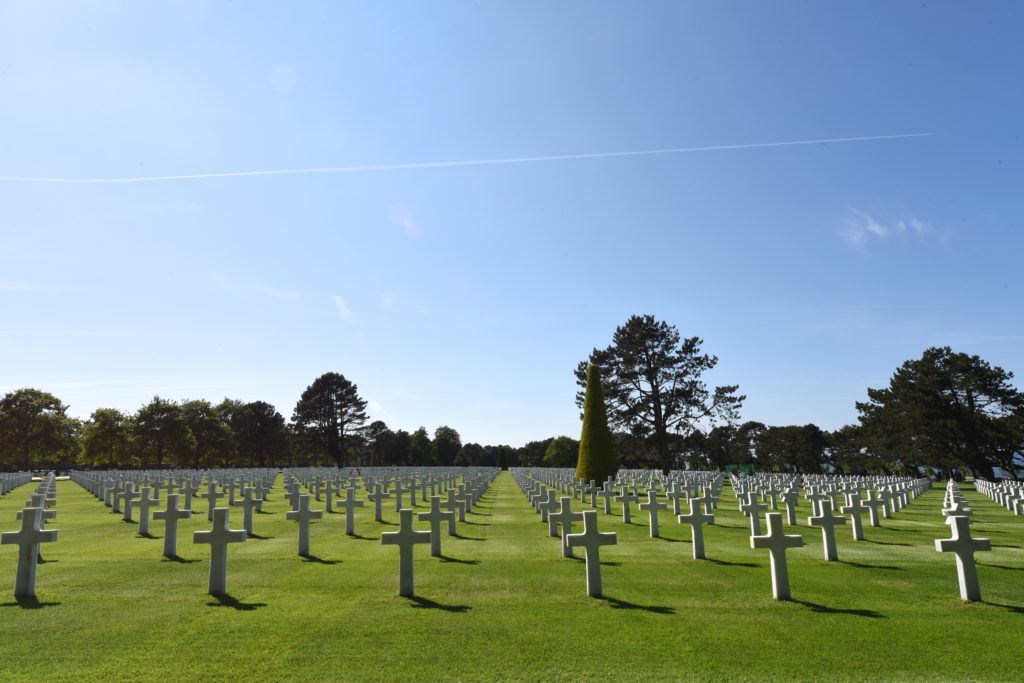
Never Forget
© Meredith Mullins
Never Forget
© Meredith Mullins
Traveling through the peaceful greenery of Normandy, it is hard to imagine a land once ravaged by WW II.
The rolling hills are dotted with flashes of white from the speckled Normande cows, famous for their cheese and butter; the statuesque stone church steeples in each town offer a comforting skyline; and the tiny winding roads are edged with towering hedges that once served to divide the farmers’ plots of land.
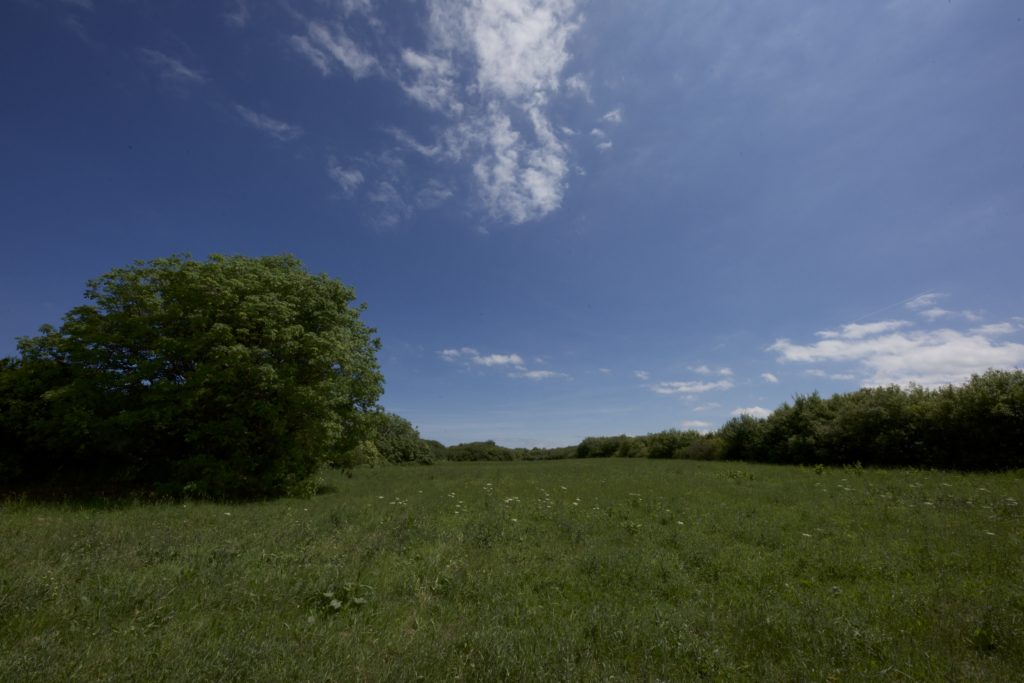
Today’s peaceful fields of Normandy
© Meredith Mullins
However, the memory of WW II is ever-present. The church steeples were observation towers and sniper posts. The hedgerows hid machine guns and mines. The fields were intentionally flooded by the Germans to make access more difficult for Allied forces.
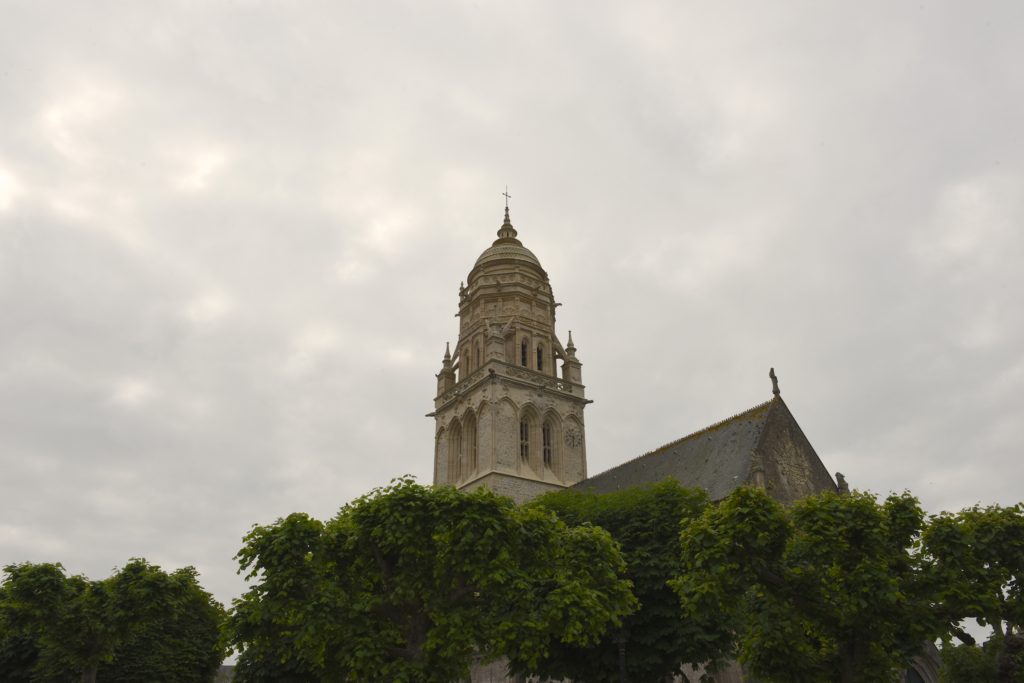
Sainte-Marie-du-Mont in Normandy
© Meredith Mullins
It is impossible to escape the past—especially this year—the 75th anniversary of the D-Day landings and Operation Overlord. The Allied invasion of Normandy was the largest amphibious assault in history (five infantry divisions and three airborne divisions).
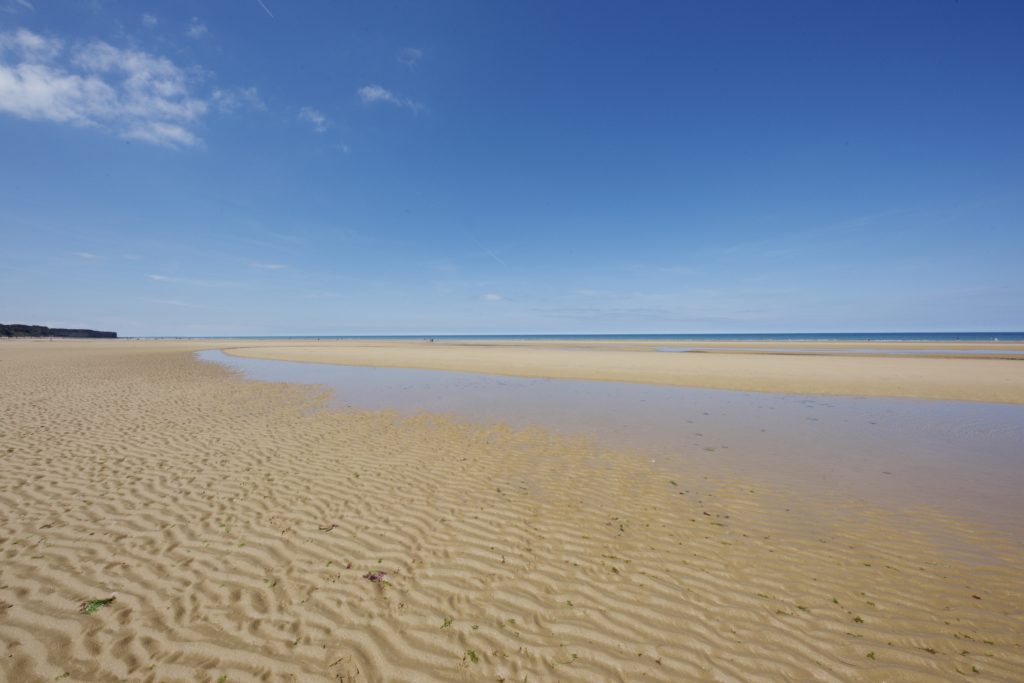
Plage des Sables d’Or (Golden Sands Beach)—known now as Omaha Beach since June 6, 1944
© Meredith Mullins
More than 150,000 soldiers from the U.S., the United Kingdom, and Canada stormed the beaches on June 6, 1944, supported by nearly 7,000 vessels (from battleships to landing barges) and 12,000 aircraft. It was a day that changed the world—a turning point in WW II.
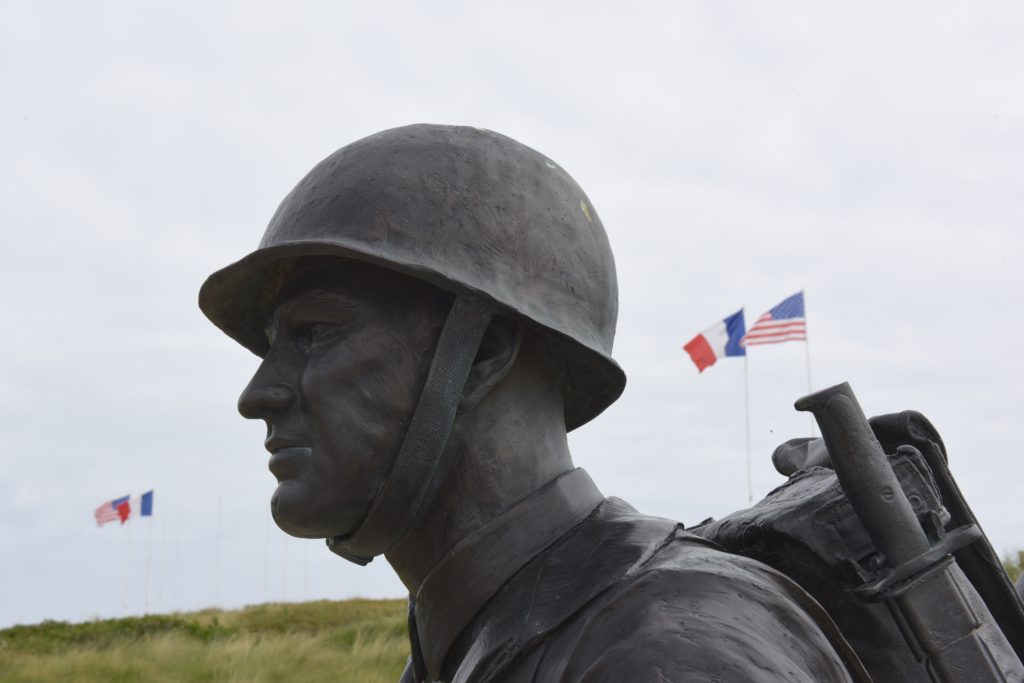
A memorial at Utah Beach
© Meredith Mullins
In almost every town, there are reminders of the value of liberty and tributes to those who sacrificed in the name of freedom—from abandoned bunkers to memorial statues, from bomb craters to endless rows of grave markers, from bullet holes to beaches that will be called by their code names forever— Utah, Omaha, Gold, Juno, and Sword.
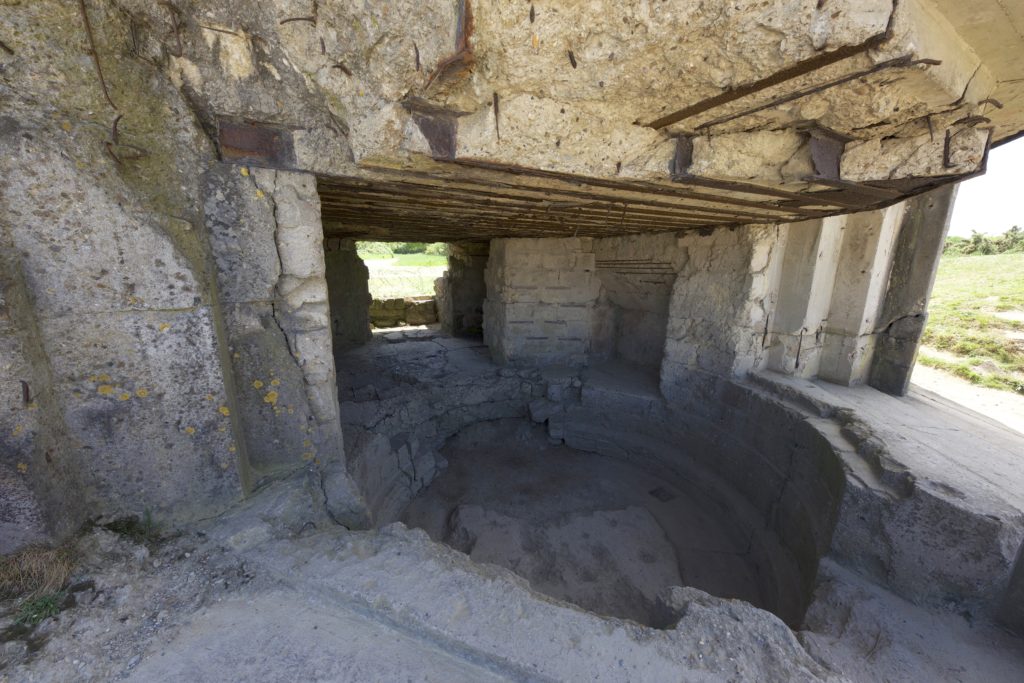
Remnants of WW II at Pointe du Hoc in Normandy
© Meredith Mullins
With stories of courage, films and photographs that bring war horrors vividly to life, and the humble words of the dwindling number of WW II veterans who gave so selflessly in combat, the memory of the Normandy landings lives on.
It is the sadness that comes with such sacrifice that inspired my travel mission—a pilgrimage to pay tribute to that important time in history.
Never forget.
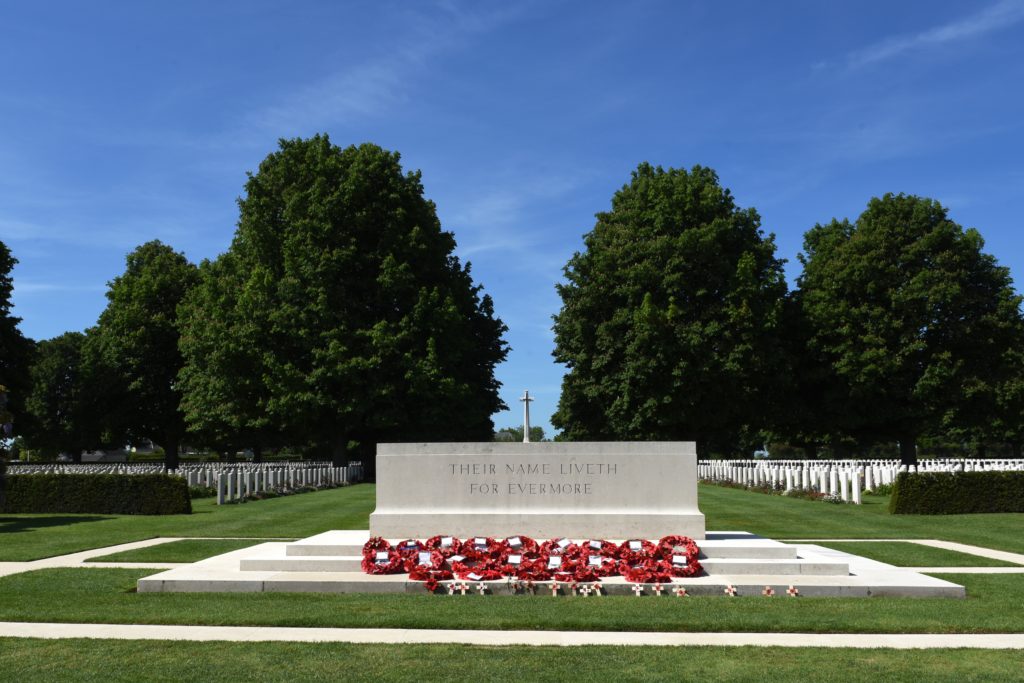
The Bayeux War Cemetery: Their Name Liveth For Evermore
© Meredith Mullins
I traveled from Bayeux to Sainte-Marie-du-Mont to Sainte-Mère-Eglise to Pointe du Hoc, to the beaches, to Colleville-sur-Mer and the American Cemetery.
I came away with tales of heroism, a better understanding of the detailed military operations and the strategic planning of both German and Allied forces . . . and deeper feelings of grief.
The “Oh, I see” moments were many. Here are five of the most memorable stories.
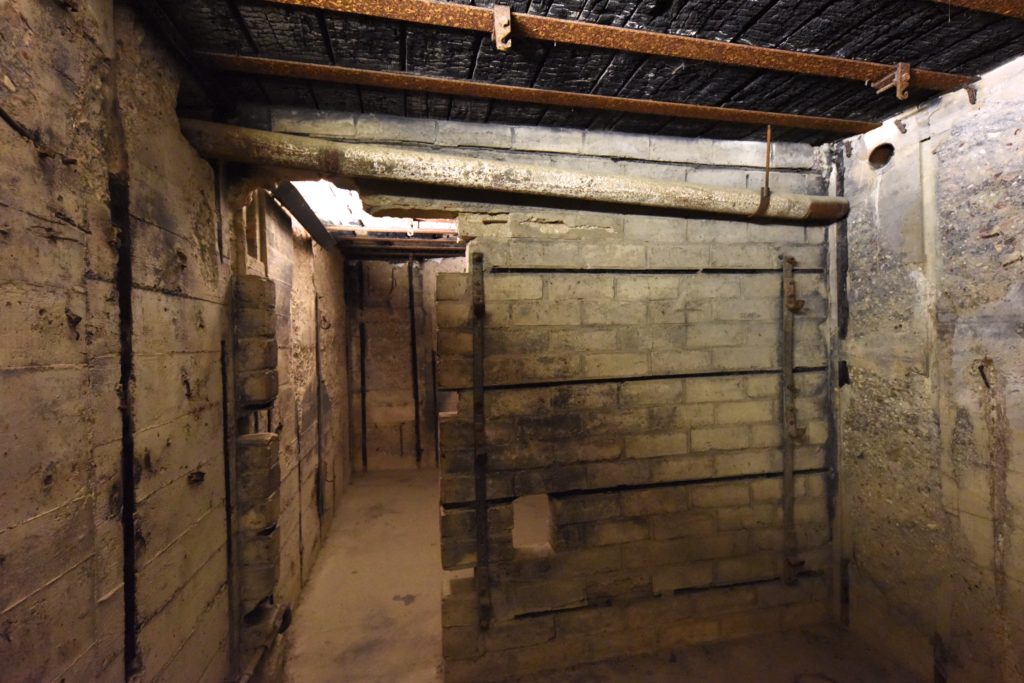
A German bunker at Pointe du Hoc in Normandy
© Meredith Mullins
Fake news was alive and well in WW II. The Allies’ element of surprise for the Normandy invasion was paramount, so they sent fake transmissions to mislead the Germans and carried out bombing raids in the Pas-de-Calais area in the spring of 1944 rather than near the beaches of Normandy. This deception plan was codenamed Operation Fortitude.
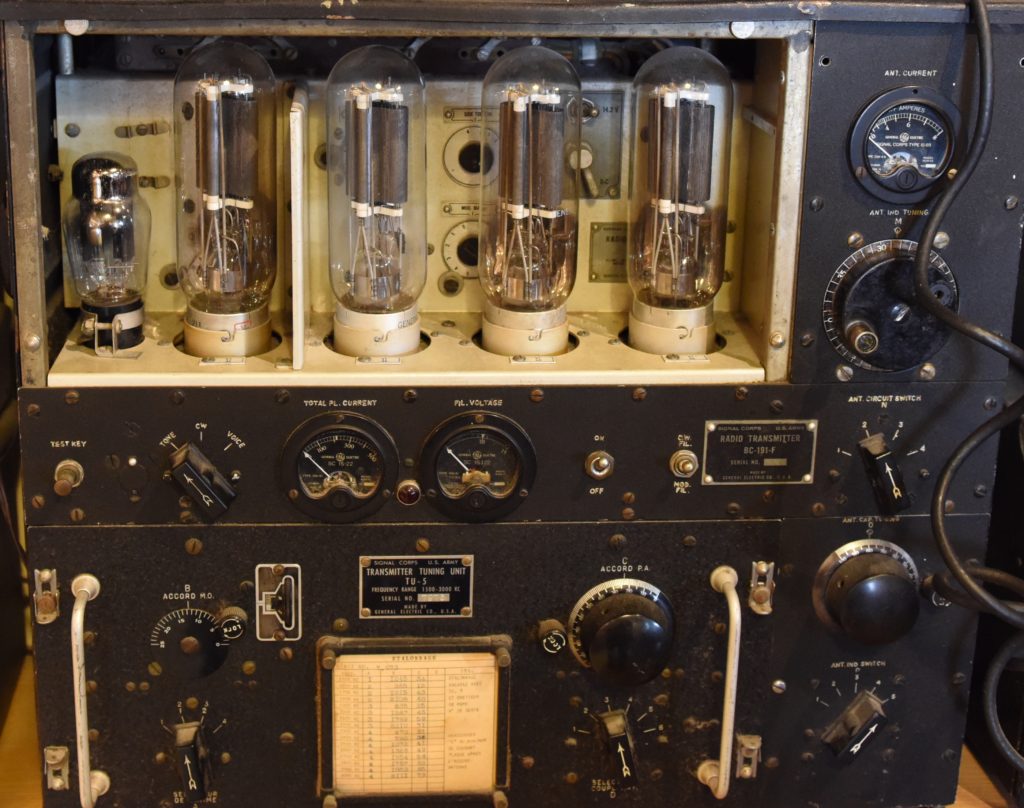
Radio transmissions could be intentionally deceptive (as in Operation Fortitude).
© Meredith Mullins
In the meantime, the Allies were training on the beaches of south England and preparing the strategies for the June bombing raids, for the paratrooper assaults to take control of the roads and bridges, and for the integrated amphibious landings.
“We will accept nothing less than full victory. Good luck. And let us all beseech the blessing of Almighty God upon this great and noble undertaking.”—General Eisenhower
All the planning in the world couldn’t dictate the weather. The beach landings had to be done at dawn, during a full moon, and at low tide so that the landing barges wouldn’t be damaged by the German obstacles in the water.
Of the three targeted days (June 5, 6, and 7), a storm prohibited June 5. The weather improved, and June 6 was designated by General Eisenhower as D-Day. “OK. Let’s go,” was his command.
The planes dropping paratroopers in the early morning of June 6 were challenged by thick fog and German gunfire. Many of the jumpers landed far from their objectives—some in the fields strategically flooded by the Germans. Their job was to free the roads connecting the beaches, so that the Allied forces could continue their march from the sea, liberating the towns.
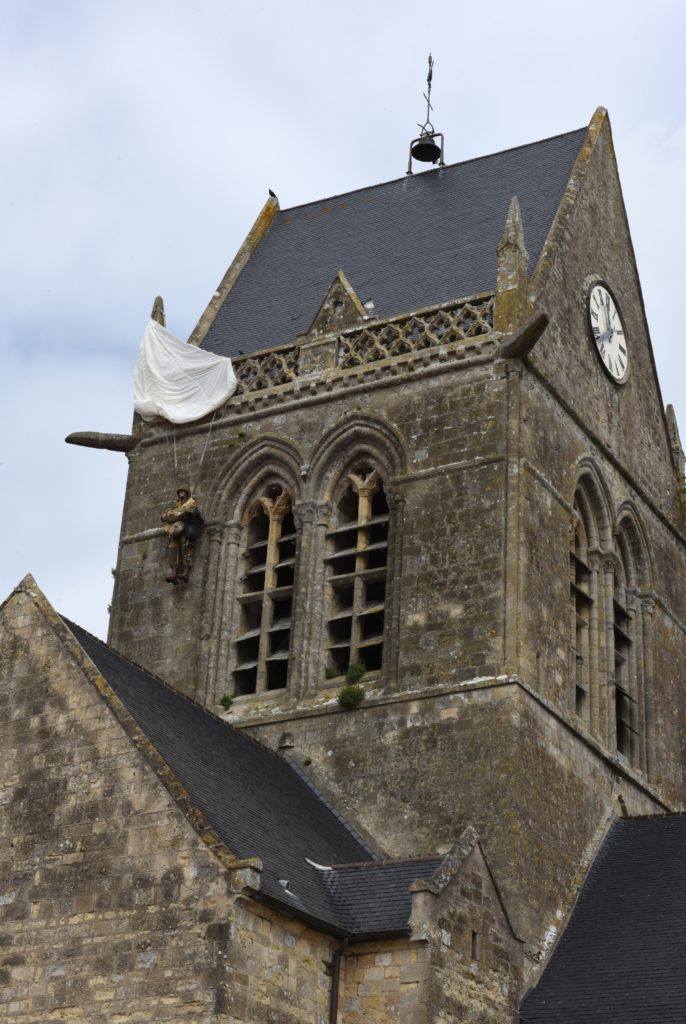
A replica of paratrooper John Steele landing on the Sainte-Mère-Eglise church steeple
on the morning of June 6, 1944.
© Meredith Mullins
The story of Sainte-Mère-Eglise was made famous (with a Hollywood touch of fiction) in the 1962 film “The Longest Day.” Because of the challenges for the paratroopers, several men of the Airborne divisions landed on the town church.
John Steele dangled from the steeple. Kenneth Russell was caught on a gargoyle. A third man, John Ray, landed on the ground by the church and was shot by a German soldier.
The German was about to shoot the hanging paratroopers when John Ray, just before dying, shot the German and saved the lives of Steele and Russell.
Today, a replica of John Steele dangles from the church (albeit on the wrong side).
The paratroopers of the 82nd and 101st Airborne divisions suffered significant casualties, but they did overcome the challenges and cleared the roads for the incoming infantry. Sainte-Mère-Eglise was the first French town to be liberated.
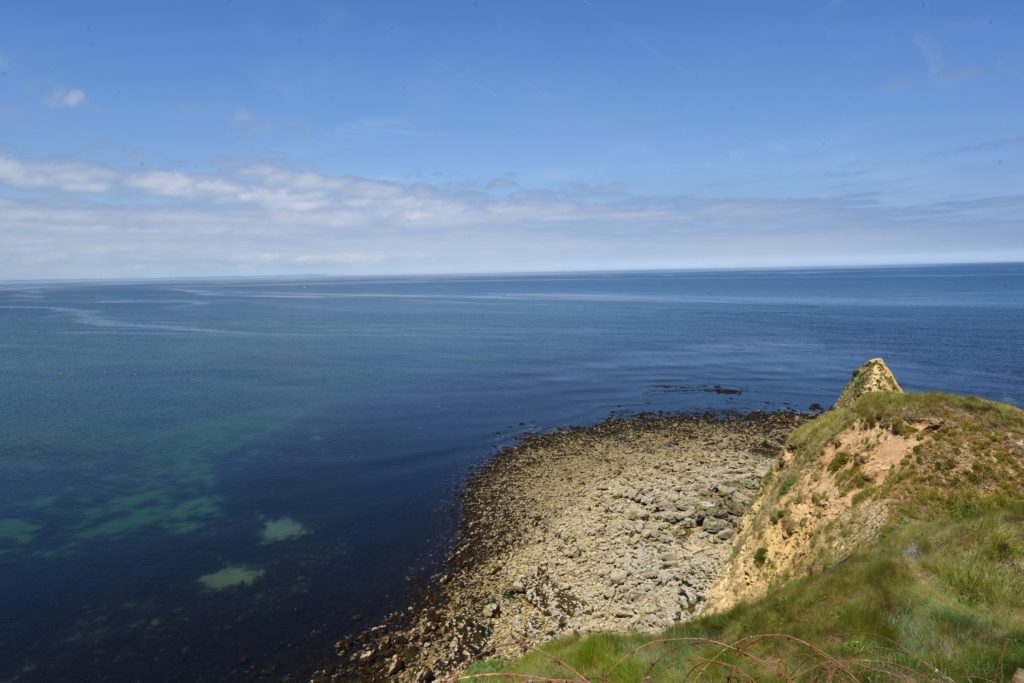
The cliffs at Pointe du Hoc
© Meredith Mullins
To help protect the Allied forces making the beach landings on June 6, six long-range German guns at Pointe du Hoc had to be destroyed. These guns had a range of 20 kilometers and could have easily targeted the Allied ships and barges as they came toward shore.
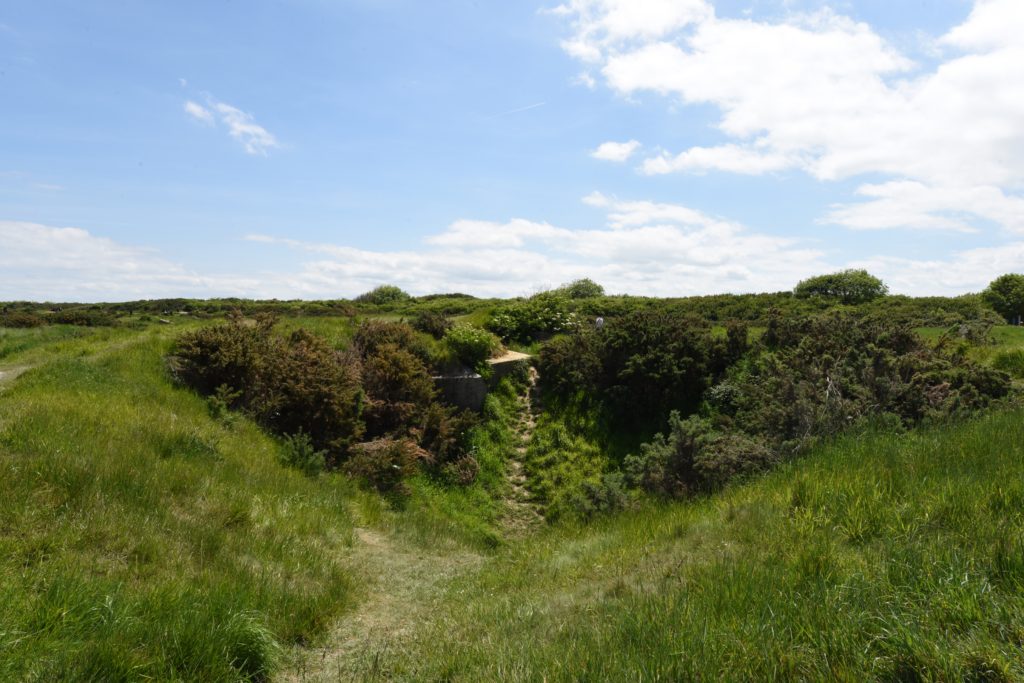
A bomb crater, with scattered pieces of bunker, at Pointe du Hoc
© Meredith Mullins
Constant bombing of Pointe du Hoc prior to the morning of June 6 created a scarred moonscape of craters, but aerial recognizance showed that the guns remained untouched. Their ultimate destruction was a job given to an elite U.S. Ranger Battalion.
The rangers landed on the narrow beach and began to scale the 100-foot cliffs, using ropes and rope ladders. They easily overtook the German garrison at the top, but realized that the guns shown on the aerial images were fake and that the real guns had been moved.
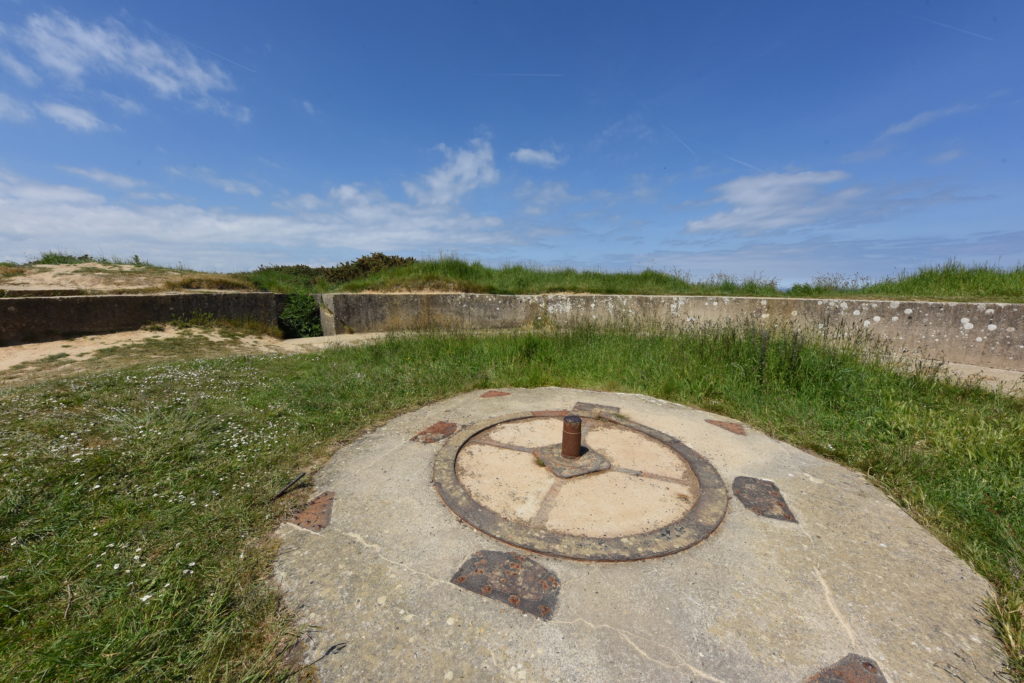
The real guns had been removed by the Germans and hidden inland.
© Meredith Mullins
Within a few hours, they found these guns inland, under the cover of an apple orchard, and destroyed them, but also met with German attackers trying to recapture their position.
After 48 hours of heavy fighting, the rangers were finally joined by reinforcements. Of the original 225 rangers, only 90 were still fit for action after the fight.
As President Ronald Reagan said in a 1984 speech at Pointe du Hoc, “These are the champions who helped free a continent, and these are the heroes who helped end a war.”
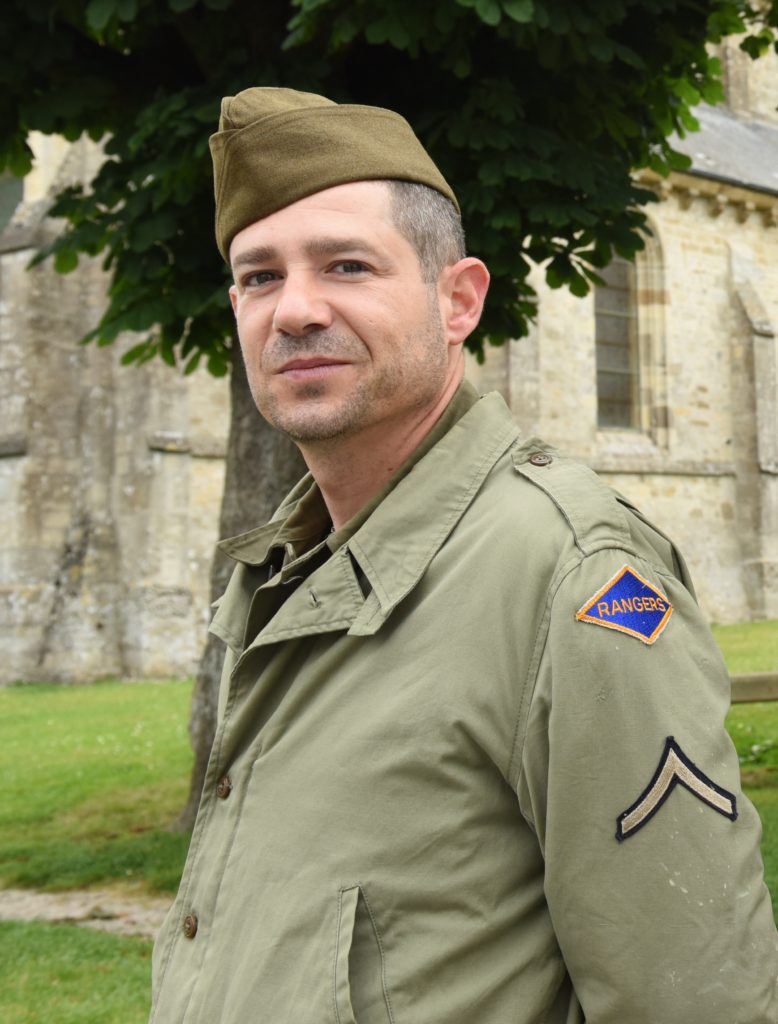
All those who gave service in WW II were heroes. The Rangers of Pointe du Hoc fought valiantly.
© Meredith Mullins (re-enactment for the 75th anniversary)
The Germans had built the “Atlantic Wall”—a coastal defense that stretched 3,000 miles across northern Europe with 12,000 bunkers, 5 million mines, and 300 large caliber guns.
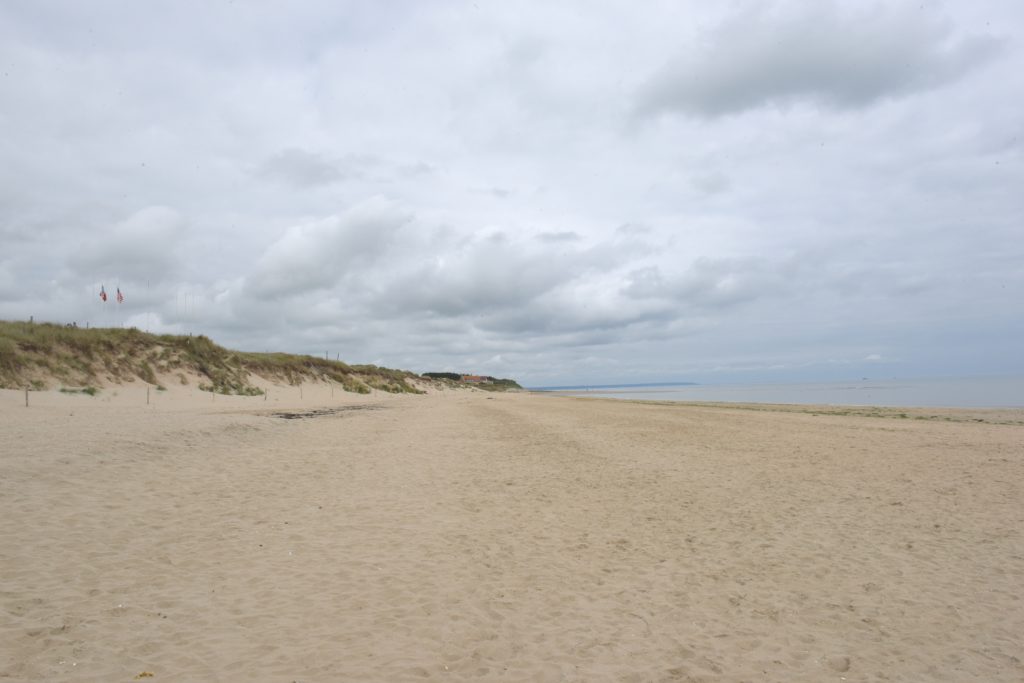
Each of the five landing beaches was different. Utah beach was relatively flat.
© Meredith Mullins
The infantry landing on June 6 knew the battles would be fierce. They had thought that the advance bombers and paratroopers would lessen German resistance. This was true on most of the beaches, but Omaha beach is the story that most remember. The Germans were ready.
The landing barges could not come ashore, so the soldiers had to wade in to the beach, carrying gear weighing 80 to 100 pounds, made even heavier by the soaking seawater.
The first wave of soldiers took the brunt of the German fire. If they weren’t shot in the water, they became completely exposed targets on the long sandy beach, made even longer because of the low tide. No shelter. No protection.
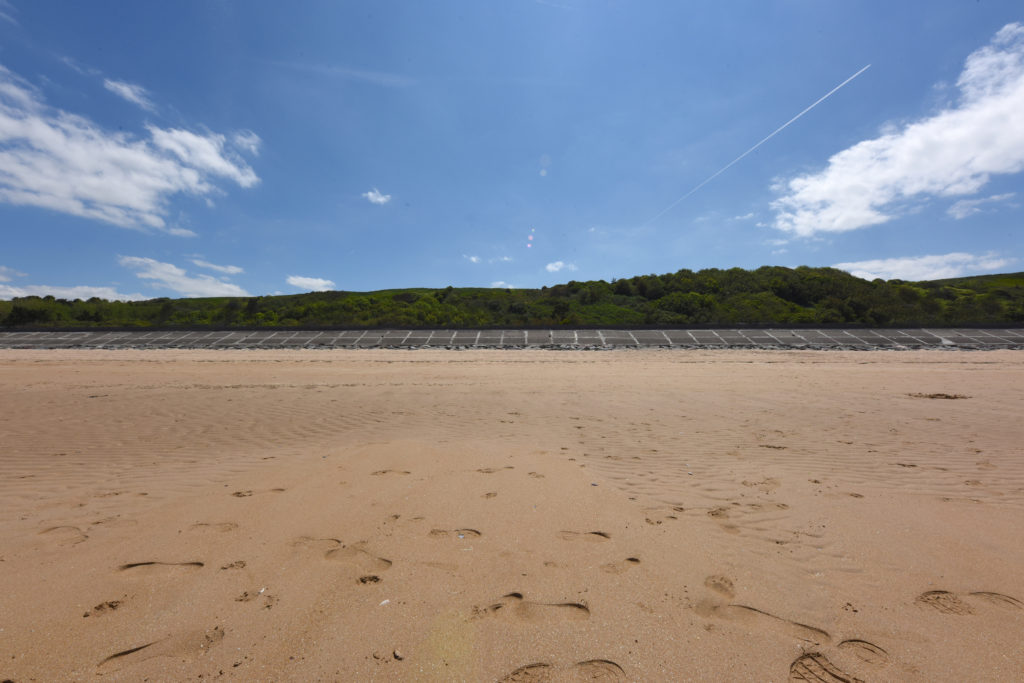
Omaha Beach. No shelter. No protection. And the Germans were well positioned on the hills.
© Meredith Mullins
The Germans, positioned on the hills, fired machine guns nonstop. Their targets fell . . . in the sea and in the sand.
Survivors describe the scene as chaos . . . and death to a lot of good men. More than 1,000 soldiers were killed in the first few hours.
“Two sorts of people are going to stay on this beach, those who are dead and those who are going to die. Let’s get the hell out of here!”—Colonel George Taylor
Soon, the destroyers moved in close and began to provide support for the men on the beach as they advanced. A few groups began to gain ground and climb the hills. Miraculously, by midday, the Americans had gained control of the beach.
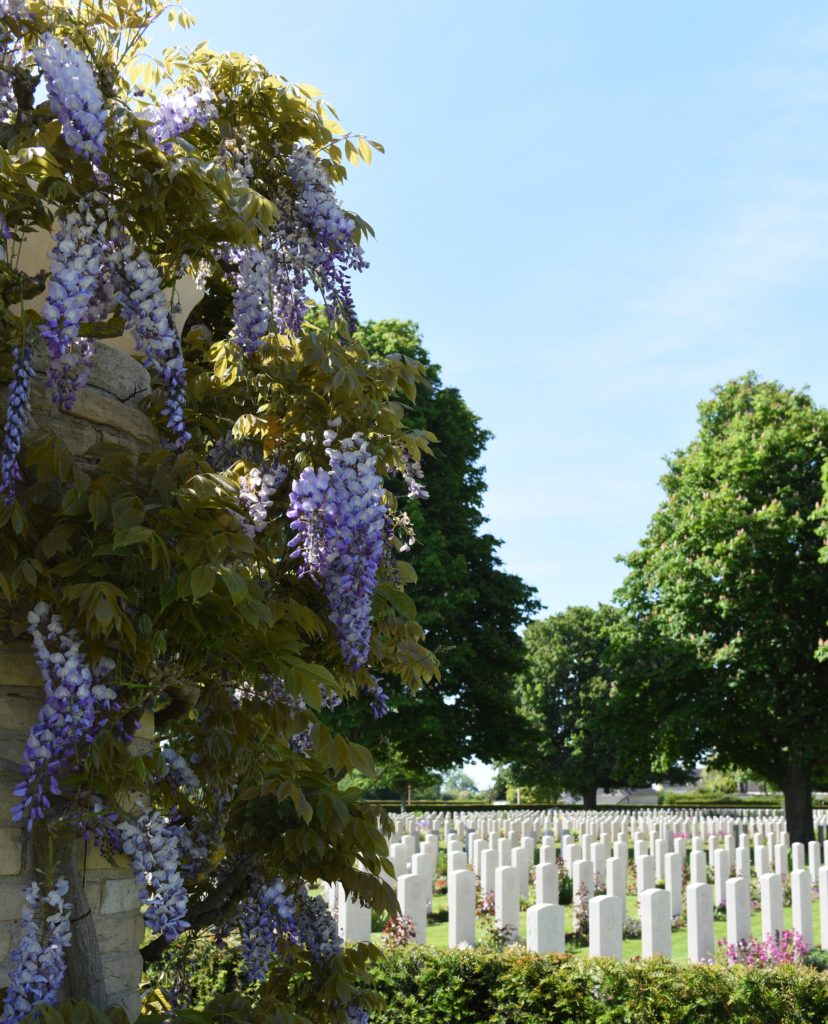
The real heroes
© Meredith Mullins
The D-Day war stories are many. The triumphs and tragedies of the invasion of Normandy are epic.
More than 9,000 U.S. soldiers died in action during the Normandy invasion. They lie in the American Cemetery in Colleville-sur-Mer.
The Bayeux War Cemetery honors more than 4,500 Commonwealth troops, as well as soldiers from other countries (including Germans).
More than 2,000 soldiers are in the Canadian cemetery in Bény-sur-Mer.
The civilian deaths were staggering also, with so much fire power coming from the air.
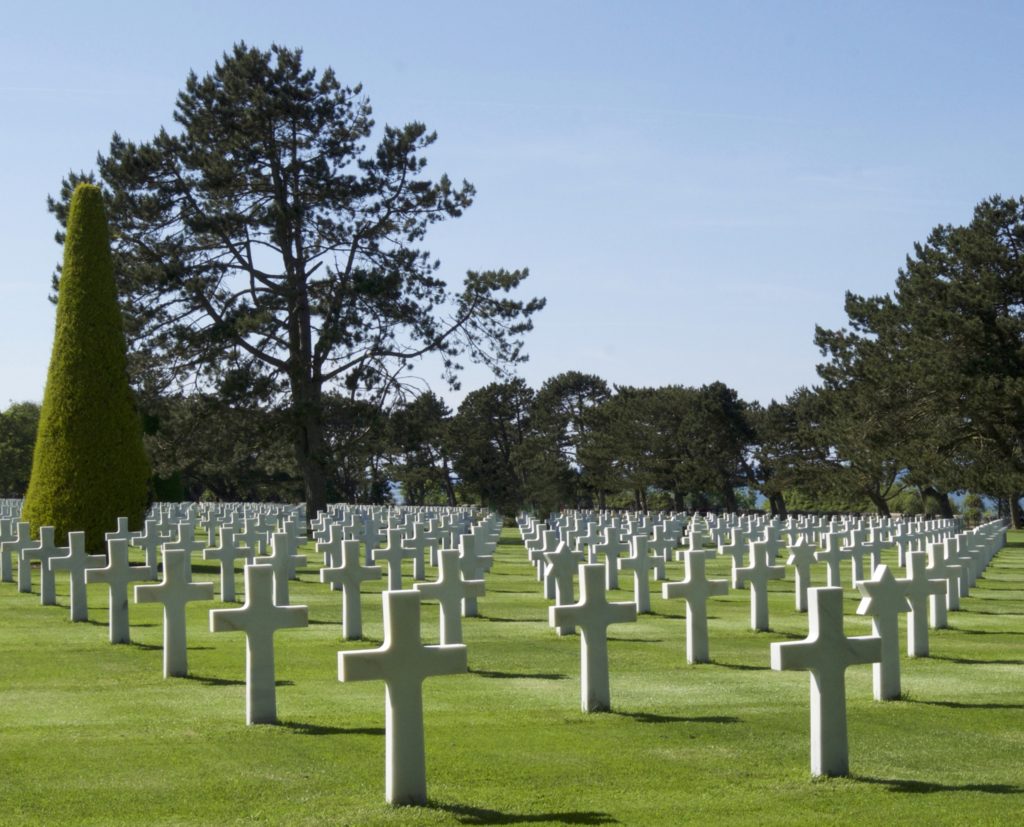
The American Cemetery in Colleville-sur-Mer
© Meredith Mullins
Traveling to the cemeteries, whether those of Allied forces or German forces, is a reminder of the real cost of war.
“That day as I was coming over in the landing craft, I said a prayer to myself, “If I come through this alive,” I said, “I will never forget the men I leave behind.”—Sergeant Ted Liska (veteran of WW II)
Their sacrifice should never be forgotten.
For more information about D-Day and the 75th anniversary, visit Normandy Tourism, D-Day Overlord, Airborne Museum at Sainte-Mère-Eglise, The Bayeux War Cemetery, and The American Cemetery.
Here are sites to visit, as well as a program of events.
See also the OIC Moments stories on the photographers of D-Day and the reenactment of an Allied military camp at Sainte-Marie-du-Mont.
Additional sources for this story: The Timeline Bloody Battlefields video, The Battle for Liberty (PUBLIHEBDOS SAS), and the paratroopers of Sainte-Mère-Eglise.
The veteran quote is take from Hilary Kaiser’s book WW II Voices.
Comment on this post below, or inspire insight with your own OIC Moment here.
{"id":34019,"date":"2019-06-06T03:00:28","date_gmt":"2019-06-06T10:00:28","guid":{"rendered":"https:\/\/www.oh-i-see.com\/blog\/?p=34019"},"modified":"2021-07-20T08:06:57","modified_gmt":"2021-07-20T15:06:57","slug":"d-day-remembrances-the-invasion-of-normandy","status":"publish","type":"post","link":"https:\/\/www.oh-i-see.com\/blog\/d-day-remembrances-the-invasion-of-normandy\/","title":{"rendered":"D-Day Remembrances: The Invasion of Normandy\u00a0"},"content":{"rendered":"
Never Forget
\u00a9 Meredith Mullins<\/p><\/div>\n
Traveling through the peaceful greenery of Normandy, it is hard to imagine a land once ravaged by WW II.<\/p>\n
The rolling hills are dotted with flashes of white from the speckled Normande cows, famous for their cheese and butter; the statuesque stone church steeples in each town offer a comforting skyline; and the tiny winding roads are edged with towering hedges that once served to divide the farmers\u2019 plots of land.<\/p>\n

Today’s peaceful fields of Normandy
\u00a9 Meredith Mullins<\/p><\/div>\n
However, the memory of WW II is ever-present. The church steeples were observation towers and sniper posts. The hedgerows hid machine guns and mines. The fields were intentionally flooded by the Germans to make access more difficult for Allied forces.<\/p>\n

Sainte-Marie-du-Mont in Normandy
\u00a9 Meredith Mullins<\/p><\/div>\n
It is impossible to escape the past\u2014especially this year\u2014the 75th\u00a0<\/sup>anniversary of the D-Day landings and Operation Overlord. The Allied invasion of Normandy was the largest amphibious assault in history (five infantry divisions and three airborne divisions).<\/p>\n Plage des Sables d’Or (Golden Sands Beach)\u2014known now as Omaha Beach since June 6, 1944 More than 150,000 soldiers from the U.S., the United Kingdom, and Canada stormed the beaches on June 6, 1944, supported by nearly 7,000 vessels (from battleships to landing barges) and 12,000 aircraft. It was a day that changed the world\u2014a turning point in WW II.<\/p>\n A memorial at Utah Beach In almost every town, there are reminders of the value of liberty and tributes to those who sacrificed in the name of freedom\u2014from abandoned bunkers to memorial statues, from bomb craters to endless rows of grave markers, from bullet holes to beaches that will be called by their code names forever\u2014 Utah, Omaha, Gold, Juno, and Sword.<\/p>\n Remnants of WW II at Pointe du Hoc in Normandy With stories of courage, films and photographs that bring war horrors vividly to life, and the humble words of the dwindling number of WW II veterans who gave so selflessly in combat, the memory of the Normandy landings lives on.<\/p>\n It is the sadness that comes with such sacrifice that inspired my travel mission\u2014a pilgrimage to pay tribute to that important time in history.<\/p>\n Never forget.<\/p>\n The Bayeux War Cemetery: Their Name Liveth For Evermore I traveled from Bayeux to Sainte-Marie-du-Mont to Sainte-M\u00e8re-Eglise to Pointe du Hoc, to the beaches, to Colleville-sur-Mer and the American Cemetery.<\/p>\n I came away with tales of heroism, a better understanding of the detailed military operations and the strategic planning of both German and Allied forces . . . and deeper feelings of grief.<\/p>\n The \u201cOh, I see\u201d moments<\/strong> were many. Here are five of the most memorable stories.<\/p>\n A German bunker at Pointe du Hoc in Normandy Fake news was alive and well in WW II. The Allies\u2019 element of surprise for the Normandy invasion was paramount, so they sent fake transmissions to mislead the Germans and carried out bombing raids in the Pas-de-Calais area in the spring of 1944 rather than near the beaches of Normandy. This deception plan was codenamed Operation Fortitude.<\/p>\n Radio transmissions could be intentionally deceptive (as in Operation Fortitude). In the meantime, the Allies were training on the beaches of south England and preparing the strategies for the June bombing raids, for the paratrooper assaults to take control of the roads and bridges, and for the integrated amphibious landings.<\/p>\n All the planning in the world couldn\u2019t dictate the weather. The beach landings had to be done at dawn, during a full moon, and at low tide so that the landing barges wouldn\u2019t be damaged by the German obstacles in the water.<\/p>\n Of the three targeted days (June 5, 6, and 7), a storm prohibited June 5. The weather improved, and June 6 was designated by General Eisenhower as D-Day. \u201cOK. Let\u2019s go,\u201d was his command.<\/p>\n The planes dropping paratroopers in the early morning of June 6 were challenged by thick fog and German gunfire. Many of the jumpers landed far from their objectives\u2014some in the fields strategically flooded by the Germans. Their job was to free the roads connecting the beaches, so that the Allied forces could continue their march from the sea, liberating the towns.<\/p>\n A replica of paratrooper John Steele landing on the Sainte-M\u00e8re-Eglise church steeple The story of Sainte-M\u00e8re-Eglise was made famous (with a Hollywood touch of fiction) in the 1962 film \u201cThe Longest Day.\u201d Because of the challenges for the paratroopers, several men of the Airborne divisions landed on the town church.<\/p>\n John Steele dangled from the steeple. Kenneth Russell was caught on a gargoyle. A third man, John Ray, landed on the ground by the church and was shot by a German soldier.<\/p>\n The German was about to shoot the hanging paratroopers when John Ray, just before dying, shot the German and saved the lives of Steele and Russell.<\/p>\n Today, a replica of John Steele dangles from the church (albeit on the wrong side).<\/p>\n The paratroopers of the 82nd\u00a0<\/sup>and 101st\u00a0<\/sup>Airborne divisions suffered significant casualties, but they did overcome the challenges and cleared the roads for the incoming infantry. Sainte-M\u00e8re-Eglise was the first French town to be liberated.<\/p>\n The cliffs at Pointe du Hoc To help protect the Allied forces making the beach landings on June 6, six long-range German guns at Pointe du Hoc had to be destroyed. These guns had a range of 20 kilometers and could have easily targeted the Allied ships and barges as they came toward shore.<\/p>\n A bomb crater, with scattered pieces of bunker, at Pointe du Hoc Constant bombing of Pointe du Hoc prior to the morning of June 6 created a scarred moonscape of craters, but aerial recognizance showed that the guns remained untouched. Their ultimate destruction was a job given to an elite U.S. Ranger Battalion.<\/p>\n The rangers landed on the narrow beach and began to scale the 100-foot cliffs, using ropes and rope ladders. They easily overtook the German garrison at the top, but realized that the guns shown on the aerial images were fake and that the real guns had been moved.<\/p>\n The real guns had been removed by the Germans and hidden inland. Within a few hours, they found these guns inland, under the cover of an apple orchard, and destroyed them, but also met with German attackers trying to recapture their position.<\/p>\n After 48 hours of heavy fighting, the rangers were finally joined by reinforcements. Of the original 225 rangers, only 90 were still fit for action after the fight.<\/p>\n As President Ronald Reagan said in a 1984 speech at Pointe du Hoc, \u201cThese are the champions who helped free a continent, and these are the heroes who helped end a war.\u201d<\/p>\n All those who gave service in WW II were heroes. The Rangers of Pointe du Hoc fought valiantly. The Germans had built the \u201cAtlantic Wall\u201d\u2014a coastal defense that stretched 3,000 miles across northern Europe with 12,000 bunkers, 5 million mines, and 300 large caliber guns.<\/p>\n Each of the five landing beaches was different. Utah beach was relatively flat. The infantry landing on June 6 knew the battles would be fierce. They had thought that the advance bombers and paratroopers would lessen German resistance. This was true on most of the beaches, but Omaha beach is the story that most remember. The Germans were ready.<\/p>\n The landing barges could not come ashore, so the soldiers had to wade in to the beach, carrying gear weighing 80 to 100 pounds, made even heavier by the soaking seawater.<\/p>\n The first wave of soldiers took the brunt of the German fire. If they weren\u2019t shot in the water, they became completely exposed targets on the long sandy beach, made even longer because of the low tide. No shelter. No protection.<\/p>\n Omaha Beach. No shelter. No protection. And the Germans were well positioned on the hills. The Germans, positioned on the hills, fired machine guns nonstop. Their targets fell . . . in the sea and in the sand.<\/p>\n Survivors describe the scene as chaos . . . and death to a lot of good men. More than 1,000 soldiers were killed in the first few hours.<\/p>\n \u201cTwo sorts of people are going to stay on this beach, those who are dead and those who are going to die. Let\u2019s get the hell out of here!\u201d\u2014<\/em>Colonel George Taylor<\/p>\n Soon, the destroyers moved in close and began to provide support for the men on the beach as they advanced. A few groups began to gain ground and climb the hills. Miraculously, by midday, the Americans had gained control of the beach.<\/p>\n The real heroes The D-Day war stories are many. The triumphs and tragedies of the invasion of Normandy are epic.<\/p>\n More than 9,000 U.S. soldiers died in action during the Normandy invasion. They lie in the American Cemetery in Colleville-sur-Mer.<\/p>\n The Bayeux War Cemetery honors more than 4,500 Commonwealth troops, as well as soldiers from other countries (including Germans).<\/p>\n More than 2,000 soldiers are in the Canadian cemetery in B\u00e9ny-sur-Mer.<\/p>\n The civilian deaths were staggering also, with so much fire power coming from the air.<\/p>\n The American Cemetery in Colleville-sur-Mer Traveling to the cemeteries, whether those of Allied forces or German forces, is a reminder of the real cost of war.<\/p>\n “That day as I was coming over in the landing craft, I said a prayer to myself, “If I come through this alive,” I said, “I will never forget the men I leave behind.”<\/em>\u2014Sergeant Ted Liska (veteran of WW II)<\/p>\n Their sacrifice should never be forgotten.<\/p>\n For more information about D-Day and the 75th anniversary, visit Normandy Tourism,<\/a> D-Day Overlord,<\/a> Airborne Museum at Sainte-M\u00e8re-Eglise,<\/a>\u00a0The Bayeux War Cemetery,<\/a> and The American Cemetery.<\/a><\/em><\/p>\n Here are sites to visit,<\/a> as well as a program of events.<\/a><\/em><\/p>\n See also the OIC Moments stories on the photographers of D-Day<\/a> and\u00a0the reenactment of an Allied military camp<\/a> at Sainte-Marie-du-Mont.<\/em><\/p>\n Additional sources for this story: The Timeline Bloody Battlefields video, The Battle for Liberty (PUBLIHEBDOS SAS), and\u00a0the paratroopers of Sainte-M\u00e8re-Eglise.<\/a><\/em><\/p>\n The veteran quote is take from Hilary Kaiser’s book WW II Voices.<\/a><\/em><\/p>\n Comment<\/a><\/i>\u00a0on this post below, or inspire insight with your own\u00a0OIC Moment\u00a0<\/em>here<\/a>.<\/em><\/p>\n","protected":false},"excerpt":{"rendered":null,"protected":false},"author":5,"featured_media":34034,"comment_status":"closed","ping_status":"open","sticky":false,"template":"","format":"standard","meta":{"footnotes":""},"categories":[200,535],"tags":[],"class_list":["post-34019","post","type-post","status-publish","format-standard","has-post-thumbnail","hentry","category-france-mappoints","category-history-travel"],"aioseo_notices":[],"_links":{"self":[{"href":"https:\/\/www.oh-i-see.com\/blog\/wp-json\/wp\/v2\/posts\/34019","targetHints":{"allow":["GET"]}}],"collection":[{"href":"https:\/\/www.oh-i-see.com\/blog\/wp-json\/wp\/v2\/posts"}],"about":[{"href":"https:\/\/www.oh-i-see.com\/blog\/wp-json\/wp\/v2\/types\/post"}],"author":[{"embeddable":true,"href":"https:\/\/www.oh-i-see.com\/blog\/wp-json\/wp\/v2\/users\/5"}],"replies":[{"embeddable":true,"href":"https:\/\/www.oh-i-see.com\/blog\/wp-json\/wp\/v2\/comments?post=34019"}],"version-history":[{"count":53,"href":"https:\/\/www.oh-i-see.com\/blog\/wp-json\/wp\/v2\/posts\/34019\/revisions"}],"predecessor-version":[{"id":34095,"href":"https:\/\/www.oh-i-see.com\/blog\/wp-json\/wp\/v2\/posts\/34019\/revisions\/34095"}],"wp:featuredmedia":[{"embeddable":true,"href":"https:\/\/www.oh-i-see.com\/blog\/wp-json\/wp\/v2\/media\/34034"}],"wp:attachment":[{"href":"https:\/\/www.oh-i-see.com\/blog\/wp-json\/wp\/v2\/media?parent=34019"}],"wp:term":[{"taxonomy":"category","embeddable":true,"href":"https:\/\/www.oh-i-see.com\/blog\/wp-json\/wp\/v2\/categories?post=34019"},{"taxonomy":"post_tag","embeddable":true,"href":"https:\/\/www.oh-i-see.com\/blog\/wp-json\/wp\/v2\/tags?post=34019"}],"curies":[{"name":"wp","href":"https:\/\/api.w.org\/{rel}","templated":true}]}}
\u00a9 Meredith Mullins<\/p><\/div>\n
\u00a9 Meredith Mullins<\/p><\/div>\n
\u00a9 Meredith Mullins<\/p><\/div>\n
\u00a9 Meredith Mullins<\/p><\/div>\nOh I See: Five Stories to Remember<\/h4>\n

\u00a9 Meredith Mullins<\/p><\/div>\nOperation Fortitude<\/h4>\n

\u00a9 Meredith Mullins<\/p><\/div>\nThe Paratroopers<\/h4>\n
\n\u201cWe will accept nothing less than full victory. Good luck. And let us all beseech the blessing of Almighty God upon this great and noble undertaking.\u201d<\/em>\u2014General Eisenhower<\/p>\n
on the morning of June 6, 1944.
\u00a9 Meredith Mullins<\/p><\/div>\n
\u00a9 Meredith Mullins<\/p><\/div>\nThe Rangers<\/h4>\n

\u00a9 Meredith Mullins<\/p><\/div>\n
\u00a9 Meredith Mullins<\/p><\/div>\n
\u00a9 Meredith Mullins (re-enactment for the 75th anniversary)<\/p><\/div>\nThe Beaches<\/h4>\n

\u00a9 Meredith Mullins<\/p><\/div>\n
\u00a9 Meredith Mullins<\/p><\/div>\n
\u00a9 Meredith Mullins<\/p><\/div>\nThe Fallen<\/h4>\n

\u00a9 Meredith Mullins<\/p><\/div>\n