
An etymological quest
© iStock/Borchee
An etymological quest
© iStock/Borchee
Once upon a time there was a wandering etymologist—a true lover of language. She had been living high on the hog for many years, enjoying the materialistic pleasures of the world.
More often than not, she was three sheets to the wind. That was her choice at the time—so no crocodile tears need be shed for her. Someday, the world hoped, she would understand the importance of minding her Ps and Qs.
People would have categorized her as upper crust. But at an important life juncture, this lifestyle became tedious to her, more of a burden than a joy. She decided to start over with a clean slate—to live life a little more off the cuff.
Even though she was, what some might cruelly say “long in the tooth,” (and, by the way, she would have told those folks to put a sock in it), she felt a surge in her soul to wander. As she did, her quest became clear.
With each step of the journey, proverbs and sayings kept leaping into her walking meditations. “Oh, I see” moments were imminent. She knew she had purpose—a syntactic search to find the origins of the many idiomatic sayings that exist in the English language.
And so, she went forth with fervor, on a path as direct as the crow flies.
Here are a few of her favorites (all open to alternative theories) . . .
High on the hog, which means to live with extravagance, is an idiom dating to the 1800s.
It was said that the best cuts of meat were from the upper part of the pig’s body. The wealthiest people feasted on cuts from the back and loin, while the poor learned to make the most of the knuckles, feet, and jowls.
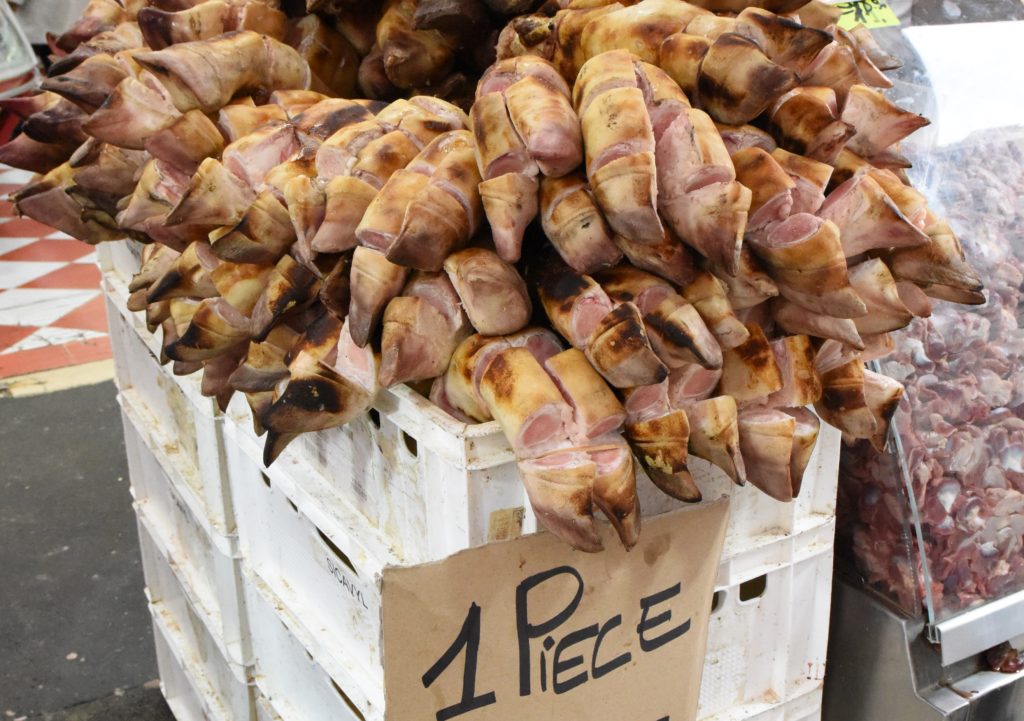
Times have changed. Pigs’ feet can become a favorite dish.
© Meredith Mullins
This saying —meaning drunk—comes from the world of sailing ships, and was first cited in novels of the 1800s.
The ropes on a ship, called “sheets” secure the lower corners of the sails. There are two (and possibly more) derivations for the phrase.
One suggests that if three sheets are loose at the bottom of the sail, the sail will flap wildly and the boat will lurch like a drunk.
A more technical derivation explains that, if the jibs (small sails) are sheeted to the wind (sideways to the wind), which is often done during a storm, the boat rolls wildly from side to side, out of control.
Either way, it’s a good description of ultimate inebriation.
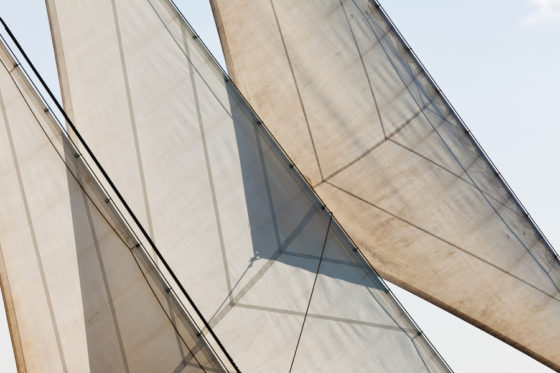
Have you ever been three sheets to the wind? Or four?
© iStock/Pi-lens
The saying “crocodile tears” means an insincere expression of sorrow—a pretense of sympathy.
References appear as early as the 14th century and make literary appearances in Shakespeare and in the work of other writers throughout time.
The tears that you might see from a crocodile are not the result of emotion. Part of the myth of tears was linked to feeding. Crocodiles were observed crying after devouring something.
Would a crocodile weep for something it gobbled down? Unlikely. But their tear ducts were activated by feeding.
Also, crocodiles sunning themselves often keep their mouths open, which causes their tear glands to water.
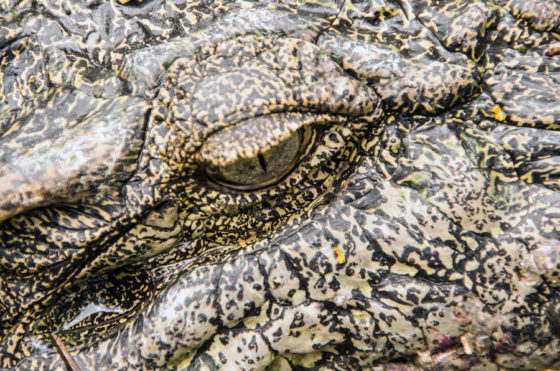
A crocodile’s lament
© iStock/Dikuch
This phrase has several possible derivations, but all agree that it means to mind your manners, be polite, and be careful of your behavior.
The phrase could possible come from learning lowercase letters, since p’s and q’s are similar in form except for the placement of the descender.
However, the more common explanation comes from British pubs, where the bartenders kept an eye on how many pints or quarts were consumed. If drinkers became too unruly, the bartender would caution them to mind their Ps and Qs or they would be thrown out.
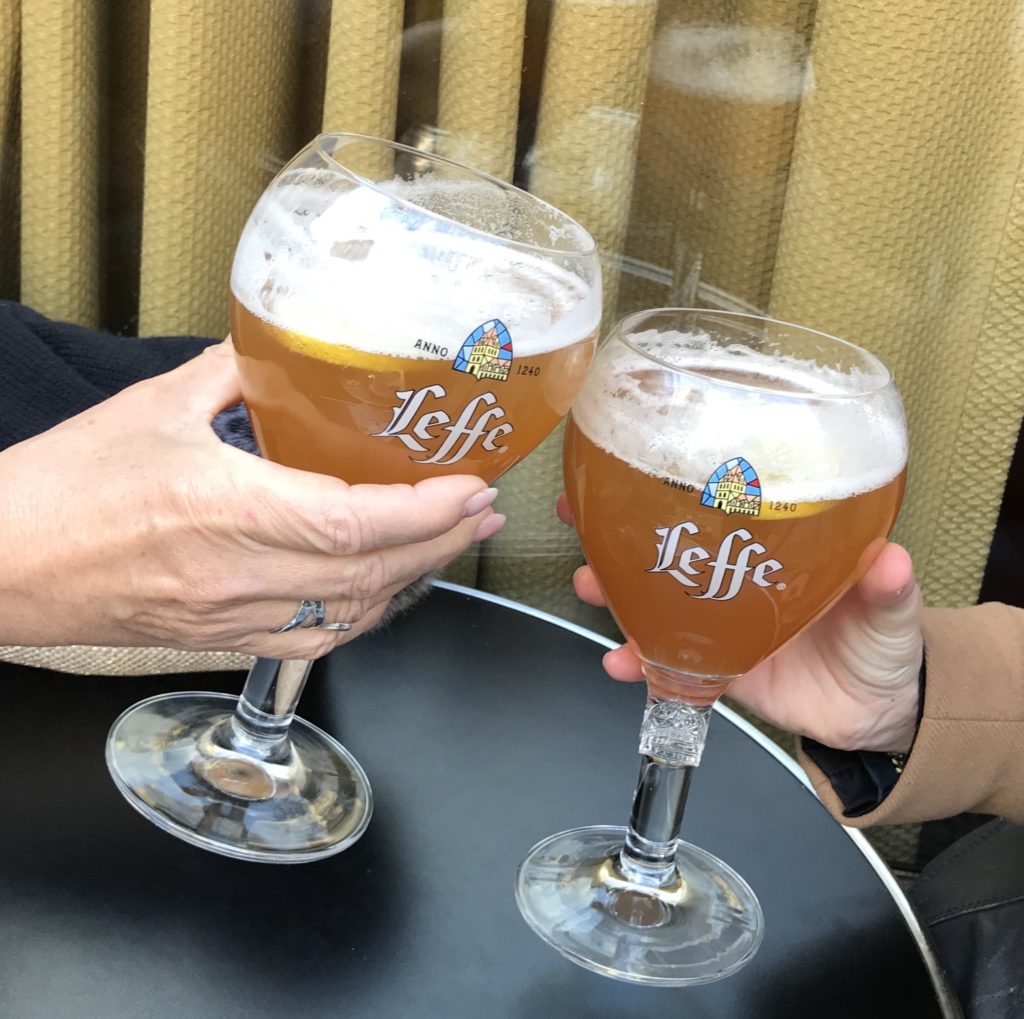
Cheers! But mind your Ps and Qs.
© Meredith Mullins
Similar to “high on the hog” being the best part of the pig’s meat, one possible origin of this phrase was that the upper crust of bread was believed to be the best part of the bread loaf.
In 16th century Europe, servants were given the bottom of the loaf (often easily burned), the family was given the middle, and guests were given the top (upper crust).
Today, the phrase means upper class, aristocratic, and part of the highest social class.
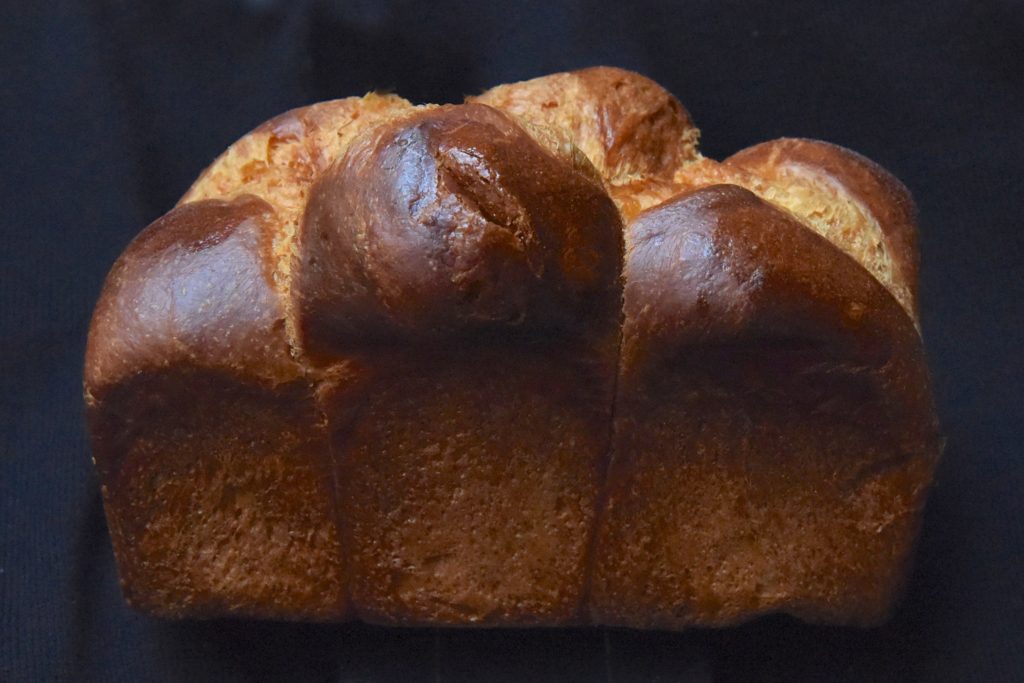
This loaf offers a mouth-watering upper crust.
© Meredith Mullins
We might all relish an opportunity to start over with a clean slate—to begin again with no baggage and no remnants of the past to unduly influence our actions and thoughts.
One origin of the phrase was nautical (a common starting point for many idioms). A ship’s crew kept a slate tablet to record data during a watch. At the start of the next watch, the slate was wiped clean if there were no problems noted.
The phrase is sometimes also linked to a slate tablet kept by shopkeepers (long before computers), recording a person’s purchases on account. When the account was paid off, the slate was wiped clean.
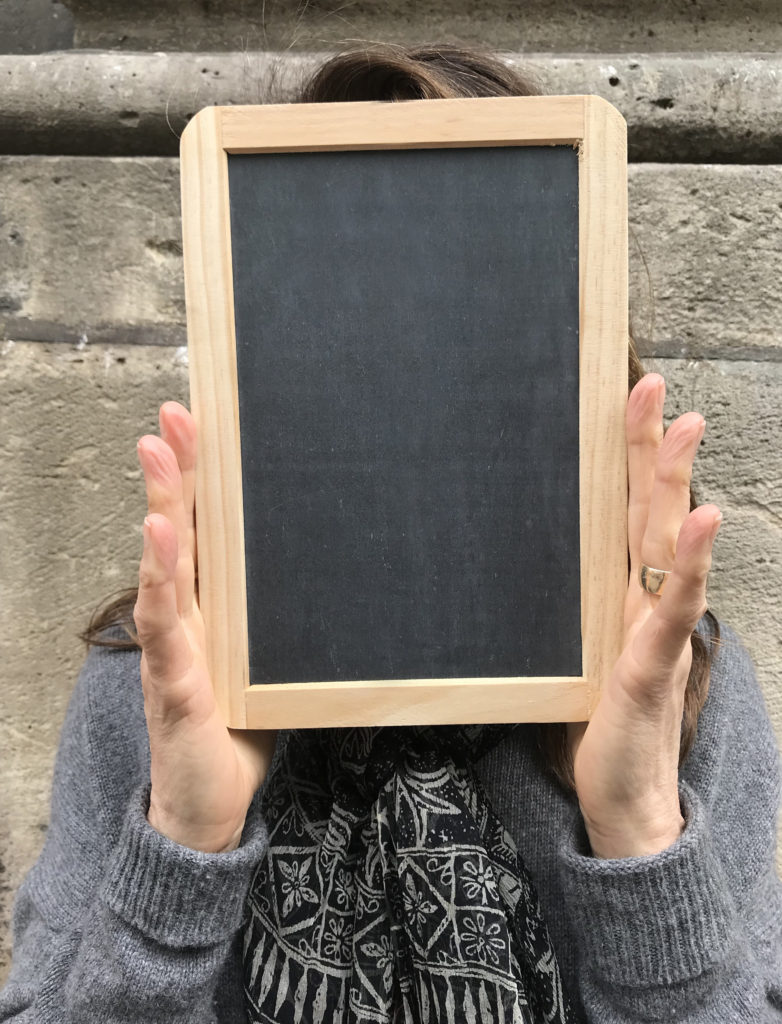
Starting over with a clean slate is a helpful option.
© Meredith Mullins
“Off the Cuff” equates to spontaneity or unplanned actions. The phrase is said to have originated as public speakers made brief notes on their shirt cuffs to help them with their speeches (usually not in indelible ink).
Teleprompters have now taken the place of spontaneity in many circumstances, but a speech from the heart still takes the prize.
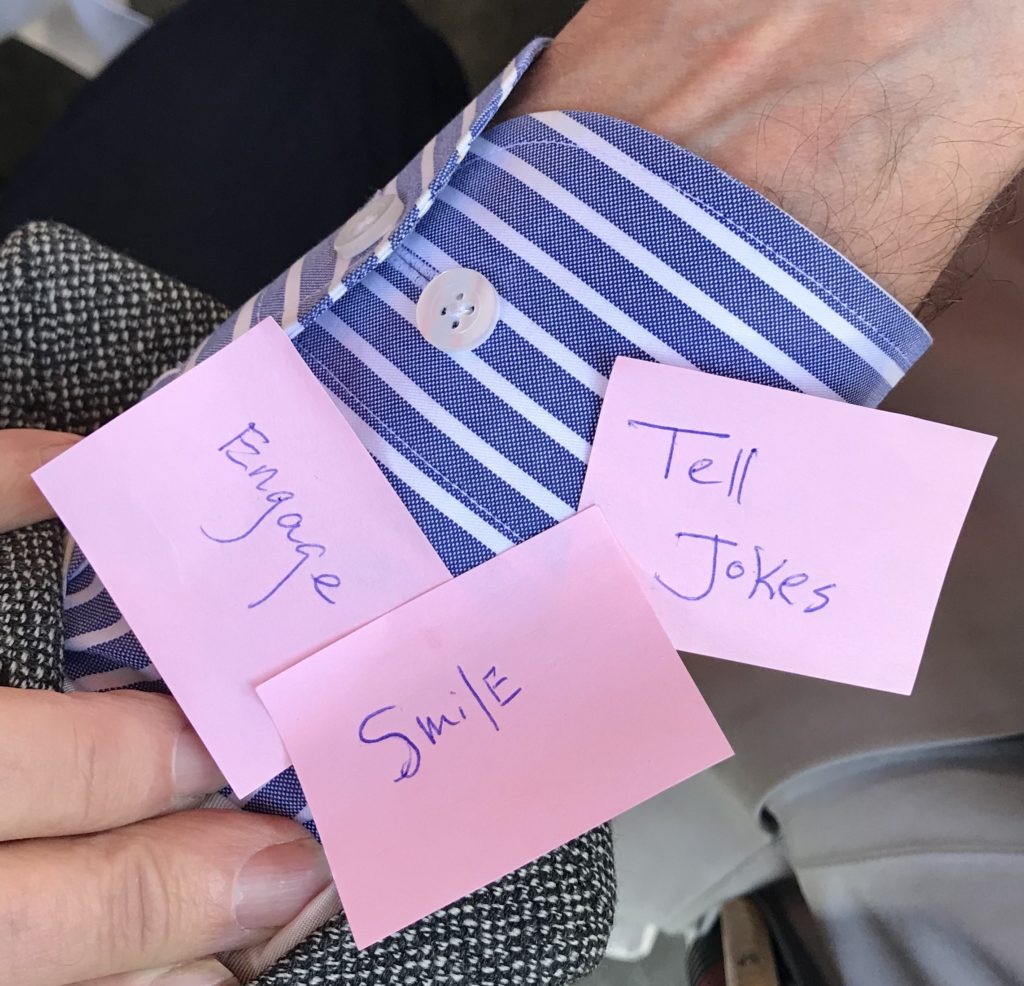
A little help from our cuff friends (post-it notes save the shirt cuff)
© Meredith Mullins
“Long in the tooth” is a visually dramatic (and a tad undiplomatic) way of saying getting old. The phrase comes from the equine world, where the age of a horse can be determined by checking its teeth. Since a horse’s gums recede with age, the longer the horse’s teeth appear, the older it is.
Etiquette hint: Don’t use this phrase if you want to remain friends with someone who is getting older.
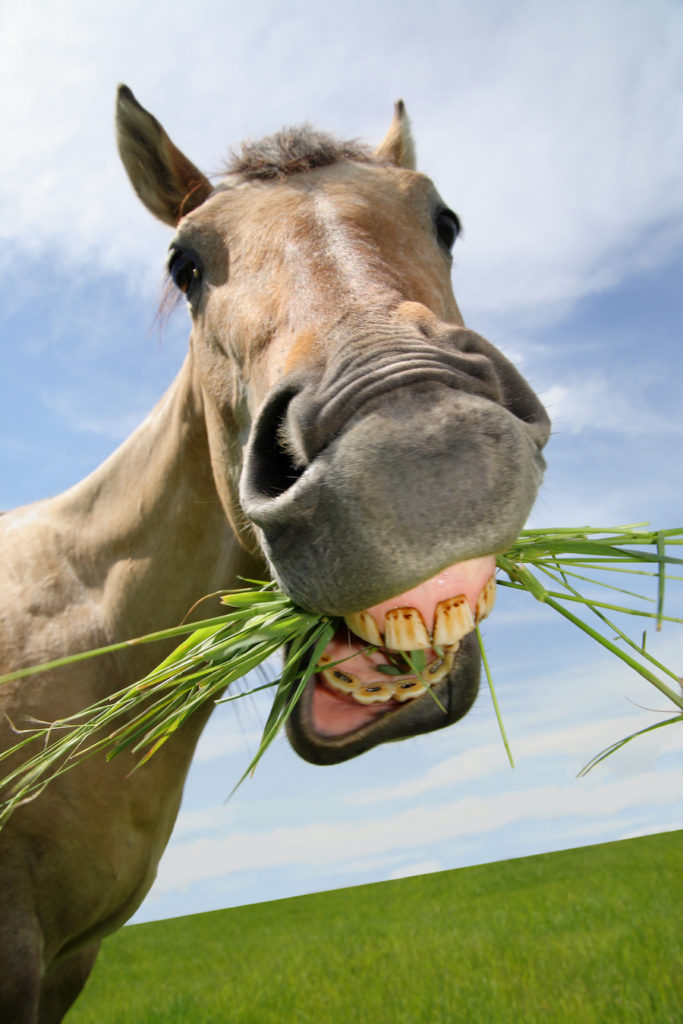
Who says I’m “long in the tooth”?
© iStock/Treasurephoto
Sometimes we just don’t want to hear what someone is saying. This phrase basically means “be quiet,” or, more directly, “shut up.”
The phrase is said to have come from the old gramophone days (the early 1900s). Since the first gramophones didn’t have volume controls, the best way to lower the volume was to put a rolled up sock in the horn.
One could argue that putting a sock in the annoying speaker’s mouth would be equally efficient.

How many socks does it take to lower the volume on an old gramophone?
© iStock/Fergregory
The crow phrase is a popular one, still used often today. It means the most direct route. The saying originates from the early days of British sailing ships.
When a ship needed to get its bearings, a caged crow was released. Since crows aren’t that fond of water, the bird always flew straight toward the nearest land and provided a rough navigational setting.
However, captains beware. A crow does not always fly in a straight line. It often swirls and swoops in grand arcs.
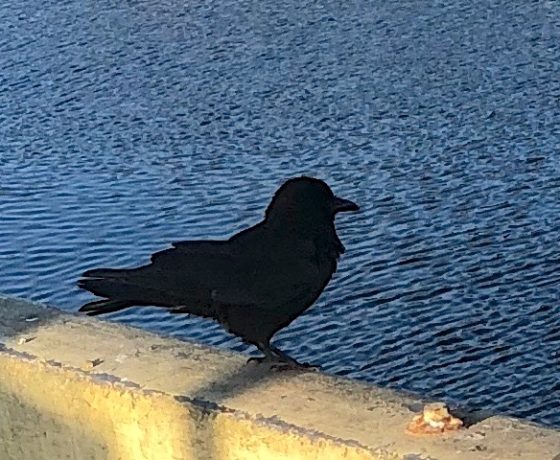
Which way will the crow fly?
© DMT
Although the origins of many proverbs and sayings have been proved to be just good storytelling—not at all based in fact—it is always fun to imagine idioms at their most entertaining. The English language offers a rich selection.
Comment on this post below, or inspire insight with your own OIC Moment here.
{"id":33781,"date":"2019-05-06T03:00:22","date_gmt":"2019-05-06T10:00:22","guid":{"rendered":"https:\/\/www.oh-i-see.com\/blog\/?p=33781"},"modified":"2021-07-20T08:05:32","modified_gmt":"2021-07-20T15:05:32","slug":"a-tale-told-by-idioms","status":"publish","type":"post","link":"https:\/\/www.oh-i-see.com\/blog\/a-tale-told-by-idioms\/","title":{"rendered":"A Tale Told by Idioms"},"content":{"rendered":"
An etymological quest
\u00a9 iStock\/Borchee<\/p><\/div>\n
Once upon a time there was a wandering etymologist\u2014a true lover of language. She had been living high on the hog for many years, enjoying the materialistic pleasures of the world.<\/p>\n
More often than not, she was three sheets to the wind. That was her choice at the time\u2014so no crocodile tears need be shed for her. Someday, the world hoped, she would understand the importance of minding her Ps and Qs.<\/p>\n
People would have categorized her as upper crust. But at an important life juncture, this lifestyle became tedious to her, more of a burden than a joy. She decided to start over with a clean slate\u2014to live life a little more off the cuff.<\/p>\n
Even though she was, what some might cruelly say \u201clong in the tooth,\u201d (and, by the way, she would have told those folks to put a sock in it), she felt a surge in her soul to wander. As she did, her quest became clear.<\/p>\n
With each step of the journey, proverbs and sayings kept leaping into her walking meditations. \u201cOh, I see\u201d moments\u00a0<\/strong>were imminent. She knew she had purpose\u2014a syntactic search to find the origins of the many idiomatic sayings that exist in the English language.<\/p>\n And so, she went forth with fervor, on a path as direct as the crow flies.<\/p>\n Here are a few of her favorites (all open to alternative theories) . . .<\/p>\n High on the hog, which means to live with extravagance, is an idiom dating to the 1800s.<\/p>\n It was said that the best cuts of meat were from the upper part of the pig\u2019s body. The wealthiest people feasted on cuts from the back and loin, while the poor learned to make the most of the knuckles, feet, and jowls.<\/p>\n Times have changed. Pigs’ feet can become a favorite dish. This saying \u2014meaning drunk\u2014comes from the world of sailing ships, and was first cited in novels of the 1800s.<\/p>\n The ropes on a ship, called \u201csheets\u201d secure the lower corners of the sails. There are two (and possibly more) derivations for the phrase.<\/p>\n One suggests that if three sheets are loose at the bottom of the sail, the sail will flap wildly and the boat will lurch like a drunk.<\/p>\n A more technical derivation explains that, if the jibs (small sails) are sheeted to the wind (sideways to the wind), which is often done during a storm, the boat rolls wildly from side to side, out of control.<\/p>\n Either way, it\u2019s a good description of ultimate inebriation.<\/p>\n Have you ever been three sheets to the wind? Or four? The saying \u201ccrocodile tears\u201d means an insincere expression of sorrow\u2014a pretense of sympathy.<\/p>\n References appear as early as the 14th\u00a0<\/sup>century and make literary appearances in Shakespeare and in the work of other writers throughout time.<\/p>\n The tears that you might see from a crocodile are not the result of emotion. Part of the myth of tears was linked to feeding. Crocodiles were observed crying after devouring something.<\/p>\n Would a crocodile weep for something it gobbled down? Unlikely. But their tear ducts were activated by feeding.<\/p>\n Also, crocodiles sunning themselves often keep their mouths open, which causes their tear glands to water.<\/p>\n A crocodile’s lament This phrase has several possible derivations, but all agree that it means to mind your manners,\u00a0 be polite, and be careful of your behavior.<\/p>\n The phrase could possible come from learning lowercase letters, since p\u2019s and q\u2019s are similar in form except for the placement of the descender.<\/p>\n However, the more common explanation comes from British pubs, where the bartenders kept an eye on how many pints or quarts were consumed. If drinkers became too unruly, the bartender would caution them to mind their Ps and Qs or they would be thrown out.<\/p>\n Cheers! But mind your Ps and Qs. Similar to \u201chigh on the hog\u201d being the best part of the pig\u2019s meat, one possible origin of this phrase was that the upper crust of bread was believed to be the best part of the bread loaf.<\/p>\n In 16th\u00a0<\/sup>century Europe, servants were given the bottom of the loaf (often easily burned), the family was given the middle, and guests were given the top (upper crust).<\/p>\n Today, the phrase means upper class, aristocratic, and part of the highest social class.<\/p>\n This loaf offers a mouth-watering upper crust. We might all relish an opportunity to start over with a clean slate\u2014to begin again with no baggage and no remnants of the past to unduly influence our actions and thoughts.<\/p>\n One origin of the phrase was nautical (a common starting point for many idioms). A ship\u2019s crew kept a slate tablet to record data during a watch. At the start of the next watch, the slate was wiped clean if there were no problems noted.<\/p>\n The phrase is sometimes also linked to a slate tablet kept by shopkeepers (long before computers), recording a person\u2019s purchases on account. When the account was paid off, the slate was wiped clean.<\/p>\n Starting over with a clean slate is a helpful option. \u201cOff the Cuff\u201d equates to spontaneity or unplanned actions. The phrase is said to have originated as public speakers made brief notes on their shirt cuffs to help them with their speeches (usually not in indelible ink).<\/p>\n Teleprompters have now taken the place of spontaneity in many circumstances, but a speech from the heart still takes the prize.<\/p>\n A little help from our cuff friends (post-it notes save the shirt cuff) \u201cLong in the tooth\u201d is a visually dramatic (and a tad undiplomatic) way of saying getting old. The phrase comes from the equine world, where the age of a horse can be determined by checking its teeth. Since a horse\u2019s gums recede with age, the longer the horse\u2019s teeth appear, the older it is.<\/p>\n Etiquette hint: Don\u2019t use this phrase if you want to remain friends with someone who is getting older.<\/p>\n Who says I’m “long in the tooth”? Sometimes we just don\u2019t want to hear what someone is saying. This phrase basically means \u201cbe quiet,\u201d or, more directly, \u201cshut up.\u201d<\/p>\n The phrase is said to have come from the old gramophone days (the early 1900s). Since the first gramophones didn\u2019t have volume controls, the best way to lower the volume was to put a rolled up sock in the horn.<\/p>\n One could argue that putting a sock in the annoying speaker\u2019s mouth would be equally efficient.<\/p>\n How many socks does it take to lower the volume on an old gramophone? The crow phrase is a popular one, still used often today. It means the most direct route. The saying originates from the early days of British sailing ships.<\/p>\n When a ship needed to get its bearings, a caged crow was released. Since crows aren\u2019t that fond of water, the bird always flew straight toward the nearest land and provided a rough navigational setting.<\/p>\n However, captains beware. A crow does not always fly in a straight line. It often swirls and swoops in grand arcs.<\/p>\n Which way will the crow fly? Although the origins of many proverbs and sayings have been proved to be just good storytelling\u2014not at all based in fact\u2014it is always fun to imagine idioms at their most entertaining. The English language offers a rich selection.<\/p>\n Comment<\/a><\/i>\u00a0on this post below, or inspire insight with your own\u00a0OIC Moment\u00a0<\/em>here<\/a>.<\/em><\/p>\n","protected":false},"excerpt":{"rendered":null,"protected":false},"author":5,"featured_media":33866,"comment_status":"closed","ping_status":"open","sticky":false,"template":"","format":"standard","meta":{"footnotes":""},"categories":[235],"tags":[],"class_list":["post-33781","post","type-post","status-publish","format-standard","has-post-thumbnail","hentry","category-proverbs-language"],"aioseo_notices":[],"_links":{"self":[{"href":"https:\/\/www.oh-i-see.com\/blog\/wp-json\/wp\/v2\/posts\/33781","targetHints":{"allow":["GET"]}}],"collection":[{"href":"https:\/\/www.oh-i-see.com\/blog\/wp-json\/wp\/v2\/posts"}],"about":[{"href":"https:\/\/www.oh-i-see.com\/blog\/wp-json\/wp\/v2\/types\/post"}],"author":[{"embeddable":true,"href":"https:\/\/www.oh-i-see.com\/blog\/wp-json\/wp\/v2\/users\/5"}],"replies":[{"embeddable":true,"href":"https:\/\/www.oh-i-see.com\/blog\/wp-json\/wp\/v2\/comments?post=33781"}],"version-history":[{"count":15,"href":"https:\/\/www.oh-i-see.com\/blog\/wp-json\/wp\/v2\/posts\/33781\/revisions"}],"predecessor-version":[{"id":33889,"href":"https:\/\/www.oh-i-see.com\/blog\/wp-json\/wp\/v2\/posts\/33781\/revisions\/33889"}],"wp:featuredmedia":[{"embeddable":true,"href":"https:\/\/www.oh-i-see.com\/blog\/wp-json\/wp\/v2\/media\/33866"}],"wp:attachment":[{"href":"https:\/\/www.oh-i-see.com\/blog\/wp-json\/wp\/v2\/media?parent=33781"}],"wp:term":[{"taxonomy":"category","embeddable":true,"href":"https:\/\/www.oh-i-see.com\/blog\/wp-json\/wp\/v2\/categories?post=33781"},{"taxonomy":"post_tag","embeddable":true,"href":"https:\/\/www.oh-i-see.com\/blog\/wp-json\/wp\/v2\/tags?post=33781"}],"curies":[{"name":"wp","href":"https:\/\/api.w.org\/{rel}","templated":true}]}}High on the Hog<\/h4>\n

\u00a9 Meredith Mullins<\/p><\/div>\nThree Sheets to the Wind<\/h4>\n

\u00a9 iStock\/Pi-lens<\/p><\/div>\nCrocodile Tears<\/h4>\n

\u00a9 iStock\/Dikuch<\/p><\/div>\nMind Your Ps and Qs<\/h4>\n

\u00a9 Meredith Mullins<\/p><\/div>\nUpper Crust<\/h4>\n

\u00a9 Meredith Mullins<\/p><\/div>\nStart Over with a Clean Slate<\/h4>\n

\u00a9 Meredith Mullins<\/p><\/div>\nOff the Cuff<\/h4>\n

\u00a9 Meredith Mullins<\/p><\/div>\nLong in the Tooth<\/h4>\n

\u00a9 iStock\/Treasurephoto<\/p><\/div>\nPut a Sock in It<\/h4>\n

\u00a9 iStock\/Fergregory<\/p><\/div>\nAs the Crow Flies<\/h4>\n

\u00a9 DMT<\/p><\/div>\n