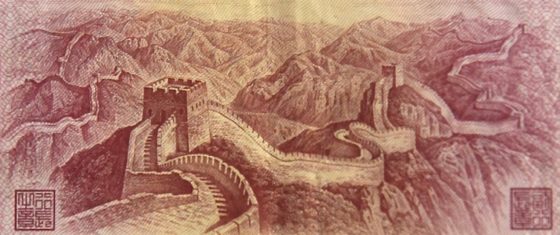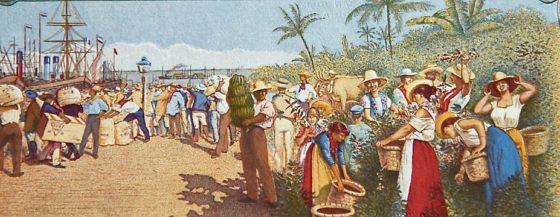
<div id="attachment_32139" style="width: 570px" class="wp-caption aligncenter"><img loading="lazy" decoding="async" aria-describedby="caption-attachment-32139" class="size-full wp-image-32139" src="https://www.oh-i-see.com/blog/wp-content/uploads/2018/09/MMM_8034adj1-e1538209530374.jpg" alt="Colorful historical scene from a Costa Rican banknote, showing the cultural heritage and traditions of a country. (Image © Meredith Mullins.)" width="560" height="217" /><p id="caption-attachment-32139" class="wp-caption-text">What can we learn from this work of art?<br />Image photo by Meredith Mullins</p></div>
<h2>Cultural Heritage and Traditions Revealed</h2>
<p>Countries reveal their cultural heritage and traditions through art, dress, storytelling, history, heroes, architecture, monuments, museums, language, music, products, and leaders.</p>
<p>They are also proud to present their natural treasures such as flora, fauna, and other gifts of nature.</p>
<div id="attachment_32135" style="width: 570px" class="wp-caption aligncenter"><img loading="lazy" decoding="async" aria-describedby="caption-attachment-32135" class="size-full wp-image-32135" src="https://www.oh-i-see.com/blog/wp-content/uploads/2018/09/MMM_8010-e1538210139411.jpeg" alt="Great wall of China on Chinese banknote, showing cultural heritage and traditions of China. (Image © Meredith Mullins.)" width="560" height="235" /><p id="caption-attachment-32135" class="wp-caption-text">Natural and human-made treasures<br />Image photo by Meredith Mullins</p></div>
<p>What do these two images have in common? </p>{"id":32137,"date":"2018-10-01T03:00:27","date_gmt":"2018-10-01T10:00:27","guid":{"rendered":"https:\/\/www.oh-i-see.com\/blog\/?p=32137"},"modified":"2021-07-20T08:04:41","modified_gmt":"2021-07-20T15:04:41","slug":"a-secret-world-of-discovery","status":"publish","type":"post","link":"https:\/\/www.oh-i-see.com\/blog\/a-secret-world-of-discovery\/","title":{"rendered":"A Secret World of Discovery"},"content":{"rendered":"<div id=\"attachment_32139\" style=\"width: 570px\" class=\"wp-caption aligncenter\"><img loading=\"lazy\" decoding=\"async\" aria-describedby=\"caption-attachment-32139\" class=\"size-full wp-image-32139\" src=\"https:\/\/www.oh-i-see.com\/blog\/wp-content\/uploads\/2018\/09\/MMM_8034adj1-e1538209530374.jpg\" alt=\"Colorful historical scene from a Costa Rican banknote, showing the cultural heritage and traditions of a country. (Image \u00a9 Meredith Mullins.)\" width=\"560\" height=\"217\" \/><p id=\"caption-attachment-32139\" class=\"wp-caption-text\">What can we learn from this work of art?<br \/>Image photo by Meredith Mullins<\/p><\/div>\n<h2>Cultural Heritage and Traditions Revealed<\/h2>\n<p>Countries reveal their cultural heritage and traditions through art, dress, storytelling, history, heroes, architecture, monuments, museums, language, music, products, and leaders.<\/p>\n<p>They are also proud to present their natural treasures such as flora, fauna, and other gifts of nature.<\/p>\n<div id=\"attachment_32135\" style=\"width: 570px\" class=\"wp-caption aligncenter\"><img loading=\"lazy\" decoding=\"async\" aria-describedby=\"caption-attachment-32135\" class=\"size-full wp-image-32135\" src=\"https:\/\/www.oh-i-see.com\/blog\/wp-content\/uploads\/2018\/09\/MMM_8010-e1538210139411.jpeg\" alt=\"Great wall of China on Chinese banknote, showing cultural heritage and traditions of China. (Image \u00a9 Meredith Mullins.)\" width=\"560\" height=\"235\" \/><p id=\"caption-attachment-32135\" class=\"wp-caption-text\">Natural and human-made treasures<br \/>Image photo by Meredith Mullins<\/p><\/div>\n<p>What do these two images have in common?<!--more--><\/p>\n<p>Both of the images are from a country\u2019s currency (paper money). The colorful coffee harvest scene appears on a five-colon bill (now out of circulation) from Costa Rica.<\/p>\n<p>The drawing of the Great Wall of China appears on the one-yuan Chinese note. (China, by the way, was the first country to use paper currency, back in the Tang Dynasty.)<\/p>\n<div id=\"attachment_32114\" style=\"width: 570px\" class=\"wp-caption aligncenter\"><img loading=\"lazy\" decoding=\"async\" aria-describedby=\"caption-attachment-32114\" class=\"size-large wp-image-32114\" src=\"https:\/\/www.oh-i-see.com\/blog\/wp-content\/uploads\/2018\/09\/MMM_8034adj-1024x422.jpg\" alt=\"Out-of-circulation banknote from Costa Rica showing coffee harvest and other cultural heritage and traditions. (Image \u00a9 Meredith Mullins.)\" width=\"560\" height=\"231\" \/><p id=\"caption-attachment-32114\" class=\"wp-caption-text\">This banknote from Costa Rica (no longer in circulation) shows the harvesting of coffee,<br \/>one of Costa Rica&#8217;s primary exports.<br \/>Image photo by Meredith Mullins<\/p><\/div>\n<p>Of course we need money to travel to distant lands. But why not look at paper money also as a source of cultural information . . . and inspiration?<\/p>\n<p>Well, perhaps not if you\u2019re in the U.S., as American dollars are some of the most institutional and colorless paper money in circulation today (although the selected green color is practical, as it reduces fading and decoloration of the currency).<\/p>\n<p><img loading=\"lazy\" decoding=\"async\" class=\"aligncenter wp-image-32151 size-large\" src=\"https:\/\/www.oh-i-see.com\/blog\/wp-content\/uploads\/2018\/09\/MMM_8052-Version-2-1024x693.jpg\" alt=\"\" width=\"560\" height=\"379\" \/><\/p>\n<p>However, the world\u2019s money tells another story.<\/p>\n<p>The lek, lev, lempira, kina, kuna, tala, hryvnia, dong, ngultrum, tenge, rufiyaa, rial, nakfa, birr, shekel, rupee, pula, dram, kwanza, rand, dinar, som, kip, tugrik, shilling, pound, and euro open a surprising window into a country\u2019s view of its treasures and how a country would like to present itself to the rest of the world.<\/p>\n<div id=\"attachment_32162\" style=\"width: 570px\" class=\"wp-caption aligncenter\"><img loading=\"lazy\" decoding=\"async\" aria-describedby=\"caption-attachment-32162\" class=\"size-large wp-image-32162\" src=\"https:\/\/www.oh-i-see.com\/blog\/wp-content\/uploads\/2018\/09\/MMM_8027-1-1024x879.jpg\" alt=\"Array of world paper money, showing cultural heritage and traditions. (Image \u00a9 Meredith Mullins.)\" width=\"560\" height=\"481\" \/><p id=\"caption-attachment-32162\" class=\"wp-caption-text\">Cultures reveal themselves in their design of paper money.<br \/>Photo by Meredith Mullins<\/p><\/div>\n<h4>Natural Riches<\/h4>\n<p>Many countries display their natural treasures, from wildlife to agricultural exports.<\/p>\n<div id=\"attachment_32165\" style=\"width: 570px\" class=\"wp-caption aligncenter\"><img loading=\"lazy\" decoding=\"async\" aria-describedby=\"caption-attachment-32165\" class=\"size-large wp-image-32165\" src=\"https:\/\/www.oh-i-see.com\/blog\/wp-content\/uploads\/2018\/09\/MMM_7989-1-1024x687.jpg\" alt=\"Paper money from Zambia, showing cultural heritage and traditions. (Image \u00a9 Meredith Mullins.)\" width=\"560\" height=\"376\" \/><p id=\"caption-attachment-32165\" class=\"wp-caption-text\">From Zambia: Wildlife, agriculture, and a strong statement on freedom<br \/>Photo by Meredith Mullins<\/p><\/div>\n<p>The Big Five make frequent appearances (rhinos, lions, leopards, elephants, and buffalos), as well as orangutans, antelope, tigers, iguanas, alligators, penguins, and exotic birds.<\/p>\n<div id=\"attachment_32167\" style=\"width: 570px\" class=\"wp-caption aligncenter\"><img loading=\"lazy\" decoding=\"async\" aria-describedby=\"caption-attachment-32167\" class=\"size-large wp-image-32167\" src=\"https:\/\/www.oh-i-see.com\/blog\/wp-content\/uploads\/2018\/09\/MMM_8047-1024x751.jpg\" alt=\"Uganda one thousand shilling note, one of the world's paper money showing cultural heritage and traditions. (Image \u00a9 Meredith Mullins.)\" width=\"560\" height=\"411\" srcset=\"https:\/\/www.oh-i-see.com\/blog\/wp-content\/uploads\/2018\/09\/MMM_8047-1024x751.jpg 1024w, https:\/\/www.oh-i-see.com\/blog\/wp-content\/uploads\/2018\/09\/MMM_8047-300x220.jpg 300w, https:\/\/www.oh-i-see.com\/blog\/wp-content\/uploads\/2018\/09\/MMM_8047-768x563.jpg 768w, https:\/\/www.oh-i-see.com\/blog\/wp-content\/uploads\/2018\/09\/MMM_8047-207x152.jpg 207w\" sizes=\"auto, (max-width: 560px) 100vw, 560px\" \/><p id=\"caption-attachment-32167\" class=\"wp-caption-text\">The Ugandan antelope is honored.<br \/>Photo by Meredith Mullins<\/p><\/div>\n<p>Indigenous plants, flowers, and trees also grace currency designs, as do exports such as coffee and chocolate.<\/p>\n<div id=\"attachment_32169\" style=\"width: 570px\" class=\"wp-caption aligncenter\"><img loading=\"lazy\" decoding=\"async\" aria-describedby=\"caption-attachment-32169\" class=\"size-large wp-image-32169\" src=\"https:\/\/www.oh-i-see.com\/blog\/wp-content\/uploads\/2018\/09\/MMM_8008-1024x466.jpg\" alt=\"Costa Rica 5000-colon note, one of the world's paper money that shows cultural heritage and traditions. (Image \u00a9 Meredith Mullins.)\" width=\"560\" height=\"255\" \/><p id=\"caption-attachment-32169\" class=\"wp-caption-text\">Portion of the beautifully designed Costa Rica 5000-colon note<br \/>Photo by Meredith Mullins<\/p><\/div>\n<h4>Sites of Interest<\/h4>\n<p>Historical and contemporary sites of interest are common themes. These visuals serve as a reminder of places worth visiting in a particular country. Paper money becomes an effective extension of travel brochures and tourist information.<\/p>\n<div id=\"attachment_32171\" style=\"width: 570px\" class=\"wp-caption aligncenter\"><img loading=\"lazy\" decoding=\"async\" aria-describedby=\"caption-attachment-32171\" class=\"size-large wp-image-32171\" src=\"https:\/\/www.oh-i-see.com\/blog\/wp-content\/uploads\/2018\/09\/MMM_7998-1-1024x571.jpg\" alt=\"Turkish lira showing Ephesus on the world paper money, also showing cultural heritage and traditions. (Image \u00a9 Meredith Mullins.)\" width=\"560\" height=\"312\" \/><p id=\"caption-attachment-32171\" class=\"wp-caption-text\">The ancient site of Ephesus in Turkey shown on the Turkish lira<br \/>Photo by Meredith Mullins<\/p><\/div>\n<h4>Movers and Shakers<\/h4>\n<p>Most paper money features some presence of the heroes, leaders, or celebrated personalities of the country.<\/p>\n<p>We meet Nelson Mandela on South African currency, Mahatma Ghandi on Indian notes, Mustafa Kamal Atat\u00fcrk on Turkish bills, Ghenghis Kahn on Mongolian notes, Mao Zedong on The People\u2019s Republic of China bills, the founding fathers on American currency, Ho Chi Minh on Vietnamese bills, and Ramesses II on Egyptian notes.<\/p>\n<div id=\"attachment_32173\" style=\"width: 570px\" class=\"wp-caption aligncenter\"><img loading=\"lazy\" decoding=\"async\" aria-describedby=\"caption-attachment-32173\" class=\"size-large wp-image-32173\" src=\"https:\/\/www.oh-i-see.com\/blog\/wp-content\/uploads\/2018\/09\/MMM_8035adj-1024x636.jpg\" alt=\"South African paper money with Nelson Mandela, showing cultural heritage and traditions. (Image \u00a9 Meredith Mullins.)\" width=\"560\" height=\"348\" \/><p id=\"caption-attachment-32173\" class=\"wp-caption-text\">A smiling Nelson Mandela gives us hope on the South African rand.<br \/>Photo by Meredith Mullins<\/p><\/div>\n<p>Perhaps the most frequently appearing leader is Queen Elizabeth II, having appeared on the currency of 33 countries. Several different portraits are used, but in most cases, she is forever young.<\/p>\n<div id=\"attachment_32175\" style=\"width: 570px\" class=\"wp-caption aligncenter\"><img loading=\"lazy\" decoding=\"async\" aria-describedby=\"caption-attachment-32175\" class=\"size-large wp-image-32175\" src=\"https:\/\/www.oh-i-see.com\/blog\/wp-content\/uploads\/2018\/09\/MMM_8017-Version-2-917x1024.jpg\" alt=\"Queen Elizabeth II on the ten-pound world paper money, showing cultural heritage and traditions. (Image \u00a9 Meredith Mullins.)\" width=\"560\" height=\"625\" \/><p id=\"caption-attachment-32175\" class=\"wp-caption-text\">Queen Elizabeth II: Forever young<br \/>Photo by Meredith Mullins<\/p><\/div>\n<p>A variety of other notables are also featured, from Winston Churchill (British pound) to Greta Garbo (Swedish krona) to Ch\u00e9 Guevara (Cuban peso) to Marie Curie and Fr\u00e9d\u00e9ric Chopin (Polish zloty).<\/p>\n<div id=\"attachment_32177\" style=\"width: 400px\" class=\"wp-caption alignright\"><img loading=\"lazy\" decoding=\"async\" aria-describedby=\"caption-attachment-32177\" class=\"size-full wp-image-32177\" src=\"https:\/\/www.oh-i-see.com\/blog\/wp-content\/uploads\/2018\/09\/IMG_2720.jpg\" alt=\"Frida Kahlo on the Mexican peso, part of the world's paper money that shows cultural heritage and traditions. (Image \u00a9 Stephen Mehay.)\" width=\"390\" height=\"261\" srcset=\"https:\/\/www.oh-i-see.com\/blog\/wp-content\/uploads\/2018\/09\/IMG_2720.jpg 390w, https:\/\/www.oh-i-see.com\/blog\/wp-content\/uploads\/2018\/09\/IMG_2720-300x201.jpg 300w, https:\/\/www.oh-i-see.com\/blog\/wp-content\/uploads\/2018\/09\/IMG_2720-207x139.jpg 207w\" sizes=\"auto, (max-width: 390px) 100vw, 390px\" \/><p id=\"caption-attachment-32177\" class=\"wp-caption-text\">Artist Frida Kahlo on the Mexican peso<br \/>Photo by Stephen Mehay<\/p><\/div>\n<p>Artists and musicians are frequently honored. Frida Kahlo and Diego Rivera appear on Mexican notes, Edvard Munch is on a Norwegian bill, the work of sculptor Alberto Giacometti appears on a Swiss note, singer Ces\u00e1ria \u00c9vora is featured on a Cape Verde bill, and the music of Jacobus Gallus is represented on a 200-tolar Slovenian bill (now out of circulation).<\/p>\n<div id=\"attachment_32179\" style=\"width: 570px\" class=\"wp-caption aligncenter\"><img loading=\"lazy\" decoding=\"async\" aria-describedby=\"caption-attachment-32179\" class=\"size-large wp-image-32179\" src=\"https:\/\/www.oh-i-see.com\/blog\/wp-content\/uploads\/2018\/09\/MMM_8001-1-1024x630.jpg\" alt=\"Musical score on the Slovenian solar, part of the world's paper money that shows cultural heritage and traditions. (Image \u00a9 Meredith Mullins.)\" width=\"560\" height=\"345\" \/><p id=\"caption-attachment-32179\" class=\"wp-caption-text\">Portion of the Slovenian tolar (now out of circulation) showing the music of Jacobus Gallus<br \/>Photo by Meredith Mullins<\/p><\/div>\n<p>Writers are prominent also, with Gabriel Garcia M\u00e1rquez on a Colombian peso, Jane Austen on a British pound note, and Karen Blixen on a Danish krone.<\/p>\n<p>The choice of who appears on the currency is, in itself, a fascinating indicator of how a country views its cultural heritage and traditions\u2014showing political power; a history of dictatorship, monarchy or freedom; or artistic depth.<\/p>\n<div id=\"attachment_32134\" style=\"width: 570px\" class=\"wp-caption aligncenter\"><img loading=\"lazy\" decoding=\"async\" aria-describedby=\"caption-attachment-32134\" class=\"size-full wp-image-32134\" src=\"https:\/\/www.oh-i-see.com\/blog\/wp-content\/uploads\/2018\/09\/iStock-976598506sized-e1538305082215.jpg\" alt=\"Iceland paper money with different personalities, part of the world's paper money showing cultural heritage and traditions. (Image \u00a9 Johan10\/iStock.)\" width=\"560\" height=\"373\" \/><p id=\"caption-attachment-32134\" class=\"wp-caption-text\">Iceland offers a range of personalities on the krona.<br \/>\u00a9 Johan10\/iStock<\/p><\/div>\n<h4>Cultural Stories<\/h4>\n<p>Currencies often tell memorable stories that include signs and symbols of cultural heritage.<\/p>\n<p>The paper money from the Maldives shows fishing and coconuts, which are the traditional ways the islanders have earned a living. The note also shows cowrie shells, which were the first form of currency on the islands.<\/p>\n<div id=\"attachment_32132\" style=\"width: 570px\" class=\"wp-caption aligncenter\"><img loading=\"lazy\" decoding=\"async\" aria-describedby=\"caption-attachment-32132\" class=\"size-full wp-image-32132\" src=\"https:\/\/www.oh-i-see.com\/blog\/wp-content\/uploads\/2018\/09\/iStock-824079750sized-e1538305343301.jpg\" alt=\"Maldives paper money with shells, a part of the world's paper money showing cultural heritage and traditions. (Image \u00a9 Siempreverde22\/iStock.)\" width=\"560\" height=\"373\" \/><p id=\"caption-attachment-32132\" class=\"wp-caption-text\">The Maldives rufiyaa shows the history of the islands and the origin of the use of currency.<br \/>\u00a9 Siempreverde22\/iStock<\/p><\/div>\n<p>The one hundred trillion dollar note (100,000,000,000,000) of Zimbabwe (the highest existing denomination in the world) is a clue that the currency devaluation in that country is a significant problem.<\/p>\n<p>The Comoros islands off the coast of Africa are a place of turbulent politics, rebellions, and coups, but the currency depicts a peaceful paradise. A hopeful prediction for the future?<\/p>\n<p>The banknotes of Eritrea reflect a focus on youth and education, important elements for the progress of the country.<\/p>\n<div id=\"attachment_32183\" style=\"width: 570px\" class=\"wp-caption aligncenter\"><img loading=\"lazy\" decoding=\"async\" aria-describedby=\"caption-attachment-32183\" class=\"size-large wp-image-32183\" src=\"https:\/\/www.oh-i-see.com\/blog\/wp-content\/uploads\/2018\/09\/MMM_8041-1024x708.jpg\" alt=\"Eritrea banknote with boys being educated, a part of the world's paper money showing cultural heritage and traditions. (Image \u00a9 Meredith Mullins.)\" width=\"560\" height=\"387\" \/><p id=\"caption-attachment-32183\" class=\"wp-caption-text\">Part of an Eritrean banknote, showing the value of education<br \/>Photo by Meredith Mullins<\/p><\/div>\n<p>Bhutan\u2019s bills incorporate the government crest, with dragons, mythical birds, and auspicious signs\u2014an interweaving of the practical and the spiritual.<\/p>\n<div id=\"attachment_32184\" style=\"width: 570px\" class=\"wp-caption aligncenter\"><img loading=\"lazy\" decoding=\"async\" aria-describedby=\"caption-attachment-32184\" class=\"size-large wp-image-32184\" src=\"https:\/\/www.oh-i-see.com\/blog\/wp-content\/uploads\/2018\/09\/MMM_8037-1-1024x364.jpg\" alt=\"Bhutan paper money, showing the world's paper money and cultural heritage and traditions. (Image \u00a9 Meredith Mullins.)\" width=\"560\" height=\"199\" \/><p id=\"caption-attachment-32184\" class=\"wp-caption-text\">The beauty of Bhutanese paper money design<br \/>Photo by Meredith Mullins<\/p><\/div>\n<h4>Counterfeit Protection Measures<\/h4>\n<p>The design, style, color, and artistry of each country\u2019s bills are unique to the government and culture of the country.<\/p>\n<p>Each country also has creative ways of addressing counterfeit protection issues.<\/p>\n<div id=\"attachment_32187\" style=\"width: 570px\" class=\"wp-caption aligncenter\"><img loading=\"lazy\" decoding=\"async\" aria-describedby=\"caption-attachment-32187\" class=\"size-large wp-image-32187\" src=\"https:\/\/www.oh-i-see.com\/blog\/wp-content\/uploads\/2018\/09\/MMM_8045-1-962x1024.jpg\" alt=\"Camel appearing on Eritrean paper money, showing the world's paper money and cultural heritage and traditions. (Image \u00a9 Meredith Mullins.)\" width=\"560\" height=\"596\" \/><p id=\"caption-attachment-32187\" class=\"wp-caption-text\">The elusive Eritrean camel<br \/>Photo by Meredith Mullins<\/p><\/div>\n<p>Bermuda has a transparent butterfly that is only visible when closely inspected. Eritrea has an elusive camel. Britain has a series of shining silver holograms. And many countries have specially made interwoven threads, as well as a secret formula of plastic and\/or linen and cotton cloth.<\/p>\n<div id=\"attachment_32192\" style=\"width: 570px\" class=\"wp-caption aligncenter\"><img loading=\"lazy\" decoding=\"async\" aria-describedby=\"caption-attachment-32192\" class=\"size-large wp-image-32192\" src=\"https:\/\/www.oh-i-see.com\/blog\/wp-content\/uploads\/2018\/09\/MMM_8025-1-671x1024.jpg\" alt=\"Holograms on the British paper money, showing anti-counterfeit measures on the world's paper money and cultural heritage and traditions. (Image \u00a9 Meredith Mullins.)\" width=\"560\" height=\"855\" \/><p id=\"caption-attachment-32192\" class=\"wp-caption-text\">Anti-counterfeit measures on the British pound: a variety of holograms<br \/>Photo by Meredith Mullins<\/p><\/div>\n<h4>Traveling the World<\/h4>\n<p>A study of a country\u2019s currency can provide solid clues to its cultural heritage and traditions, bringing the world closer together and promoting understanding among us.<\/p>\n<p>The next time you are traveling in a new country, take an <strong>&#8220;Oh, I see&#8221; moment<\/strong> to discover the details of the paper money. It\u2019s an inventive way to begin to get to know a culture.<\/p>\n<div id=\"attachment_32191\" style=\"width: 570px\" class=\"wp-caption aligncenter\"><img loading=\"lazy\" decoding=\"async\" aria-describedby=\"caption-attachment-32191\" class=\"size-large wp-image-32191\" src=\"https:\/\/www.oh-i-see.com\/blog\/wp-content\/uploads\/2018\/09\/MMM_8033-1-1024x646.jpg\" alt=\"Iguana and flower on Fiji paper money, showing cultural heritage and traditions. (Image \u00a9 Meredith Mullins.)\" width=\"560\" height=\"353\" \/><p id=\"caption-attachment-32191\" class=\"wp-caption-text\">Fiji fauna and flora<br \/>Photo by Meredith Mullins<\/p><\/div>\n<h4>Test Your World Money Skills<\/h4>\n<p>As an added world culture brain teaser, match the money name with the country (without the aid of Google). (Answers are in tiny print below.)<\/p>\n<ol>\n<li>Lek<\/li>\n<li>Tenge<\/li>\n<li>Tugrik<\/li>\n<li>Nakfa<\/li>\n<li>Birr<\/li>\n<li>Kwanza<\/li>\n<li>Ngultrum<\/li>\n<li>Lempira<\/li>\n<li>Dong<\/li>\n<li>Dram<\/li>\n<\/ol>\n<p>A. Bhutan<br \/>\nB. Eritrea<br \/>\nC. Honduras<br \/>\nD. Angola<br \/>\nE. Vietnam<br \/>\nF. Ethiopia<br \/>\nG. Armenia<br \/>\nH. Mongolia<br \/>\nI. \u00a0Albania<br \/>\nJ. Kazakhstan<\/p>\n<p><em>Thank you to <a href=\"https:\/\/robertsworldmoney.com\" target=\"_blank\" rel=\"noopener\">Robert&#8217;s World Money <\/a>and world travelers Rick McGarrity, Helen Ogden, Stephen Mehay, and Stephanie Herrick.<\/em><\/p>\n<p><i><a title=\"Creative Inspiration Flows In Underwater Photographs\" href=\"#comments\">Comment<\/a><\/i><em>\u00a0on this post below, or inspire insight with your own\u00a0OIC Moment\u00a0<\/em><em><a href=\"https:\/\/www.oh-i-see.com\/blog\/your-oic-moments\/\">here<\/a>.<\/em><\/p>\n<h6>1-I \u00a02-J \u00a03-H \u00a04-B \u00a05-F \u00a06-D \u00a07-A \u00a08-C \u00a09-E \u00a010-G<\/h6>","protected":false},"excerpt":{"rendered":null,"protected":false},"author":5,"featured_media":32139,"comment_status":"closed","ping_status":"open","sticky":false,"template":"","format":"standard","meta":{"footnotes":""},"categories":[99,227],"tags":[],"class_list":["post-32137","post","type-post","status-publish","format-standard","has-post-thumbnail","hentry","category-heritage-culture","category-worldwide-mappoints"],"aioseo_notices":[],"_links":{"self":[{"href":"https:\/\/www.oh-i-see.com\/blog\/wp-json\/wp\/v2\/posts\/32137","targetHints":{"allow":["GET"]}}],"collection":[{"href":"https:\/\/www.oh-i-see.com\/blog\/wp-json\/wp\/v2\/posts"}],"about":[{"href":"https:\/\/www.oh-i-see.com\/blog\/wp-json\/wp\/v2\/types\/post"}],"author":[{"embeddable":true,"href":"https:\/\/www.oh-i-see.com\/blog\/wp-json\/wp\/v2\/users\/5"}],"replies":[{"embeddable":true,"href":"https:\/\/www.oh-i-see.com\/blog\/wp-json\/wp\/v2\/comments?post=32137"}],"version-history":[{"count":57,"href":"https:\/\/www.oh-i-see.com\/blog\/wp-json\/wp\/v2\/posts\/32137\/revisions"}],"predecessor-version":[{"id":32214,"href":"https:\/\/www.oh-i-see.com\/blog\/wp-json\/wp\/v2\/posts\/32137\/revisions\/32214"}],"wp:featuredmedia":[{"embeddable":true,"href":"https:\/\/www.oh-i-see.com\/blog\/wp-json\/wp\/v2\/media\/32139"}],"wp:attachment":[{"href":"https:\/\/www.oh-i-see.com\/blog\/wp-json\/wp\/v2\/media?parent=32137"}],"wp:term":[{"taxonomy":"category","embeddable":true,"href":"https:\/\/www.oh-i-see.com\/blog\/wp-json\/wp\/v2\/categories?post=32137"},{"taxonomy":"post_tag","embeddable":true,"href":"https:\/\/www.oh-i-see.com\/blog\/wp-json\/wp\/v2\/tags?post=32137"}],"curies":[{"name":"wp","href":"https:\/\/api.w.org\/{rel}","templated":true}]}}