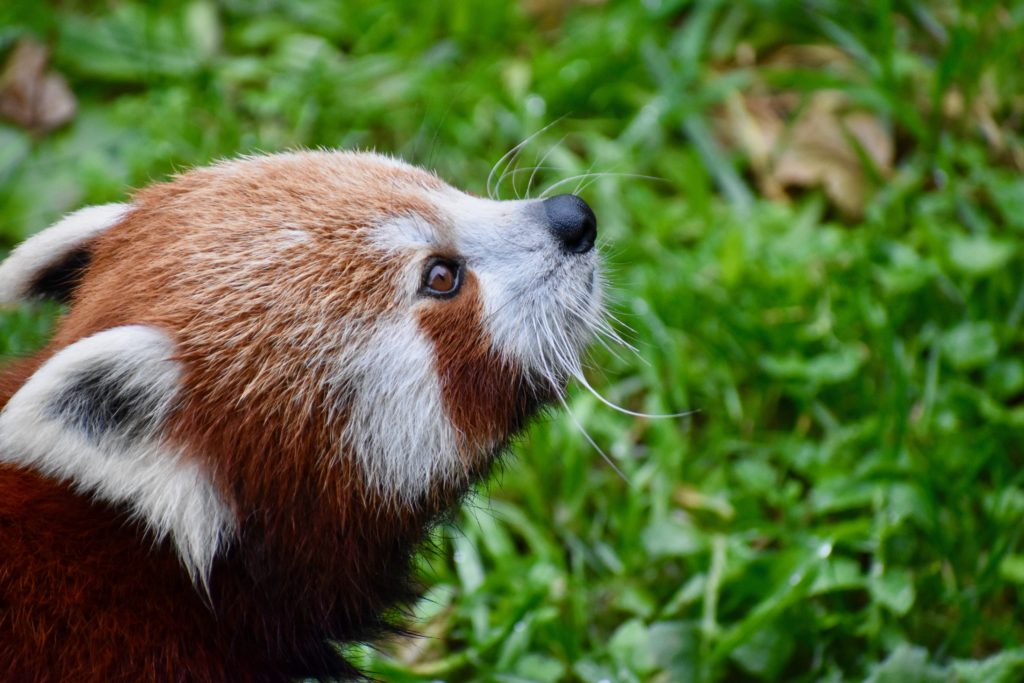
<div id="attachment_32064" style="width: 610px" class="wp-caption aligncenter"><img loading="lazy" decoding="async" aria-describedby="caption-attachment-32064" class="wp-image-32064" src="https://www.oh-i-see.com/blog/wp-content/uploads/2019/09/DSC_0893-1024x683.jpg" alt="A red panda in Wellington, New Zealand reminds the writer that animal idioms continues to influence everyday language. (Image © Joyce McGreevy)" width="600" height="400" srcset="https://www.oh-i-see.com/blog/wp-content/uploads/2019/09/DSC_0893-1024x683.jpg 1024w, https://www.oh-i-see.com/blog/wp-content/uploads/2019/09/DSC_0893-300x200.jpg 300w, https://www.oh-i-see.com/blog/wp-content/uploads/2019/09/DSC_0893-768x512.jpg 768w, https://www.oh-i-see.com/blog/wp-content/uploads/2019/09/DSC_0893-207x138.jpg 207w" sizes="auto, (max-width: 600px) 100vw, 600px" /><p id="caption-attachment-32064" class="wp-caption-text">Red pandas, like this one at the Wellington Zoo, New Zealand, have influenced human language.<br />© Joyce McGreevy</p></div>
<h2>Animal Idioms Around the World</h2>
<p>Animal idioms have burrowed into everyday wordplay since Moses was a pup. It doesn’t take a fisheye lens to get the picture. Animal words prowl the planet.</p>
<p>You don’t have to be a bookworm or wear a deerstalker hat to ferret out examples. A simple mouse click ponies up swarms of animal buzzwords.</p>
<h4><strong>Fledgling Phrases</strong></h4>
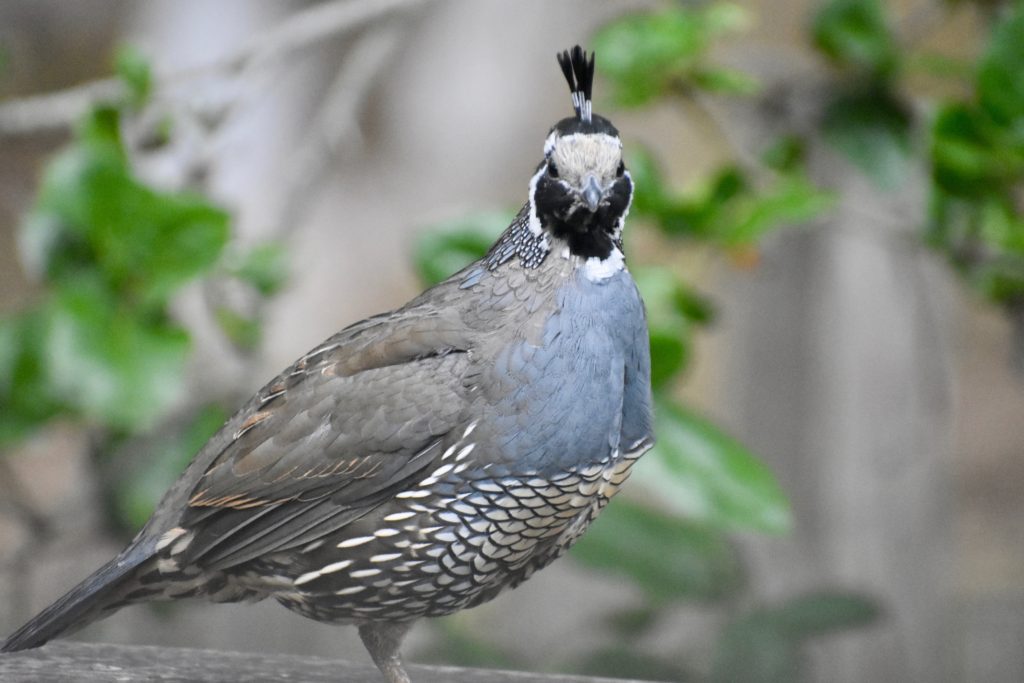
<p>Animal idioms are cross-cultural and nest in every language. Some are as timeless as a phoenix rising from the ashes. Others are newly hatched.</p>
<div id="attachment_32076" style="width: 570px" class="wp-caption aligncenter"><img loading="lazy" decoding="async" aria-describedby="caption-attachment-32076" class="wp-image-32076 size-large" src="https://www.oh-i-see.com/blog/wp-content/uploads/2019/09/DSC_0202-1024x683.jpg" alt="A quail in California reminds the writer that animal names and animal idioms influence everyday language. (Image © Joyce McGreevy)" width="560" height="374" srcset="https://www.oh-i-see.com/blog/wp-content/uploads/2019/09/DSC_0202-1024x683.jpg 1024w, https://www.oh-i-see.com/blog/wp-content/uploads/2019/09/DSC_0202-300x200.jpg 300w, https://www.oh-i-see.com/blog/wp-content/uploads/2019/09/DSC_0202-768x512.jpg 768w, https://www.oh-i-see.com/blog/wp-content/uploads/2019/09/DSC_0202-207x138.jpg 207w" sizes="auto, (max-width: 560px) 100vw, 560px" /><p id="caption-attachment-32076" class="wp-caption-text">Bird idioms abound, so don&#8217;t quail. Have a lark and let wordplay take flight!<br />(Carmel, California)<br />© Joyce McGreevy</p></div>
<h4><strong>Consider the Red Panda Effect</strong></h4>
<p>People who experience this condition see things that aren’t there or misidentify what they do see. The term goes back to 1978 when a red panda escaped from a German zoo. People reported hundreds of sightings—long after the red panda had been found.</p>
<p>Seems our brains construct what we expect to see. Hence, the Red Panda Effect. Proving that’s what red all over isn’t always black and white.</p>
<h4><strong>Giraffe Language</strong></h4>
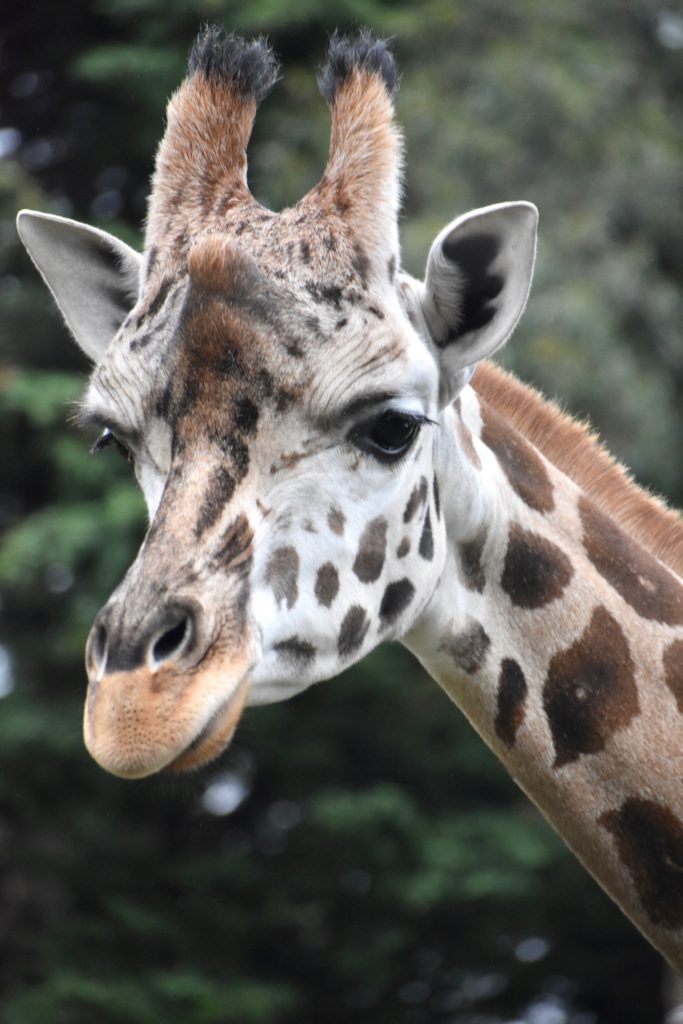
<p>Quick—what sound does a giraffe make? I don’t know either, but <strong>Giraffe Language</strong> is changing the way humans speak across cultures.</p>
<div id="attachment_32066" style="width: 460px" class="wp-caption aligncenter"><img loading="lazy" decoding="async" aria-describedby="caption-attachment-32066" class="wp-image-32066" src="https://www.oh-i-see.com/blog/wp-content/uploads/2019/09/DSC_0995-683x1024.jpg" alt="A giraffe in Wellington, New Zealand reminds the writer that animal names, idioms, and terms, such as Giraffe Language, influence everyday language. (Image © Joyce McGreevy)" width="450" height="675" srcset="https://www.oh-i-see.com/blog/wp-content/uploads/2019/09/DSC_0995-683x1024.jpg 683w, https://www.oh-i-see.com/blog/wp-content/uploads/2019/09/DSC_0995-200x300.jpg 200w, https://www.oh-i-see.com/blog/wp-content/uploads/2019/09/DSC_0995-768x1152.jpg 768w, https://www.oh-i-see.com/blog/wp-content/uploads/2019/09/DSC_0995-138x207.jpg 138w, https://www.oh-i-see.com/blog/wp-content/uploads/2019/09/DSC_0995-300x450.jpg 300w" sizes="auto, (max-width: 450px) 100vw, 450px" /><p id="caption-attachment-32066" class="wp-caption-text">In French, <em>peigner la giraffe</em> (&#8220;combing the giraffe&#8221;) is to do a <br />pointless task. But that&#8217;s a horse of a different color. <br />© Joyce McGreevy</p></div>
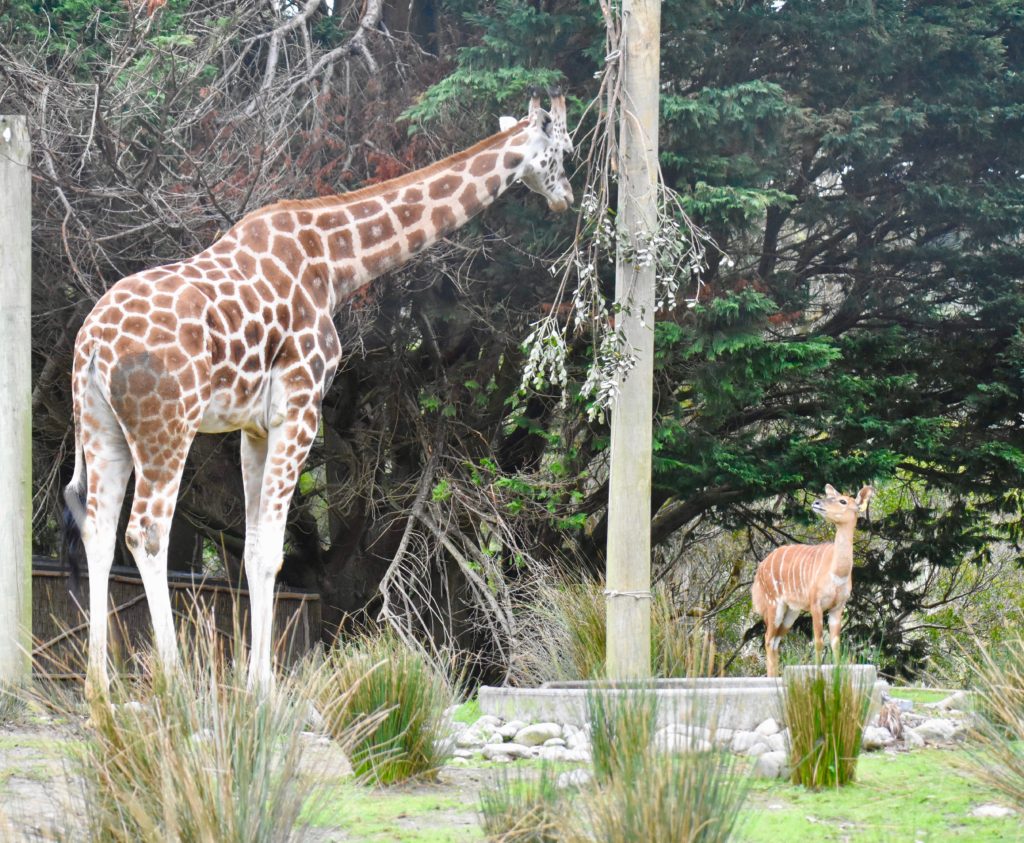
<p>Giraffes have the biggest hearts of any land animal, a fact that inspired psychologist Marshall Rosenberg. As the founder of the Center for Nonviolent Communication, Rosenberg explored two genres of interpersonal communication:</p>
<ul>
<li><strong>Giraffe Language</strong>, the language of requests, respect, and compassion, and</li>
<li><strong>Jackal Language</strong>, the language of demands, insults, and self-interest.</li>
</ul>
<p>I hope we&#8217;ll consider that the next time we tweet or retweet.</p>
<div id="attachment_32080" style="width: 570px" class="wp-caption aligncenter"><img loading="lazy" decoding="async" aria-describedby="caption-attachment-32080" class="wp-image-32080 size-large" src="https://www.oh-i-see.com/blog/wp-content/uploads/2019/09/DSC_0986-1024x843.jpg" alt="A giraffe and an antelope in Wellington, New Zealand remind the writer that animal names, idioms, and terms, such as Giraffe Language, influence everyday language. (Image © Joyce McGreevy)" width="560" height="461" srcset="https://www.oh-i-see.com/blog/wp-content/uploads/2019/09/DSC_0986-1024x843.jpg 1024w, https://www.oh-i-see.com/blog/wp-content/uploads/2019/09/DSC_0986-300x247.jpg 300w, https://www.oh-i-see.com/blog/wp-content/uploads/2019/09/DSC_0986-768x633.jpg 768w, https://www.oh-i-see.com/blog/wp-content/uploads/2019/09/DSC_0986-207x170.jpg 207w" sizes="auto, (max-width: 560px) 100vw, 560px" /><p id="caption-attachment-32080" class="wp-caption-text">We needn&#8217;t be birds of a feather to flock together, or animals of the same stripe to bond.<br />(Wellington, New Zealand)<br />© Joyce McGreevy</p></div>
<h4><strong>Weasel Words</strong></h4>
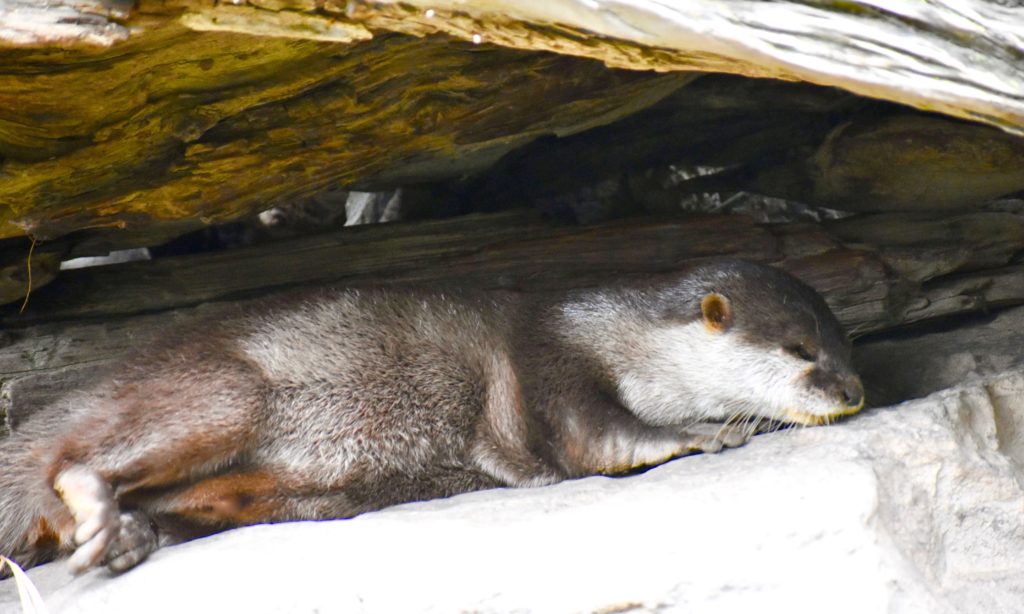
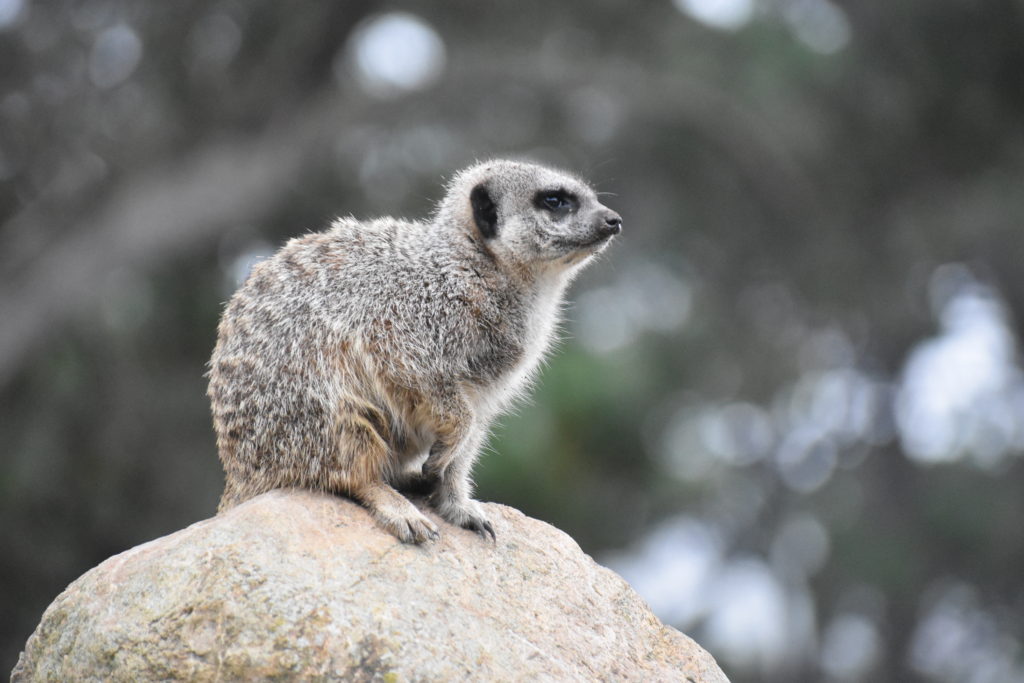
<p>Weasel words are all about evasion. They allow the user to avoid giving clear answers, so one might think this term reflects weasels’ ability to navigate tight spaces. In fact, weasel words come from an unproven belief that weasels can suck the insides out of an egg without affecting the shell.</p>
<div id="attachment_32101" style="width: 570px" class="wp-caption aligncenter"><img loading="lazy" decoding="async" aria-describedby="caption-attachment-32101" class="wp-image-32101 size-large" src="https://www.oh-i-see.com/blog/wp-content/uploads/2019/09/DSC_0854-1024x614.jpg" alt="Otters in Wellington, New Zealand remind one that animal idioms, animal names, and animal traits inspire everyday language, including wordplay. (Image © Joyce McGreevy)" width="560" height="336" srcset="https://www.oh-i-see.com/blog/wp-content/uploads/2019/09/DSC_0854-1024x614.jpg 1024w, https://www.oh-i-see.com/blog/wp-content/uploads/2019/09/DSC_0854-300x180.jpg 300w, https://www.oh-i-see.com/blog/wp-content/uploads/2019/09/DSC_0854-768x460.jpg 768w, https://www.oh-i-see.com/blog/wp-content/uploads/2019/09/DSC_0854-207x124.jpg 207w, https://www.oh-i-see.com/blog/wp-content/uploads/2019/09/DSC_0854-165x100.jpg 165w" sizes="auto, (max-width: 560px) 100vw, 560px" /><p id="caption-attachment-32101" class="wp-caption-text">What member of the weasel family is as slippery as an eel? You otter know. <br />(Wellington, New Zealand) © Joyce McGreevy</p></div>
<p>Classic examples of weasel word language include:</p>
<ul>
<li>“Research shows” (without citing data)</li>
<li>“This product is 30% better” (compared to what?)</li>
<li>“somewhat” or “in most respects” (kinda-sorta-maybe, or maybe not)</li>
</ul>
<div id="attachment_32067" style="width: 570px" class="wp-caption aligncenter"><img loading="lazy" decoding="async" aria-describedby="caption-attachment-32067" class="wp-image-32067 size-large" src="https://www.oh-i-see.com/blog/wp-content/uploads/2019/09/DSC_0925-1024x683.jpg" alt="A meerkat in Wellington, New Zealand reminds the writer that animal names inspire everyday wordplay. (Image © Joyce McGreevy)" width="560" height="374" srcset="https://www.oh-i-see.com/blog/wp-content/uploads/2019/09/DSC_0925-1024x683.jpg 1024w, https://www.oh-i-see.com/blog/wp-content/uploads/2019/09/DSC_0925-300x200.jpg 300w, https://www.oh-i-see.com/blog/wp-content/uploads/2019/09/DSC_0925-768x512.jpg 768w, https://www.oh-i-see.com/blog/wp-content/uploads/2019/09/DSC_0925-207x138.jpg 207w" sizes="auto, (max-width: 560px) 100vw, 560px" /><p id="caption-attachment-32067" class="wp-caption-text">Weasel-like meerkats are neither weasels nor cats, nor mere. (Wellington, New Zealand)<br />© Joyce McGreevy</p></div>
<h4><strong>Busy as a Lizard?</strong></h4>
<p>Animal traits are often used to describe humans. Accordingly, someone can be as proud as a peacock, slippery as an eel,  hungry as a horse, stubborn as a mule, graceful as a gazelle, and drunk as a skunk—though rarely all at once.</p>
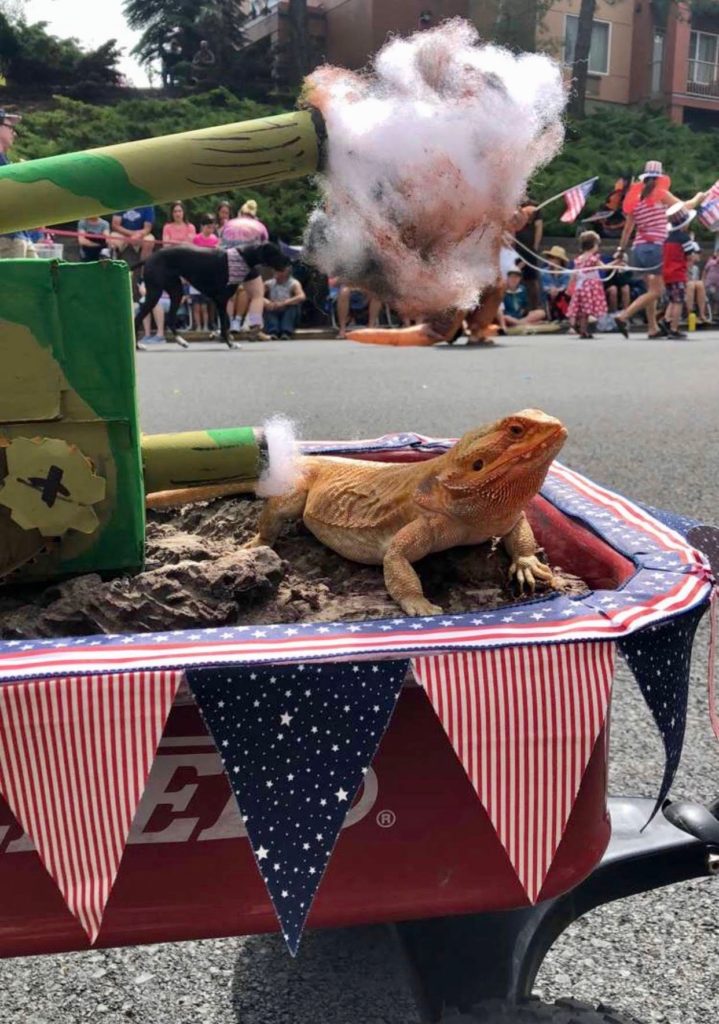
<p>Some animal comparisons are less clear. In Australia, the equivalent of being “busy as a bee” is to work “flat out like a lizard drinking.” <em>Huh?</em></p>
<p>It has to do with how rapidly lizards dart their tongues when drinking water. <strong>Oh, I see</strong>: Animal idioms can really take you down a rabbit hole.</p>
<div id="attachment_32070" style="width: 570px" class="wp-caption aligncenter"><img loading="lazy" decoding="async" aria-describedby="caption-attachment-32070" class="wp-image-32070 size-large" src="https://www.oh-i-see.com/blog/wp-content/uploads/2019/09/IMG_9786-719x1024.jpg" alt="A lizard in a pet parade in Bend, Oregon reminds one that animal idioms, names, and traits inspire everyday wordplay. (Image © Carolyn McGreevy)" width="560" height="798" srcset="https://www.oh-i-see.com/blog/wp-content/uploads/2019/09/IMG_9786-719x1024.jpg 719w, https://www.oh-i-see.com/blog/wp-content/uploads/2019/09/IMG_9786-211x300.jpg 211w, https://www.oh-i-see.com/blog/wp-content/uploads/2019/09/IMG_9786-768x1094.jpg 768w, https://www.oh-i-see.com/blog/wp-content/uploads/2019/09/IMG_9786-145x207.jpg 145w, https://www.oh-i-see.com/blog/wp-content/uploads/2019/09/IMG_9786-300x427.jpg 300w, https://www.oh-i-see.com/blog/wp-content/uploads/2019/09/IMG_9786.jpg 1242w" sizes="auto, (max-width: 560px) 100vw, 560px" /><p id="caption-attachment-32070" class="wp-caption-text">That&#8217;s one very chill lizard at the Pet Parade in Bend, Oregon. <br />© Carolyn McGreevy</p></div>
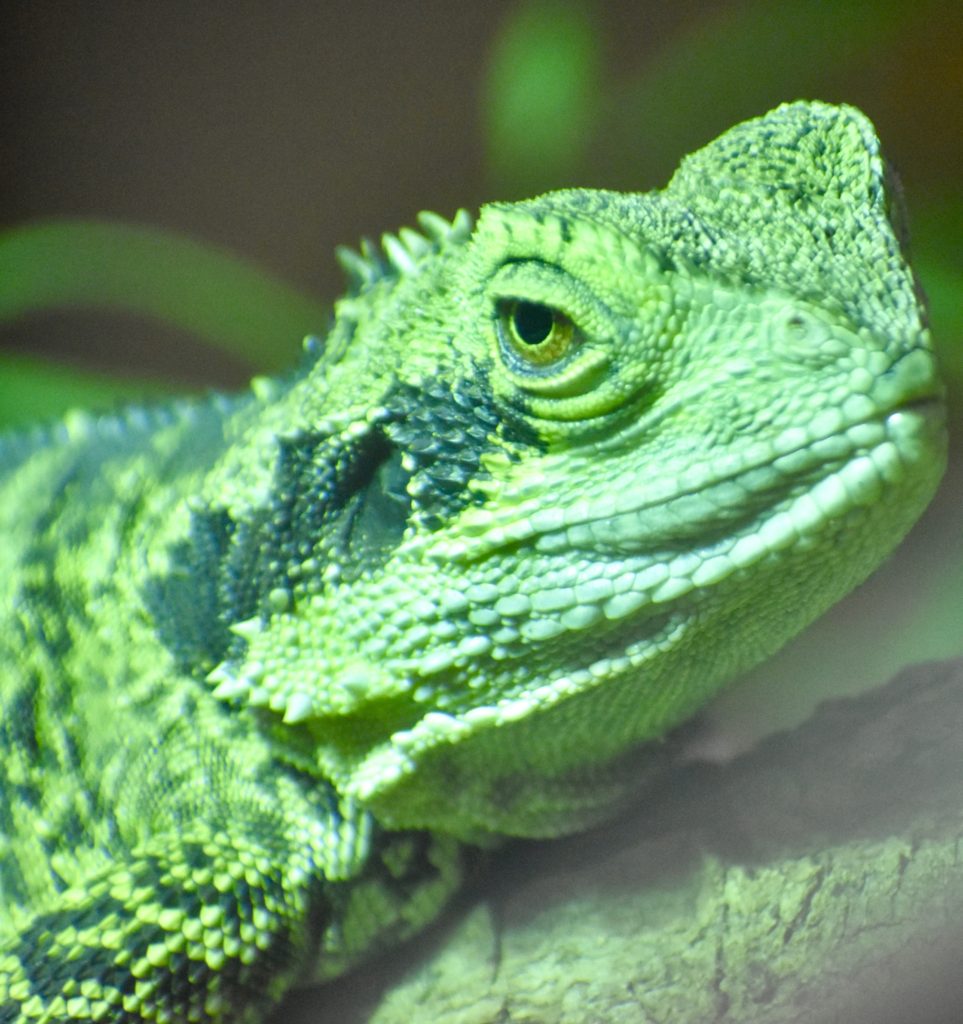
<p>And what of “lounge lizard”?  It describes a sleazy character who hangs out in bars looking for—well, not <em>love,</em> exactly.  That expression seems unfair to real lizards, who are often adorable.</p>
<div id="attachment_32071" style="width: 570px" class="wp-caption aligncenter"><img loading="lazy" decoding="async" aria-describedby="caption-attachment-32071" class="wp-image-32071 size-large" src="https://www.oh-i-see.com/blog/wp-content/uploads/2019/09/DSC_0932-963x1024.jpg" alt="A lizard in Wellington, New Zealand reminds one that animal idioms, animal names, and animal traits inspire everyday language, including wordplay. (Image © Joyce McGreevy)" width="560" height="595" srcset="https://www.oh-i-see.com/blog/wp-content/uploads/2019/09/DSC_0932-963x1024.jpg 963w, https://www.oh-i-see.com/blog/wp-content/uploads/2019/09/DSC_0932-282x300.jpg 282w, https://www.oh-i-see.com/blog/wp-content/uploads/2019/09/DSC_0932-768x816.jpg 768w, https://www.oh-i-see.com/blog/wp-content/uploads/2019/09/DSC_0932-195x207.jpg 195w, https://www.oh-i-see.com/blog/wp-content/uploads/2019/09/DSC_0932-300x319.jpg 300w" sizes="auto, (max-width: 560px) 100vw, 560px" /><p id="caption-attachment-32071" class="wp-caption-text">No flies on you, Lizard Lips! (Wellington, NZ)<br />© Joyce McGreevy</p></div>
<h4><strong>Polar (Bear) Opposites?</strong></h4>
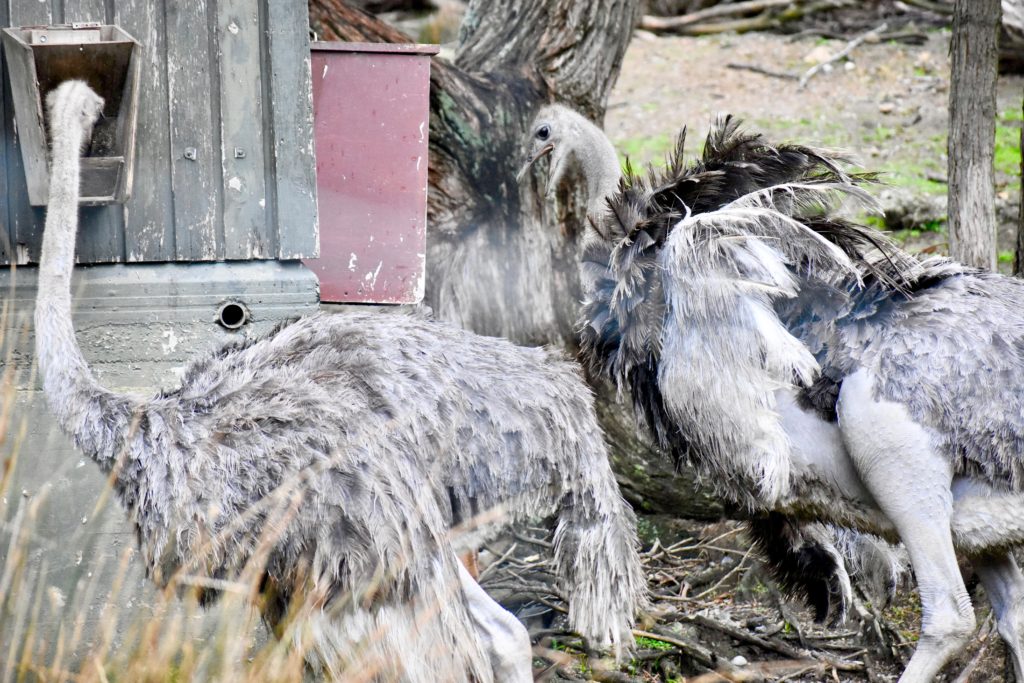
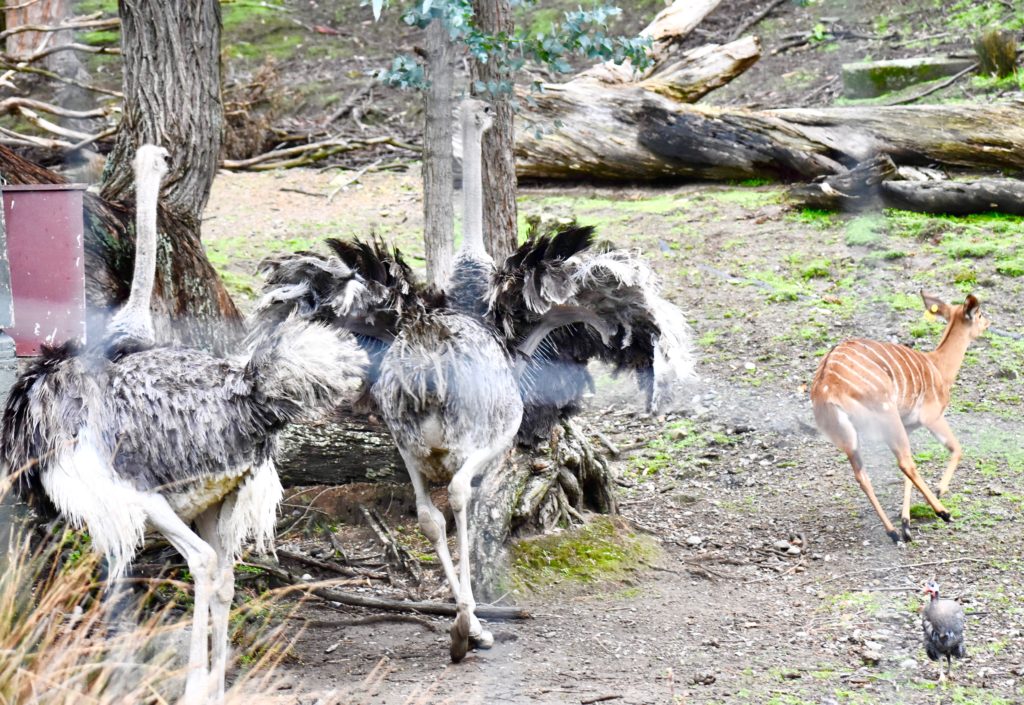
<p>Other animal idioms are contradictory. “To be an ostrich” is to stick your head in the sand, ignoring what’s going on around you.  But ostriches are quick to stick their necks out.</p>
<div id="attachment_32069" style="width: 570px" class="wp-caption aligncenter"><img loading="lazy" decoding="async" aria-describedby="caption-attachment-32069" class="wp-image-32069 size-large" src="https://www.oh-i-see.com/blog/wp-content/uploads/2019/09/DSC_0951-1024x683.jpg" alt="Two ostriches in Wellington, New Zealand remind one that animal idioms, animal names, and animal traits inspire everyday language, including wordplay. (Image © Joyce McGreevy)" width="560" height="374" srcset="https://www.oh-i-see.com/blog/wp-content/uploads/2019/09/DSC_0951-1024x683.jpg 1024w, https://www.oh-i-see.com/blog/wp-content/uploads/2019/09/DSC_0951-300x200.jpg 300w, https://www.oh-i-see.com/blog/wp-content/uploads/2019/09/DSC_0951-768x512.jpg 768w, https://www.oh-i-see.com/blog/wp-content/uploads/2019/09/DSC_0951-207x138.jpg 207w" sizes="auto, (max-width: 560px) 100vw, 560px" /><p id="caption-attachment-32069" class="wp-caption-text">More fluent in Jackal than Giraffe, these ostriches are mad as wet hens when . . .<br />© Joyce McGreevy</p></div>
<div id="attachment_32068" style="width: 570px" class="wp-caption alignnone"><img loading="lazy" decoding="async" aria-describedby="caption-attachment-32068" class="wp-image-32068 size-large" src="https://www.oh-i-see.com/blog/wp-content/uploads/2019/09/DSC_0954-1024x705.jpg" alt="Ostriches and an antelope in Wellington, New Zealand remind one that animal idioms, animal names, and animal traits inspire everyday language, including wordplay. (Image © Joyce McGreevy)" width="560" height="386" srcset="https://www.oh-i-see.com/blog/wp-content/uploads/2019/09/DSC_0954-1024x705.jpg 1024w, https://www.oh-i-see.com/blog/wp-content/uploads/2019/09/DSC_0954-300x206.jpg 300w, https://www.oh-i-see.com/blog/wp-content/uploads/2019/09/DSC_0954-768x528.jpg 768w, https://www.oh-i-see.com/blog/wp-content/uploads/2019/09/DSC_0954-207x142.jpg 207w" sizes="auto, (max-width: 560px) 100vw, 560px" /><p id="caption-attachment-32068" class="wp-caption-text">. . .a baby antelope tries to eat like a bird. (Wellington, New Zealand)<br />© Joyce McGreevy</p></div>
<p>How did the ostrich idiom begin? Pliny the Elder, an ancient Roman philosopher, believed incorrectly that ostriches hide their heads in bushes. Pliny the Younger would have corrected him but I guess the cat got his tongue.</p>
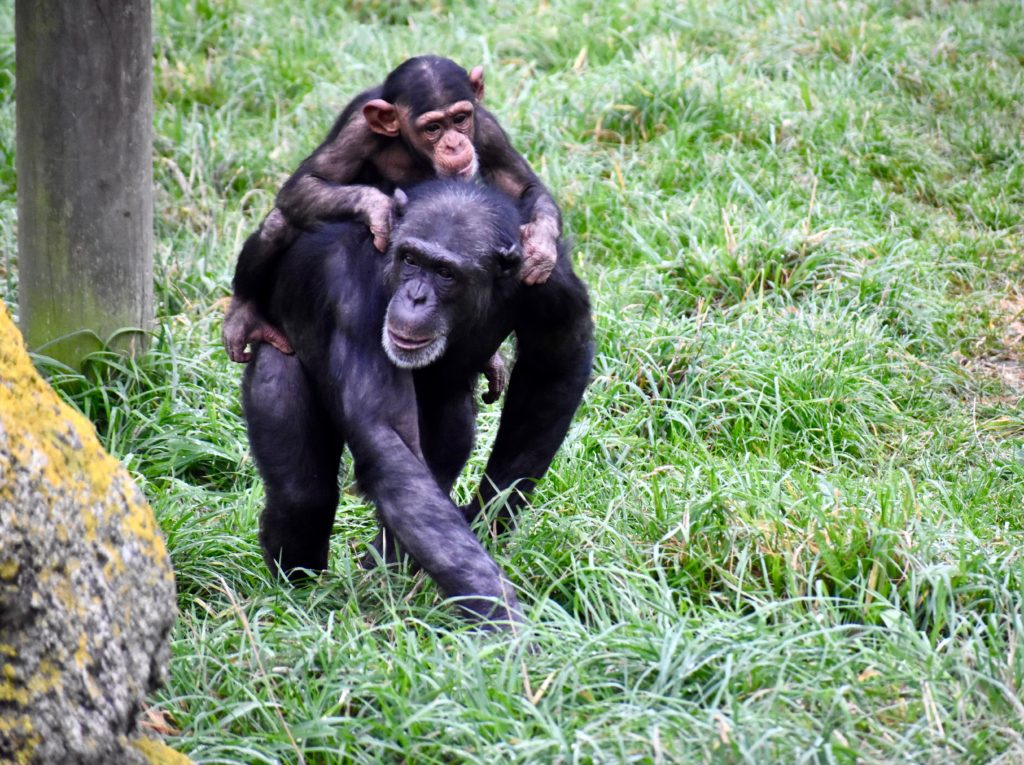
<p>Then there’s the expression, “to have a monkey on your back.” It means to be addicted or encumbered with a problem. But it could just as easily have meant to protect someone more vulnerable than you.</p>
<div id="attachment_32074" style="width: 570px" class="wp-caption aligncenter"><img loading="lazy" decoding="async" aria-describedby="caption-attachment-32074" class="wp-image-32074 size-large" src="https://www.oh-i-see.com/blog/wp-content/uploads/2019/09/DSC_0975-1024x765.jpg" alt="A mother and baby chimp in Wellington, New Zealand remind one that animal idioms, animal names, and animal traits inspire everyday language, including wordplay. (Image © Joyce McGreevy)" width="560" height="418" srcset="https://www.oh-i-see.com/blog/wp-content/uploads/2019/09/DSC_0975-1024x765.jpg 1024w, https://www.oh-i-see.com/blog/wp-content/uploads/2019/09/DSC_0975-300x224.jpg 300w, https://www.oh-i-see.com/blog/wp-content/uploads/2019/09/DSC_0975-768x574.jpg 768w, https://www.oh-i-see.com/blog/wp-content/uploads/2019/09/DSC_0975-207x155.jpg 207w" sizes="auto, (max-width: 560px) 100vw, 560px" /><p id="caption-attachment-32074" class="wp-caption-text">In Wellington, New Zealand, Mum&#8217;s got your back.  And vice versa. <br />© Joyce McGreevy</p></div>
<h4><strong>Monkeying Around </strong></h4>
<p>Speaking of monkeys, some cultures have had more fun than a barrel of &#8217;em when it comes to animal idioms. Take the English expression “The cat is out of the bag.” In Dutch it becomes “Now the monkey comes out of the sleeve.”</p>
<p>Likewise, someone who doesn’t want to get involved in another’s issues might invoke this American colloquialism: “My dog ain’t in that fight.” In Poland, this idiom translates into, “Not my circus, not my monkey.”</p>
<h4><strong>Hay, Herd These?  </strong></h4>
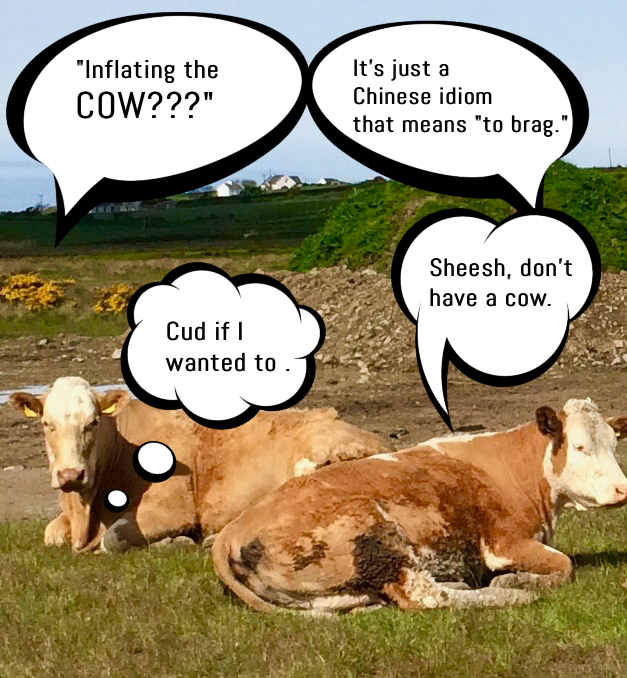
<p>Cows get a leg up in international animal idioms:</p>
<ul>
<li>In the Netherlands, if you “pull an old cow out of the ditch,” you’re rehashing an old grievance.</li>
<li>In Sweden, “There is no cow on the ice,&#8221; means &#8220;No need to worry.&#8221;</li>
<li>In China, “to play piano for a cow” is like throwing pearls before swine. It means your audience can’t appreciate or understand you.</li>
</ul>
<div id="attachment_32079" style="width: 570px" class="wp-caption aligncenter"><img loading="lazy" decoding="async" aria-describedby="caption-attachment-32079" class="wp-image-32079" src="https://www.oh-i-see.com/blog/wp-content/uploads/2019/09/Cow-talk.jpg" alt="Cows in Lehinch, Co. Clare, Ireland remind one that animal idioms, animal names, and animal traits inspire everyday language, including wordplay. (Image © Joyce McGreevy)" width="560" height="606" srcset="https://www.oh-i-see.com/blog/wp-content/uploads/2019/09/Cow-talk.jpg 627w, https://www.oh-i-see.com/blog/wp-content/uploads/2019/09/Cow-talk-277x300.jpg 277w, https://www.oh-i-see.com/blog/wp-content/uploads/2019/09/Cow-talk-191x207.jpg 191w, https://www.oh-i-see.com/blog/wp-content/uploads/2019/09/Cow-talk-300x324.jpg 300w" sizes="auto, (max-width: 560px) 100vw, 560px" /><p id="caption-attachment-32079" class="wp-caption-text">&#8220;Okay, now you&#8217;re just milking it.&#8221; (Lehinch, Ireland)<br />© Joyce McGreevy</p></div>
<h4><strong>Animal Quackers </strong></h4>
<p>Many animal idioms have cross-cultural cousins:</p>
<ul>
<li>In English, we try to get all our ducks in a row. In Portugal, “paying the duck” means taking the blame for something you didn’t do.</li>
<li>In English, someone who fakes being nice to hide ulterior motives is “a wolf in sheep&#8217;s clothing.” In Japanese, such a sneaky person “wears a cat on one’s head.”</li>
<li>The Indonesian equivalent is, “There’s a shrimp behind the rock!” Clearly, Indonesian shrimp are no mere prawns in the shell game.</li>
<li>By contrast, “to slide in on a shrimp sandwich” is how Swedes describe someone born to privilege—those lucky ducks who inherit “the goose that laid the golden egg.”</li>
</ul>
<h4><strong>Linguistic Animal Planet </strong></h4>
<p>One could rabbit on till the cows come home about cross-cultural animal idioms. But I don’t want to be like a dog with a bone, so I guess I should clam up.</p>
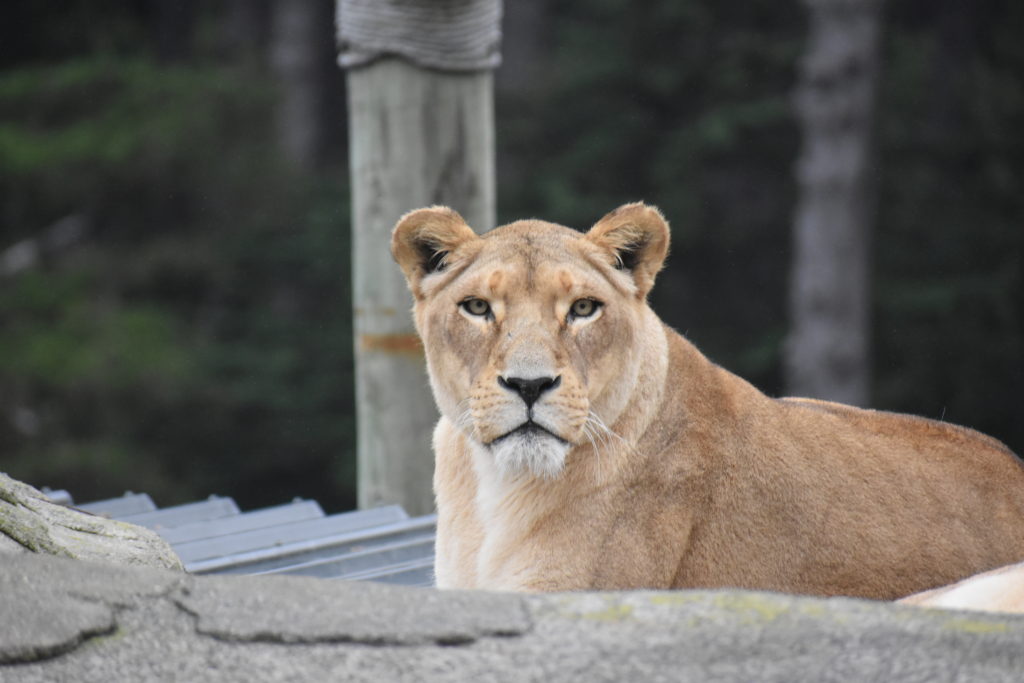
<div id="attachment_32072" style="width: 570px" class="wp-caption aligncenter"><img loading="lazy" decoding="async" aria-describedby="caption-attachment-32072" class="wp-image-32072 size-large" src="https://www.oh-i-see.com/blog/wp-content/uploads/2019/09/DSC_0981-1024x683.jpg" alt="A lion in Wellington, New Zealand reminds one that animal idioms, animal names, and animal traits inspire everyday language, including wordplay. (Image © Joyce McGreevy)" width="560" height="374" srcset="https://www.oh-i-see.com/blog/wp-content/uploads/2019/09/DSC_0981-1024x683.jpg 1024w, https://www.oh-i-see.com/blog/wp-content/uploads/2019/09/DSC_0981-300x200.jpg 300w, https://www.oh-i-see.com/blog/wp-content/uploads/2019/09/DSC_0981-768x512.jpg 768w, https://www.oh-i-see.com/blog/wp-content/uploads/2019/09/DSC_0981-207x138.jpg 207w" sizes="auto, (max-width: 560px) 100vw, 560px" /><p id="caption-attachment-32072" class="wp-caption-text">In France, you might &#8220;have a cat in your throat.&#8221; In New Zealand, this lion <br />suggests things could go the other way. <br />© Joyce McGreevy</p></div>
<p>Just remember: Somewhere in Buffalo, NY someone may be getting into a Bronco and listening to Drake or the Arctic Monkeys. A clothes horse in Chihuahua, Mexico could be swanning about on the dance floor. Someone sailing the horse latitudes might have raided a piggy bank to fly the coop to the Canary Islands.</p>
<p>Ewe never know.</p>
<p>Me, I’m going to squirrel away a few more animal idioms, then make a beeline for a catnap. After all this animal talk, I&#8217;m a little hoarse.</p>
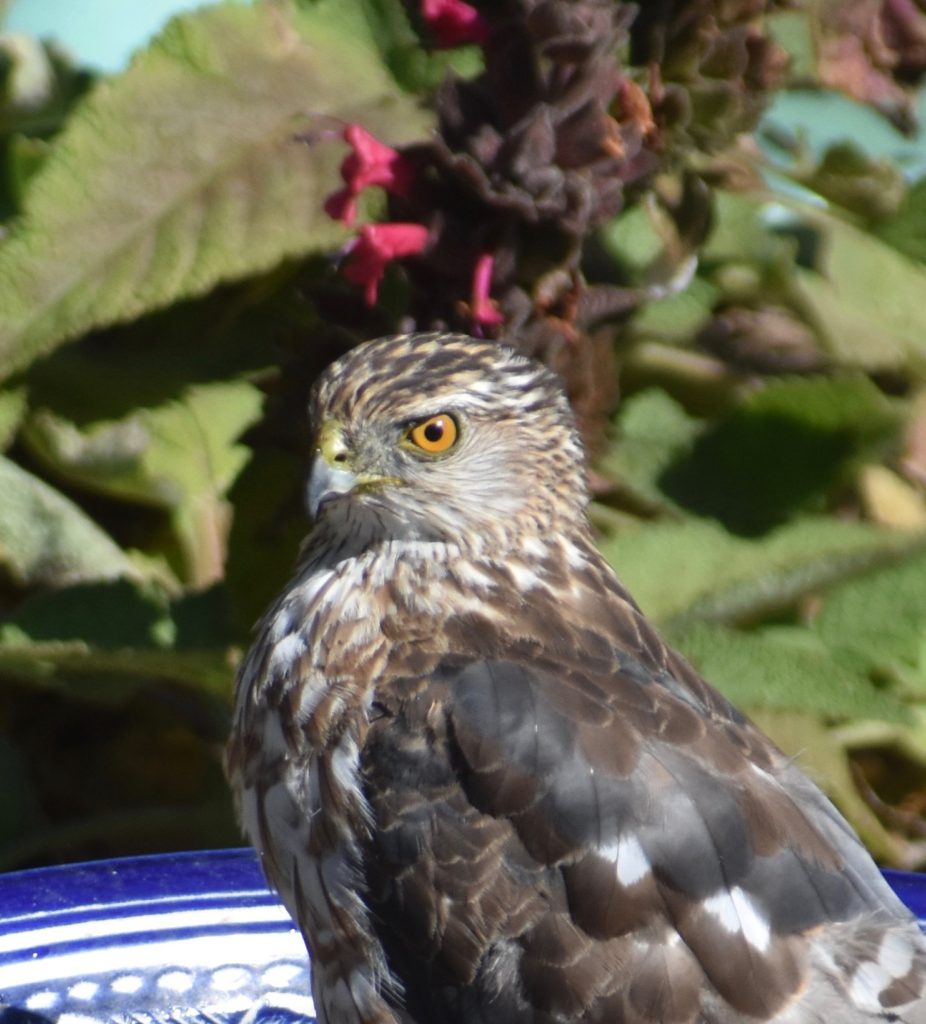
<div id="attachment_32077" style="width: 570px" class="wp-caption aligncenter"><img loading="lazy" decoding="async" aria-describedby="caption-attachment-32077" class="wp-image-32077 size-large" src="https://www.oh-i-see.com/blog/wp-content/uploads/2019/09/DSC_0763-926x1024.jpg" alt="A Cooper’s hawk in Carmel, California reminds one that animal idioms, animal names, and animal traits inspire everyday language, including wordplay. (Image © Joyce McGreevy)" width="560" height="619" srcset="https://www.oh-i-see.com/blog/wp-content/uploads/2019/09/DSC_0763-926x1024.jpg 926w, https://www.oh-i-see.com/blog/wp-content/uploads/2019/09/DSC_0763-271x300.jpg 271w, https://www.oh-i-see.com/blog/wp-content/uploads/2019/09/DSC_0763-768x849.jpg 768w, https://www.oh-i-see.com/blog/wp-content/uploads/2019/09/DSC_0763-187x207.jpg 187w, https://www.oh-i-see.com/blog/wp-content/uploads/2019/09/DSC_0763-300x332.jpg 300w, https://www.oh-i-see.com/blog/wp-content/uploads/2019/09/DSC_0763.jpg 1482w" sizes="auto, (max-width: 560px) 100vw, 560px" /><p id="caption-attachment-32077" class="wp-caption-text">That bird was watching me like a hawk. (Cooper&#8217;s hawk in Carmel, California)<br />© Joyce McGreevy</p></div>
<p><a href="#comments" target="_blank" rel="noopener"><em>Comment</em></a> <em>on this post below, or inspire insight with your own OIC Moment <a href="https://www.oh-i-see.com/blog/your-oic-moments/" target="_blank" rel="noopener">here</a>.</em></p>
{"id":32062,"date":"2018-09-24T03:00:45","date_gmt":"2018-09-24T10:00:45","guid":{"rendered":"https:\/\/www.oh-i-see.com\/blog\/?p=32062"},"modified":"2021-07-20T08:04:42","modified_gmt":"2021-07-20T15:04:42","slug":"wild-and-woolly-wordplay","status":"publish","type":"post","link":"https:\/\/www.oh-i-see.com\/blog\/wild-and-woolly-wordplay\/","title":{"rendered":"Wild and Woolly Wordplay"},"content":{"rendered":"<div id=\"attachment_32064\" style=\"width: 610px\" class=\"wp-caption aligncenter\"><img loading=\"lazy\" decoding=\"async\" aria-describedby=\"caption-attachment-32064\" class=\"wp-image-32064\" src=\"https:\/\/www.oh-i-see.com\/blog\/wp-content\/uploads\/2019\/09\/DSC_0893-1024x683.jpg\" alt=\"A red panda in Wellington, New Zealand reminds the writer that animal idioms continues to influence everyday language. (Image \u00a9 Joyce McGreevy)\" width=\"600\" height=\"400\" srcset=\"https:\/\/www.oh-i-see.com\/blog\/wp-content\/uploads\/2019\/09\/DSC_0893-1024x683.jpg 1024w, https:\/\/www.oh-i-see.com\/blog\/wp-content\/uploads\/2019\/09\/DSC_0893-300x200.jpg 300w, https:\/\/www.oh-i-see.com\/blog\/wp-content\/uploads\/2019\/09\/DSC_0893-768x512.jpg 768w, https:\/\/www.oh-i-see.com\/blog\/wp-content\/uploads\/2019\/09\/DSC_0893-207x138.jpg 207w\" sizes=\"auto, (max-width: 600px) 100vw, 600px\" \/><p id=\"caption-attachment-32064\" class=\"wp-caption-text\">Red pandas, like this one at the Wellington Zoo, New Zealand, have influenced human language.<br \/>\u00a9 Joyce McGreevy<\/p><\/div>\n<h2>Animal Idioms Around the World<\/h2>\n<p>Animal idioms have burrowed into everyday wordplay since Moses was a pup. It doesn\u2019t take a fisheye lens to get the picture. Animal words prowl the planet.<\/p>\n<p>You don\u2019t have to be a bookworm or wear a deerstalker hat to ferret out examples. A simple mouse click ponies up swarms of animal buzzwords.<\/p>\n<h4><strong>Fledgling Phrases<\/strong><\/h4>\n<p>Animal idioms are cross-cultural and nest in every language.\u00a0Some are as timeless as a phoenix rising from the ashes. Others are newly hatched.<\/p>\n<div id=\"attachment_32076\" style=\"width: 570px\" class=\"wp-caption aligncenter\"><img loading=\"lazy\" decoding=\"async\" aria-describedby=\"caption-attachment-32076\" class=\"wp-image-32076 size-large\" src=\"https:\/\/www.oh-i-see.com\/blog\/wp-content\/uploads\/2019\/09\/DSC_0202-1024x683.jpg\" alt=\"A quail in California reminds the writer that animal names and animal idioms influence everyday language. (Image \u00a9 Joyce McGreevy)\" width=\"560\" height=\"374\" srcset=\"https:\/\/www.oh-i-see.com\/blog\/wp-content\/uploads\/2019\/09\/DSC_0202-1024x683.jpg 1024w, https:\/\/www.oh-i-see.com\/blog\/wp-content\/uploads\/2019\/09\/DSC_0202-300x200.jpg 300w, https:\/\/www.oh-i-see.com\/blog\/wp-content\/uploads\/2019\/09\/DSC_0202-768x512.jpg 768w, https:\/\/www.oh-i-see.com\/blog\/wp-content\/uploads\/2019\/09\/DSC_0202-207x138.jpg 207w\" sizes=\"auto, (max-width: 560px) 100vw, 560px\" \/><p id=\"caption-attachment-32076\" class=\"wp-caption-text\">Bird idioms abound, so don&#8217;t quail. Have a lark and let wordplay take flight!<br \/>(Carmel, California)<br \/>\u00a9 Joyce McGreevy<\/p><\/div>\n<h4><strong>Consider the Red Panda Effect<\/strong><\/h4>\n<p>People who experience this condition see things that aren\u2019t there or misidentify what they do see. The term goes back to 1978 when a red panda escaped from a German zoo. People reported hundreds of sightings\u2014long after the red panda had been found.<\/p>\n<p>Seems our brains construct what we expect to see. Hence, the Red Panda Effect.\u00a0Proving that\u2019s what red all over isn\u2019t always black and white.<\/p>\n<h4><strong>Giraffe Language<\/strong><\/h4>\n<p>Quick\u2014what sound does a giraffe make? I don\u2019t know either, but <strong>Giraffe Language<\/strong> is changing the way humans speak across cultures.<\/p>\n<div id=\"attachment_32066\" style=\"width: 460px\" class=\"wp-caption aligncenter\"><img loading=\"lazy\" decoding=\"async\" aria-describedby=\"caption-attachment-32066\" class=\"wp-image-32066\" src=\"https:\/\/www.oh-i-see.com\/blog\/wp-content\/uploads\/2019\/09\/DSC_0995-683x1024.jpg\" alt=\"A giraffe in Wellington, New Zealand reminds the writer that animal names, idioms, and terms, such as Giraffe Language, influence everyday language. (Image \u00a9 Joyce McGreevy)\" width=\"450\" height=\"675\" srcset=\"https:\/\/www.oh-i-see.com\/blog\/wp-content\/uploads\/2019\/09\/DSC_0995-683x1024.jpg 683w, https:\/\/www.oh-i-see.com\/blog\/wp-content\/uploads\/2019\/09\/DSC_0995-200x300.jpg 200w, https:\/\/www.oh-i-see.com\/blog\/wp-content\/uploads\/2019\/09\/DSC_0995-768x1152.jpg 768w, https:\/\/www.oh-i-see.com\/blog\/wp-content\/uploads\/2019\/09\/DSC_0995-138x207.jpg 138w, https:\/\/www.oh-i-see.com\/blog\/wp-content\/uploads\/2019\/09\/DSC_0995-300x450.jpg 300w\" sizes=\"auto, (max-width: 450px) 100vw, 450px\" \/><p id=\"caption-attachment-32066\" class=\"wp-caption-text\">In French, <em>peigner la giraffe<\/em> (&#8220;combing the giraffe&#8221;) is to do a <br \/>pointless task. But that&#8217;s a horse of a different color.\u00a0<br \/>\u00a9 Joyce McGreevy<\/p><\/div>\n<p>Giraffes have the biggest hearts of any land animal, a fact that inspired psychologist Marshall Rosenberg. As the founder of the Center for Nonviolent Communication, Rosenberg explored two genres of interpersonal communication:<\/p>\n<ul>\n<li><strong>Giraffe Language<\/strong>, the language of requests, respect, and compassion, and<\/li>\n<li><strong>Jackal Language<\/strong>, the language of demands, insults, and self-interest.<\/li>\n<\/ul>\n<p>I hope we&#8217;ll consider that the next time we tweet or retweet.<\/p>\n<div id=\"attachment_32080\" style=\"width: 570px\" class=\"wp-caption aligncenter\"><img loading=\"lazy\" decoding=\"async\" aria-describedby=\"caption-attachment-32080\" class=\"wp-image-32080 size-large\" src=\"https:\/\/www.oh-i-see.com\/blog\/wp-content\/uploads\/2019\/09\/DSC_0986-1024x843.jpg\" alt=\"A giraffe and an antelope in Wellington, New Zealand remind the writer that animal names, idioms, and terms, such as Giraffe Language, influence everyday language. (Image \u00a9 Joyce McGreevy)\" width=\"560\" height=\"461\" srcset=\"https:\/\/www.oh-i-see.com\/blog\/wp-content\/uploads\/2019\/09\/DSC_0986-1024x843.jpg 1024w, https:\/\/www.oh-i-see.com\/blog\/wp-content\/uploads\/2019\/09\/DSC_0986-300x247.jpg 300w, https:\/\/www.oh-i-see.com\/blog\/wp-content\/uploads\/2019\/09\/DSC_0986-768x633.jpg 768w, https:\/\/www.oh-i-see.com\/blog\/wp-content\/uploads\/2019\/09\/DSC_0986-207x170.jpg 207w\" sizes=\"auto, (max-width: 560px) 100vw, 560px\" \/><p id=\"caption-attachment-32080\" class=\"wp-caption-text\">We needn&#8217;t be birds of a feather to flock together, or animals of the same stripe to bond.<br \/>(Wellington, New Zealand)<br \/>\u00a9 Joyce McGreevy<\/p><\/div>\n<h4><strong>Weasel Words<\/strong><\/h4>\n<p>Weasel words are all about evasion. They allow the user to avoid giving clear answers, so one might think this term reflects weasels\u2019 ability to navigate tight spaces. In fact, weasel words come from an unproven belief that weasels can suck the insides out of an egg without affecting the shell.<\/p>\n<div id=\"attachment_32101\" style=\"width: 570px\" class=\"wp-caption aligncenter\"><img loading=\"lazy\" decoding=\"async\" aria-describedby=\"caption-attachment-32101\" class=\"wp-image-32101 size-large\" src=\"https:\/\/www.oh-i-see.com\/blog\/wp-content\/uploads\/2019\/09\/DSC_0854-1024x614.jpg\" alt=\"Otters in Wellington, New Zealand remind one that animal idioms, animal names, and animal traits inspire everyday language, including wordplay. (Image \u00a9 Joyce McGreevy)\" width=\"560\" height=\"336\" srcset=\"https:\/\/www.oh-i-see.com\/blog\/wp-content\/uploads\/2019\/09\/DSC_0854-1024x614.jpg 1024w, https:\/\/www.oh-i-see.com\/blog\/wp-content\/uploads\/2019\/09\/DSC_0854-300x180.jpg 300w, https:\/\/www.oh-i-see.com\/blog\/wp-content\/uploads\/2019\/09\/DSC_0854-768x460.jpg 768w, https:\/\/www.oh-i-see.com\/blog\/wp-content\/uploads\/2019\/09\/DSC_0854-207x124.jpg 207w, https:\/\/www.oh-i-see.com\/blog\/wp-content\/uploads\/2019\/09\/DSC_0854-165x100.jpg 165w\" sizes=\"auto, (max-width: 560px) 100vw, 560px\" \/><p id=\"caption-attachment-32101\" class=\"wp-caption-text\">What member of the weasel family is as slippery as an eel? You otter know. <br \/>(Wellington, New Zealand) \u00a9 Joyce McGreevy<\/p><\/div>\n<p>Classic examples of weasel word language include:<\/p>\n<ul>\n<li>\u201cResearch shows\u201d (without citing data)<\/li>\n<li>\u201cThis product is 30% better\u201d (compared to what?)<\/li>\n<li>\u201csomewhat\u201d or \u201cin most respects\u201d (kinda-sorta-maybe, or maybe not)<\/li>\n<\/ul>\n<div id=\"attachment_32067\" style=\"width: 570px\" class=\"wp-caption aligncenter\"><img loading=\"lazy\" decoding=\"async\" aria-describedby=\"caption-attachment-32067\" class=\"wp-image-32067 size-large\" src=\"https:\/\/www.oh-i-see.com\/blog\/wp-content\/uploads\/2019\/09\/DSC_0925-1024x683.jpg\" alt=\"A meerkat in Wellington, New Zealand reminds the writer that animal names inspire everyday wordplay. (Image \u00a9 Joyce McGreevy)\" width=\"560\" height=\"374\" srcset=\"https:\/\/www.oh-i-see.com\/blog\/wp-content\/uploads\/2019\/09\/DSC_0925-1024x683.jpg 1024w, https:\/\/www.oh-i-see.com\/blog\/wp-content\/uploads\/2019\/09\/DSC_0925-300x200.jpg 300w, https:\/\/www.oh-i-see.com\/blog\/wp-content\/uploads\/2019\/09\/DSC_0925-768x512.jpg 768w, https:\/\/www.oh-i-see.com\/blog\/wp-content\/uploads\/2019\/09\/DSC_0925-207x138.jpg 207w\" sizes=\"auto, (max-width: 560px) 100vw, 560px\" \/><p id=\"caption-attachment-32067\" class=\"wp-caption-text\">Weasel-like meerkats are neither weasels nor cats, nor mere. (Wellington, New Zealand)<br \/>\u00a9 Joyce McGreevy<\/p><\/div>\n<h4><strong>Busy as a Lizard?<\/strong><\/h4>\n<p>Animal traits are often used to describe humans. Accordingly, someone can be as proud as a peacock, slippery as an eel, \u00a0hungry as a horse, stubborn as a mule, graceful as a gazelle, and drunk as a skunk\u2014though rarely all at once.<\/p>\n<p>Some animal comparisons are less clear. In Australia, the equivalent of being \u201cbusy as a bee\u201d is to work \u201cflat out like a lizard drinking.\u201d <em>Huh?<\/em><\/p>\n<p>It has to do with how rapidly lizards dart their tongues when drinking water. <strong>Oh, I see<\/strong>: Animal idioms can really take you down a rabbit hole.<\/p>\n<div id=\"attachment_32070\" style=\"width: 570px\" class=\"wp-caption aligncenter\"><img loading=\"lazy\" decoding=\"async\" aria-describedby=\"caption-attachment-32070\" class=\"wp-image-32070 size-large\" src=\"https:\/\/www.oh-i-see.com\/blog\/wp-content\/uploads\/2019\/09\/IMG_9786-719x1024.jpg\" alt=\"A lizard in a pet parade in Bend, Oregon reminds one that animal idioms, names, and traits inspire everyday wordplay. (Image \u00a9 Carolyn McGreevy)\" width=\"560\" height=\"798\" srcset=\"https:\/\/www.oh-i-see.com\/blog\/wp-content\/uploads\/2019\/09\/IMG_9786-719x1024.jpg 719w, https:\/\/www.oh-i-see.com\/blog\/wp-content\/uploads\/2019\/09\/IMG_9786-211x300.jpg 211w, https:\/\/www.oh-i-see.com\/blog\/wp-content\/uploads\/2019\/09\/IMG_9786-768x1094.jpg 768w, https:\/\/www.oh-i-see.com\/blog\/wp-content\/uploads\/2019\/09\/IMG_9786-145x207.jpg 145w, https:\/\/www.oh-i-see.com\/blog\/wp-content\/uploads\/2019\/09\/IMG_9786-300x427.jpg 300w, https:\/\/www.oh-i-see.com\/blog\/wp-content\/uploads\/2019\/09\/IMG_9786.jpg 1242w\" sizes=\"auto, (max-width: 560px) 100vw, 560px\" \/><p id=\"caption-attachment-32070\" class=\"wp-caption-text\">That&#8217;s one very chill lizard at the Pet Parade in Bend, Oregon.\u00a0<br \/>\u00a9 Carolyn McGreevy<\/p><\/div>\n<p>And what of \u201clounge lizard\u201d?\u00a0 It describes a sleazy character who hangs out in bars looking for\u2014well, not <em>love,<\/em> exactly.\u00a0 That expression seems unfair to real lizards, who are often adorable.<\/p>\n<div id=\"attachment_32071\" style=\"width: 570px\" class=\"wp-caption aligncenter\"><img loading=\"lazy\" decoding=\"async\" aria-describedby=\"caption-attachment-32071\" class=\"wp-image-32071 size-large\" src=\"https:\/\/www.oh-i-see.com\/blog\/wp-content\/uploads\/2019\/09\/DSC_0932-963x1024.jpg\" alt=\"A lizard in Wellington, New Zealand reminds one that animal idioms, animal names, and animal traits inspire everyday language, including wordplay. (Image \u00a9 Joyce McGreevy)\" width=\"560\" height=\"595\" srcset=\"https:\/\/www.oh-i-see.com\/blog\/wp-content\/uploads\/2019\/09\/DSC_0932-963x1024.jpg 963w, https:\/\/www.oh-i-see.com\/blog\/wp-content\/uploads\/2019\/09\/DSC_0932-282x300.jpg 282w, https:\/\/www.oh-i-see.com\/blog\/wp-content\/uploads\/2019\/09\/DSC_0932-768x816.jpg 768w, https:\/\/www.oh-i-see.com\/blog\/wp-content\/uploads\/2019\/09\/DSC_0932-195x207.jpg 195w, https:\/\/www.oh-i-see.com\/blog\/wp-content\/uploads\/2019\/09\/DSC_0932-300x319.jpg 300w\" sizes=\"auto, (max-width: 560px) 100vw, 560px\" \/><p id=\"caption-attachment-32071\" class=\"wp-caption-text\">No flies on you, Lizard Lips! (Wellington, NZ)<br \/>\u00a9 Joyce McGreevy<\/p><\/div>\n<h4><strong>Polar (Bear) Opposites?<\/strong><\/h4>\n<p>Other animal idioms are contradictory. \u201cTo be an ostrich\u201d is to stick your head in the sand, ignoring what\u2019s going on around you.\u00a0 But ostriches are quick to stick their necks out.<\/p>\n<div id=\"attachment_32069\" style=\"width: 570px\" class=\"wp-caption aligncenter\"><img loading=\"lazy\" decoding=\"async\" aria-describedby=\"caption-attachment-32069\" class=\"wp-image-32069 size-large\" src=\"https:\/\/www.oh-i-see.com\/blog\/wp-content\/uploads\/2019\/09\/DSC_0951-1024x683.jpg\" alt=\"Two ostriches in Wellington, New Zealand remind one that animal idioms, animal names, and animal traits inspire everyday language, including wordplay. (Image \u00a9 Joyce McGreevy)\" width=\"560\" height=\"374\" srcset=\"https:\/\/www.oh-i-see.com\/blog\/wp-content\/uploads\/2019\/09\/DSC_0951-1024x683.jpg 1024w, https:\/\/www.oh-i-see.com\/blog\/wp-content\/uploads\/2019\/09\/DSC_0951-300x200.jpg 300w, https:\/\/www.oh-i-see.com\/blog\/wp-content\/uploads\/2019\/09\/DSC_0951-768x512.jpg 768w, https:\/\/www.oh-i-see.com\/blog\/wp-content\/uploads\/2019\/09\/DSC_0951-207x138.jpg 207w\" sizes=\"auto, (max-width: 560px) 100vw, 560px\" \/><p id=\"caption-attachment-32069\" class=\"wp-caption-text\">More fluent in Jackal than Giraffe, these ostriches are mad as wet hens when . . .<br \/>\u00a9 Joyce McGreevy<\/p><\/div>\n<div id=\"attachment_32068\" style=\"width: 570px\" class=\"wp-caption alignnone\"><img loading=\"lazy\" decoding=\"async\" aria-describedby=\"caption-attachment-32068\" class=\"wp-image-32068 size-large\" src=\"https:\/\/www.oh-i-see.com\/blog\/wp-content\/uploads\/2019\/09\/DSC_0954-1024x705.jpg\" alt=\"Ostriches and an antelope in Wellington, New Zealand remind one that animal idioms, animal names, and animal traits inspire everyday language, including wordplay. (Image \u00a9 Joyce McGreevy)\" width=\"560\" height=\"386\" srcset=\"https:\/\/www.oh-i-see.com\/blog\/wp-content\/uploads\/2019\/09\/DSC_0954-1024x705.jpg 1024w, https:\/\/www.oh-i-see.com\/blog\/wp-content\/uploads\/2019\/09\/DSC_0954-300x206.jpg 300w, https:\/\/www.oh-i-see.com\/blog\/wp-content\/uploads\/2019\/09\/DSC_0954-768x528.jpg 768w, https:\/\/www.oh-i-see.com\/blog\/wp-content\/uploads\/2019\/09\/DSC_0954-207x142.jpg 207w\" sizes=\"auto, (max-width: 560px) 100vw, 560px\" \/><p id=\"caption-attachment-32068\" class=\"wp-caption-text\">. . .a baby antelope tries to eat like a bird. (Wellington, New Zealand)<br \/>\u00a9 Joyce McGreevy<\/p><\/div>\n<p>How did the ostrich idiom begin? Pliny the Elder, an ancient Roman philosopher, believed incorrectly that ostriches hide their heads in bushes. Pliny the Younger would have corrected him but I guess the cat got his tongue.<\/p>\n<p>Then there\u2019s the expression, \u201cto have a monkey on your back.\u201d It means to be addicted or encumbered with a problem. But it could just as easily have meant to protect someone more vulnerable than you.<\/p>\n<div id=\"attachment_32074\" style=\"width: 570px\" class=\"wp-caption aligncenter\"><img loading=\"lazy\" decoding=\"async\" aria-describedby=\"caption-attachment-32074\" class=\"wp-image-32074 size-large\" src=\"https:\/\/www.oh-i-see.com\/blog\/wp-content\/uploads\/2019\/09\/DSC_0975-1024x765.jpg\" alt=\"A mother and baby chimp in Wellington, New Zealand remind one that animal idioms, animal names, and animal traits inspire everyday language, including wordplay. (Image \u00a9 Joyce McGreevy)\" width=\"560\" height=\"418\" srcset=\"https:\/\/www.oh-i-see.com\/blog\/wp-content\/uploads\/2019\/09\/DSC_0975-1024x765.jpg 1024w, https:\/\/www.oh-i-see.com\/blog\/wp-content\/uploads\/2019\/09\/DSC_0975-300x224.jpg 300w, https:\/\/www.oh-i-see.com\/blog\/wp-content\/uploads\/2019\/09\/DSC_0975-768x574.jpg 768w, https:\/\/www.oh-i-see.com\/blog\/wp-content\/uploads\/2019\/09\/DSC_0975-207x155.jpg 207w\" sizes=\"auto, (max-width: 560px) 100vw, 560px\" \/><p id=\"caption-attachment-32074\" class=\"wp-caption-text\">In Wellington, New Zealand, Mum&#8217;s got your back. \u00a0And vice versa.\u00a0<br \/>\u00a9 Joyce McGreevy<\/p><\/div>\n<h4><strong>Monkeying Around <\/strong><\/h4>\n<p>Speaking of monkeys, some cultures have had more fun than a barrel of &#8217;em when it comes to animal idioms. Take the English expression \u201cThe cat is out of the bag.\u201d In Dutch it becomes\u00a0\u201cNow the monkey comes out of the sleeve.\u201d<\/p>\n<p>Likewise, someone who doesn\u2019t want to get involved in another\u2019s issues might invoke this American colloquialism: \u201cMy dog ain\u2019t in that fight.\u201d In Poland, this idiom translates into, \u201cNot my circus, not my monkey.\u201d<\/p>\n<h4><strong>Hay, Herd These?\u00a0 <\/strong><\/h4>\n<p>Cows get a leg up in international animal idioms:<\/p>\n<ul>\n<li>In the Netherlands, if you \u201cpull an old cow out of the ditch,\u201d you\u2019re rehashing an old grievance.<\/li>\n<li>In Sweden, \u201cThere is no cow on the ice,&#8221; means &#8220;No need to worry.&#8221;<\/li>\n<li>In China, \u201cto play piano for a cow\u201d is like throwing pearls before swine. It means your audience can\u2019t appreciate or understand you.<\/li>\n<\/ul>\n<div id=\"attachment_32079\" style=\"width: 570px\" class=\"wp-caption aligncenter\"><img loading=\"lazy\" decoding=\"async\" aria-describedby=\"caption-attachment-32079\" class=\"wp-image-32079\" src=\"https:\/\/www.oh-i-see.com\/blog\/wp-content\/uploads\/2019\/09\/Cow-talk.jpg\" alt=\"Cows in Lehinch, Co. Clare, Ireland remind one that animal idioms, animal names, and animal traits inspire everyday language, including wordplay. (Image \u00a9 Joyce McGreevy)\" width=\"560\" height=\"606\" srcset=\"https:\/\/www.oh-i-see.com\/blog\/wp-content\/uploads\/2019\/09\/Cow-talk.jpg 627w, https:\/\/www.oh-i-see.com\/blog\/wp-content\/uploads\/2019\/09\/Cow-talk-277x300.jpg 277w, https:\/\/www.oh-i-see.com\/blog\/wp-content\/uploads\/2019\/09\/Cow-talk-191x207.jpg 191w, https:\/\/www.oh-i-see.com\/blog\/wp-content\/uploads\/2019\/09\/Cow-talk-300x324.jpg 300w\" sizes=\"auto, (max-width: 560px) 100vw, 560px\" \/><p id=\"caption-attachment-32079\" class=\"wp-caption-text\">&#8220;Okay, now you&#8217;re just milking it.&#8221; (Lehinch, Ireland)<br \/>\u00a9 Joyce McGreevy<\/p><\/div>\n<h4><strong>Animal Quackers <\/strong><\/h4>\n<p>Many animal idioms have cross-cultural cousins:<\/p>\n<ul>\n<li>In English, we try to get all our ducks in a row. In Portugal, \u201cpaying the duck\u201d means taking the blame for something you didn\u2019t do.<\/li>\n<li>In English, someone who fakes being nice to hide ulterior motives is \u201ca wolf in sheep&#8217;s clothing.\u201d In Japanese, such a sneaky person \u201cwears a cat on one\u2019s head.\u201d<\/li>\n<li>The Indonesian equivalent is, \u201cThere\u2019s a shrimp behind the rock!\u201d Clearly, Indonesian shrimp are no mere prawns in the shell game.<\/li>\n<li>By contrast, \u201cto slide in on a shrimp sandwich\u201d is how Swedes describe someone born to privilege\u2014those lucky ducks who inherit \u201cthe goose that laid the golden egg.\u201d<\/li>\n<\/ul>\n<h4><strong>Linguistic Animal Planet <\/strong><\/h4>\n<p>One could rabbit on till the cows come home about cross-cultural animal idioms. But I don\u2019t want to be like a dog with a bone, so I guess I should clam up.<\/p>\n<div id=\"attachment_32072\" style=\"width: 570px\" class=\"wp-caption aligncenter\"><img loading=\"lazy\" decoding=\"async\" aria-describedby=\"caption-attachment-32072\" class=\"wp-image-32072 size-large\" src=\"https:\/\/www.oh-i-see.com\/blog\/wp-content\/uploads\/2019\/09\/DSC_0981-1024x683.jpg\" alt=\"A lion in Wellington, New Zealand reminds one that animal idioms, animal names, and animal traits inspire everyday language, including wordplay. (Image \u00a9 Joyce McGreevy)\" width=\"560\" height=\"374\" srcset=\"https:\/\/www.oh-i-see.com\/blog\/wp-content\/uploads\/2019\/09\/DSC_0981-1024x683.jpg 1024w, https:\/\/www.oh-i-see.com\/blog\/wp-content\/uploads\/2019\/09\/DSC_0981-300x200.jpg 300w, https:\/\/www.oh-i-see.com\/blog\/wp-content\/uploads\/2019\/09\/DSC_0981-768x512.jpg 768w, https:\/\/www.oh-i-see.com\/blog\/wp-content\/uploads\/2019\/09\/DSC_0981-207x138.jpg 207w\" sizes=\"auto, (max-width: 560px) 100vw, 560px\" \/><p id=\"caption-attachment-32072\" class=\"wp-caption-text\">In France, you might &#8220;have a cat in your throat.&#8221; In New Zealand, this lion <br \/>suggests things could go the other way. <br \/>\u00a9 Joyce McGreevy<\/p><\/div>\n<p>Just remember: Somewhere in Buffalo, NY someone may be getting into a Bronco and listening to Drake or the Arctic Monkeys. A clothes horse in Chihuahua, Mexico could be swanning about on the dance floor. Someone sailing the horse latitudes might have raided a piggy bank to fly the coop to the Canary Islands.<\/p>\n<p>Ewe never know.<\/p>\n<p>Me, I\u2019m going to squirrel away a few more animal idioms, then make a beeline for a catnap. After all this animal talk, I&#8217;m a little hoarse.<\/p>\n<div id=\"attachment_32077\" style=\"width: 570px\" class=\"wp-caption aligncenter\"><img loading=\"lazy\" decoding=\"async\" aria-describedby=\"caption-attachment-32077\" class=\"wp-image-32077 size-large\" src=\"https:\/\/www.oh-i-see.com\/blog\/wp-content\/uploads\/2019\/09\/DSC_0763-926x1024.jpg\" alt=\"A Cooper\u2019s hawk in Carmel, California reminds one that animal idioms, animal names, and animal traits inspire everyday language, including wordplay. (Image \u00a9 Joyce McGreevy)\" width=\"560\" height=\"619\" srcset=\"https:\/\/www.oh-i-see.com\/blog\/wp-content\/uploads\/2019\/09\/DSC_0763-926x1024.jpg 926w, https:\/\/www.oh-i-see.com\/blog\/wp-content\/uploads\/2019\/09\/DSC_0763-271x300.jpg 271w, https:\/\/www.oh-i-see.com\/blog\/wp-content\/uploads\/2019\/09\/DSC_0763-768x849.jpg 768w, https:\/\/www.oh-i-see.com\/blog\/wp-content\/uploads\/2019\/09\/DSC_0763-187x207.jpg 187w, https:\/\/www.oh-i-see.com\/blog\/wp-content\/uploads\/2019\/09\/DSC_0763-300x332.jpg 300w, https:\/\/www.oh-i-see.com\/blog\/wp-content\/uploads\/2019\/09\/DSC_0763.jpg 1482w\" sizes=\"auto, (max-width: 560px) 100vw, 560px\" \/><p id=\"caption-attachment-32077\" class=\"wp-caption-text\">That bird was watching me like a hawk. (Cooper&#8217;s hawk in Carmel, California)<br \/>\u00a9 Joyce McGreevy<\/p><\/div>\n<p><a href=\"#comments\" target=\"_blank\" rel=\"noopener\"><em>Comment<\/em><\/a>\u00a0<em>on this post below, or inspire insight with your own OIC Moment <a href=\"https:\/\/www.oh-i-see.com\/blog\/your-oic-moments\/\" target=\"_blank\" rel=\"noopener\">here<\/a>.<\/em><\/p>\n","protected":false},"excerpt":{"rendered":null,"protected":false},"author":15,"featured_media":32064,"comment_status":"closed","ping_status":"open","sticky":false,"template":"","format":"standard","meta":{"footnotes":""},"categories":[225,235,227],"tags":[],"class_list":["post-32062","post","type-post","status-publish","format-standard","has-post-thumbnail","hentry","category-nature-travel","category-proverbs-language","category-worldwide-mappoints"],"aioseo_notices":[],"_links":{"self":[{"href":"https:\/\/www.oh-i-see.com\/blog\/wp-json\/wp\/v2\/posts\/32062","targetHints":{"allow":["GET"]}}],"collection":[{"href":"https:\/\/www.oh-i-see.com\/blog\/wp-json\/wp\/v2\/posts"}],"about":[{"href":"https:\/\/www.oh-i-see.com\/blog\/wp-json\/wp\/v2\/types\/post"}],"author":[{"embeddable":true,"href":"https:\/\/www.oh-i-see.com\/blog\/wp-json\/wp\/v2\/users\/15"}],"replies":[{"embeddable":true,"href":"https:\/\/www.oh-i-see.com\/blog\/wp-json\/wp\/v2\/comments?post=32062"}],"version-history":[{"count":20,"href":"https:\/\/www.oh-i-see.com\/blog\/wp-json\/wp\/v2\/posts\/32062\/revisions"}],"predecessor-version":[{"id":32131,"href":"https:\/\/www.oh-i-see.com\/blog\/wp-json\/wp\/v2\/posts\/32062\/revisions\/32131"}],"wp:featuredmedia":[{"embeddable":true,"href":"https:\/\/www.oh-i-see.com\/blog\/wp-json\/wp\/v2\/media\/32064"}],"wp:attachment":[{"href":"https:\/\/www.oh-i-see.com\/blog\/wp-json\/wp\/v2\/media?parent=32062"}],"wp:term":[{"taxonomy":"category","embeddable":true,"href":"https:\/\/www.oh-i-see.com\/blog\/wp-json\/wp\/v2\/categories?post=32062"},{"taxonomy":"post_tag","embeddable":true,"href":"https:\/\/www.oh-i-see.com\/blog\/wp-json\/wp\/v2\/tags?post=32062"}],"curies":[{"name":"wp","href":"https:\/\/api.w.org\/{rel}","templated":true}]}}