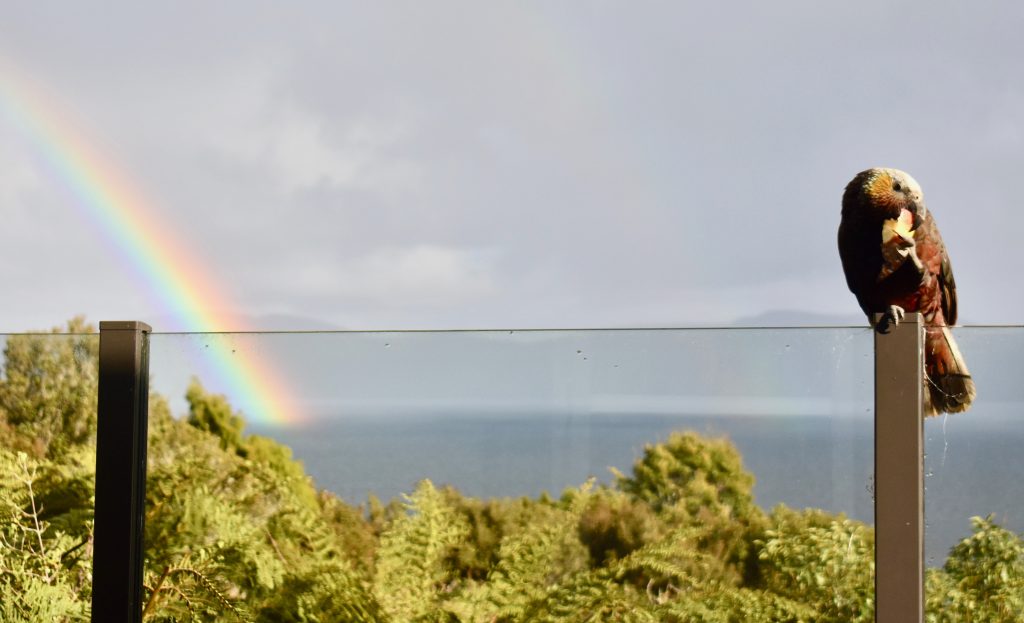
<div id="attachment_31401" style="width: 570px" class="wp-caption aligncenter"><img loading="lazy" decoding="async" aria-describedby="caption-attachment-31401" class="wp-image-31401 size-large" src="https://www.oh-i-see.com/blog/wp-content/uploads/2018/07/REV_parrot-1-1024x623.jpg" alt="A rainbow and bush parrot in New Zealand suggest a brighter future for native birds around the world. (Image @ Joyce McGreevy)" width="560" height="341" srcset="https://www.oh-i-see.com/blog/wp-content/uploads/2018/07/REV_parrot-1-1024x623.jpg 1024w, https://www.oh-i-see.com/blog/wp-content/uploads/2018/07/REV_parrot-1-300x183.jpg 300w, https://www.oh-i-see.com/blog/wp-content/uploads/2018/07/REV_parrot-1-768x467.jpg 768w, https://www.oh-i-see.com/blog/wp-content/uploads/2018/07/REV_parrot-1-207x126.jpg 207w, https://www.oh-i-see.com/blog/wp-content/uploads/2018/07/REV_parrot-1-165x100.jpg 165w" sizes="auto, (max-width: 560px) 100vw, 560px" /><p id="caption-attachment-31401" class="wp-caption-text">New Zealand birds need vast areas of pest-free forest to survive. <br />© Joyce McGreevy</p></div>
<h2><strong>Winging It in New Zealand</strong></h2>
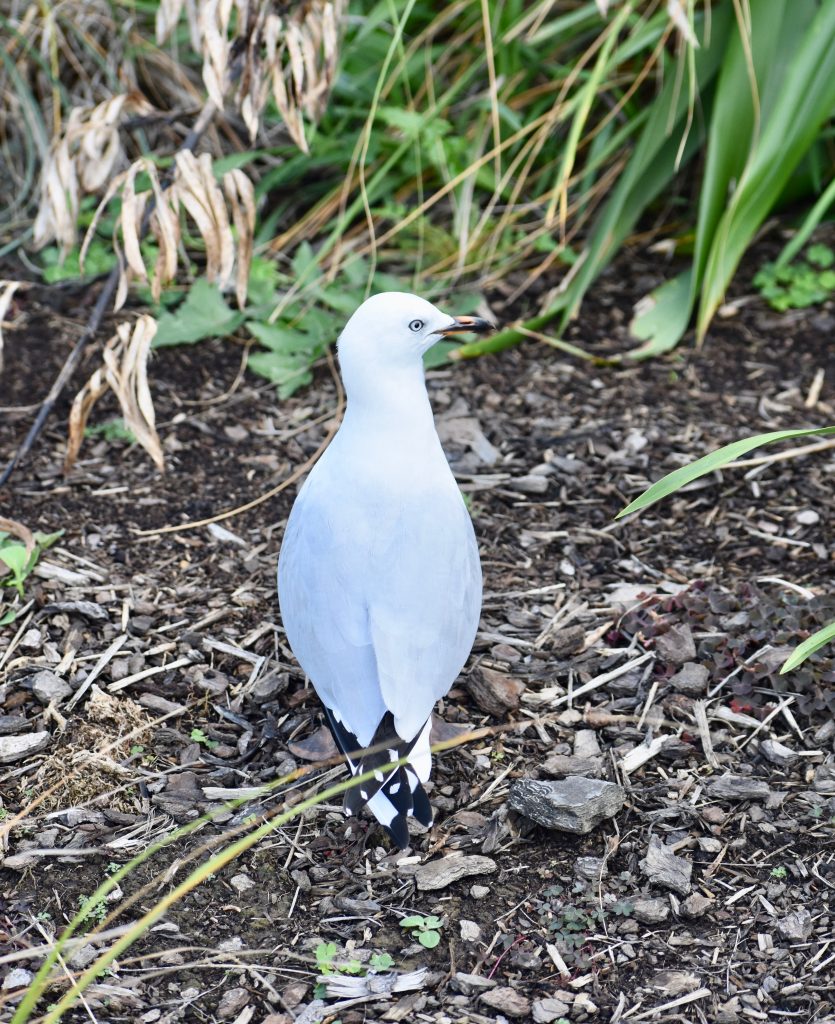
<p>Some of the best reasons for traveling the world are birdbrained. Consider New Zealand, home to some of the planet&#8217;s most amazing birds. But what makes New Zealand native birds remarkable has also made them vulnerable.</p>
<div id="attachment_31339" style="width: 570px" class="wp-caption aligncenter"><img loading="lazy" decoding="async" aria-describedby="caption-attachment-31339" class="wp-image-31339 size-large" src="https://www.oh-i-see.com/blog/wp-content/uploads/2019/07/gull-835x1024.jpg" alt="A black-billed gull remind a birdwatcher traveling the world that many New Zealand native bird species are in trouble. (Image © Joyce McGreevy)" width="560" height="687" srcset="https://www.oh-i-see.com/blog/wp-content/uploads/2019/07/gull-835x1024.jpg 835w, https://www.oh-i-see.com/blog/wp-content/uploads/2019/07/gull-245x300.jpg 245w, https://www.oh-i-see.com/blog/wp-content/uploads/2019/07/gull-768x942.jpg 768w, https://www.oh-i-see.com/blog/wp-content/uploads/2019/07/gull-169x207.jpg 169w, https://www.oh-i-see.com/blog/wp-content/uploads/2019/07/gull-300x368.jpg 300w" sizes="auto, (max-width: 560px) 100vw, 560px" /><p id="caption-attachment-31339" class="wp-caption-text">New Zealand&#8217;s black-billed gulls are the world&#8217;s most threatened gull. <br />© Joyce McGreevy</p></div>
<h4><strong>Avian Nation</strong></h4>
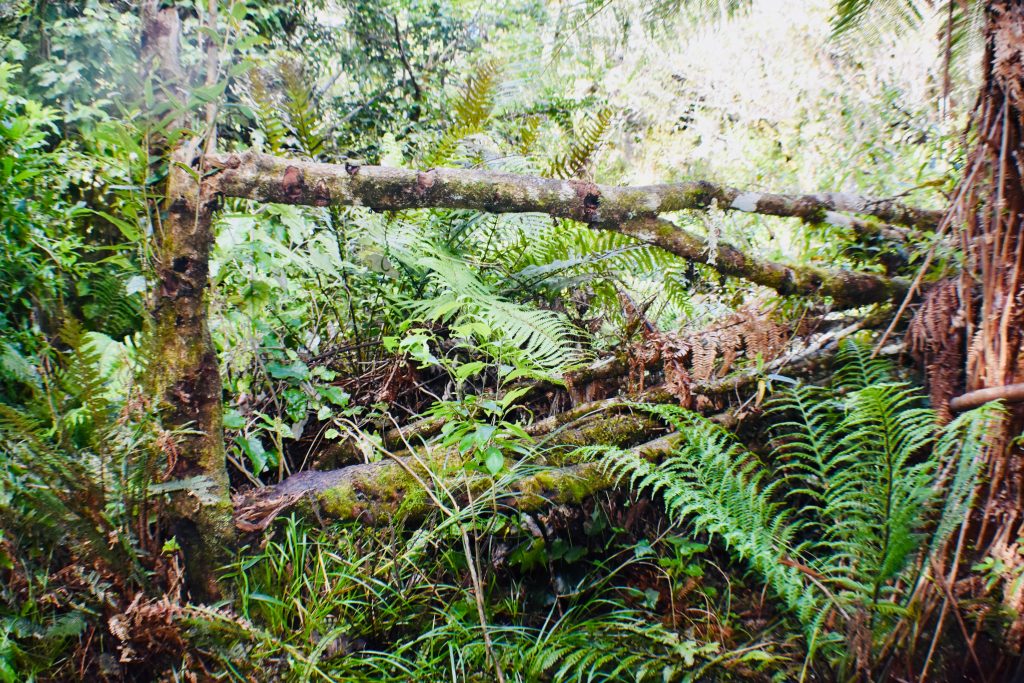
<p>New Zealand is unique. Until about 800 years ago, its only land mammals were species of bat. With virtually no predators, many bird species evolved beyond fight-or-flight. Why fly when you can safely nest on solid ground?</p>
<p>Over time, the land became home to more species of flightless birds than anywhere else on Earth.</p>
<div id="attachment_31371" style="width: 570px" class="wp-caption aligncenter"><img loading="lazy" decoding="async" aria-describedby="caption-attachment-31371" class="wp-image-31371 size-large" src="https://www.oh-i-see.com/blog/wp-content/uploads/2019/07/DSC_0432-2-1024x683.jpg" alt="A forest in New Zealand was a paradise for native birds until humans traveling the world arrived as settlers. (Image @ Joyce McGreevy)" width="560" height="374" srcset="https://www.oh-i-see.com/blog/wp-content/uploads/2019/07/DSC_0432-2-1024x683.jpg 1024w, https://www.oh-i-see.com/blog/wp-content/uploads/2019/07/DSC_0432-2-300x200.jpg 300w, https://www.oh-i-see.com/blog/wp-content/uploads/2019/07/DSC_0432-2-768x512.jpg 768w, https://www.oh-i-see.com/blog/wp-content/uploads/2019/07/DSC_0432-2-207x138.jpg 207w" sizes="auto, (max-width: 560px) 100vw, 560px" /><p id="caption-attachment-31371" class="wp-caption-text">With 80% forest and 0% mammals, New Zealand pulsed with the life of birds.<br />© Joyce McGreevy</p></div>
<h4><strong>Sitting Ducks</strong></h4>
<p>What happened next? People.</p>
<p>As humans arrived, they introduced predators—some deliberately, some as shipboard stowaways. Meanwhile, they cleared forests and hunted.</p>
<p>Some birds would gobble up fermented berries and drunkenly doze off. Hunting became as easy as “scoop it and soup it.”</p>
<p>Soon one of the last places on Earth colonized by humans suffered one of the worst biological losses.</p>
<h4><strong>Size Didn’t Save Them</strong></h4>
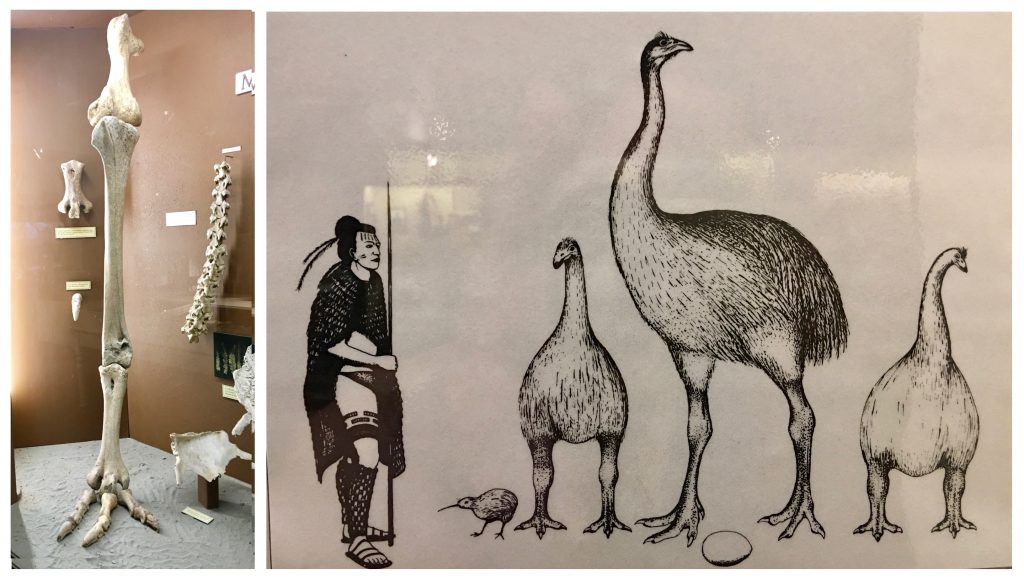
<p>The most astounding lost birds were moa. Some stood 13-foot tall and weighed 600 pounds.</p>
<div id="attachment_31346" style="width: 570px" class="wp-caption aligncenter"><img loading="lazy" decoding="async" aria-describedby="caption-attachment-31346" class="wp-image-31346 size-large" src="https://www.oh-i-see.com/blog/wp-content/uploads/2019/07/Moa_pair-1024x581.jpg" alt="Moa bones and a drawing of moa remind viewers that many of New Zealand’s flightless birds are extinct. (Image @ Joyce McGreevy)" width="560" height="318" srcset="https://www.oh-i-see.com/blog/wp-content/uploads/2019/07/Moa_pair-1024x581.jpg 1024w, https://www.oh-i-see.com/blog/wp-content/uploads/2019/07/Moa_pair-300x170.jpg 300w, https://www.oh-i-see.com/blog/wp-content/uploads/2019/07/Moa_pair-768x436.jpg 768w, https://www.oh-i-see.com/blog/wp-content/uploads/2019/07/Moa_pair-207x117.jpg 207w" sizes="auto, (max-width: 560px) 100vw, 560px" /><p id="caption-attachment-31346" class="wp-caption-text">Moa once ruled New Zealand forestland.<br />© Joyce McGreevy</p></div>
<p>But after millions of years of safe grazing, moas ended up in cooking pits and their habitat was destroyed.</p>
<p>Since human arrival, at least 51 New Zealand bird species have become extinct.</p>
<h4><strong>Protecting the World of Birds</strong></h4>
<p>Today, New Zealand goes all-out to restore habitat and protect wildlife. <a href="https://www.backpackerguide.nz/arrival-advice-biosecurity-customs-new-zealand/">Biosecurity </a>at Customs is strict, so leave those snacks on the plane and thoroughly scrub outdoor gear.</p>
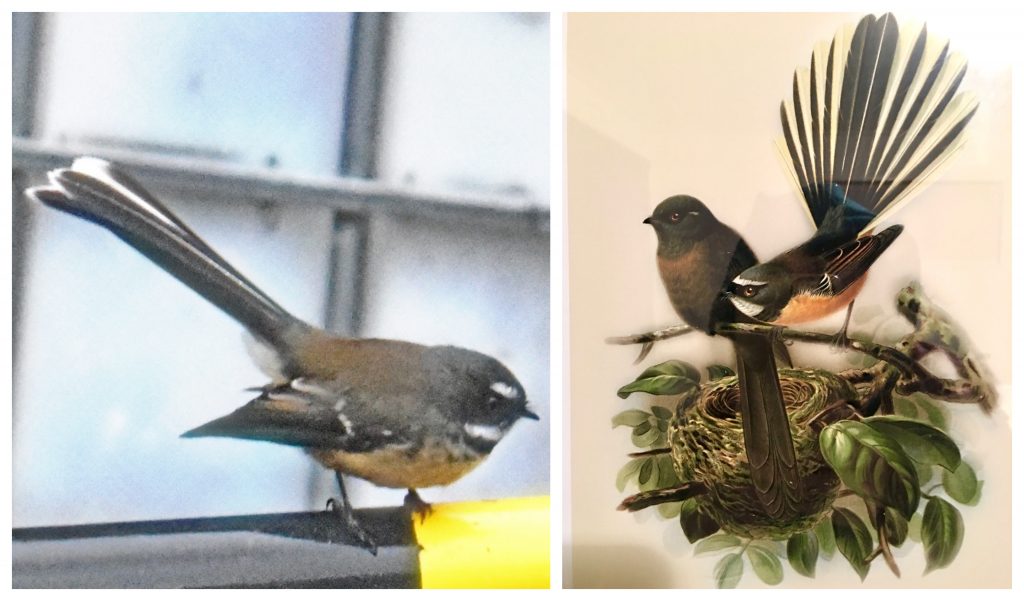
<p>One-third of the country is national parkland. Avian projects by the NZ Department of Conservation engage hundreds of volunteers and are models for wildlife organizations around the world.</p>
<div id="attachment_31373" style="width: 570px" class="wp-caption aligncenter"><img loading="lazy" decoding="async" aria-describedby="caption-attachment-31373" class="wp-image-31373 size-large" src="https://www.oh-i-see.com/blog/wp-content/uploads/2019/07/piwakawaka-1024x601.jpg" alt="The piwakawaka or fantail is New Zealand bird native bird worth traveling the world to see. (Image @ Joyce McGreevy)" width="560" height="329" srcset="https://www.oh-i-see.com/blog/wp-content/uploads/2019/07/piwakawaka-1024x601.jpg 1024w, https://www.oh-i-see.com/blog/wp-content/uploads/2019/07/piwakawaka-300x176.jpg 300w, https://www.oh-i-see.com/blog/wp-content/uploads/2019/07/piwakawaka-768x451.jpg 768w, https://www.oh-i-see.com/blog/wp-content/uploads/2019/07/piwakawaka-207x122.jpg 207w" sizes="auto, (max-width: 560px) 100vw, 560px" /><p id="caption-attachment-31373" class="wp-caption-text">In flight, piwakawaka, or  fantails, are as fluttery as butterflies. <br />© Joyce McGreevy</p></div>
<h4><strong>Hidden Birds</strong></h4>
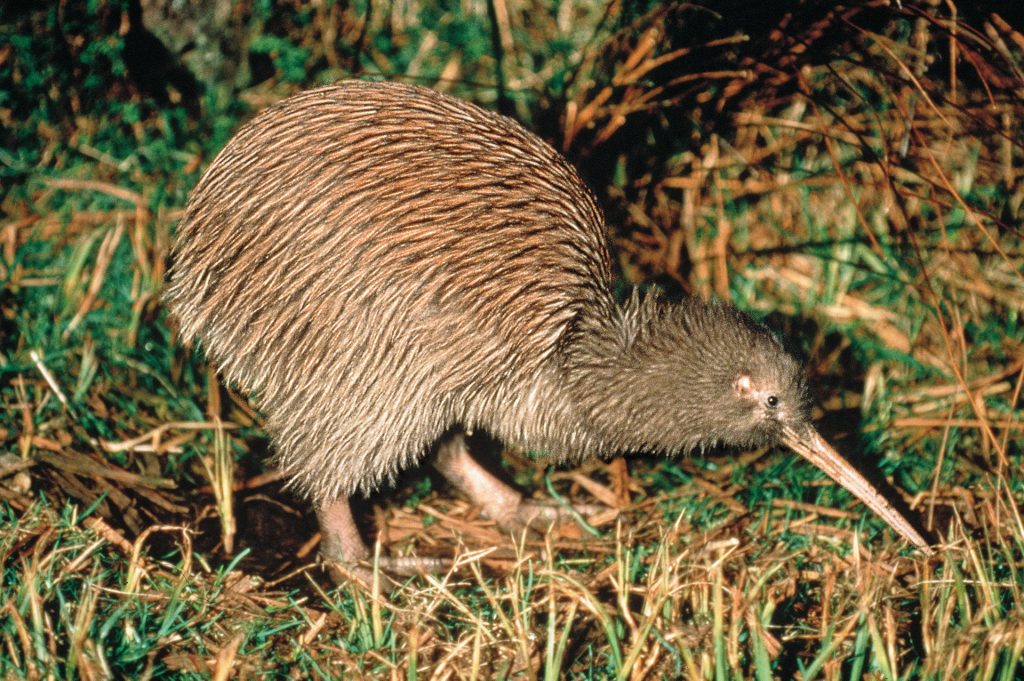
<p>Which bird tops the perch? Kiwis, of course! About the size of a hen, the kiwi is wingless aside from nubs under its hairlike feathers. It also has nostrils at the end of its long beak.</p>
<div id="attachment_31338" style="width: 570px" class="wp-caption aligncenter"><img loading="lazy" decoding="async" aria-describedby="caption-attachment-31338" class="wp-image-31338 size-large" src="https://www.oh-i-see.com/blog/wp-content/uploads/2019/07/NA12-Rotorua-Rotorua-Tourism-New-Zealand-1024x681.jpg" alt="The kiwi, a flightless bird, is New Zealand’s national icon. (Image courtesy of New Zealand Tourism)" width="560" height="372" srcset="https://www.oh-i-see.com/blog/wp-content/uploads/2019/07/NA12-Rotorua-Rotorua-Tourism-New-Zealand-1024x681.jpg 1024w, https://www.oh-i-see.com/blog/wp-content/uploads/2019/07/NA12-Rotorua-Rotorua-Tourism-New-Zealand-300x200.jpg 300w, https://www.oh-i-see.com/blog/wp-content/uploads/2019/07/NA12-Rotorua-Rotorua-Tourism-New-Zealand-768x511.jpg 768w, https://www.oh-i-see.com/blog/wp-content/uploads/2019/07/NA12-Rotorua-Rotorua-Tourism-New-Zealand-207x138.jpg 207w, https://www.oh-i-see.com/blog/wp-content/uploads/2019/07/NA12-Rotorua-Rotorua-Tourism-New-Zealand.jpg 1920w" sizes="auto, (max-width: 560px) 100vw, 560px" /><p id="caption-attachment-31338" class="wp-caption-text">Despite their awkward appearance, kiwis can outrun humans.<br />© Tourism New Zealand</p></div>
<p>As national symbols, kiwis appear everywhere in New Zealand. In the 1800s, kiwis were pictured on regimental badges, and during WWI “Kiwi” became a nickname for New Zealand soldiers, one since adopted by the general population.</p>
<p>Seeking kiwi (the avian variety) can feel like falling for a prankster’s snipe hunt. <em>Kiwi </em>is Maori for “hidden bird” and most species are nocturnal. While guides cannot guarantee you’ll see one, outfits like <a href="https://www.realjourneys.co.nz/en/experiences/tours/stewart-island-wild-kiwi-encounter/" target="_blank" rel="noopener">Real Journeys</a> offer a 50% refund if you don’t. Either way, you’ll have a magical hike.</p>
<p>Such was the case when I went birdwatching on New Zealand&#8217;s Stewart Island.</p>
<p>“Don’t they realize we drove all the way from Auckland?” said one disappointed visitor afterward. Alas, kiwis really don’t care how far one has traveled. Nature is not a theme park.</p>
<p>Besides, we’d had the pleasure of sailing to Glory Cove, and then walking in silence, illuminated only by moon and stars. In this loud, light-polluted age, that, too, is a rare experience.</p>
<h4><strong>Precocious Parrots</strong></h4>
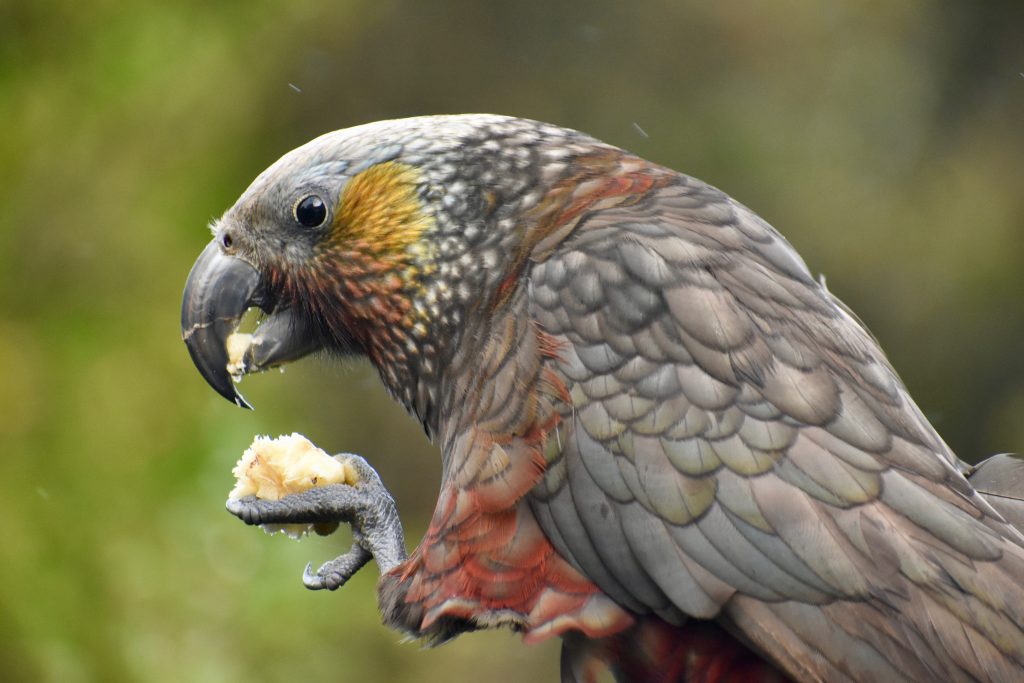
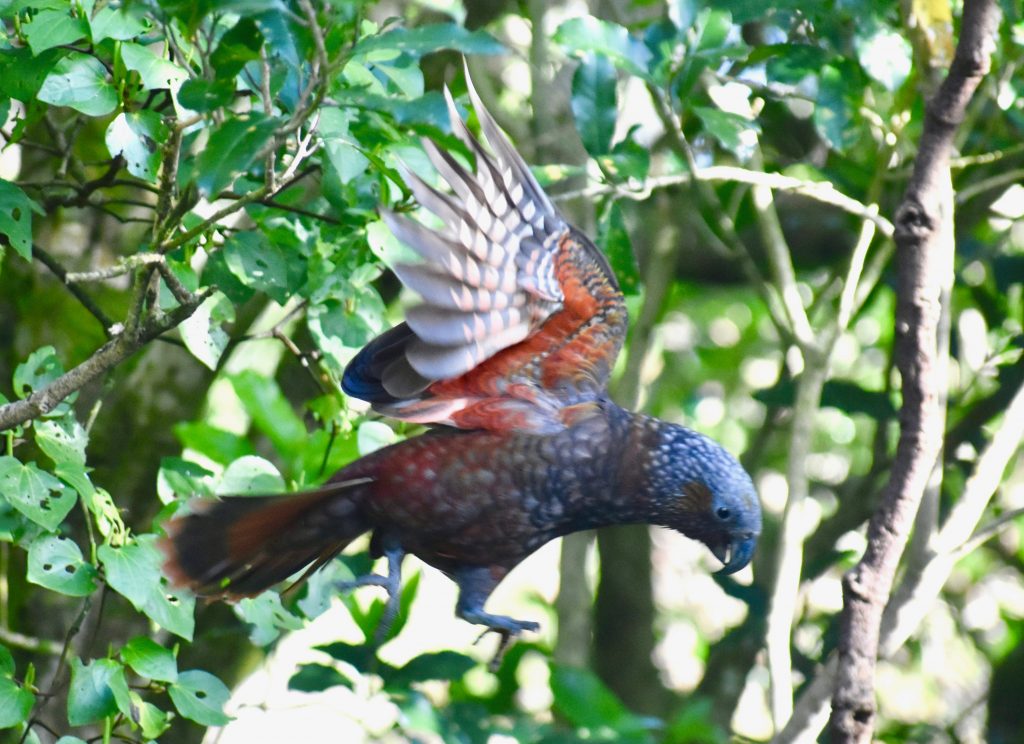
<p>Other terrestrial birds are never shy. Each morning a cheeky kākā, or olive-brown bush parrot, stopped by my garden to pluck wild fruit. Then it would perch nearby, deftly removing the peel.</p>
<div id="attachment_31354" style="width: 570px" class="wp-caption aligncenter"><img loading="lazy" decoding="async" aria-describedby="caption-attachment-31354" class="wp-image-31354 size-large" src="https://www.oh-i-see.com/blog/wp-content/uploads/2019/07/AA_kaka1-1024x683.jpg" alt="The bush parrot, or kaka, is a New Zealand native bird. (Image @ Joyce McGreevy)" width="560" height="374" srcset="https://www.oh-i-see.com/blog/wp-content/uploads/2019/07/AA_kaka1-1024x683.jpg 1024w, https://www.oh-i-see.com/blog/wp-content/uploads/2019/07/AA_kaka1-300x200.jpg 300w, https://www.oh-i-see.com/blog/wp-content/uploads/2019/07/AA_kaka1-768x512.jpg 768w, https://www.oh-i-see.com/blog/wp-content/uploads/2019/07/AA_kaka1-207x138.jpg 207w" sizes="auto, (max-width: 560px) 100vw, 560px" /><p id="caption-attachment-31354" class="wp-caption-text">One bush parrot eats &#8220;brekkie,&#8221; while another (below) takes wing.<br />© Joyce McGreevy</p></div>
<div id="attachment_31355" style="width: 570px" class="wp-caption alignnone"><img loading="lazy" decoding="async" aria-describedby="caption-attachment-31355" class="wp-image-31355 size-large" src="https://www.oh-i-see.com/blog/wp-content/uploads/2019/07/kaka_flight-1024x744.jpg" alt="A bush parrot, or kaka, displays its wings at Zealandia, a New Zealand bird sanctuary.(Image @ Joyce McGreevy)" width="560" height="407" srcset="https://www.oh-i-see.com/blog/wp-content/uploads/2019/07/kaka_flight-1024x744.jpg 1024w, https://www.oh-i-see.com/blog/wp-content/uploads/2019/07/kaka_flight-300x218.jpg 300w, https://www.oh-i-see.com/blog/wp-content/uploads/2019/07/kaka_flight-768x558.jpg 768w, https://www.oh-i-see.com/blog/wp-content/uploads/2019/07/kaka_flight-207x150.jpg 207w" sizes="auto, (max-width: 560px) 100vw, 560px" /><p id="caption-attachment-31355" class="wp-caption-text">© Joyce McGreevy</p></div>
<p>Though similar to kākās, keas have green plumage. These clever critters endear themselves to some and test the patience of others. It depends on whether the kea—the world’s only alpine parrot—is proving its <a href="https://www.youtube.com/watch?v=7W7hEUGtv4U" target="_blank" rel="noopener">smarts</a> or <a href="https://www.youtube.com/watch?v=OGVf_qLsyyQ" target="_blank" rel="noopener">dismantling</a> your gear.</p>
<h4>Hello, Caller?</h4>
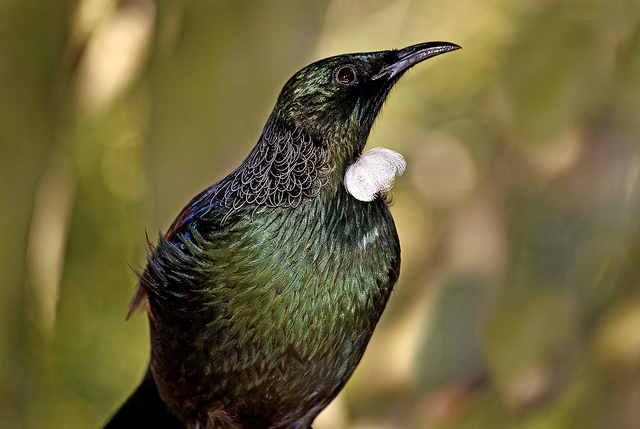
<p>One bird you&#8217;ll certainly hear throughout the country is the tūī, unique to New Zealand. With two voice boxes, tūī can produce complex songs, from melodious to punk-raucous.</p>
<p>They even inspired a Maori compliment about orators and singers, <em>Me he korokoro tūī: &#8220;</em>He has the throat of a tūī.&#8221;</p>
<p>Tūī are also mimics. Birdwatchers have reported tūī calls that sound like ringing cellphones.</p>
<div id="attachment_31337" style="width: 650px" class="wp-caption aligncenter"><img loading="lazy" decoding="async" aria-describedby="caption-attachment-31337" class="wp-image-31337 size-full" src="https://www.oh-i-see.com/blog/wp-content/uploads/2019/07/tui.jpg" alt="The tui is unique to New Zealand, a favorite among birdwatchers. (Public domain image; credit: Bernard Spragg)" width="640" height="429" srcset="https://www.oh-i-see.com/blog/wp-content/uploads/2019/07/tui.jpg 640w, https://www.oh-i-see.com/blog/wp-content/uploads/2019/07/tui-300x201.jpg 300w, https://www.oh-i-see.com/blog/wp-content/uploads/2019/07/tui-207x139.jpg 207w" sizes="auto, (max-width: 640px) 100vw, 640px" /><p id="caption-attachment-31337" class="wp-caption-text">The white &#8220;collars&#8221; of tūī led Europeans to call them Parson Birds. <br />© Bernard <a href="https://www.flickr.com/photos/volvob12b/9157585500" target="_blank" rel="noopener">Spragg</a></p></div>
<h4><strong>Pecks and the City</strong></h4>
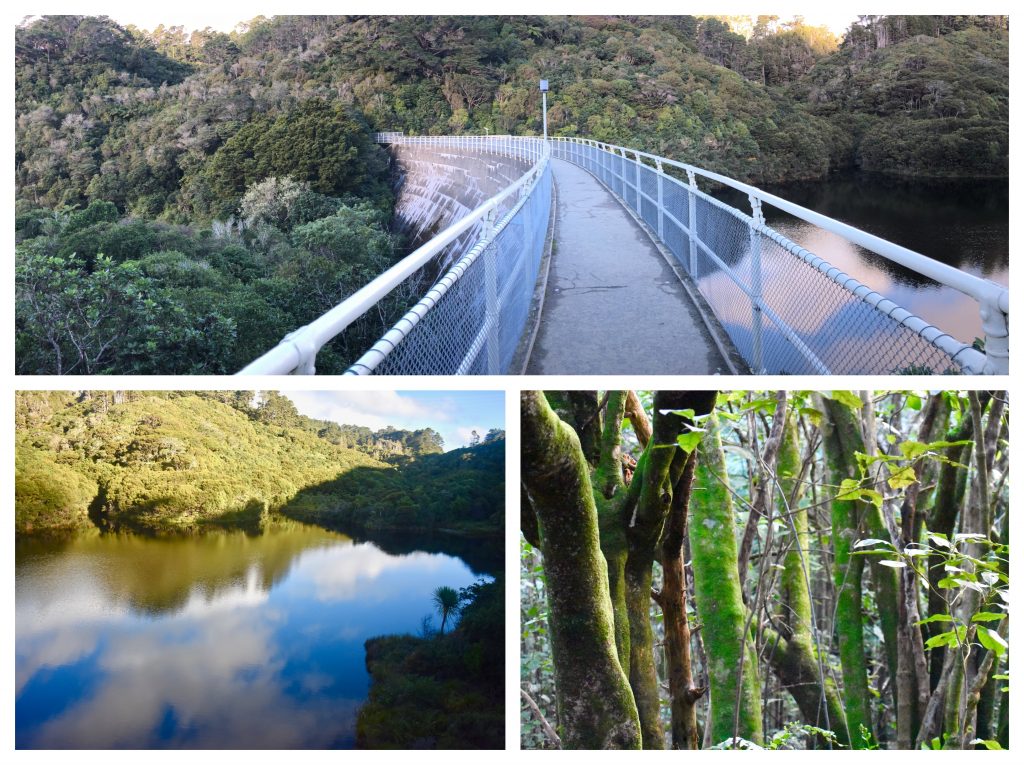
<p>One surprising place to birdwatch is New Zealand’s capital. Minutes from Wellington, one of the world’s hippest cities, is the world’s first fully-fenced urban ecosanctuary.</p>
<div id="attachment_31344" style="width: 570px" class="wp-caption aligncenter"><img loading="lazy" decoding="async" aria-describedby="caption-attachment-31344" class="wp-image-31344 size-large" src="https://www.oh-i-see.com/blog/wp-content/uploads/2019/07/Zealandia-collage-1024x765.jpg" alt="Zealandia is a sanctuary for New Zealand’s native birds and other wildlife. (Image @ Joyce McGreevy)" width="560" height="418" srcset="https://www.oh-i-see.com/blog/wp-content/uploads/2019/07/Zealandia-collage-1024x765.jpg 1024w, https://www.oh-i-see.com/blog/wp-content/uploads/2019/07/Zealandia-collage-300x224.jpg 300w, https://www.oh-i-see.com/blog/wp-content/uploads/2019/07/Zealandia-collage-768x574.jpg 768w, https://www.oh-i-see.com/blog/wp-content/uploads/2019/07/Zealandia-collage-207x155.jpg 207w" sizes="auto, (max-width: 560px) 100vw, 560px" /><p id="caption-attachment-31344" class="wp-caption-text"><a href="https://www.visitzealandia.com/Visit" target="_blank" rel="noopener">Zealandia</a> is a haven for 40 species of native birds.<br />© Joyce McGreevy</p></div>
<p>Over 500 acres of valley forest have been restored as closely as possible to their pre-colonized state.</p>
<p>Nearby is Kapiti Island, an important site for bird recovery. But <a href="https://www.kapitiisland.com" target="_blank" rel="noopener">plan</a> ahead—only 50 visitors are allowed each day.</p>
<h4><strong>&#8220;Extinct&#8221; No More</strong></h4>
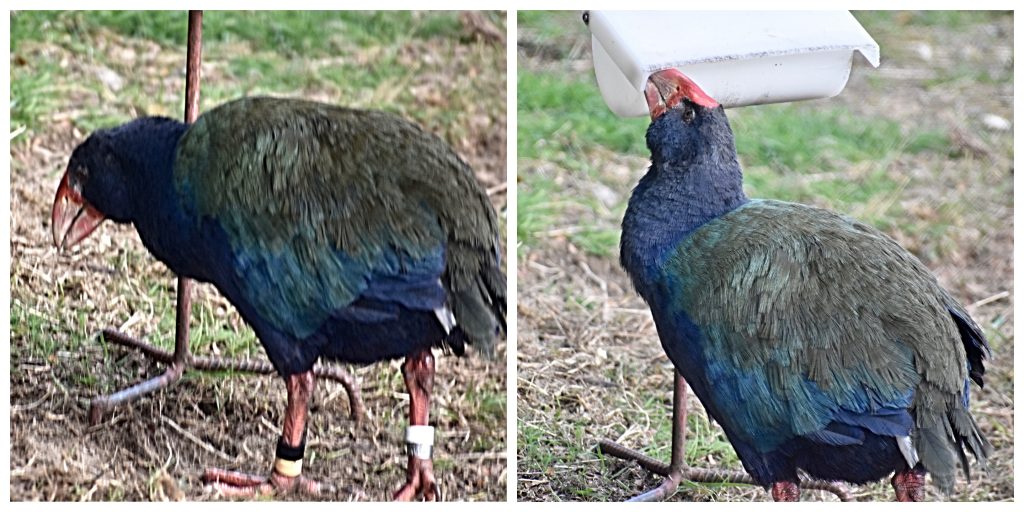
<p>One of my favorite sites is Te Anau Bird Sanctuary. Tourists who bypass it for Fiordland’s more famous attractions are missing out. This tranquil lakeshore setting features birds that are among the hardest to find in the wild. These include <strong><a href="https://www.doc.govt.nz/our-work/takahe-recovery-programme/">takahē</a></strong>, which until 1948 were thought to be extinct.</p>
<div id="attachment_31349" style="width: 570px" class="wp-caption aligncenter"><img loading="lazy" decoding="async" aria-describedby="caption-attachment-31349" class="wp-image-31349 size-large" src="https://www.oh-i-see.com/blog/wp-content/uploads/2019/07/Takahe-collage-1024x512.jpg" alt="The takahe, once thought to be extinct, is one of New Zealand’s most unusual native birds. (Image @ Joyce McGreevy)" width="560" height="280" srcset="https://www.oh-i-see.com/blog/wp-content/uploads/2019/07/Takahe-collage-1024x512.jpg 1024w, https://www.oh-i-see.com/blog/wp-content/uploads/2019/07/Takahe-collage-300x150.jpg 300w, https://www.oh-i-see.com/blog/wp-content/uploads/2019/07/Takahe-collage-768x384.jpg 768w, https://www.oh-i-see.com/blog/wp-content/uploads/2019/07/Takahe-collage-207x104.jpg 207w" sizes="auto, (max-width: 560px) 100vw, 560px" /><p id="caption-attachment-31349" class="wp-caption-text">Unique to New Zealand, takahē have been around for 8 million years. <br />© Joyce McGreevy</p></div>
<h4><strong>Seas the Day!</strong></h4>
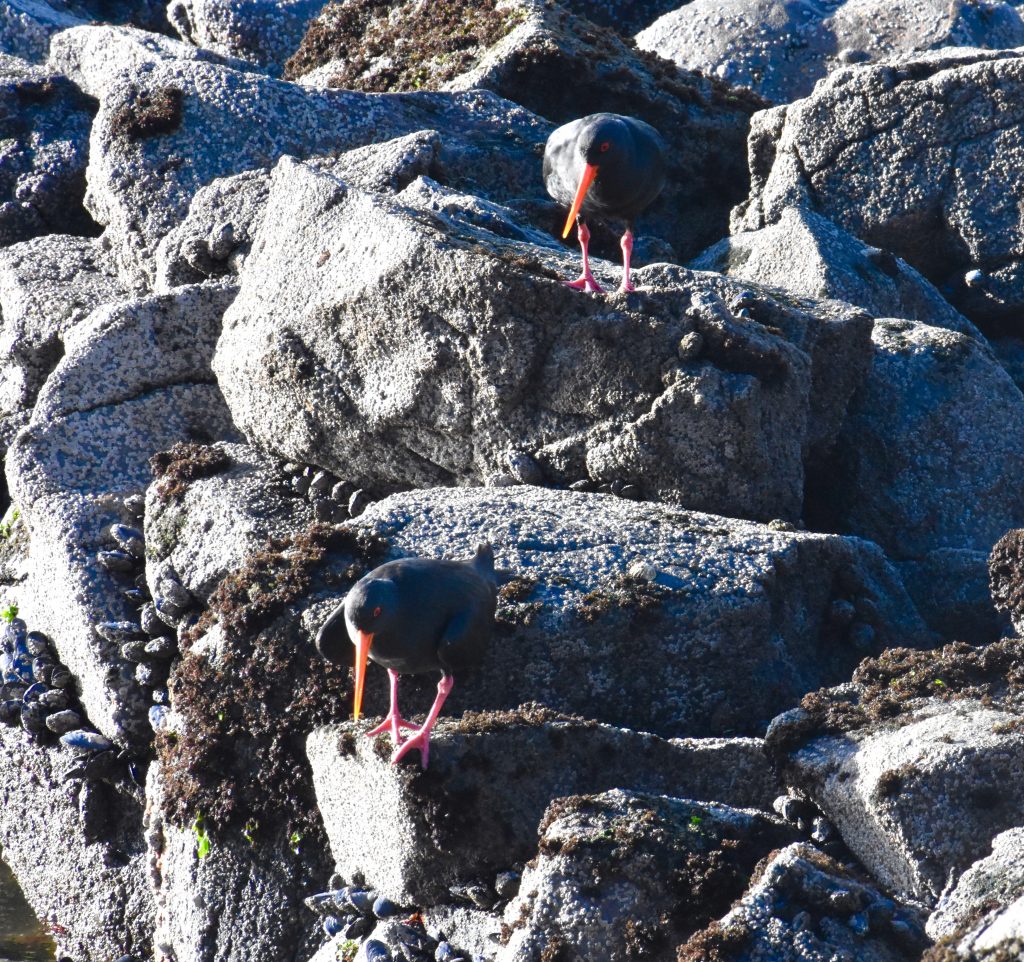
<p>If you like pelagic birds, you’re in luck. New Zealand has the world’s most diverse seabird community. You’re never more than 80 miles from the coast, where the variety of birds includes native species of albatross (the world’s largest seabird), gulls, oystercatcher, petrel, and tern.</p>
<div id="attachment_31367" style="width: 570px" class="wp-caption aligncenter"><img loading="lazy" decoding="async" aria-describedby="caption-attachment-31367" class="wp-image-31367 size-large" src="https://www.oh-i-see.com/blog/wp-content/uploads/2019/07/DSC_0763-1024x962.jpg" alt="New Zealand oystercatchers are seabirds that make their nests near the shoreline.(Image @ Joyce McGreevy)" width="560" height="526" srcset="https://www.oh-i-see.com/blog/wp-content/uploads/2019/07/DSC_0763-1024x962.jpg 1024w, https://www.oh-i-see.com/blog/wp-content/uploads/2019/07/DSC_0763-300x282.jpg 300w, https://www.oh-i-see.com/blog/wp-content/uploads/2019/07/DSC_0763-768x722.jpg 768w, https://www.oh-i-see.com/blog/wp-content/uploads/2019/07/DSC_0763-207x195.jpg 207w" sizes="auto, (max-width: 560px) 100vw, 560px" /><p id="caption-attachment-31367" class="wp-caption-text">The shoreline nests of oystercatchers have been disturbed by pests, pets—and <br />careless beachgoers. <br />© Joyce McGreevy</p></div>
<h4><strong>Don’t Pester the Penguins</strong></h4>
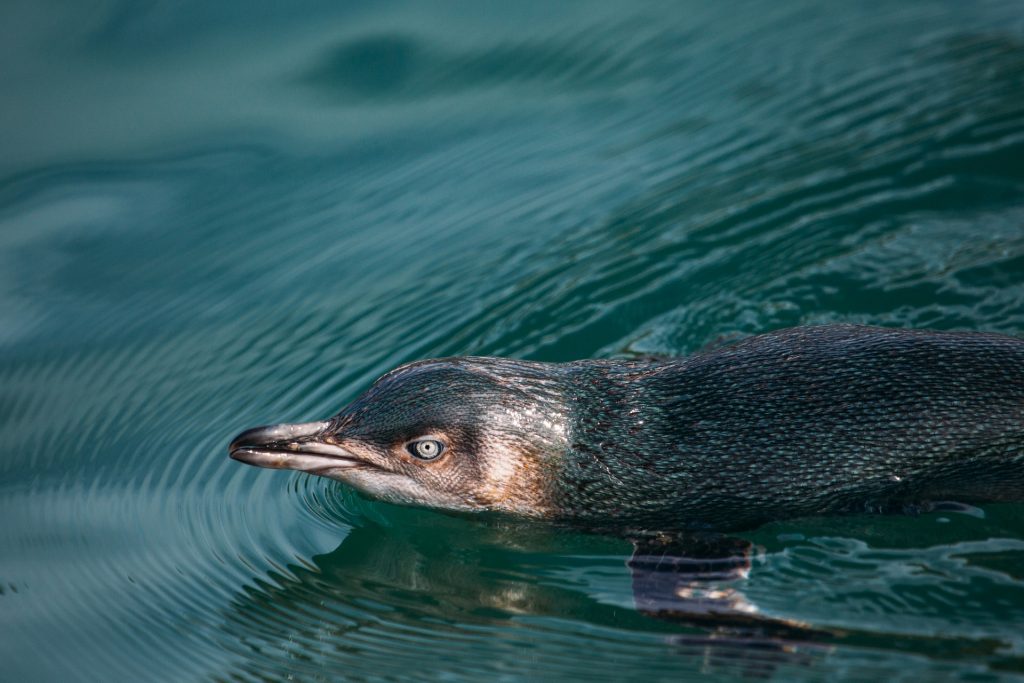
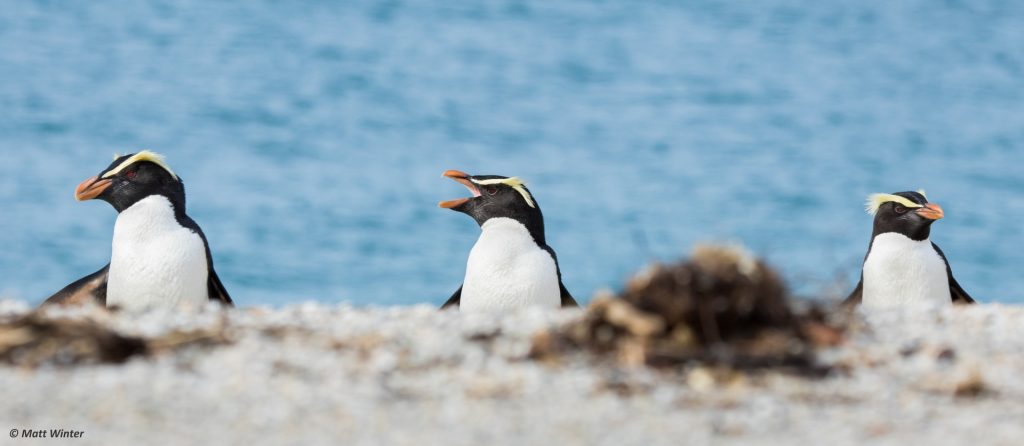
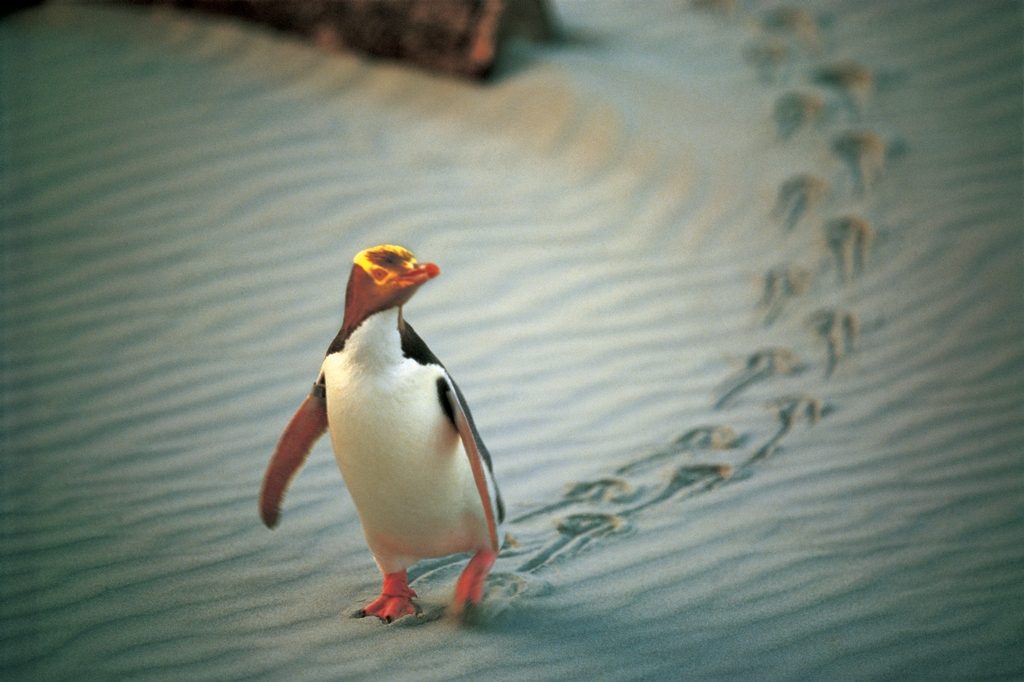
<p>New Zealand is home to three fascinating species of penguins. (Is there a <em>boring </em>species of penguins?) They are:</p>
<div id="attachment_31340" style="width: 570px" class="wp-caption aligncenter"><img loading="lazy" decoding="async" aria-describedby="caption-attachment-31340" class="wp-image-31340 size-large" src="https://www.oh-i-see.com/blog/wp-content/uploads/2019/07/Chris-Stephenson-Dunedin-1024x683.jpg" alt="New Zealand’s little blue penguins explain why many birdwatchers love traveling the world. (Image © Chris Stephenson/ New Zealand Tourism)" width="560" height="374" srcset="https://www.oh-i-see.com/blog/wp-content/uploads/2019/07/Chris-Stephenson-Dunedin-1024x683.jpg 1024w, https://www.oh-i-see.com/blog/wp-content/uploads/2019/07/Chris-Stephenson-Dunedin-300x200.jpg 300w, https://www.oh-i-see.com/blog/wp-content/uploads/2019/07/Chris-Stephenson-Dunedin-768x512.jpg 768w, https://www.oh-i-see.com/blog/wp-content/uploads/2019/07/Chris-Stephenson-Dunedin-207x138.jpg 207w, https://www.oh-i-see.com/blog/wp-content/uploads/2019/07/Chris-Stephenson-Dunedin.jpg 1920w" sizes="auto, (max-width: 560px) 100vw, 560px" /><p id="caption-attachment-31340" class="wp-caption-text">Kororā, little blue penguins (average height 13 inches) . . .<br />© Chris Stephenson/New Zealand Tourism</p></div>
<div id="attachment_31341" style="width: 570px" class="wp-caption aligncenter"><img loading="lazy" decoding="async" aria-describedby="caption-attachment-31341" class="wp-image-31341 size-large" src="https://www.oh-i-see.com/blog/wp-content/uploads/2019/07/658-West-Coast-Matt-Winter-1024x446.jpg" alt="New Zealand’s Fiordland crested penguins inspire birdwatchers to travel the world. (Image © Matt Winter/ New Zealand Tourism)" width="560" height="244" srcset="https://www.oh-i-see.com/blog/wp-content/uploads/2019/07/658-West-Coast-Matt-Winter-1024x446.jpg 1024w, https://www.oh-i-see.com/blog/wp-content/uploads/2019/07/658-West-Coast-Matt-Winter-300x131.jpg 300w, https://www.oh-i-see.com/blog/wp-content/uploads/2019/07/658-West-Coast-Matt-Winter-768x335.jpg 768w, https://www.oh-i-see.com/blog/wp-content/uploads/2019/07/658-West-Coast-Matt-Winter-207x90.jpg 207w, https://www.oh-i-see.com/blog/wp-content/uploads/2019/07/658-West-Coast-Matt-Winter.jpg 1920w" sizes="auto, (max-width: 560px) 100vw, 560px" /><p id="caption-attachment-31341" class="wp-caption-text">Tawaki, Fiordland crested penguins . . .<br />© Matt Winter/New Zealand Tourism</p></div>
<div id="attachment_31342" style="width: 570px" class="wp-caption aligncenter"><img loading="lazy" decoding="async" aria-describedby="caption-attachment-31342" class="wp-image-31342 size-large" src="https://www.oh-i-see.com/blog/wp-content/uploads/2019/07/NA02-Penguin-Place-Central-Otago-Penguin-Place-1024x682.jpg" alt="New Zealand’s yellow-eyed penguins show why many birdwatchers are traveling the world. (Image © Penguin Place/ New Zealand Tourism)" width="560" height="373" srcset="https://www.oh-i-see.com/blog/wp-content/uploads/2019/07/NA02-Penguin-Place-Central-Otago-Penguin-Place.jpg 1024w, https://www.oh-i-see.com/blog/wp-content/uploads/2019/07/NA02-Penguin-Place-Central-Otago-Penguin-Place-300x200.jpg 300w, https://www.oh-i-see.com/blog/wp-content/uploads/2019/07/NA02-Penguin-Place-Central-Otago-Penguin-Place-768x512.jpg 768w, https://www.oh-i-see.com/blog/wp-content/uploads/2019/07/NA02-Penguin-Place-Central-Otago-Penguin-Place-207x138.jpg 207w" sizes="auto, (max-width: 560px) 100vw, 560px" /><p id="caption-attachment-31342" class="wp-caption-text">and Hoiho, yellow-eyed penguins.<br />© Penguin Place/New Zealand Tourism</p></div>
<p>Unfortunately, they are also among the most endangered birds—and travelers are adding to the problem.</p>
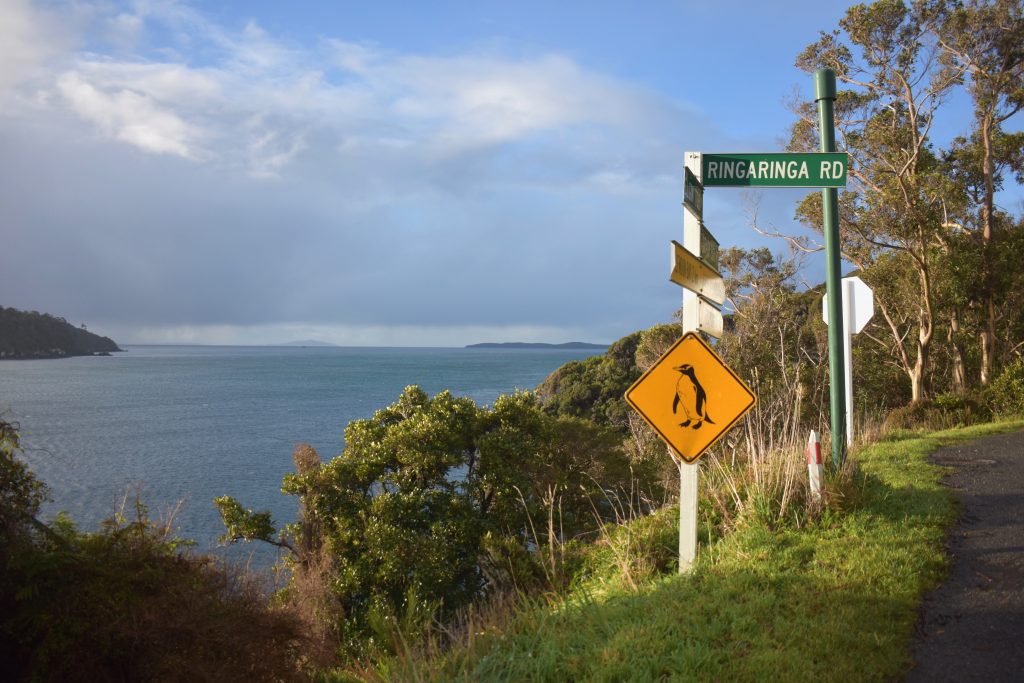
<p>According to NZ&#8217;s Department of Conservation, “Inappropriate behavior by visitors to . . . habitats is an increasing threat to nesting and molting birds. Poor use of selfie sticks and people entering nesting areas is causing stress to nesting penguins . . .  [that] could affect survival rates.”</p>
<p>Does that mean we can’t see penguins? No, but if we truly love them, we’ll do so from a distance. Let’s prioritize <a href="http://www.birdingnz.co.nz/birding-operators" target="_blank" rel="noopener">ecological</a> respect over social media boast-posts.</p>
<div id="attachment_31375" style="width: 570px" class="wp-caption aligncenter"><img loading="lazy" decoding="async" aria-describedby="caption-attachment-31375" class="wp-image-31375 size-large" src="https://www.oh-i-see.com/blog/wp-content/uploads/2019/07/DSC_0851-1024x683.jpg" alt="A penguin crossing sign in New Zealand reminds people to respect the world of birds. (Image @ Joyce McGreevy)" width="560" height="374" srcset="https://www.oh-i-see.com/blog/wp-content/uploads/2019/07/DSC_0851-1024x683.jpg 1024w, https://www.oh-i-see.com/blog/wp-content/uploads/2019/07/DSC_0851-300x200.jpg 300w, https://www.oh-i-see.com/blog/wp-content/uploads/2019/07/DSC_0851-768x512.jpg 768w, https://www.oh-i-see.com/blog/wp-content/uploads/2019/07/DSC_0851-207x138.jpg 207w" sizes="auto, (max-width: 560px) 100vw, 560px" /><p id="caption-attachment-31375" class="wp-caption-text">When penguins come ashore to breed and molt, we humans need to give them space. <br />© Joyce McGreevy</p></div>
<h4><strong>Becoming Bird-minded</strong></h4>
<p>Something I observed about Kiwis (the human variety) is that they are passionate about protecting native birds. There’s even a campaign for NZ’s <a href="https://www.birdoftheyear.org.nz" target="_blank" rel="noopener">Bird of the Year</a>.</p>
<p>We should all be so bird-minded.</p>
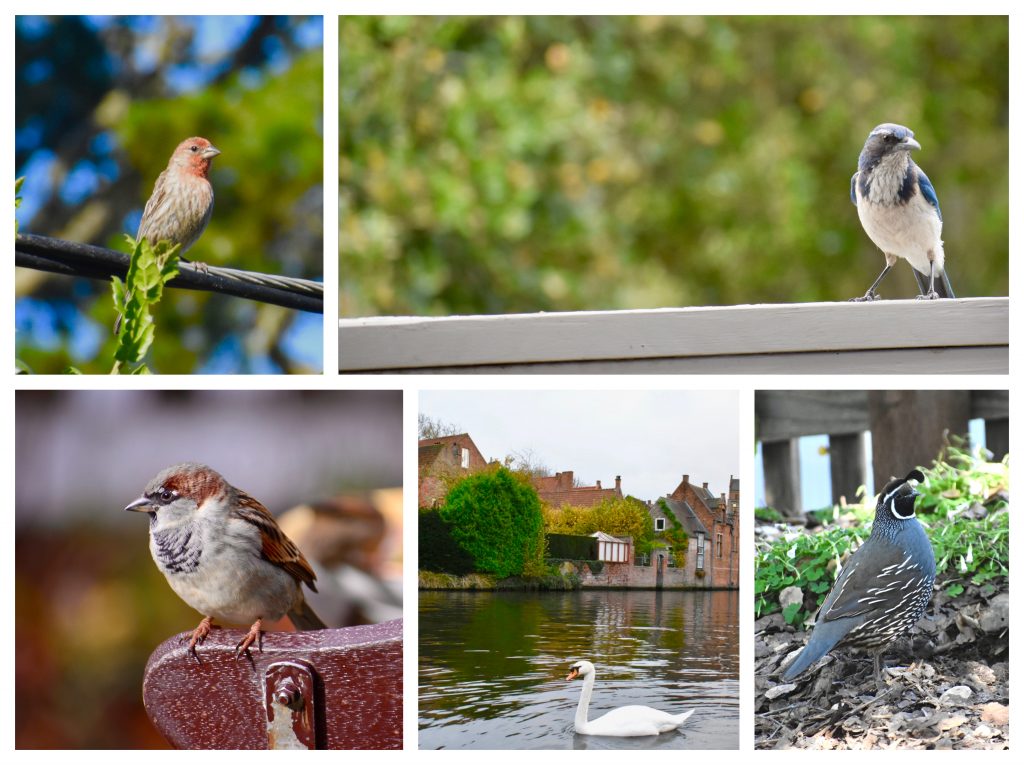
<div id="attachment_31352" style="width: 570px" class="wp-caption aligncenter"><img loading="lazy" decoding="async" aria-describedby="caption-attachment-31352" class="wp-image-31352 size-large" src="https://www.oh-i-see.com/blog/wp-content/uploads/2019/07/Bird-collage-1024x765.jpg" alt="A collage of five common birds reflects the joys of birdwatching while traveling the world. (Image @ Joyce McGreevy)" width="560" height="418" srcset="https://www.oh-i-see.com/blog/wp-content/uploads/2019/07/Bird-collage-1024x765.jpg 1024w, https://www.oh-i-see.com/blog/wp-content/uploads/2019/07/Bird-collage-300x224.jpg 300w, https://www.oh-i-see.com/blog/wp-content/uploads/2019/07/Bird-collage-768x574.jpg 768w, https://www.oh-i-see.com/blog/wp-content/uploads/2019/07/Bird-collage-207x155.jpg 207w" sizes="auto, (max-width: 560px) 100vw, 560px" /><p id="caption-attachment-31352" class="wp-caption-text">Wherever we go, we&#8217;re traveling the world of birds. <br />© Joyce McGreevy</p></div>
<p>Because as the campaign’s <a href="https://www.birdoftheyear.org.nz" target="_blank" rel="noopener">roster</a> shows, 45% of New Zealand’s native birds are “in trouble.” In North America, 30% of native bird populations are in decline. Worldwide, nearly 1,500 bird species face extinction.</p>
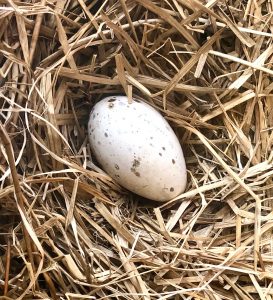
<p><strong>Oh, I see: </strong>When traveling the world of birds, tread lightly. Earth is a fragile nest and its balance is in our hands.</p>
<div id="attachment_31376" style="width: 260px" class="wp-caption aligncenter"><img loading="lazy" decoding="async" aria-describedby="caption-attachment-31376" class="wp-image-31376" src="https://www.oh-i-see.com/blog/wp-content/uploads/2019/07/IMG_1511-273x300.jpg" alt="A bird’s egg reminds the viewer that the world of birds is fragile. (Image @ Joyce McGreevy)" width="250" height="275" srcset="https://www.oh-i-see.com/blog/wp-content/uploads/2019/07/IMG_1511-273x300.jpg 273w, https://www.oh-i-see.com/blog/wp-content/uploads/2019/07/IMG_1511-768x845.jpg 768w, https://www.oh-i-see.com/blog/wp-content/uploads/2019/07/IMG_1511-930x1024.jpg 930w, https://www.oh-i-see.com/blog/wp-content/uploads/2019/07/IMG_1511-188x207.jpg 188w, https://www.oh-i-see.com/blog/wp-content/uploads/2019/07/IMG_1511-300x330.jpg 300w, https://www.oh-i-see.com/blog/wp-content/uploads/2019/07/IMG_1511.jpg 1568w" sizes="auto, (max-width: 250px) 100vw, 250px" /><p id="caption-attachment-31376" class="wp-caption-text">Nurture their future.<br />© Joyce McGreevy</p></div>
<p><em>Find bird-friendly tips <a href="https://www.doc.govt.nz/nature/native-animals/birds/you-can-help-birds/" target="_blank" rel="noopener">here</a> and <a href="https://www.nature.org/newsfeatures/specialfeatures/animals/birds/migratorybirds/what-you-can-do/everyday-ways-you-can-help-birds.xml" target="_blank" rel="noopener">here</a>. Discover birds of New Zealand <a href="https://www.doc.govt.nz/nature/native-animals/birds/birds-a-z/" target="_blank" rel="noopener">here</a>.</em></p>
<p><em><a href="#comments">Comment</a> on this post below, or inspire insight with your own OIC Moment</em> <em><a href="https://www.oh-i-see.com/blog/your-oic-moments/">here</a>.</em></p>
{"id":31332,"date":"2018-07-02T03:00:33","date_gmt":"2018-07-02T10:00:33","guid":{"rendered":"http:\/\/ohisee.genweb.site\/blog\/?p=31332"},"modified":"2021-07-20T08:03:20","modified_gmt":"2021-07-20T15:03:20","slug":"traveling-the-world-of-birds","status":"publish","type":"post","link":"https:\/\/www.oh-i-see.com\/blog\/traveling-the-world-of-birds\/","title":{"rendered":"Traveling the World of Birds"},"content":{"rendered":"<div id=\"attachment_31401\" style=\"width: 570px\" class=\"wp-caption aligncenter\"><img loading=\"lazy\" decoding=\"async\" aria-describedby=\"caption-attachment-31401\" class=\"wp-image-31401 size-large\" src=\"https:\/\/www.oh-i-see.com\/blog\/wp-content\/uploads\/2018\/07\/REV_parrot-1-1024x623.jpg\" alt=\"A rainbow and bush parrot in New Zealand suggest a brighter future for native birds around the world. (Image @ Joyce McGreevy)\" width=\"560\" height=\"341\" srcset=\"https:\/\/www.oh-i-see.com\/blog\/wp-content\/uploads\/2018\/07\/REV_parrot-1-1024x623.jpg 1024w, https:\/\/www.oh-i-see.com\/blog\/wp-content\/uploads\/2018\/07\/REV_parrot-1-300x183.jpg 300w, https:\/\/www.oh-i-see.com\/blog\/wp-content\/uploads\/2018\/07\/REV_parrot-1-768x467.jpg 768w, https:\/\/www.oh-i-see.com\/blog\/wp-content\/uploads\/2018\/07\/REV_parrot-1-207x126.jpg 207w, https:\/\/www.oh-i-see.com\/blog\/wp-content\/uploads\/2018\/07\/REV_parrot-1-165x100.jpg 165w\" sizes=\"auto, (max-width: 560px) 100vw, 560px\" \/><p id=\"caption-attachment-31401\" class=\"wp-caption-text\">New Zealand birds need vast areas of pest-free forest to survive. <br \/>\u00a9 Joyce McGreevy<\/p><\/div>\n<h2><strong>Winging It in New Zealand<\/strong><\/h2>\n<p>Some of the best reasons for traveling the world are birdbrained. Consider New Zealand, home to some of the planet&#8217;s most amazing birds. But what makes New Zealand native birds remarkable has also made them vulnerable.<\/p>\n<div id=\"attachment_31339\" style=\"width: 570px\" class=\"wp-caption aligncenter\"><img loading=\"lazy\" decoding=\"async\" aria-describedby=\"caption-attachment-31339\" class=\"wp-image-31339 size-large\" src=\"https:\/\/www.oh-i-see.com\/blog\/wp-content\/uploads\/2019\/07\/gull-835x1024.jpg\" alt=\"A black-billed gull remind a birdwatcher traveling the world that many New Zealand native bird species are in trouble. (Image \u00a9 Joyce McGreevy)\" width=\"560\" height=\"687\" srcset=\"https:\/\/www.oh-i-see.com\/blog\/wp-content\/uploads\/2019\/07\/gull-835x1024.jpg 835w, https:\/\/www.oh-i-see.com\/blog\/wp-content\/uploads\/2019\/07\/gull-245x300.jpg 245w, https:\/\/www.oh-i-see.com\/blog\/wp-content\/uploads\/2019\/07\/gull-768x942.jpg 768w, https:\/\/www.oh-i-see.com\/blog\/wp-content\/uploads\/2019\/07\/gull-169x207.jpg 169w, https:\/\/www.oh-i-see.com\/blog\/wp-content\/uploads\/2019\/07\/gull-300x368.jpg 300w\" sizes=\"auto, (max-width: 560px) 100vw, 560px\" \/><p id=\"caption-attachment-31339\" class=\"wp-caption-text\">New Zealand&#8217;s black-billed gulls are the world&#8217;s most threatened gull.\u00a0<br \/>\u00a9 Joyce McGreevy<\/p><\/div>\n<h4><strong>Avian Nation<\/strong><\/h4>\n<p>New Zealand is unique. Until about 800 years ago, its only land mammals were species of bat.\u00a0With virtually no predators, many bird species evolved beyond fight-or-flight. Why fly when you can safely nest on solid ground?<\/p>\n<p>Over time, the land became home to more species of flightless birds than anywhere else on Earth.<\/p>\n<div id=\"attachment_31371\" style=\"width: 570px\" class=\"wp-caption aligncenter\"><img loading=\"lazy\" decoding=\"async\" aria-describedby=\"caption-attachment-31371\" class=\"wp-image-31371 size-large\" src=\"https:\/\/www.oh-i-see.com\/blog\/wp-content\/uploads\/2019\/07\/DSC_0432-2-1024x683.jpg\" alt=\"A forest in New Zealand was a paradise for native birds until humans traveling the world arrived as settlers. (Image @ Joyce McGreevy)\" width=\"560\" height=\"374\" srcset=\"https:\/\/www.oh-i-see.com\/blog\/wp-content\/uploads\/2019\/07\/DSC_0432-2-1024x683.jpg 1024w, https:\/\/www.oh-i-see.com\/blog\/wp-content\/uploads\/2019\/07\/DSC_0432-2-300x200.jpg 300w, https:\/\/www.oh-i-see.com\/blog\/wp-content\/uploads\/2019\/07\/DSC_0432-2-768x512.jpg 768w, https:\/\/www.oh-i-see.com\/blog\/wp-content\/uploads\/2019\/07\/DSC_0432-2-207x138.jpg 207w\" sizes=\"auto, (max-width: 560px) 100vw, 560px\" \/><p id=\"caption-attachment-31371\" class=\"wp-caption-text\">With 80% forest and 0% mammals, New Zealand pulsed with the life of birds.<br \/>\u00a9 Joyce McGreevy<\/p><\/div>\n<h4><strong>Sitting Ducks<\/strong><\/h4>\n<p>What happened next? People.<\/p>\n<p>As humans arrived, they introduced predators\u2014some deliberately, some as shipboard stowaways. Meanwhile, they cleared forests and hunted.<\/p>\n<p>Some birds would gobble up fermented berries and drunkenly doze off. Hunting became as easy as \u201cscoop it and soup it.\u201d<\/p>\n<p>Soon one of the last places on Earth colonized by humans suffered one of the worst biological losses.<\/p>\n<h4><strong>Size Didn\u2019t Save Them<\/strong><\/h4>\n<p>The most astounding lost birds were moa. Some stood 13-foot tall and weighed 600 pounds.<\/p>\n<div id=\"attachment_31346\" style=\"width: 570px\" class=\"wp-caption aligncenter\"><img loading=\"lazy\" decoding=\"async\" aria-describedby=\"caption-attachment-31346\" class=\"wp-image-31346 size-large\" src=\"https:\/\/www.oh-i-see.com\/blog\/wp-content\/uploads\/2019\/07\/Moa_pair-1024x581.jpg\" alt=\"Moa bones and a drawing of moa remind viewers that many of New Zealand\u2019s flightless birds are extinct. (Image @ Joyce McGreevy)\" width=\"560\" height=\"318\" srcset=\"https:\/\/www.oh-i-see.com\/blog\/wp-content\/uploads\/2019\/07\/Moa_pair-1024x581.jpg 1024w, https:\/\/www.oh-i-see.com\/blog\/wp-content\/uploads\/2019\/07\/Moa_pair-300x170.jpg 300w, https:\/\/www.oh-i-see.com\/blog\/wp-content\/uploads\/2019\/07\/Moa_pair-768x436.jpg 768w, https:\/\/www.oh-i-see.com\/blog\/wp-content\/uploads\/2019\/07\/Moa_pair-207x117.jpg 207w\" sizes=\"auto, (max-width: 560px) 100vw, 560px\" \/><p id=\"caption-attachment-31346\" class=\"wp-caption-text\">Moa once ruled New Zealand forestland.<br \/>\u00a9 Joyce McGreevy<\/p><\/div>\n<p>But after millions of years of safe grazing, moas ended up in cooking pits and their habitat was destroyed.<\/p>\n<p>Since human arrival, at least 51 New Zealand bird species have become extinct.<\/p>\n<h4><strong>Protecting the World of Birds<\/strong><\/h4>\n<p>Today, New Zealand goes all-out to restore habitat and protect wildlife. <a href=\"https:\/\/www.backpackerguide.nz\/arrival-advice-biosecurity-customs-new-zealand\/\">Biosecurity\u00a0<\/a>at Customs is strict, so leave those snacks on the plane and thoroughly scrub outdoor gear.<\/p>\n<p>One-third of the country is national parkland. Avian projects by the NZ Department of Conservation engage hundreds of volunteers and are models for wildlife organizations around the world.<\/p>\n<div id=\"attachment_31373\" style=\"width: 570px\" class=\"wp-caption aligncenter\"><img loading=\"lazy\" decoding=\"async\" aria-describedby=\"caption-attachment-31373\" class=\"wp-image-31373 size-large\" src=\"https:\/\/www.oh-i-see.com\/blog\/wp-content\/uploads\/2019\/07\/piwakawaka-1024x601.jpg\" alt=\"The piwakawaka or fantail is New Zealand bird native bird worth traveling the world to see. (Image @ Joyce McGreevy)\" width=\"560\" height=\"329\" srcset=\"https:\/\/www.oh-i-see.com\/blog\/wp-content\/uploads\/2019\/07\/piwakawaka-1024x601.jpg 1024w, https:\/\/www.oh-i-see.com\/blog\/wp-content\/uploads\/2019\/07\/piwakawaka-300x176.jpg 300w, https:\/\/www.oh-i-see.com\/blog\/wp-content\/uploads\/2019\/07\/piwakawaka-768x451.jpg 768w, https:\/\/www.oh-i-see.com\/blog\/wp-content\/uploads\/2019\/07\/piwakawaka-207x122.jpg 207w\" sizes=\"auto, (max-width: 560px) 100vw, 560px\" \/><p id=\"caption-attachment-31373\" class=\"wp-caption-text\">In flight, piwakawaka, or \u00a0fantails, are as fluttery as butterflies.\u00a0<br \/>\u00a9 Joyce McGreevy<\/p><\/div>\n<h4><strong>Hidden Birds<\/strong><\/h4>\n<p>Which bird tops the perch? Kiwis, of course! About the size of a hen, the kiwi is wingless aside from nubs under its hairlike feathers. It also has nostrils at the end of its long beak.<\/p>\n<div id=\"attachment_31338\" style=\"width: 570px\" class=\"wp-caption aligncenter\"><img loading=\"lazy\" decoding=\"async\" aria-describedby=\"caption-attachment-31338\" class=\"wp-image-31338 size-large\" src=\"https:\/\/www.oh-i-see.com\/blog\/wp-content\/uploads\/2019\/07\/NA12-Rotorua-Rotorua-Tourism-New-Zealand-1024x681.jpg\" alt=\"The kiwi, a flightless bird, is New Zealand\u2019s national icon. (Image courtesy of New Zealand Tourism)\" width=\"560\" height=\"372\" srcset=\"https:\/\/www.oh-i-see.com\/blog\/wp-content\/uploads\/2019\/07\/NA12-Rotorua-Rotorua-Tourism-New-Zealand-1024x681.jpg 1024w, https:\/\/www.oh-i-see.com\/blog\/wp-content\/uploads\/2019\/07\/NA12-Rotorua-Rotorua-Tourism-New-Zealand-300x200.jpg 300w, https:\/\/www.oh-i-see.com\/blog\/wp-content\/uploads\/2019\/07\/NA12-Rotorua-Rotorua-Tourism-New-Zealand-768x511.jpg 768w, https:\/\/www.oh-i-see.com\/blog\/wp-content\/uploads\/2019\/07\/NA12-Rotorua-Rotorua-Tourism-New-Zealand-207x138.jpg 207w, https:\/\/www.oh-i-see.com\/blog\/wp-content\/uploads\/2019\/07\/NA12-Rotorua-Rotorua-Tourism-New-Zealand.jpg 1920w\" sizes=\"auto, (max-width: 560px) 100vw, 560px\" \/><p id=\"caption-attachment-31338\" class=\"wp-caption-text\">Despite their awkward appearance, kiwis can outrun humans.<br \/>\u00a9 Tourism New Zealand<\/p><\/div>\n<p>As national symbols, kiwis appear everywhere in New Zealand. In the 1800s, kiwis were pictured on regimental badges, and during WWI \u201cKiwi\u201d became a nickname for New Zealand soldiers, one since adopted by the general population.<\/p>\n<p>Seeking kiwi (the avian variety) can feel like falling for a prankster\u2019s snipe hunt. <em>Kiwi <\/em>is\u00a0Maori for \u201chidden bird\u201d and most species are nocturnal. While guides cannot guarantee you\u2019ll see one, outfits like <a href=\"https:\/\/www.realjourneys.co.nz\/en\/experiences\/tours\/stewart-island-wild-kiwi-encounter\/\" target=\"_blank\" rel=\"noopener\">Real Journeys<\/a> offer a 50% refund if you don\u2019t. Either way, you\u2019ll have a magical hike.<\/p>\n<p>Such was the case when I went birdwatching on New Zealand&#8217;s Stewart Island.<\/p>\n<p>\u201cDon\u2019t they realize we drove all the way from Auckland?\u201d said one disappointed visitor afterward. Alas, kiwis really don\u2019t care how far one has traveled. Nature is not a theme park.<\/p>\n<p>Besides, we\u2019d had the pleasure of sailing to Glory Cove, and then walking in silence, illuminated only by moon and stars. In this loud, light-polluted age, that, too, is a rare experience.<\/p>\n<h4><strong>Precocious Parrots<\/strong><\/h4>\n<p>Other terrestrial birds are never shy. Each morning a cheeky k\u0101k\u0101, or olive-brown bush parrot, stopped by my garden to pluck wild fruit. Then it would perch nearby, deftly removing the peel.<\/p>\n<div id=\"attachment_31354\" style=\"width: 570px\" class=\"wp-caption aligncenter\"><img loading=\"lazy\" decoding=\"async\" aria-describedby=\"caption-attachment-31354\" class=\"wp-image-31354 size-large\" src=\"https:\/\/www.oh-i-see.com\/blog\/wp-content\/uploads\/2019\/07\/AA_kaka1-1024x683.jpg\" alt=\"The bush parrot, or kaka, is a New Zealand native bird. (Image @ Joyce McGreevy)\" width=\"560\" height=\"374\" srcset=\"https:\/\/www.oh-i-see.com\/blog\/wp-content\/uploads\/2019\/07\/AA_kaka1-1024x683.jpg 1024w, https:\/\/www.oh-i-see.com\/blog\/wp-content\/uploads\/2019\/07\/AA_kaka1-300x200.jpg 300w, https:\/\/www.oh-i-see.com\/blog\/wp-content\/uploads\/2019\/07\/AA_kaka1-768x512.jpg 768w, https:\/\/www.oh-i-see.com\/blog\/wp-content\/uploads\/2019\/07\/AA_kaka1-207x138.jpg 207w\" sizes=\"auto, (max-width: 560px) 100vw, 560px\" \/><p id=\"caption-attachment-31354\" class=\"wp-caption-text\">One bush parrot eats &#8220;brekkie,&#8221; while another (below) takes wing.<br \/>\u00a9 Joyce McGreevy<\/p><\/div>\n<div id=\"attachment_31355\" style=\"width: 570px\" class=\"wp-caption alignnone\"><img loading=\"lazy\" decoding=\"async\" aria-describedby=\"caption-attachment-31355\" class=\"wp-image-31355 size-large\" src=\"https:\/\/www.oh-i-see.com\/blog\/wp-content\/uploads\/2019\/07\/kaka_flight-1024x744.jpg\" alt=\"A bush parrot, or kaka, displays its wings at Zealandia, a New Zealand bird sanctuary.(Image @ Joyce McGreevy)\" width=\"560\" height=\"407\" srcset=\"https:\/\/www.oh-i-see.com\/blog\/wp-content\/uploads\/2019\/07\/kaka_flight-1024x744.jpg 1024w, https:\/\/www.oh-i-see.com\/blog\/wp-content\/uploads\/2019\/07\/kaka_flight-300x218.jpg 300w, https:\/\/www.oh-i-see.com\/blog\/wp-content\/uploads\/2019\/07\/kaka_flight-768x558.jpg 768w, https:\/\/www.oh-i-see.com\/blog\/wp-content\/uploads\/2019\/07\/kaka_flight-207x150.jpg 207w\" sizes=\"auto, (max-width: 560px) 100vw, 560px\" \/><p id=\"caption-attachment-31355\" class=\"wp-caption-text\">\u00a9 Joyce McGreevy<\/p><\/div>\n<p>Though similar to k\u0101k\u0101s, keas have green plumage. These clever critters endear themselves to some and test the patience of others. It depends on whether the kea\u2014the world\u2019s only alpine parrot\u2014is proving its <a href=\"https:\/\/www.youtube.com\/watch?v=7W7hEUGtv4U\" target=\"_blank\" rel=\"noopener\">smarts<\/a> or <a href=\"https:\/\/www.youtube.com\/watch?v=OGVf_qLsyyQ\" target=\"_blank\" rel=\"noopener\">dismantling<\/a> your gear.<\/p>\n<h4>Hello, Caller?<\/h4>\n<p>One bird you&#8217;ll certainly hear throughout the country is the t\u016b\u012b, unique to New Zealand. With two voice boxes,\u00a0t\u016b\u012b can produce complex songs, from melodious to punk-raucous.<\/p>\n<p>They even inspired a Maori compliment about orators and singers, <em>Me he korokoro t\u016b\u012b: &#8220;<\/em>He has the throat of a t\u016b\u012b.&#8221;<\/p>\n<p>T\u016b\u012b are also mimics. Birdwatchers have reported t\u016b\u012b calls\u00a0that sound like ringing cellphones.<\/p>\n<div id=\"attachment_31337\" style=\"width: 650px\" class=\"wp-caption aligncenter\"><img loading=\"lazy\" decoding=\"async\" aria-describedby=\"caption-attachment-31337\" class=\"wp-image-31337 size-full\" src=\"https:\/\/www.oh-i-see.com\/blog\/wp-content\/uploads\/2019\/07\/tui.jpg\" alt=\"The tui is unique to New Zealand, a favorite among birdwatchers. (Public domain image; credit: Bernard Spragg)\" width=\"640\" height=\"429\" srcset=\"https:\/\/www.oh-i-see.com\/blog\/wp-content\/uploads\/2019\/07\/tui.jpg 640w, https:\/\/www.oh-i-see.com\/blog\/wp-content\/uploads\/2019\/07\/tui-300x201.jpg 300w, https:\/\/www.oh-i-see.com\/blog\/wp-content\/uploads\/2019\/07\/tui-207x139.jpg 207w\" sizes=\"auto, (max-width: 640px) 100vw, 640px\" \/><p id=\"caption-attachment-31337\" class=\"wp-caption-text\">The white &#8220;collars&#8221; of t\u016b\u012b led Europeans to call them Parson Birds. <br \/>\u00a9 Bernard <a href=\"https:\/\/www.flickr.com\/photos\/volvob12b\/9157585500\" target=\"_blank\" rel=\"noopener\">Spragg<\/a><\/p><\/div>\n<h4><strong>Pecks and the City<\/strong><\/h4>\n<p>One surprising place to birdwatch is New Zealand\u2019s capital. Minutes from Wellington, one of the world\u2019s hippest cities, is the world\u2019s first fully-fenced urban ecosanctuary.<\/p>\n<div id=\"attachment_31344\" style=\"width: 570px\" class=\"wp-caption aligncenter\"><img loading=\"lazy\" decoding=\"async\" aria-describedby=\"caption-attachment-31344\" class=\"wp-image-31344 size-large\" src=\"https:\/\/www.oh-i-see.com\/blog\/wp-content\/uploads\/2019\/07\/Zealandia-collage-1024x765.jpg\" alt=\"Zealandia is a sanctuary for New Zealand\u2019s native birds and other wildlife. (Image @ Joyce McGreevy)\" width=\"560\" height=\"418\" srcset=\"https:\/\/www.oh-i-see.com\/blog\/wp-content\/uploads\/2019\/07\/Zealandia-collage-1024x765.jpg 1024w, https:\/\/www.oh-i-see.com\/blog\/wp-content\/uploads\/2019\/07\/Zealandia-collage-300x224.jpg 300w, https:\/\/www.oh-i-see.com\/blog\/wp-content\/uploads\/2019\/07\/Zealandia-collage-768x574.jpg 768w, https:\/\/www.oh-i-see.com\/blog\/wp-content\/uploads\/2019\/07\/Zealandia-collage-207x155.jpg 207w\" sizes=\"auto, (max-width: 560px) 100vw, 560px\" \/><p id=\"caption-attachment-31344\" class=\"wp-caption-text\"><a href=\"https:\/\/www.visitzealandia.com\/Visit\" target=\"_blank\" rel=\"noopener\">Zealandia<\/a> is a haven for 40 species of native birds.<br \/>\u00a9 Joyce McGreevy<\/p><\/div>\n<p>Over 500 acres of valley forest have been restored as closely as possible to their pre-colonized state.<\/p>\n<p>Nearby is Kapiti Island, an important site for bird recovery. But <a href=\"https:\/\/www.kapitiisland.com\" target=\"_blank\" rel=\"noopener\">plan<\/a>\u00a0ahead\u2014only 50 visitors are allowed each day.<\/p>\n<h4><strong>&#8220;Extinct&#8221; No More<\/strong><\/h4>\n<p>One of my favorite sites is Te Anau Bird Sanctuary. Tourists who bypass it for Fiordland\u2019s more famous attractions are missing out. This tranquil lakeshore setting features birds that are among the hardest to find in the wild. These include\u00a0<strong><a href=\"https:\/\/www.doc.govt.nz\/our-work\/takahe-recovery-programme\/\">takah\u0113<\/a><\/strong>, which until 1948 were thought to be extinct.<\/p>\n<div id=\"attachment_31349\" style=\"width: 570px\" class=\"wp-caption aligncenter\"><img loading=\"lazy\" decoding=\"async\" aria-describedby=\"caption-attachment-31349\" class=\"wp-image-31349 size-large\" src=\"https:\/\/www.oh-i-see.com\/blog\/wp-content\/uploads\/2019\/07\/Takahe-collage-1024x512.jpg\" alt=\"The takahe, once thought to be extinct, is one of New Zealand\u2019s most unusual native birds. (Image @ Joyce McGreevy)\" width=\"560\" height=\"280\" srcset=\"https:\/\/www.oh-i-see.com\/blog\/wp-content\/uploads\/2019\/07\/Takahe-collage-1024x512.jpg 1024w, https:\/\/www.oh-i-see.com\/blog\/wp-content\/uploads\/2019\/07\/Takahe-collage-300x150.jpg 300w, https:\/\/www.oh-i-see.com\/blog\/wp-content\/uploads\/2019\/07\/Takahe-collage-768x384.jpg 768w, https:\/\/www.oh-i-see.com\/blog\/wp-content\/uploads\/2019\/07\/Takahe-collage-207x104.jpg 207w\" sizes=\"auto, (max-width: 560px) 100vw, 560px\" \/><p id=\"caption-attachment-31349\" class=\"wp-caption-text\">Unique to New Zealand, takah\u0113 have been around for 8 million years.\u00a0<br \/>\u00a9 Joyce McGreevy<\/p><\/div>\n<h4><strong>Seas the Day!<\/strong><\/h4>\n<p>If you like pelagic birds, you\u2019re in luck. New Zealand has the world\u2019s most diverse seabird community. You\u2019re never more than 80 miles from the coast, where the variety of birds includes native species of albatross (the world\u2019s largest seabird), gulls, oystercatcher, petrel, and tern.<\/p>\n<div id=\"attachment_31367\" style=\"width: 570px\" class=\"wp-caption aligncenter\"><img loading=\"lazy\" decoding=\"async\" aria-describedby=\"caption-attachment-31367\" class=\"wp-image-31367 size-large\" src=\"https:\/\/www.oh-i-see.com\/blog\/wp-content\/uploads\/2019\/07\/DSC_0763-1024x962.jpg\" alt=\"New Zealand oystercatchers are seabirds that make their nests near the shoreline.(Image @ Joyce McGreevy)\" width=\"560\" height=\"526\" srcset=\"https:\/\/www.oh-i-see.com\/blog\/wp-content\/uploads\/2019\/07\/DSC_0763-1024x962.jpg 1024w, https:\/\/www.oh-i-see.com\/blog\/wp-content\/uploads\/2019\/07\/DSC_0763-300x282.jpg 300w, https:\/\/www.oh-i-see.com\/blog\/wp-content\/uploads\/2019\/07\/DSC_0763-768x722.jpg 768w, https:\/\/www.oh-i-see.com\/blog\/wp-content\/uploads\/2019\/07\/DSC_0763-207x195.jpg 207w\" sizes=\"auto, (max-width: 560px) 100vw, 560px\" \/><p id=\"caption-attachment-31367\" class=\"wp-caption-text\">The shoreline nests of oystercatchers have been disturbed by pests, pets\u2014and <br \/>careless beachgoers.\u00a0<br \/>\u00a9 Joyce McGreevy<\/p><\/div>\n<h4><strong>Don\u2019t Pester the Penguins<\/strong><\/h4>\n<p>New Zealand is home to three fascinating species of penguins. (Is there a <em>boring\u00a0<\/em>species of penguins?) They are:<\/p>\n<div id=\"attachment_31340\" style=\"width: 570px\" class=\"wp-caption aligncenter\"><img loading=\"lazy\" decoding=\"async\" aria-describedby=\"caption-attachment-31340\" class=\"wp-image-31340 size-large\" src=\"https:\/\/www.oh-i-see.com\/blog\/wp-content\/uploads\/2019\/07\/Chris-Stephenson-Dunedin-1024x683.jpg\" alt=\"New Zealand\u2019s little blue penguins explain why many birdwatchers love traveling the world. (Image \u00a9 Chris Stephenson\/ New Zealand Tourism)\" width=\"560\" height=\"374\" srcset=\"https:\/\/www.oh-i-see.com\/blog\/wp-content\/uploads\/2019\/07\/Chris-Stephenson-Dunedin-1024x683.jpg 1024w, https:\/\/www.oh-i-see.com\/blog\/wp-content\/uploads\/2019\/07\/Chris-Stephenson-Dunedin-300x200.jpg 300w, https:\/\/www.oh-i-see.com\/blog\/wp-content\/uploads\/2019\/07\/Chris-Stephenson-Dunedin-768x512.jpg 768w, https:\/\/www.oh-i-see.com\/blog\/wp-content\/uploads\/2019\/07\/Chris-Stephenson-Dunedin-207x138.jpg 207w, https:\/\/www.oh-i-see.com\/blog\/wp-content\/uploads\/2019\/07\/Chris-Stephenson-Dunedin.jpg 1920w\" sizes=\"auto, (max-width: 560px) 100vw, 560px\" \/><p id=\"caption-attachment-31340\" class=\"wp-caption-text\">Koror\u0101, little blue penguins (average height 13 inches) . . .<br \/>\u00a9 Chris Stephenson\/New Zealand Tourism<\/p><\/div>\n<div id=\"attachment_31341\" style=\"width: 570px\" class=\"wp-caption aligncenter\"><img loading=\"lazy\" decoding=\"async\" aria-describedby=\"caption-attachment-31341\" class=\"wp-image-31341 size-large\" src=\"https:\/\/www.oh-i-see.com\/blog\/wp-content\/uploads\/2019\/07\/658-West-Coast-Matt-Winter-1024x446.jpg\" alt=\"New Zealand\u2019s Fiordland crested penguins inspire birdwatchers to travel the world. (Image \u00a9 Matt Winter\/ New Zealand Tourism)\" width=\"560\" height=\"244\" srcset=\"https:\/\/www.oh-i-see.com\/blog\/wp-content\/uploads\/2019\/07\/658-West-Coast-Matt-Winter-1024x446.jpg 1024w, https:\/\/www.oh-i-see.com\/blog\/wp-content\/uploads\/2019\/07\/658-West-Coast-Matt-Winter-300x131.jpg 300w, https:\/\/www.oh-i-see.com\/blog\/wp-content\/uploads\/2019\/07\/658-West-Coast-Matt-Winter-768x335.jpg 768w, https:\/\/www.oh-i-see.com\/blog\/wp-content\/uploads\/2019\/07\/658-West-Coast-Matt-Winter-207x90.jpg 207w, https:\/\/www.oh-i-see.com\/blog\/wp-content\/uploads\/2019\/07\/658-West-Coast-Matt-Winter.jpg 1920w\" sizes=\"auto, (max-width: 560px) 100vw, 560px\" \/><p id=\"caption-attachment-31341\" class=\"wp-caption-text\">Tawaki, Fiordland crested penguins . . .<br \/>\u00a9 Matt Winter\/New Zealand Tourism<\/p><\/div>\n<div id=\"attachment_31342\" style=\"width: 570px\" class=\"wp-caption aligncenter\"><img loading=\"lazy\" decoding=\"async\" aria-describedby=\"caption-attachment-31342\" class=\"wp-image-31342 size-large\" src=\"https:\/\/www.oh-i-see.com\/blog\/wp-content\/uploads\/2019\/07\/NA02-Penguin-Place-Central-Otago-Penguin-Place-1024x682.jpg\" alt=\"New Zealand\u2019s yellow-eyed penguins show why many birdwatchers are traveling the world. (Image \u00a9 Penguin Place\/ New Zealand Tourism)\" width=\"560\" height=\"373\" srcset=\"https:\/\/www.oh-i-see.com\/blog\/wp-content\/uploads\/2019\/07\/NA02-Penguin-Place-Central-Otago-Penguin-Place.jpg 1024w, https:\/\/www.oh-i-see.com\/blog\/wp-content\/uploads\/2019\/07\/NA02-Penguin-Place-Central-Otago-Penguin-Place-300x200.jpg 300w, https:\/\/www.oh-i-see.com\/blog\/wp-content\/uploads\/2019\/07\/NA02-Penguin-Place-Central-Otago-Penguin-Place-768x512.jpg 768w, https:\/\/www.oh-i-see.com\/blog\/wp-content\/uploads\/2019\/07\/NA02-Penguin-Place-Central-Otago-Penguin-Place-207x138.jpg 207w\" sizes=\"auto, (max-width: 560px) 100vw, 560px\" \/><p id=\"caption-attachment-31342\" class=\"wp-caption-text\">and Hoiho, yellow-eyed penguins.<br \/>\u00a9 Penguin Place\/New Zealand Tourism<\/p><\/div>\n<p>Unfortunately, they are also among the most endangered birds\u2014and travelers are adding to the problem.<\/p>\n<p>According to NZ&#8217;s Department of Conservation, \u201cInappropriate behavior by visitors to . . . habitats is an increasing threat to nesting and molting birds. Poor use of selfie sticks and people entering nesting areas is causing stress to nesting penguins . . .\u00a0 [that] could affect survival rates.\u201d<\/p>\n<p>Does that mean we can\u2019t see penguins? No, but if we truly love them, we\u2019ll do so from a distance. Let\u2019s prioritize <a href=\"http:\/\/www.birdingnz.co.nz\/birding-operators\" target=\"_blank\" rel=\"noopener\">ecological<\/a> respect over social media boast-posts.<\/p>\n<div id=\"attachment_31375\" style=\"width: 570px\" class=\"wp-caption aligncenter\"><img loading=\"lazy\" decoding=\"async\" aria-describedby=\"caption-attachment-31375\" class=\"wp-image-31375 size-large\" src=\"https:\/\/www.oh-i-see.com\/blog\/wp-content\/uploads\/2019\/07\/DSC_0851-1024x683.jpg\" alt=\"A penguin crossing sign in New Zealand reminds people to respect the world of birds. (Image @ Joyce McGreevy)\" width=\"560\" height=\"374\" srcset=\"https:\/\/www.oh-i-see.com\/blog\/wp-content\/uploads\/2019\/07\/DSC_0851-1024x683.jpg 1024w, https:\/\/www.oh-i-see.com\/blog\/wp-content\/uploads\/2019\/07\/DSC_0851-300x200.jpg 300w, https:\/\/www.oh-i-see.com\/blog\/wp-content\/uploads\/2019\/07\/DSC_0851-768x512.jpg 768w, https:\/\/www.oh-i-see.com\/blog\/wp-content\/uploads\/2019\/07\/DSC_0851-207x138.jpg 207w\" sizes=\"auto, (max-width: 560px) 100vw, 560px\" \/><p id=\"caption-attachment-31375\" class=\"wp-caption-text\">When penguins come ashore to breed and molt, we humans need to give them space.\u00a0<br \/>\u00a9 Joyce McGreevy<\/p><\/div>\n<h4><strong>Becoming Bird-minded<\/strong><\/h4>\n<p>Something I observed about Kiwis (the human variety) is that they are passionate about protecting native birds. There\u2019s even a campaign for NZ\u2019s <a href=\"https:\/\/www.birdoftheyear.org.nz\" target=\"_blank\" rel=\"noopener\">Bird of the Year<\/a>.<\/p>\n<p>We should all be so bird-minded.<\/p>\n<div id=\"attachment_31352\" style=\"width: 570px\" class=\"wp-caption aligncenter\"><img loading=\"lazy\" decoding=\"async\" aria-describedby=\"caption-attachment-31352\" class=\"wp-image-31352 size-large\" src=\"https:\/\/www.oh-i-see.com\/blog\/wp-content\/uploads\/2019\/07\/Bird-collage-1024x765.jpg\" alt=\"A collage of five common birds reflects the joys of birdwatching while traveling the world. (Image @ Joyce McGreevy)\" width=\"560\" height=\"418\" srcset=\"https:\/\/www.oh-i-see.com\/blog\/wp-content\/uploads\/2019\/07\/Bird-collage-1024x765.jpg 1024w, https:\/\/www.oh-i-see.com\/blog\/wp-content\/uploads\/2019\/07\/Bird-collage-300x224.jpg 300w, https:\/\/www.oh-i-see.com\/blog\/wp-content\/uploads\/2019\/07\/Bird-collage-768x574.jpg 768w, https:\/\/www.oh-i-see.com\/blog\/wp-content\/uploads\/2019\/07\/Bird-collage-207x155.jpg 207w\" sizes=\"auto, (max-width: 560px) 100vw, 560px\" \/><p id=\"caption-attachment-31352\" class=\"wp-caption-text\">Wherever we go, we&#8217;re traveling the world of birds.\u00a0<br \/>\u00a9 Joyce McGreevy<\/p><\/div>\n<p>Because as the campaign\u2019s\u00a0<a href=\"https:\/\/www.birdoftheyear.org.nz\" target=\"_blank\" rel=\"noopener\">roster<\/a> shows, 45% of New Zealand\u2019s native birds are \u201cin trouble.\u201d In North America, 30% of native bird populations are in decline. Worldwide, nearly 1,500 bird species face extinction.<\/p>\n<p><strong>Oh, I see:\u00a0<\/strong>When traveling the world of birds, tread lightly. Earth is a fragile nest and its balance is in our hands.<\/p>\n<div id=\"attachment_31376\" style=\"width: 260px\" class=\"wp-caption aligncenter\"><img loading=\"lazy\" decoding=\"async\" aria-describedby=\"caption-attachment-31376\" class=\"wp-image-31376\" src=\"https:\/\/www.oh-i-see.com\/blog\/wp-content\/uploads\/2019\/07\/IMG_1511-273x300.jpg\" alt=\"A bird\u2019s egg reminds the viewer that the world of birds is fragile. (Image @ Joyce McGreevy)\" width=\"250\" height=\"275\" srcset=\"https:\/\/www.oh-i-see.com\/blog\/wp-content\/uploads\/2019\/07\/IMG_1511-273x300.jpg 273w, https:\/\/www.oh-i-see.com\/blog\/wp-content\/uploads\/2019\/07\/IMG_1511-768x845.jpg 768w, https:\/\/www.oh-i-see.com\/blog\/wp-content\/uploads\/2019\/07\/IMG_1511-930x1024.jpg 930w, https:\/\/www.oh-i-see.com\/blog\/wp-content\/uploads\/2019\/07\/IMG_1511-188x207.jpg 188w, https:\/\/www.oh-i-see.com\/blog\/wp-content\/uploads\/2019\/07\/IMG_1511-300x330.jpg 300w, https:\/\/www.oh-i-see.com\/blog\/wp-content\/uploads\/2019\/07\/IMG_1511.jpg 1568w\" sizes=\"auto, (max-width: 250px) 100vw, 250px\" \/><p id=\"caption-attachment-31376\" class=\"wp-caption-text\">Nurture their future.<br \/>\u00a9 Joyce McGreevy<\/p><\/div>\n<p><em>Find bird-friendly tips <a href=\"https:\/\/www.doc.govt.nz\/nature\/native-animals\/birds\/you-can-help-birds\/\" target=\"_blank\" rel=\"noopener\">here<\/a> and <a href=\"https:\/\/www.nature.org\/newsfeatures\/specialfeatures\/animals\/birds\/migratorybirds\/what-you-can-do\/everyday-ways-you-can-help-birds.xml\" target=\"_blank\" rel=\"noopener\">here<\/a>. Discover birds of New Zealand <a href=\"https:\/\/www.doc.govt.nz\/nature\/native-animals\/birds\/birds-a-z\/\" target=\"_blank\" rel=\"noopener\">here<\/a>.<\/em><\/p>\n<p><em><a href=\"#comments\">Comment<\/a> on this post below, or inspire insight with your own OIC Moment<\/em>\u00a0<em><a href=\"https:\/\/www.oh-i-see.com\/blog\/your-oic-moments\/\">here<\/a>.<\/em><\/p>\n","protected":false},"excerpt":{"rendered":null,"protected":false},"author":15,"featured_media":31398,"comment_status":"closed","ping_status":"open","sticky":false,"template":"","format":"standard","meta":{"footnotes":""},"categories":[248,225,534],"tags":[],"class_list":["post-31332","post","type-post","status-publish","format-standard","has-post-thumbnail","hentry","category-makingadifference-life","category-nature-travel","category-newzealand-mappoints"],"aioseo_notices":[],"_links":{"self":[{"href":"https:\/\/www.oh-i-see.com\/blog\/wp-json\/wp\/v2\/posts\/31332","targetHints":{"allow":["GET"]}}],"collection":[{"href":"https:\/\/www.oh-i-see.com\/blog\/wp-json\/wp\/v2\/posts"}],"about":[{"href":"https:\/\/www.oh-i-see.com\/blog\/wp-json\/wp\/v2\/types\/post"}],"author":[{"embeddable":true,"href":"https:\/\/www.oh-i-see.com\/blog\/wp-json\/wp\/v2\/users\/15"}],"replies":[{"embeddable":true,"href":"https:\/\/www.oh-i-see.com\/blog\/wp-json\/wp\/v2\/comments?post=31332"}],"version-history":[{"count":40,"href":"https:\/\/www.oh-i-see.com\/blog\/wp-json\/wp\/v2\/posts\/31332\/revisions"}],"predecessor-version":[{"id":31402,"href":"https:\/\/www.oh-i-see.com\/blog\/wp-json\/wp\/v2\/posts\/31332\/revisions\/31402"}],"wp:featuredmedia":[{"embeddable":true,"href":"https:\/\/www.oh-i-see.com\/blog\/wp-json\/wp\/v2\/media\/31398"}],"wp:attachment":[{"href":"https:\/\/www.oh-i-see.com\/blog\/wp-json\/wp\/v2\/media?parent=31332"}],"wp:term":[{"taxonomy":"category","embeddable":true,"href":"https:\/\/www.oh-i-see.com\/blog\/wp-json\/wp\/v2\/categories?post=31332"},{"taxonomy":"post_tag","embeddable":true,"href":"https:\/\/www.oh-i-see.com\/blog\/wp-json\/wp\/v2\/tags?post=31332"}],"curies":[{"name":"wp","href":"https:\/\/api.w.org\/{rel}","templated":true}]}}