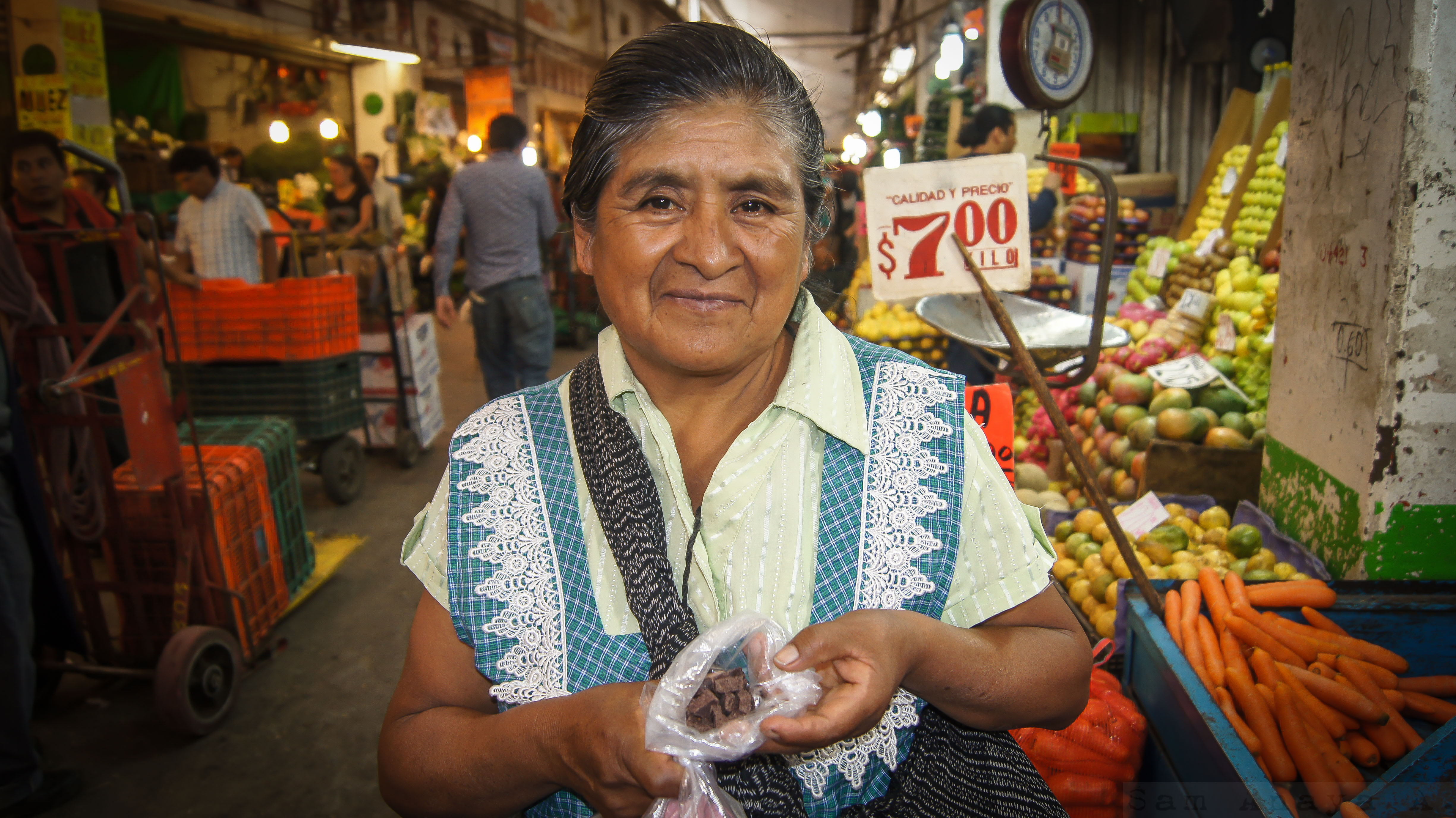
<div id="attachment_26382" style="width: 570px" class="wp-caption aligncenter"><img loading="lazy" decoding="async" aria-describedby="caption-attachment-26382" class="wp-image-26382" src="https://www.oh-i-see.com/blog/wp-content/uploads/2016/09/DSC05100.jpg" alt="A woman selling chocolate at Central de Abasto, the world's largest wholesale market where Mexico's cultural heritage is also on display. (image © Sam Anaya A.)" width="560" height="315" srcset="https://www.oh-i-see.com/blog/wp-content/uploads/2016/09/DSC05100.jpg 4899w, https://www.oh-i-see.com/blog/wp-content/uploads/2016/09/DSC05100-300x169.jpg 300w, https://www.oh-i-see.com/blog/wp-content/uploads/2016/09/DSC05100-768x432.jpg 768w, https://www.oh-i-see.com/blog/wp-content/uploads/2016/09/DSC05100-1024x575.jpg 1024w, https://www.oh-i-see.com/blog/wp-content/uploads/2016/09/DSC05100-600x337.jpg 600w, https://www.oh-i-see.com/blog/wp-content/uploads/2016/09/DSC05100-207x116.jpg 207w" sizes="auto, (max-width: 560px) 100vw, 560px" /><p id="caption-attachment-26382" class="wp-caption-text">Oaxacan chocolate rivals Swiss and Belgian chocolate in flavor, in uses (<em>mole</em>, hot chocolate, <br /> sweet and savory dishes), and in cultural heritage. <br /> © Sam Anaya A.</p></div>
<h2>Chocolate, Pineapples, and Cultural Heritage&#8212;All at Mexico&#8217;s Central de Abasto</h2>
<p>&#8220;Zoooooom!&#8221; A cart stacked with mangos tumbles by me, almost taking my right foot along for the ride. Fortunately, Isabel Ramillo, who sells chocolate from Oaxaca, grabs my shoulder to pull me out of the way.</p>
<p>As I regain my composure, my nose catches a whiff of meats, flowers, and spices for Mexican <em>mole</em> sauce. My ears ring with the sounds of  &#8220;¡Buen precio!&#8221;, whistles, and hundreds of shuffling feet.</p>
<p>I&#8217;m in Mexico City at the <a href="https://www.youtube.com/watch?v=t7g-JOiaclA" target="_blank" rel="noopener"><em>Central de Abasto</em> </a>(&#8220;Supply Center&#8221;), the world&#8217;s largest wholesale market. But, considering the people, produce, and regions of Mexico represented here, to my eye it is more like a bustling food museum.</p>
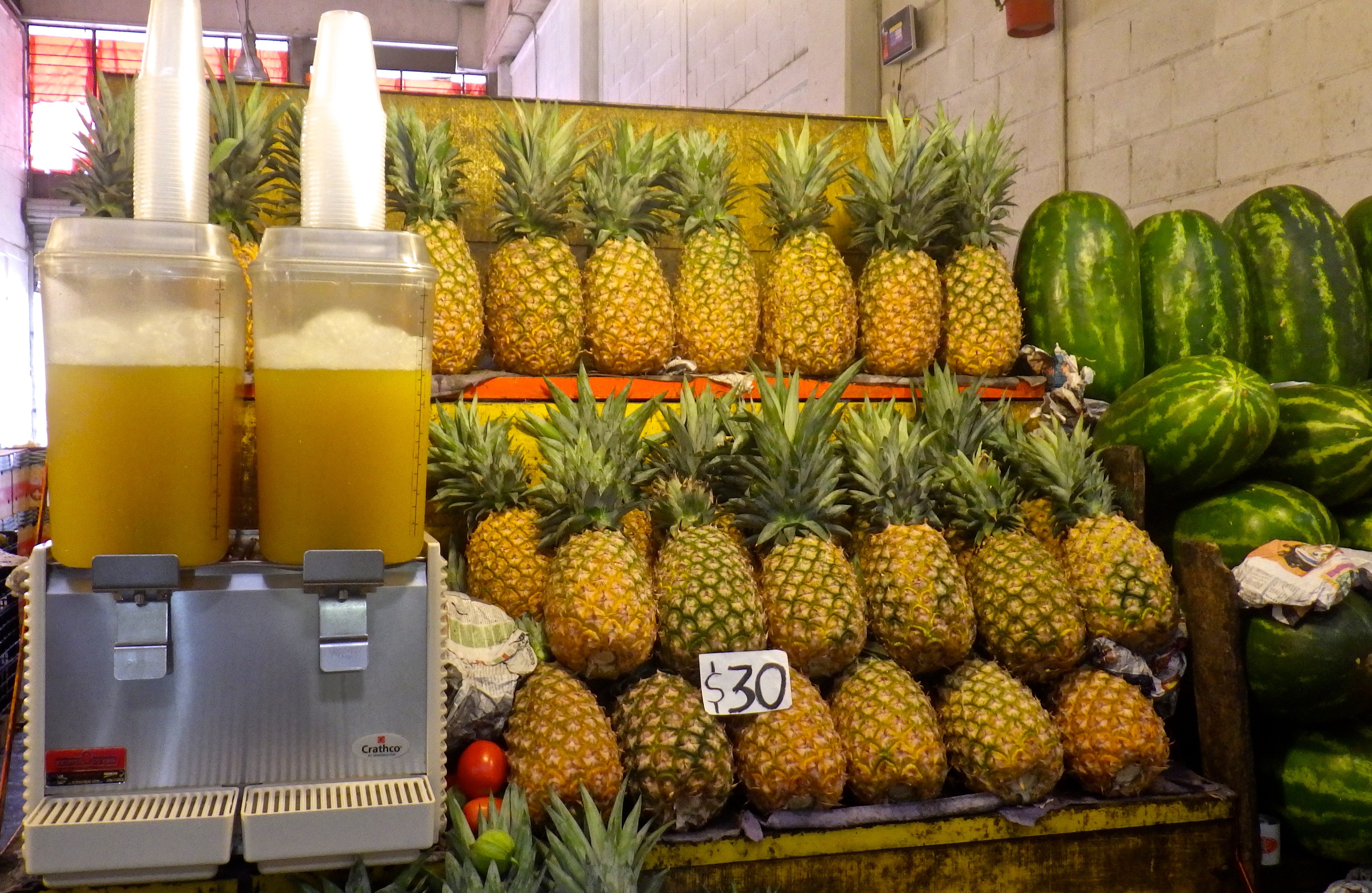
<div id="attachment_26370" style="width: 570px" class="wp-caption aligncenter"><img loading="lazy" decoding="async" aria-describedby="caption-attachment-26370" class="wp-image-26370" src="https://www.oh-i-see.com/blog/wp-content/uploads/2016/09/RIMG5620-e1474242626115.jpg" alt="Pineapples stacked with their juice in front at Central de Abasto, the world's largest wholesale market where Mexico's cultural heritage is also on display. (image © Eva Boynton)" width="560" height="365" srcset="https://www.oh-i-see.com/blog/wp-content/uploads/2016/09/RIMG5620-e1474242626115.jpg 3936w, https://www.oh-i-see.com/blog/wp-content/uploads/2016/09/RIMG5620-e1474242626115-300x195.jpg 300w, https://www.oh-i-see.com/blog/wp-content/uploads/2016/09/RIMG5620-e1474242626115-768x500.jpg 768w, https://www.oh-i-see.com/blog/wp-content/uploads/2016/09/RIMG5620-e1474242626115-1024x667.jpg 1024w, https://www.oh-i-see.com/blog/wp-content/uploads/2016/09/RIMG5620-e1474242626115-600x391.jpg 600w, https://www.oh-i-see.com/blog/wp-content/uploads/2016/09/RIMG5620-e1474242626115-207x135.jpg 207w" sizes="auto, (max-width: 560px) 100vw, 560px" /><p id="caption-attachment-26370" class="wp-caption-text">At this &#8220;museum,&#8221; the exhibits are interactive&#8212;buy and sell, sell and buy.<br /> © Eva Boynton</p></div>
<p>Within the mountains of tomatoes, baskets of c<em>hile de árbol</em> (tree chile), bags of <em>nopal</em> (a type of cactus), and shelves of pineapple, there are also links to Mexico&#8217;s cultural heritage. You may be surprised at what you find.</p>
<h4>Metropolis Within a Metropolis</h4>
<p>The <em>Central de Abasto</em> has everything typical of a big city: banks, kitchen supplies, laundry, convenience stores, electronics and restaurants&#8212;not to mention Mexico&#8217;s greatest show of produce, fish, flowers, seafood, milks, and meats.</p>
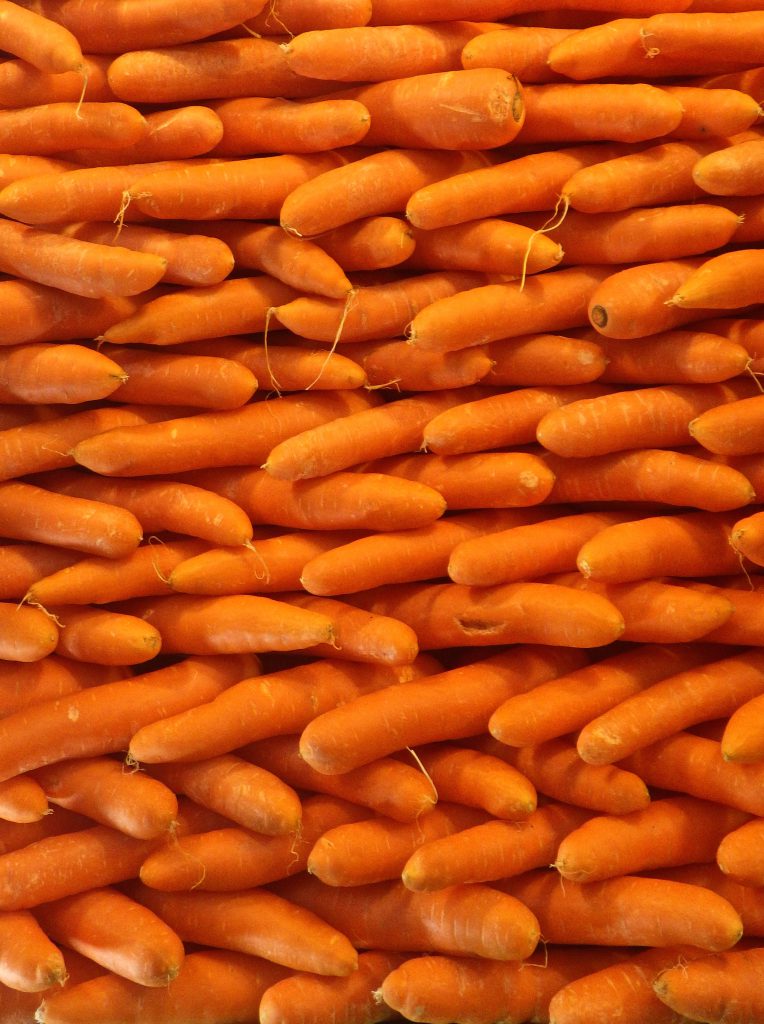
<p>Foods attract the eye in museum-like exhibits, carefully arranged for beauty and stability.</p>
<div id="attachment_26383" style="width: 410px" class="wp-caption aligncenter"><img loading="lazy" decoding="async" aria-describedby="caption-attachment-26383" class="wp-image-26383" src="https://www.oh-i-see.com/blog/wp-content/uploads/2016/09/RIMG5615-764x1024.jpg" alt="Carrots stacked in a criss-cross pattern at the Central de Abasto, the world's largest wholesale market where Mexico's cultural heritage is also on display. (image © Eva Boynton)" width="400" height="536" srcset="https://www.oh-i-see.com/blog/wp-content/uploads/2016/09/RIMG5615-764x1024.jpg 764w, https://www.oh-i-see.com/blog/wp-content/uploads/2016/09/RIMG5615-224x300.jpg 224w, https://www.oh-i-see.com/blog/wp-content/uploads/2016/09/RIMG5615-768x1030.jpg 768w, https://www.oh-i-see.com/blog/wp-content/uploads/2016/09/RIMG5615-600x804.jpg 600w, https://www.oh-i-see.com/blog/wp-content/uploads/2016/09/RIMG5615-154x207.jpg 154w, https://www.oh-i-see.com/blog/wp-content/uploads/2016/09/RIMG5615-300x402.jpg 300w" sizes="auto, (max-width: 400px) 100vw, 400px" /><p id="caption-attachment-26383" class="wp-caption-text">A carrot weaving?<br /> © Eva Boynton</p></div>
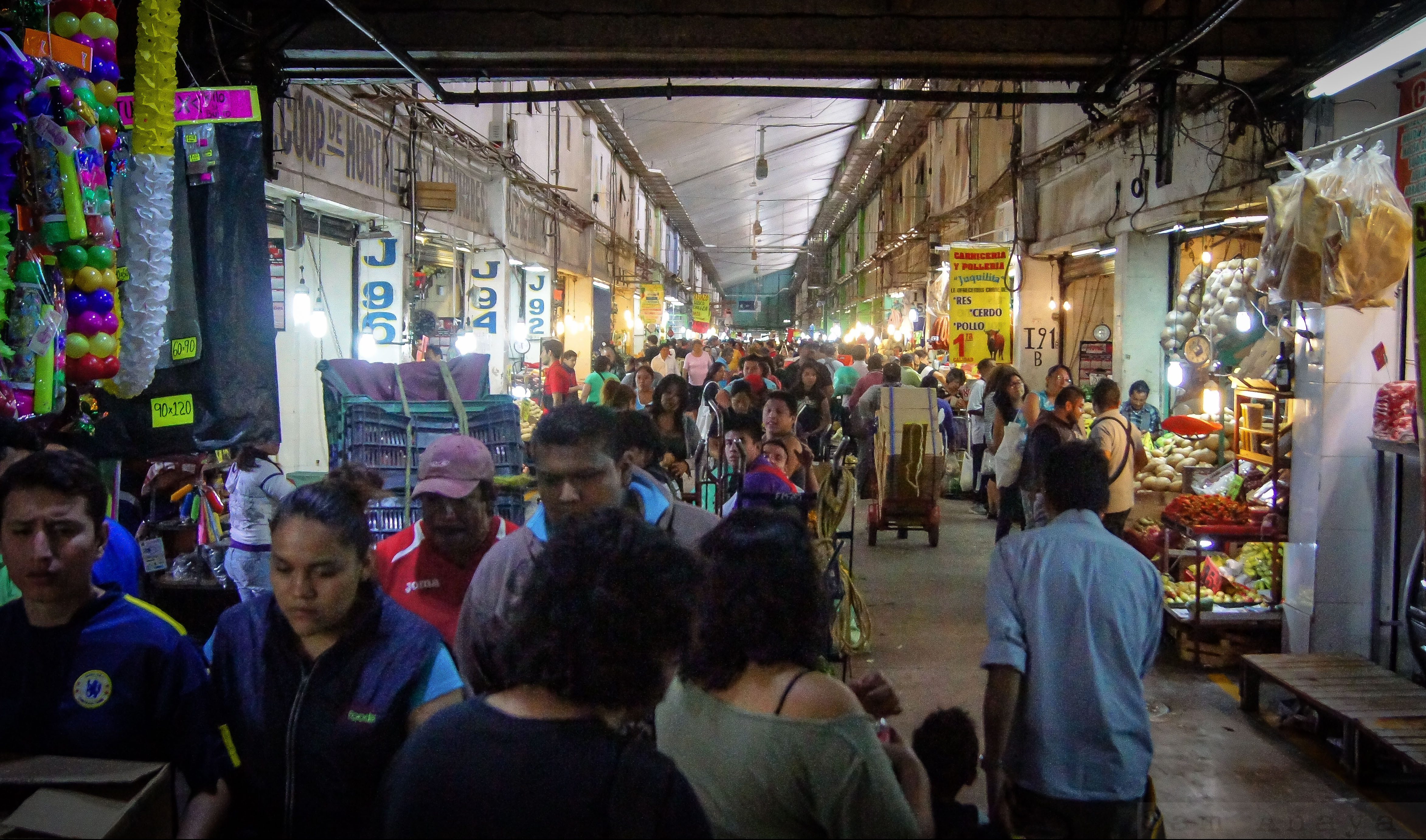
<p>The market is a hive of activity with somewhere between 300,000&#8211;450,000 daily visitors, more than see Rome or Madrid in a day! Consider its impact:</p>
<ul>
<li>30 thousand tons of food are sold here on a daily basis.</li>
<li>The market provides 80% of the food consumption for over 20 million Mexicans.</li>
<li>About 10,000 loaders, known as <em><a href="https://www.youtube.com/watch?v=1Mfp3fATkjQ" target="_blank" rel="noopener">diableros</a>, </em>operate carts that<em> </em>carry goods to the vendors&#8217; stands. They are among the market&#8217;s 70,000 employees.</li>
<li>Warehouses in the market complex cover 328 hectares (810 acres).</li>
<li>Fifteen halls, totaling 11 kilometers in length, hold 100 warehouse sections each&#8212;all filled to the brim.</li>
</ul>
<p>In fact, the market is so big that freeway-like signs direct customers to the halls, each of which specializes in one type of food or goods. In just the produce area, about 2,000 vendors sell fruits and vegetables.</p>
<div id="attachment_26570" style="width: 570px" class="wp-caption aligncenter"><img loading="lazy" decoding="async" aria-describedby="caption-attachment-26570" class="wp-image-26570" src="https://www.oh-i-see.com/blog/wp-content/uploads/2016/09/DSC05088-e1474248894442.jpg" alt="Inside a hall packed with people at Central de Abasto, the world's largest wholesale market where Mexico's cultural heritage is also on display. (image © Sam Anaya A.)" width="560" height="330" srcset="https://www.oh-i-see.com/blog/wp-content/uploads/2016/09/DSC05088-e1474248894442.jpg 4690w, https://www.oh-i-see.com/blog/wp-content/uploads/2016/09/DSC05088-e1474248894442-300x177.jpg 300w, https://www.oh-i-see.com/blog/wp-content/uploads/2016/09/DSC05088-e1474248894442-768x452.jpg 768w, https://www.oh-i-see.com/blog/wp-content/uploads/2016/09/DSC05088-e1474248894442-1024x603.jpg 1024w, https://www.oh-i-see.com/blog/wp-content/uploads/2016/09/DSC05088-e1474248894442-600x353.jpg 600w, https://www.oh-i-see.com/blog/wp-content/uploads/2016/09/DSC05088-e1474248894442-207x122.jpg 207w" sizes="auto, (max-width: 560px) 100vw, 560px" /><p id="caption-attachment-26570" class="wp-caption-text">In the middle of the hustle and bustle!<br /> © Sam Anaya A.</p></div>
<h4>Cultural Roots</h4>
<p>The concept of a large central market in the area that became Mexico City goes back six hundred years to the Aztec market known as <em>Tlanechicoloya.</em><em> </em>Throughout Mexico&#8217;s cultural history, foods and goods have continued to change hands in central markets.</p>
<p>In the 20th century, when Mexico City expanded around the downtown <em>La Merced</em> market to the point that traffic congestion impeded market operations, the government decided to open a new central supply center.</p>
<p>In 1982, it inaugurated the <em>Central de Abasto</em> in Iztapalapa, an outlying district in the eastern part of Mexico City. Over time, the <em>Central de Abasto</em> became its own metropolis. Today, it is not only the most important food supply and distribution site for Mexico City but also for the entire country.</p>
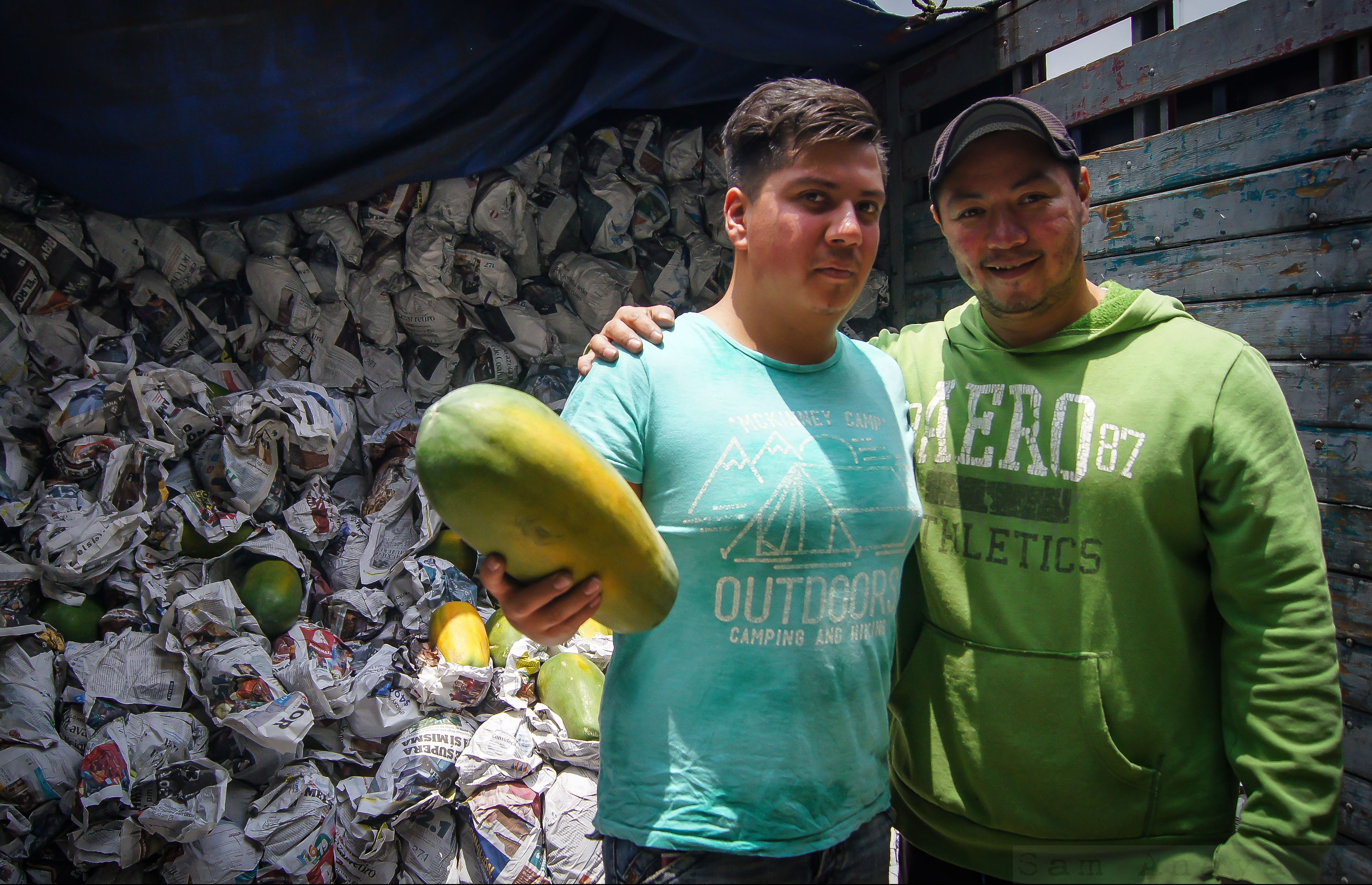
<div id="attachment_26376" style="width: 570px" class="wp-caption aligncenter"><img loading="lazy" decoding="async" aria-describedby="caption-attachment-26376" class="wp-image-26376" src="https://www.oh-i-see.com/blog/wp-content/uploads/2016/09/DSC05083-e1474242934835.jpg" alt="Two vendors holding a papaya in front a stack of papayas wrapped in newspapers at the Central de Abasto, the world's largest wholesale market where Mexico's cultural heritage is also on display. (image © Sam Anaya A.)" width="560" height="361" srcset="https://www.oh-i-see.com/blog/wp-content/uploads/2016/09/DSC05083-e1474242934835.jpg 4285w, https://www.oh-i-see.com/blog/wp-content/uploads/2016/09/DSC05083-e1474242934835-300x193.jpg 300w, https://www.oh-i-see.com/blog/wp-content/uploads/2016/09/DSC05083-e1474242934835-768x495.jpg 768w, https://www.oh-i-see.com/blog/wp-content/uploads/2016/09/DSC05083-e1474242934835-1024x660.jpg 1024w, https://www.oh-i-see.com/blog/wp-content/uploads/2016/09/DSC05083-e1474242934835-600x387.jpg 600w, https://www.oh-i-see.com/blog/wp-content/uploads/2016/09/DSC05083-e1474242934835-207x133.jpg 207w" sizes="auto, (max-width: 560px) 100vw, 560px" /><p id="caption-attachment-26376" class="wp-caption-text">Papayas travel from Oaxaca to the <em>Central de Abasto</em> to be sold by Enrique and Eric Mandujano. They are wrapped in newspaper to keep their color and avoid oxidation.<br /> © Sam Anaya A.</p></div>
<p>The produce from the country travels first through the <em>Central de Abasto</em> and on to homes, taco stands, neighborhood mini-markets in Mexico City and even to outlets in Mexico&#8217;s different states.</p>
<h4>A Taste of Cultural Heritage</h4>
<p>Mexico is a country of diverse cultures and regions, all represented at the <em>Central de Abasto</em> by vendors offering products unique to their regions.</p>
<p>If the market is a food &#8220;museum&#8221; offering a collection of cultural heritage, then the foods are the cultural artifacts in the collection. These are foods that have fed indigenous and Mexican populations across centuries. They offer you nourishment and something more&#8212;a taste of cultural heritage. Tastes like these:</p>
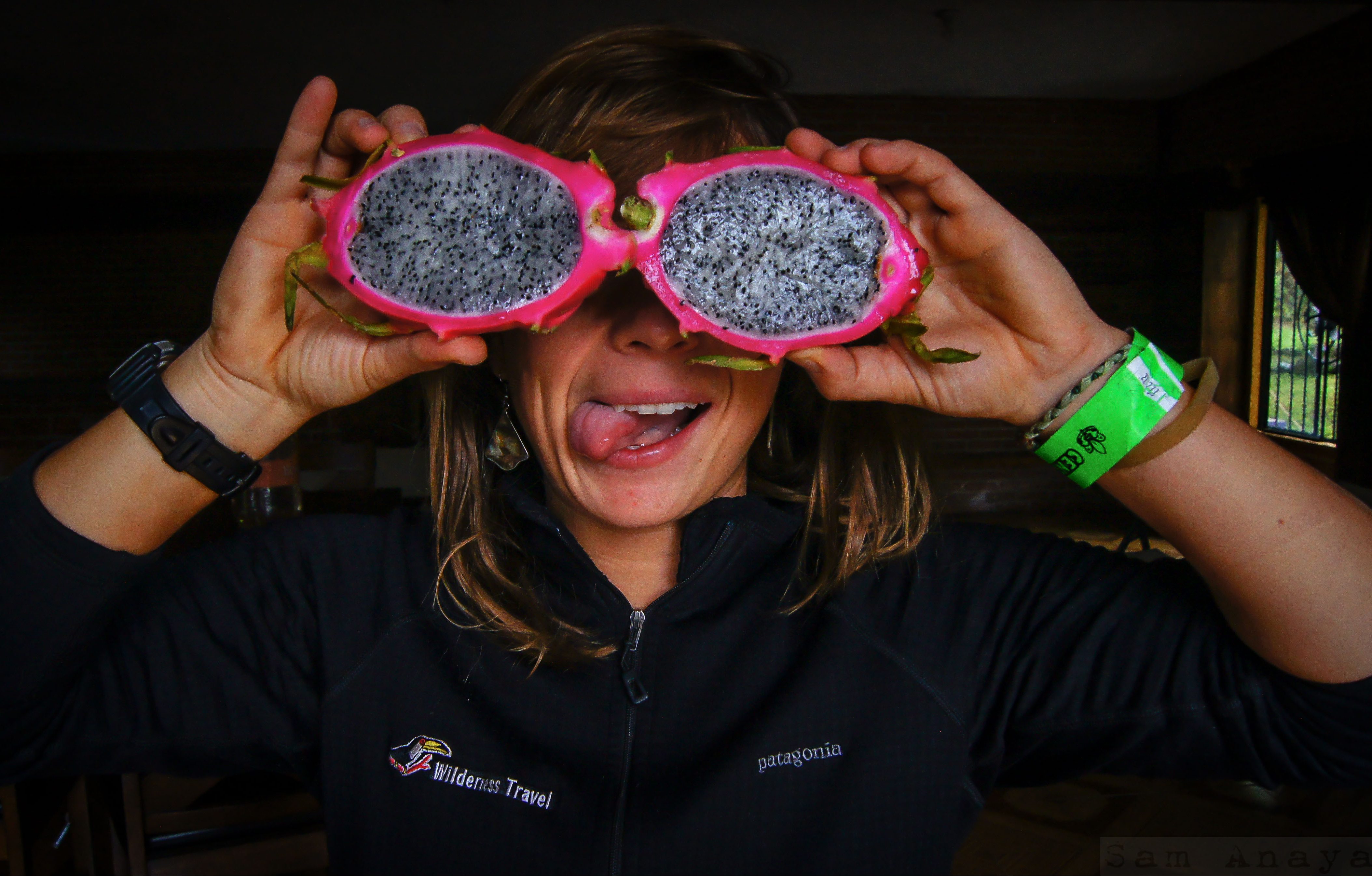
<p><strong>1. The Pitahaya</strong></p>
<p>Known as dragon fruit,<em> pitahaya</em> or <em>pitaya</em> (pee-TAH-yah) comes in an exotic pink with a delicious surprise center. As a member of the cactus family, it grows in the northern desert regions of Mexico.</p>
<p>Every July, a <em>pitahaya</em> festival is celebrated in Miraflores, Baja California. A gathering contest kicks it off and is followed by traditional dance, music, and food dishes, many of which showcase <em>pitahaya</em> as an ingredient. The festival began thousands of years ago with the Pericúes, Guaycuras and Cochimíes, indigenous peoples who celebrated the juicy fruit in cactus &#8220;forests.&#8221;</p>
<div id="attachment_26574" style="width: 570px" class="wp-caption aligncenter"><img loading="lazy" decoding="async" aria-describedby="caption-attachment-26574" class="wp-image-26574" src="https://www.oh-i-see.com/blog/wp-content/uploads/2016/09/DSC04306-1-e1474252941205.jpg" alt="A girl holding a pitahaya fruit cut in half at the Central de Abasto, the world's largest wholesale market where Mexico's cultural heritage is also on display. (image © Sam Anaya A.)" width="560" height="358" srcset="https://www.oh-i-see.com/blog/wp-content/uploads/2016/09/DSC04306-1-e1474252941205.jpg 4216w, https://www.oh-i-see.com/blog/wp-content/uploads/2016/09/DSC04306-1-e1474252941205-300x192.jpg 300w, https://www.oh-i-see.com/blog/wp-content/uploads/2016/09/DSC04306-1-e1474252941205-768x491.jpg 768w, https://www.oh-i-see.com/blog/wp-content/uploads/2016/09/DSC04306-1-e1474252941205-1024x654.jpg 1024w, https://www.oh-i-see.com/blog/wp-content/uploads/2016/09/DSC04306-1-e1474252941205-600x383.jpg 600w, https://www.oh-i-see.com/blog/wp-content/uploads/2016/09/DSC04306-1-e1474252941205-207x132.jpg 207w" sizes="auto, (max-width: 560px) 100vw, 560px" /><p id="caption-attachment-26574" class="wp-caption-text"><em>Pitahaya</em> comes with a sweet chia seed-like gelatin center. <br /> Add some yogurt for a tasty combination!<br /> © Sam Anaya A.</p></div>
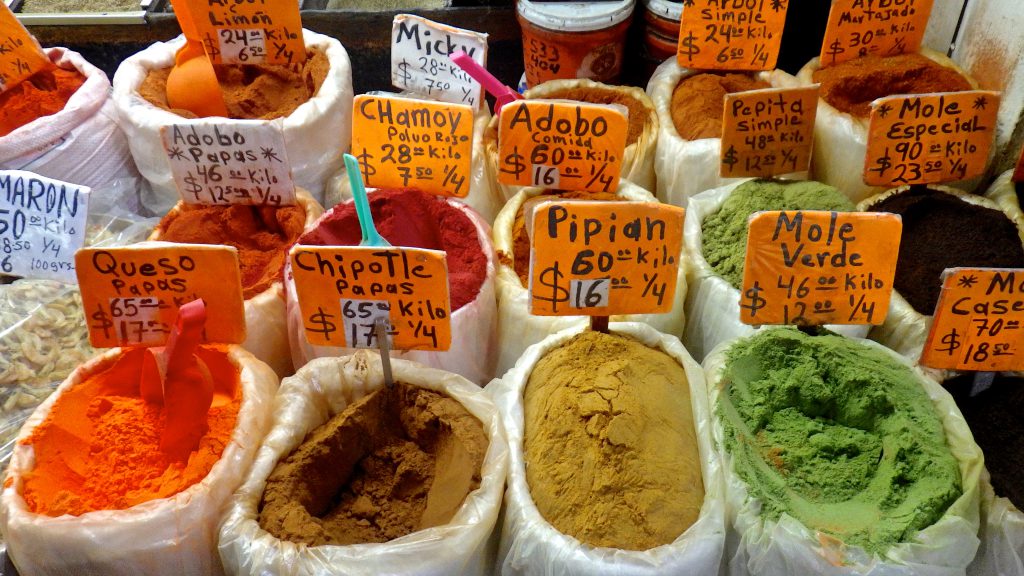
<p><strong>2. Magnificent Mole Sauce</strong></p>
<p>Coming from the Nahuatl word <i>molli </i>that means &#8220;sauce&#8221; or &#8220;mixture,&#8221; <em>m</em><em>ole </em>(MO-lay) is used as a base for soup, poured over different kinds of meats, or used as a sauce for <em>enchiladas</em>. It can include a complex arrangement of 20 <a href="http://www.mexonline.com/culture/mxrec5.htm" target="_blank" rel="noopener">ingredients</a>, including chiles, nuts, seeds, vegetables, and sometimes cacao.</p>
<div id="attachment_26377" style="width: 570px" class="wp-caption aligncenter"><img loading="lazy" decoding="async" aria-describedby="caption-attachment-26377" class="wp-image-26377 size-large" src="https://www.oh-i-see.com/blog/wp-content/uploads/2016/09/RIMG5627-1024x576.jpg" alt="Bags filled with different spices at Central de Abasto, the world's largest wholesale market where Mexico's cultural heritage is also on display. (image© Eva Boynton)" width="560" height="315" srcset="https://www.oh-i-see.com/blog/wp-content/uploads/2016/09/RIMG5627-1024x576.jpg 1024w, https://www.oh-i-see.com/blog/wp-content/uploads/2016/09/RIMG5627-300x169.jpg 300w, https://www.oh-i-see.com/blog/wp-content/uploads/2016/09/RIMG5627-768x432.jpg 768w, https://www.oh-i-see.com/blog/wp-content/uploads/2016/09/RIMG5627-600x338.jpg 600w, https://www.oh-i-see.com/blog/wp-content/uploads/2016/09/RIMG5627-207x116.jpg 207w" sizes="auto, (max-width: 560px) 100vw, 560px" /><p id="caption-attachment-26377" class="wp-caption-text">A rainbow of <em>mole</em> and other spice powders<br /> © Eva Boynton</p></div>
<p>The flavors and styles of <em>mole</em> vary with the region in Mexico where it is prepared: <em>moles</em> come sweet, spicy, red, yellow, brown, and in a variety of names.<em> Mole poblano</em>, named the &#8220;national dish of Mexico,&#8221; is associated with either the state of Puebla or Oaxaca. The origin of the famous dish is a mystery told in several <a href="http://www.mexonline.com/molepoblano.htm" target="_blank" rel="noopener">legends</a>.</p>
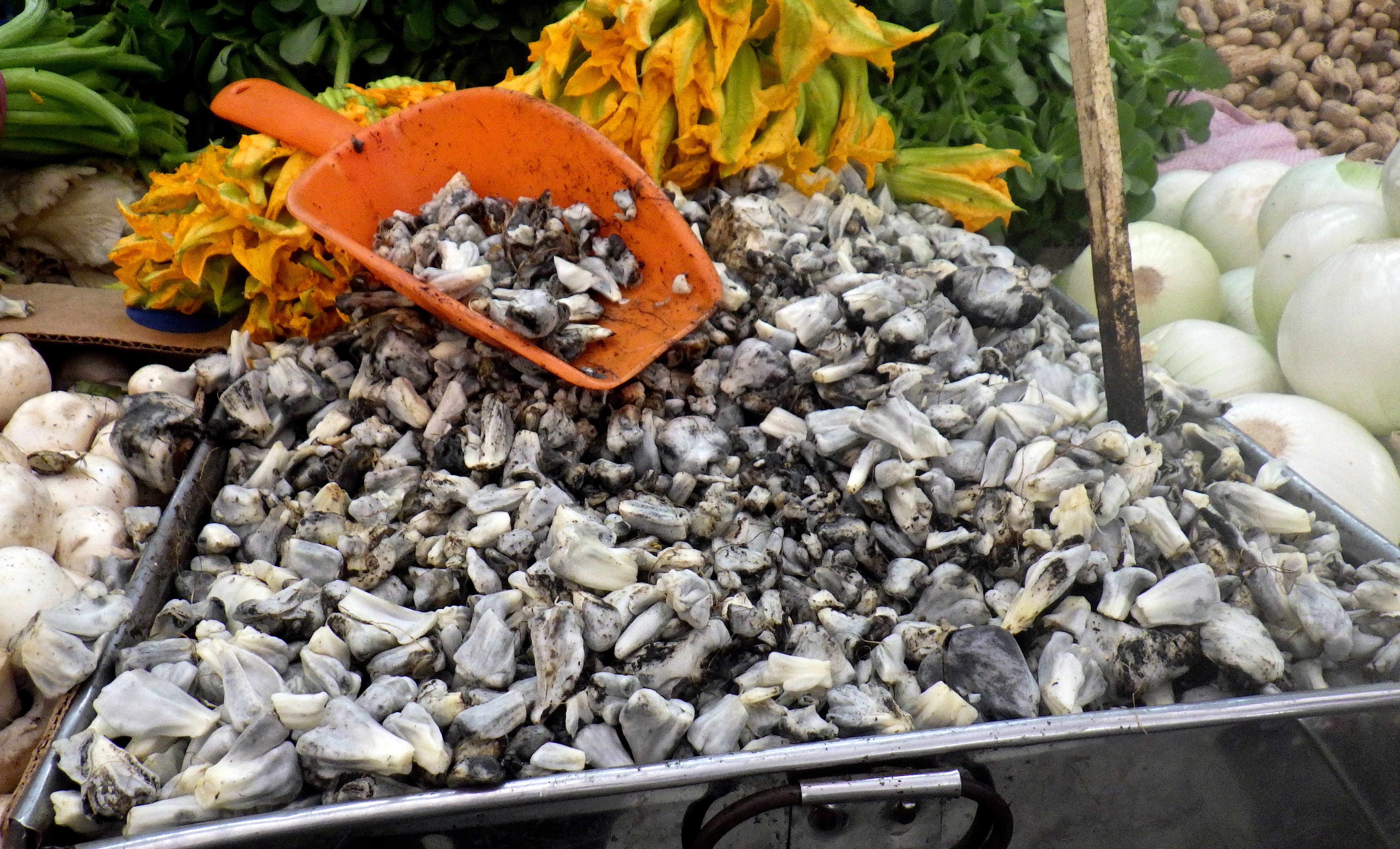
<p><strong>3. Huitlacoche</strong></p>
<p><em>Huitlacoche</em> (wheat-lah-CO-chay) is a fungus that grows on corn kernels, a delicacy inherited from the Aztec who added it to soups, crepes, <em>quesadillas</em> and <em>tamales</em>. Though its name translates from Nahuatl as &#8220;raven&#8217;s excrement,&#8221; it makes a tasty dish when you slap it together with onion, garlic, and salt.</p>
<div id="attachment_26374" style="width: 570px" class="wp-caption aligncenter"><img loading="lazy" decoding="async" aria-describedby="caption-attachment-26374" class=" wp-image-26374" src="https://www.oh-i-see.com/blog/wp-content/uploads/2016/09/RIMG5657-e1474243034140.jpg" alt="Huitlacoche fungus at the market, an artifact of cultural heritage at Central de Abasto (image © Eva Boynton)." width="560" height="340" srcset="https://www.oh-i-see.com/blog/wp-content/uploads/2016/09/RIMG5657-e1474243034140.jpg 4273w, https://www.oh-i-see.com/blog/wp-content/uploads/2016/09/RIMG5657-e1474243034140-300x182.jpg 300w, https://www.oh-i-see.com/blog/wp-content/uploads/2016/09/RIMG5657-e1474243034140-768x466.jpg 768w, https://www.oh-i-see.com/blog/wp-content/uploads/2016/09/RIMG5657-e1474243034140-1024x621.jpg 1024w, https://www.oh-i-see.com/blog/wp-content/uploads/2016/09/RIMG5657-e1474243034140-600x364.jpg 600w, https://www.oh-i-see.com/blog/wp-content/uploads/2016/09/RIMG5657-e1474243034140-207x126.jpg 207w, https://www.oh-i-see.com/blog/wp-content/uploads/2016/09/RIMG5657-e1474243034140-165x100.jpg 165w" sizes="auto, (max-width: 560px) 100vw, 560px" /><p id="caption-attachment-26374" class="wp-caption-text"><em>Huitlacoche</em> is also known as corn smut or Mexican truffle.<br />©Eva Boynton</p></div>
<p>In Chiapas, people connect <em>huitlacoche</em> to family, history, and life in Mexico. When families searched for the fungus in corn fields, they spent quality time together. While they walked through the fields, elders passed down stories and families built a relationship to their land and crops.</p>
<h4><strong style="line-height: 1.5;">Oh, I See</strong></h4>
<p>The experience of the <em>Central de Abasto</em> is like that of a grand museum. You leave happily exhausted from looking hard at the details of the past and present.</p>
<p>What I took away from the market was not only some tasty cultural artifacts but also a new understanding of Mexico&#8217;s culinary cultural heritage. The <em>Central de Abasto</em> transforms from a food market to an epicenter of national inheritance: the gifts of the land incorporated into cultural practices.</p>
<p>Mexico City is the city with the most museums in the world &#8212; 128 in all. It is a city that proudly preserves its cultural heritage. Let&#8217;s put one more museum on the list&#8212;the <em>Central de Abasto</em>!</p>
<div id="attachment_26366" style="width: 310px" class="wp-caption aligncenter"><img loading="lazy" decoding="async" aria-describedby="caption-attachment-26366" class="wp-image-26366 size-medium" src="https://www.oh-i-see.com/blog/wp-content/uploads/2016/09/DSC04298-300x169.jpg" alt="A table with produce bought at the Central de Abasto, the world's largest wholesale market where Mexico's cultural heritage is also on display. (image © Sam Anaya A.)" width="300" height="169" srcset="https://www.oh-i-see.com/blog/wp-content/uploads/2016/09/DSC04298-300x169.jpg 300w, https://www.oh-i-see.com/blog/wp-content/uploads/2016/09/DSC04298-768x432.jpg 768w, https://www.oh-i-see.com/blog/wp-content/uploads/2016/09/DSC04298-1024x575.jpg 1024w, https://www.oh-i-see.com/blog/wp-content/uploads/2016/09/DSC04298-600x337.jpg 600w, https://www.oh-i-see.com/blog/wp-content/uploads/2016/09/DSC04298-207x116.jpg 207w" sizes="auto, (max-width: 300px) 100vw, 300px" /><p id="caption-attachment-26366" class="wp-caption-text">A display of cultural souvenirs<br /> © Sam Anaya A.</p></div>
<p><i><a title="Creative Inspiration Flows In Underwater Photographs" href="#comments">Comment</a></i><em> on this post below, or inspire insight with your own OIC Moment </em><em><a href="https://www.oh-i-see.com/blog/your-oic-moments/">here</a>.</em></p>
{"id":26365,"date":"2016-09-21T03:00:23","date_gmt":"2016-09-21T10:00:23","guid":{"rendered":"http:\/\/ohisee.genweb.site\/blog\/?p=26365"},"modified":"2021-07-20T08:00:22","modified_gmt":"2021-07-20T15:00:22","slug":"whats-in-the-worlds-largest-food-museum","status":"publish","type":"post","link":"https:\/\/www.oh-i-see.com\/blog\/whats-in-the-worlds-largest-food-museum\/","title":{"rendered":"What&#8217;s in the World&#8217;s Largest Food Museum?"},"content":{"rendered":"<div id=\"attachment_26382\" style=\"width: 570px\" class=\"wp-caption aligncenter\"><img loading=\"lazy\" decoding=\"async\" aria-describedby=\"caption-attachment-26382\" class=\"wp-image-26382\" src=\"https:\/\/www.oh-i-see.com\/blog\/wp-content\/uploads\/2016\/09\/DSC05100.jpg\" alt=\"A woman selling chocolate at Central de Abasto, the world's largest wholesale market where Mexico's cultural heritage is also on display. (image \u00a9 Sam Anaya A.)\" width=\"560\" height=\"315\" srcset=\"https:\/\/www.oh-i-see.com\/blog\/wp-content\/uploads\/2016\/09\/DSC05100.jpg 4899w, https:\/\/www.oh-i-see.com\/blog\/wp-content\/uploads\/2016\/09\/DSC05100-300x169.jpg 300w, https:\/\/www.oh-i-see.com\/blog\/wp-content\/uploads\/2016\/09\/DSC05100-768x432.jpg 768w, https:\/\/www.oh-i-see.com\/blog\/wp-content\/uploads\/2016\/09\/DSC05100-1024x575.jpg 1024w, https:\/\/www.oh-i-see.com\/blog\/wp-content\/uploads\/2016\/09\/DSC05100-600x337.jpg 600w, https:\/\/www.oh-i-see.com\/blog\/wp-content\/uploads\/2016\/09\/DSC05100-207x116.jpg 207w\" sizes=\"auto, (max-width: 560px) 100vw, 560px\" \/><p id=\"caption-attachment-26382\" class=\"wp-caption-text\">Oaxacan chocolate\u00a0rivals Swiss and Belgian chocolate in flavor, in uses (<em>mole<\/em>, hot chocolate, <br \/> sweet and savory dishes), and in cultural heritage.\u00a0<br \/> \u00a9 Sam Anaya A.<\/p><\/div>\n<h2>Chocolate, Pineapples, and Cultural Heritage&#8212;All at Mexico&#8217;s\u00a0Central de Abasto<\/h2>\n<p>&#8220;Zoooooom!&#8221; A cart stacked with mangos tumbles by me, almost taking my right foot along for the ride. Fortunately,\u00a0Isabel Ramillo, who sells chocolate\u00a0from Oaxaca, grabs my shoulder to pull me out of the way.<\/p>\n<p>As I regain my composure, my nose catches a whiff\u00a0of meats, flowers, and spices for Mexican\u00a0<em>mole<\/em>\u00a0sauce. My ears ring with the sounds of \u00a0&#8220;\u00a1Buen precio!&#8221;, whistles, and hundreds of shuffling feet.<\/p>\n<p>I&#8217;m in\u00a0Mexico City\u00a0at the\u00a0<a href=\"https:\/\/www.youtube.com\/watch?v=t7g-JOiaclA\" target=\"_blank\" rel=\"noopener\"><em>Central de Abasto<\/em> <\/a>(&#8220;Supply Center&#8221;), the world&#8217;s largest wholesale market. But, considering the people, produce, and regions of Mexico represented here, to my eye it is more like a bustling food museum.<\/p>\n<div id=\"attachment_26370\" style=\"width: 570px\" class=\"wp-caption aligncenter\"><img loading=\"lazy\" decoding=\"async\" aria-describedby=\"caption-attachment-26370\" class=\"wp-image-26370\" src=\"https:\/\/www.oh-i-see.com\/blog\/wp-content\/uploads\/2016\/09\/RIMG5620-e1474242626115.jpg\" alt=\"Pineapples stacked with their juice in front at Central de Abasto, the world's largest wholesale market where Mexico's cultural heritage is also on display. (image \u00a9 Eva Boynton)\" width=\"560\" height=\"365\" srcset=\"https:\/\/www.oh-i-see.com\/blog\/wp-content\/uploads\/2016\/09\/RIMG5620-e1474242626115.jpg 3936w, https:\/\/www.oh-i-see.com\/blog\/wp-content\/uploads\/2016\/09\/RIMG5620-e1474242626115-300x195.jpg 300w, https:\/\/www.oh-i-see.com\/blog\/wp-content\/uploads\/2016\/09\/RIMG5620-e1474242626115-768x500.jpg 768w, https:\/\/www.oh-i-see.com\/blog\/wp-content\/uploads\/2016\/09\/RIMG5620-e1474242626115-1024x667.jpg 1024w, https:\/\/www.oh-i-see.com\/blog\/wp-content\/uploads\/2016\/09\/RIMG5620-e1474242626115-600x391.jpg 600w, https:\/\/www.oh-i-see.com\/blog\/wp-content\/uploads\/2016\/09\/RIMG5620-e1474242626115-207x135.jpg 207w\" sizes=\"auto, (max-width: 560px) 100vw, 560px\" \/><p id=\"caption-attachment-26370\" class=\"wp-caption-text\">At this &#8220;museum,&#8221; the exhibits are interactive&#8212;buy and sell, sell and buy.<br \/> \u00a9 Eva Boynton<\/p><\/div>\n<p>Within the mountains of tomatoes, baskets of c<em>hile de \u00e1rbol<\/em> (tree chile), bags of <em>nopal<\/em> (a type\u00a0of cactus), and shelves of pineapple, there are also links to Mexico&#8217;s cultural heritage. You may be surprised at what you find.<\/p>\n<h4>Metropolis Within a Metropolis<\/h4>\n<p>The <em>Central de Abasto<\/em>\u00a0has\u00a0everything typical of a big city: banks, kitchen supplies, laundry, convenience stores, electronics and restaurants&#8212;not to mention Mexico&#8217;s\u00a0greatest show\u00a0of\u00a0produce, fish, flowers, seafood, milks, and meats.<\/p>\n<p>Foods attract the eye\u00a0in museum-like exhibits, carefully arranged for beauty and stability.<\/p>\n<div id=\"attachment_26383\" style=\"width: 410px\" class=\"wp-caption aligncenter\"><img loading=\"lazy\" decoding=\"async\" aria-describedby=\"caption-attachment-26383\" class=\"wp-image-26383\" src=\"https:\/\/www.oh-i-see.com\/blog\/wp-content\/uploads\/2016\/09\/RIMG5615-764x1024.jpg\" alt=\"Carrots stacked in a criss-cross pattern at the Central de Abasto, the world's largest wholesale market where Mexico's cultural heritage is also on display. (image \u00a9 Eva Boynton)\" width=\"400\" height=\"536\" srcset=\"https:\/\/www.oh-i-see.com\/blog\/wp-content\/uploads\/2016\/09\/RIMG5615-764x1024.jpg 764w, https:\/\/www.oh-i-see.com\/blog\/wp-content\/uploads\/2016\/09\/RIMG5615-224x300.jpg 224w, https:\/\/www.oh-i-see.com\/blog\/wp-content\/uploads\/2016\/09\/RIMG5615-768x1030.jpg 768w, https:\/\/www.oh-i-see.com\/blog\/wp-content\/uploads\/2016\/09\/RIMG5615-600x804.jpg 600w, https:\/\/www.oh-i-see.com\/blog\/wp-content\/uploads\/2016\/09\/RIMG5615-154x207.jpg 154w, https:\/\/www.oh-i-see.com\/blog\/wp-content\/uploads\/2016\/09\/RIMG5615-300x402.jpg 300w\" sizes=\"auto, (max-width: 400px) 100vw, 400px\" \/><p id=\"caption-attachment-26383\" class=\"wp-caption-text\">A carrot weaving?<br \/> \u00a9 Eva Boynton<\/p><\/div>\n<p>The market is a hive of activity with somewhere between 300,000&#8211;450,000 daily visitors, more than see Rome or Madrid in a day! Consider its impact:<\/p>\n<ul>\n<li>30 thousand tons of food are sold here on a daily basis.<\/li>\n<li>The market\u00a0provides\u00a080% of the\u00a0food\u00a0consumption for over 20 million Mexicans.<\/li>\n<li>About 10,000 loaders, known as\u00a0<em><a href=\"https:\/\/www.youtube.com\/watch?v=1Mfp3fATkjQ\" target=\"_blank\" rel=\"noopener\">diableros<\/a>, <\/em>operate carts that<em>\u00a0<\/em>carry\u00a0goods to the vendors&#8217; stands. They are among the market&#8217;s 70,000 employees.<\/li>\n<li>Warehouses in the market complex cover\u00a0328 hectares (810 acres).<\/li>\n<li>Fifteen halls, totaling\u00a011 kilometers in length, hold 100 warehouse sections each&#8212;all filled to the brim.<\/li>\n<\/ul>\n<p>In fact, the market is so big that freeway-like signs direct customers to the halls, each of which specializes in one type of\u00a0food or goods. In just\u00a0the produce area, about 2,000 vendors sell fruits and vegetables.<\/p>\n<div id=\"attachment_26570\" style=\"width: 570px\" class=\"wp-caption aligncenter\"><img loading=\"lazy\" decoding=\"async\" aria-describedby=\"caption-attachment-26570\" class=\"wp-image-26570\" src=\"https:\/\/www.oh-i-see.com\/blog\/wp-content\/uploads\/2016\/09\/DSC05088-e1474248894442.jpg\" alt=\"Inside a hall packed with people at Central de Abasto, the world's largest wholesale market where Mexico's cultural heritage is also on display. (image \u00a9 Sam Anaya A.)\" width=\"560\" height=\"330\" srcset=\"https:\/\/www.oh-i-see.com\/blog\/wp-content\/uploads\/2016\/09\/DSC05088-e1474248894442.jpg 4690w, https:\/\/www.oh-i-see.com\/blog\/wp-content\/uploads\/2016\/09\/DSC05088-e1474248894442-300x177.jpg 300w, https:\/\/www.oh-i-see.com\/blog\/wp-content\/uploads\/2016\/09\/DSC05088-e1474248894442-768x452.jpg 768w, https:\/\/www.oh-i-see.com\/blog\/wp-content\/uploads\/2016\/09\/DSC05088-e1474248894442-1024x603.jpg 1024w, https:\/\/www.oh-i-see.com\/blog\/wp-content\/uploads\/2016\/09\/DSC05088-e1474248894442-600x353.jpg 600w, https:\/\/www.oh-i-see.com\/blog\/wp-content\/uploads\/2016\/09\/DSC05088-e1474248894442-207x122.jpg 207w\" sizes=\"auto, (max-width: 560px) 100vw, 560px\" \/><p id=\"caption-attachment-26570\" class=\"wp-caption-text\">In the middle of the\u00a0hustle and bustle!<br \/> \u00a9 Sam Anaya A.<\/p><\/div>\n<h4>Cultural Roots<\/h4>\n<p>The concept of a large central market in the area that became\u00a0Mexico City goes back six hundred years to\u00a0the Aztec market\u00a0known as <em>Tlanechicoloya.<\/em><em>\u00a0<\/em>Throughout Mexico&#8217;s cultural history,\u00a0foods and goods have continued to change hands\u00a0in central markets.<\/p>\n<p>In the 20th century, when Mexico City expanded around the downtown <em>La Merced<\/em> market to the point that\u00a0traffic congestion impeded market\u00a0operations, the government decided to open a new central supply center.<\/p>\n<p>In 1982, it inaugurated the\u00a0<em>Central de Abasto<\/em> in Iztapalapa, an outlying district in the eastern part of Mexico City. Over time, the <em>Central de Abasto<\/em> became its own metropolis. Today, it is\u00a0not only the most important food supply and distribution site for Mexico City but also for the entire\u00a0country.<\/p>\n<div id=\"attachment_26376\" style=\"width: 570px\" class=\"wp-caption aligncenter\"><img loading=\"lazy\" decoding=\"async\" aria-describedby=\"caption-attachment-26376\" class=\"wp-image-26376\" src=\"https:\/\/www.oh-i-see.com\/blog\/wp-content\/uploads\/2016\/09\/DSC05083-e1474242934835.jpg\" alt=\"Two vendors holding a papaya in front a stack of papayas wrapped in newspapers at the Central de Abasto, the world's largest wholesale market where Mexico's cultural heritage is also on display. (image \u00a9 Sam Anaya A.)\" width=\"560\" height=\"361\" srcset=\"https:\/\/www.oh-i-see.com\/blog\/wp-content\/uploads\/2016\/09\/DSC05083-e1474242934835.jpg 4285w, https:\/\/www.oh-i-see.com\/blog\/wp-content\/uploads\/2016\/09\/DSC05083-e1474242934835-300x193.jpg 300w, https:\/\/www.oh-i-see.com\/blog\/wp-content\/uploads\/2016\/09\/DSC05083-e1474242934835-768x495.jpg 768w, https:\/\/www.oh-i-see.com\/blog\/wp-content\/uploads\/2016\/09\/DSC05083-e1474242934835-1024x660.jpg 1024w, https:\/\/www.oh-i-see.com\/blog\/wp-content\/uploads\/2016\/09\/DSC05083-e1474242934835-600x387.jpg 600w, https:\/\/www.oh-i-see.com\/blog\/wp-content\/uploads\/2016\/09\/DSC05083-e1474242934835-207x133.jpg 207w\" sizes=\"auto, (max-width: 560px) 100vw, 560px\" \/><p id=\"caption-attachment-26376\" class=\"wp-caption-text\">Papayas travel\u00a0from Oaxaca to the <em>Central de Abasto<\/em> to be\u00a0sold by Enrique and Eric Mandujano. They are wrapped in newspaper to keep their color and avoid oxidation.<br \/> \u00a9 Sam Anaya A.<\/p><\/div>\n<p>The produce from\u00a0the country travels first through the\u00a0<em>Central de Abasto<\/em> and on to\u00a0homes, taco stands, neighborhood mini-markets in Mexico City and even to outlets in Mexico&#8217;s different states.<\/p>\n<h4>A Taste of Cultural Heritage<\/h4>\n<p>Mexico is a country of diverse cultures and regions, all represented\u00a0at the <em>Central de Abasto<\/em> by vendors offering products unique to their regions.<\/p>\n<p>If the market\u00a0is a food &#8220;museum&#8221; offering a collection of cultural heritage, then the foods are the cultural artifacts in the collection. These are foods that\u00a0have fed indigenous and Mexican populations across centuries. They\u00a0offer\u00a0you nourishment and something more&#8212;a taste of cultural heritage. Tastes like these:<\/p>\n<p><strong>1. The Pitahaya<\/strong><\/p>\n<p>Known as dragon fruit,<em> pitahaya<\/em> or <em>pitaya<\/em> (pee-TAH-yah) comes in an exotic pink with a delicious surprise center.\u00a0As a member of the cactus family, it grows\u00a0in the northern desert regions of Mexico.<\/p>\n<p>Every July, a\u00a0<em>pitahaya<\/em> festival is celebrated in Miraflores, Baja California. A gathering contest\u00a0kicks it off and is followed by\u00a0traditional dance, music, and food dishes, many of which showcase <em>pitahaya<\/em> as an ingredient. The festival began thousands of years ago with the Peric\u00faes,\u00a0Guaycuras and Cochim\u00edes, indigenous peoples who celebrated the juicy fruit in\u00a0cactus &#8220;forests.&#8221;<\/p>\n<div id=\"attachment_26574\" style=\"width: 570px\" class=\"wp-caption aligncenter\"><img loading=\"lazy\" decoding=\"async\" aria-describedby=\"caption-attachment-26574\" class=\"wp-image-26574\" src=\"https:\/\/www.oh-i-see.com\/blog\/wp-content\/uploads\/2016\/09\/DSC04306-1-e1474252941205.jpg\" alt=\"A girl holding a pitahaya fruit cut in half at the Central de Abasto, the world's largest wholesale market where Mexico's cultural heritage is also on display. (image \u00a9 Sam Anaya A.)\" width=\"560\" height=\"358\" srcset=\"https:\/\/www.oh-i-see.com\/blog\/wp-content\/uploads\/2016\/09\/DSC04306-1-e1474252941205.jpg 4216w, https:\/\/www.oh-i-see.com\/blog\/wp-content\/uploads\/2016\/09\/DSC04306-1-e1474252941205-300x192.jpg 300w, https:\/\/www.oh-i-see.com\/blog\/wp-content\/uploads\/2016\/09\/DSC04306-1-e1474252941205-768x491.jpg 768w, https:\/\/www.oh-i-see.com\/blog\/wp-content\/uploads\/2016\/09\/DSC04306-1-e1474252941205-1024x654.jpg 1024w, https:\/\/www.oh-i-see.com\/blog\/wp-content\/uploads\/2016\/09\/DSC04306-1-e1474252941205-600x383.jpg 600w, https:\/\/www.oh-i-see.com\/blog\/wp-content\/uploads\/2016\/09\/DSC04306-1-e1474252941205-207x132.jpg 207w\" sizes=\"auto, (max-width: 560px) 100vw, 560px\" \/><p id=\"caption-attachment-26574\" class=\"wp-caption-text\"><em>Pitahaya<\/em> comes with a sweet chia seed-like gelatin center. <br \/> Add some yogurt for a tasty combination!<br \/> \u00a9 Sam Anaya A.<\/p><\/div>\n<p><strong>2. Magnificent Mole Sauce<\/strong><\/p>\n<p>Coming from the Nahuatl word <i>molli\u00a0<\/i>that means &#8220;sauce&#8221; or &#8220;mixture,&#8221; <em>m<\/em><em>ole\u00a0<\/em>(MO-lay) is used as a base for soup, poured over different kinds of meats, or used as a sauce for <em>enchiladas<\/em>. It can include a complex arrangement of 20 <a href=\"http:\/\/www.mexonline.com\/culture\/mxrec5.htm\" target=\"_blank\" rel=\"noopener\">ingredients<\/a>, including chiles, nuts, seeds, vegetables, and sometimes cacao.<\/p>\n<div id=\"attachment_26377\" style=\"width: 570px\" class=\"wp-caption aligncenter\"><img loading=\"lazy\" decoding=\"async\" aria-describedby=\"caption-attachment-26377\" class=\"wp-image-26377 size-large\" src=\"https:\/\/www.oh-i-see.com\/blog\/wp-content\/uploads\/2016\/09\/RIMG5627-1024x576.jpg\" alt=\"Bags filled with different spices at Central de Abasto, the world's largest wholesale market where Mexico's cultural heritage is also on display. (image\u00a9 Eva Boynton)\" width=\"560\" height=\"315\" srcset=\"https:\/\/www.oh-i-see.com\/blog\/wp-content\/uploads\/2016\/09\/RIMG5627-1024x576.jpg 1024w, https:\/\/www.oh-i-see.com\/blog\/wp-content\/uploads\/2016\/09\/RIMG5627-300x169.jpg 300w, https:\/\/www.oh-i-see.com\/blog\/wp-content\/uploads\/2016\/09\/RIMG5627-768x432.jpg 768w, https:\/\/www.oh-i-see.com\/blog\/wp-content\/uploads\/2016\/09\/RIMG5627-600x338.jpg 600w, https:\/\/www.oh-i-see.com\/blog\/wp-content\/uploads\/2016\/09\/RIMG5627-207x116.jpg 207w\" sizes=\"auto, (max-width: 560px) 100vw, 560px\" \/><p id=\"caption-attachment-26377\" class=\"wp-caption-text\">A rainbow of <em>mole<\/em> and other spice powders<br \/> \u00a9 Eva Boynton<\/p><\/div>\n<p>The flavors and styles of <em>mole<\/em>\u00a0vary with\u00a0the region in Mexico where it is prepared: <em>moles<\/em>\u00a0come sweet, spicy, red, yellow, brown, and in a variety of names.<em> Mole poblano<\/em>, named the &#8220;national dish of Mexico,&#8221; is\u00a0associated with either\u00a0the state of Puebla or Oaxaca. The origin of the famous dish is a mystery told in several\u00a0<a href=\"http:\/\/www.mexonline.com\/molepoblano.htm\" target=\"_blank\" rel=\"noopener\">legends<\/a>.<\/p>\n<p><strong>3. Huitlacoche<\/strong><\/p>\n<p><em>Huitlacoche<\/em>\u00a0(wheat-lah-CO-chay) is a fungus that\u00a0grows on corn kernels, a delicacy inherited from\u00a0the Aztec who added it to\u00a0soups, crepes, <em>quesadillas<\/em> and <em>tamales<\/em>. Though its name translates from Nahuatl as &#8220;raven&#8217;s excrement,&#8221; it makes a tasty dish when you\u00a0slap it together with onion, garlic, and salt.<\/p>\n<div id=\"attachment_26374\" style=\"width: 570px\" class=\"wp-caption aligncenter\"><img loading=\"lazy\" decoding=\"async\" aria-describedby=\"caption-attachment-26374\" class=\" wp-image-26374\" src=\"https:\/\/www.oh-i-see.com\/blog\/wp-content\/uploads\/2016\/09\/RIMG5657-e1474243034140.jpg\" alt=\"Huitlacoche fungus at the market, an artifact of cultural heritage at Central de Abasto (image \u00a9 Eva Boynton).\" width=\"560\" height=\"340\" srcset=\"https:\/\/www.oh-i-see.com\/blog\/wp-content\/uploads\/2016\/09\/RIMG5657-e1474243034140.jpg 4273w, https:\/\/www.oh-i-see.com\/blog\/wp-content\/uploads\/2016\/09\/RIMG5657-e1474243034140-300x182.jpg 300w, https:\/\/www.oh-i-see.com\/blog\/wp-content\/uploads\/2016\/09\/RIMG5657-e1474243034140-768x466.jpg 768w, https:\/\/www.oh-i-see.com\/blog\/wp-content\/uploads\/2016\/09\/RIMG5657-e1474243034140-1024x621.jpg 1024w, https:\/\/www.oh-i-see.com\/blog\/wp-content\/uploads\/2016\/09\/RIMG5657-e1474243034140-600x364.jpg 600w, https:\/\/www.oh-i-see.com\/blog\/wp-content\/uploads\/2016\/09\/RIMG5657-e1474243034140-207x126.jpg 207w, https:\/\/www.oh-i-see.com\/blog\/wp-content\/uploads\/2016\/09\/RIMG5657-e1474243034140-165x100.jpg 165w\" sizes=\"auto, (max-width: 560px) 100vw, 560px\" \/><p id=\"caption-attachment-26374\" class=\"wp-caption-text\"><em>Huitlacoche<\/em> is also known as corn smut or Mexican truffle.<br \/>\u00a9Eva Boynton<\/p><\/div>\n<p>In Chiapas, people\u00a0connect <em>huitlacoche<\/em> to family, history, and life in Mexico. When families searched for the fungus in corn fields, they spent quality\u00a0time together. While\u00a0they walked through the fields, elders passed down stories and families\u00a0built a relationship to their\u00a0land and crops.<\/p>\n<h4><strong style=\"line-height: 1.5;\">Oh, I See<\/strong><\/h4>\n<p>The experience of the\u00a0<em>Central de Abasto<\/em> is like that of a grand museum. You leave happily exhausted from looking hard at the details\u00a0of the past and present.<\/p>\n<p>What I took away from the market was not only some tasty cultural artifacts but also a new understanding of Mexico&#8217;s culinary\u00a0cultural heritage. The\u00a0<em>Central de Abasto<\/em> transforms from a food market to an epicenter of national inheritance:\u00a0the\u00a0gifts of the land\u00a0incorporated into\u00a0cultural practices.<\/p>\n<p>Mexico City is the city with\u00a0the most museums in the world &#8212; 128 in all. It is a city that proudly preserves its cultural heritage. Let&#8217;s put one more museum on the list&#8212;the <em>Central de Abasto<\/em>!<\/p>\n<div id=\"attachment_26366\" style=\"width: 310px\" class=\"wp-caption aligncenter\"><img loading=\"lazy\" decoding=\"async\" aria-describedby=\"caption-attachment-26366\" class=\"wp-image-26366 size-medium\" src=\"https:\/\/www.oh-i-see.com\/blog\/wp-content\/uploads\/2016\/09\/DSC04298-300x169.jpg\" alt=\"A table with produce bought at the Central de Abasto, the world's largest wholesale market where Mexico's cultural heritage is also on display. (image \u00a9 Sam Anaya A.)\" width=\"300\" height=\"169\" srcset=\"https:\/\/www.oh-i-see.com\/blog\/wp-content\/uploads\/2016\/09\/DSC04298-300x169.jpg 300w, https:\/\/www.oh-i-see.com\/blog\/wp-content\/uploads\/2016\/09\/DSC04298-768x432.jpg 768w, https:\/\/www.oh-i-see.com\/blog\/wp-content\/uploads\/2016\/09\/DSC04298-1024x575.jpg 1024w, https:\/\/www.oh-i-see.com\/blog\/wp-content\/uploads\/2016\/09\/DSC04298-600x337.jpg 600w, https:\/\/www.oh-i-see.com\/blog\/wp-content\/uploads\/2016\/09\/DSC04298-207x116.jpg 207w\" sizes=\"auto, (max-width: 300px) 100vw, 300px\" \/><p id=\"caption-attachment-26366\" class=\"wp-caption-text\">A display of cultural souvenirs<br \/> \u00a9 Sam Anaya A.<\/p><\/div>\n<p><i><a title=\"Creative Inspiration Flows In Underwater Photographs\" href=\"#comments\">Comment<\/a><\/i><em>\u00a0on this post below, or inspire insight with your own\u00a0OIC Moment\u00a0<\/em><em><a href=\"https:\/\/www.oh-i-see.com\/blog\/your-oic-moments\/\">here<\/a>.<\/em><\/p>\n","protected":false},"excerpt":{"rendered":null,"protected":false},"author":10,"featured_media":26382,"comment_status":"closed","ping_status":"open","sticky":false,"template":"","format":"standard","meta":{"footnotes":""},"categories":[99,195],"tags":[],"class_list":["post-26365","post","type-post","status-publish","format-standard","has-post-thumbnail","hentry","category-heritage-culture","category-mexico-mappoints"],"aioseo_notices":[],"_links":{"self":[{"href":"https:\/\/www.oh-i-see.com\/blog\/wp-json\/wp\/v2\/posts\/26365","targetHints":{"allow":["GET"]}}],"collection":[{"href":"https:\/\/www.oh-i-see.com\/blog\/wp-json\/wp\/v2\/posts"}],"about":[{"href":"https:\/\/www.oh-i-see.com\/blog\/wp-json\/wp\/v2\/types\/post"}],"author":[{"embeddable":true,"href":"https:\/\/www.oh-i-see.com\/blog\/wp-json\/wp\/v2\/users\/10"}],"replies":[{"embeddable":true,"href":"https:\/\/www.oh-i-see.com\/blog\/wp-json\/wp\/v2\/comments?post=26365"}],"version-history":[{"count":97,"href":"https:\/\/www.oh-i-see.com\/blog\/wp-json\/wp\/v2\/posts\/26365\/revisions"}],"predecessor-version":[{"id":40784,"href":"https:\/\/www.oh-i-see.com\/blog\/wp-json\/wp\/v2\/posts\/26365\/revisions\/40784"}],"wp:featuredmedia":[{"embeddable":true,"href":"https:\/\/www.oh-i-see.com\/blog\/wp-json\/wp\/v2\/media\/26382"}],"wp:attachment":[{"href":"https:\/\/www.oh-i-see.com\/blog\/wp-json\/wp\/v2\/media?parent=26365"}],"wp:term":[{"taxonomy":"category","embeddable":true,"href":"https:\/\/www.oh-i-see.com\/blog\/wp-json\/wp\/v2\/categories?post=26365"},{"taxonomy":"post_tag","embeddable":true,"href":"https:\/\/www.oh-i-see.com\/blog\/wp-json\/wp\/v2\/tags?post=26365"}],"curies":[{"name":"wp","href":"https:\/\/api.w.org\/{rel}","templated":true}]}}