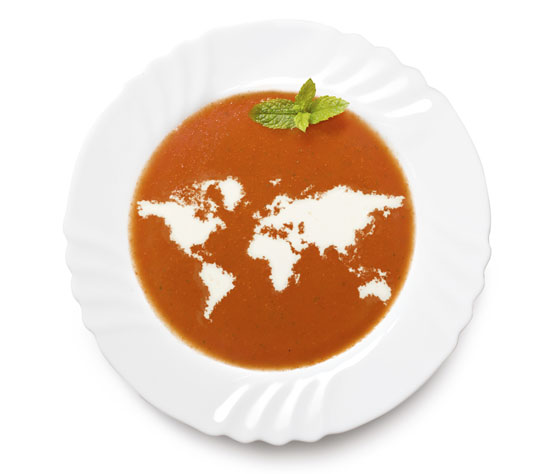
<div id="attachment_23187" style="width: 570px" class="wp-caption aligncenter"><img loading="lazy" decoding="async" aria-describedby="caption-attachment-23187" class="wp-image-23187 size-full" src="https://www.oh-i-see.com/blog/wp-content/uploads/2015/06/501364919sized.jpg" alt="The continents depicted in cream in a bowl of tomato soup, illustrating that people at lunch around the world have different cultural do's and taboos. (Image © eyegelb / iStock)" width="560" height="474" srcset="https://www.oh-i-see.com/blog/wp-content/uploads/2015/06/501364919sized.jpg 560w, https://www.oh-i-see.com/blog/wp-content/uploads/2015/06/501364919sized-300x254.jpg 300w, https://www.oh-i-see.com/blog/wp-content/uploads/2015/06/501364919sized-207x175.jpg 207w" sizes="auto, (max-width: 560px) 100vw, 560px" /><p id="caption-attachment-23187" class="wp-caption-text">Places to eat, and people to meet. Do you know what&#8217;s taboo?<br /> © eyegelb / iStock</p></div>
<h2>10 Cultural Do&#8217;s &amp; Taboos at the Table</h2>
<p>When you travel the world, there&#8217;s much more to dining than tasting the food.  In fact, it&#8217;s the cultural dimension of the dining table (or mat) that often makes or breaks the meal. Here are <strong>10 cultural do&#8217;s and taboos</strong> to keep you out of the soup when you&#8217;re at lunch in the world.</p>
<h4>#1 Chile: Respect the Mealtime</h4>
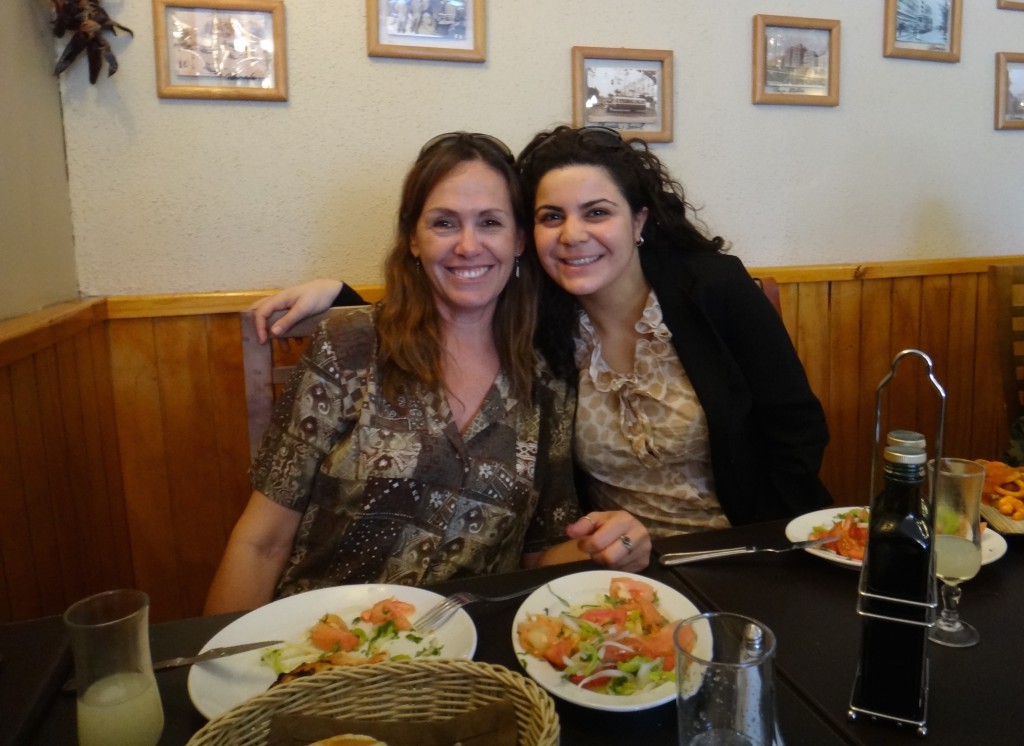
<p>In many places in Latin America, the working lunch just doesn&#8217;t work.  On a business trip to Santiago, Chile, a colleague suggested that we save time by continuing our meeting over lunch.</p>
<p>Much to her surprise, a Paraguayan man in the meeting stood up, puffed out his chest, and insisted that lunch was the time to socialize with his colleagues, to learn about their families and their health, and actually eat his meal in peace.</p>
<p>We followed his lead and enjoyed the people and the pisco sour at lunch that day.</p>
<div id="attachment_23165" style="width: 460px" class="wp-caption aligncenter"><img loading="lazy" decoding="async" aria-describedby="caption-attachment-23165" class="wp-image-23165" src="https://www.oh-i-see.com/blog/wp-content/uploads/2015/06/DSC023932-1024x746.jpg" alt="Two business colleagues at lunch in a restaurant in Santiago, Chile, enjoying each other rather than working over lunch, a cultural taboo in Chile. (Image © Sally Baho )" width="450" height="328" srcset="https://www.oh-i-see.com/blog/wp-content/uploads/2015/06/DSC023932-1024x746.jpg 1024w, https://www.oh-i-see.com/blog/wp-content/uploads/2015/06/DSC023932-300x219.jpg 300w, https://www.oh-i-see.com/blog/wp-content/uploads/2015/06/DSC023932-600x437.jpg 600w, https://www.oh-i-see.com/blog/wp-content/uploads/2015/06/DSC023932-207x151.jpg 207w, https://www.oh-i-see.com/blog/wp-content/uploads/2015/06/DSC023932-900x656.jpg 900w" sizes="auto, (max-width: 450px) 100vw, 450px" /><p id="caption-attachment-23165" class="wp-caption-text">Taking time for people at lunch in Santiago, Chile. <br /> © Sally Baho</p></div>
<h4>#2 Romania, France, and Spain: Wait for the Cue</h4>
<p>In Romania, only when the host(ess) says <em>pofta buna</em> may you begin eating. Similar wishes to enjoy the meal are common signals in other countries, too. In France, it&#8217;s <em>bon appétit</em>.  In Spain, it&#8217;s <em>buen provecho.  </em>And it&#8217;s taboo to start before the wish is spoken.</p>
<h4>#3 Morocco: Be a Grateful Guest</h4>
<p>A friend and I stayed with a family in Morocco.  When it came time to take a meal, we all ate off of one central plate.  The family would not eat the meat from the platter, and instead pushed it to our side.</p>
<p>We pantomimed that they eat the meat, too.  They refused. We were their guests, and we soon learned that our role was to show how much we enjoyed and appreciated the dish, their company, and the environment.</p>
<p>Many cultures may wish to honor the guests by giving a toast, serving them first, or insisting they eat the best food.  Graciously accept.</p>
<h4>#4 Korea: Offer and Accept with Both Hands</h4>
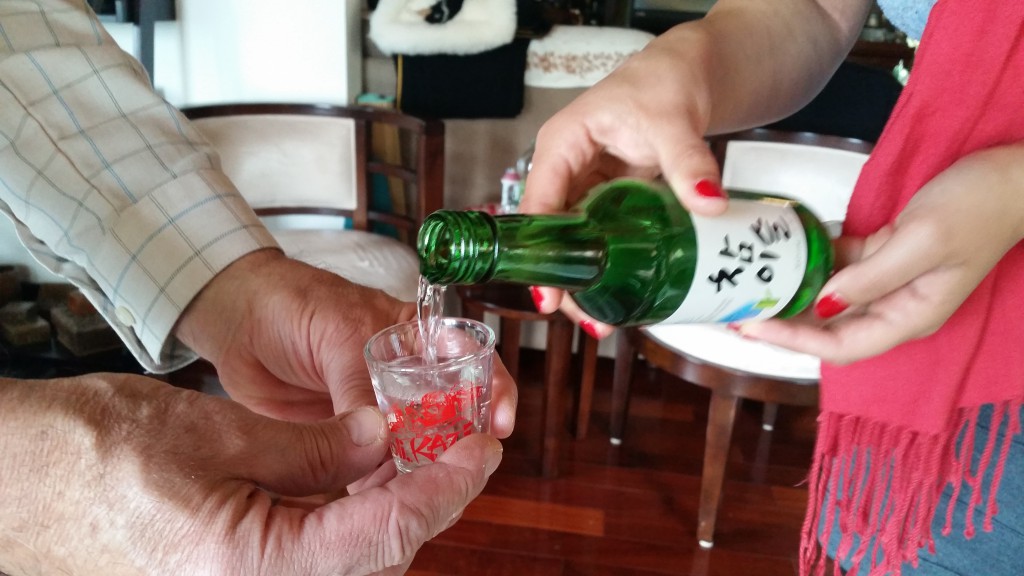
<p>In Korea, when offered or offering something&#8212;whether it be a cup, a dish, a napkin, money or pouring a drink&#8212;hold the item with both hands or at least touch your second hand to the arm carrying the item to show full intention and dedication to the act you are doing.</p>
<div id="attachment_23193" style="width: 460px" class="wp-caption aligncenter"><img loading="lazy" decoding="async" aria-describedby="caption-attachment-23193" class="wp-image-23193" src="https://www.oh-i-see.com/blog/wp-content/uploads/2015/06/20150622_110418-1024x576.jpg" alt="A young lady using both hands to pour soju for her father at lunch, illustrating respect for cultural do's and taboos. (Image © Sally Baho)" width="450" height="253" srcset="https://www.oh-i-see.com/blog/wp-content/uploads/2015/06/20150622_110418-1024x576.jpg 1024w, https://www.oh-i-see.com/blog/wp-content/uploads/2015/06/20150622_110418-300x169.jpg 300w, https://www.oh-i-see.com/blog/wp-content/uploads/2015/06/20150622_110418-600x338.jpg 600w, https://www.oh-i-see.com/blog/wp-content/uploads/2015/06/20150622_110418-207x116.jpg 207w, https://www.oh-i-see.com/blog/wp-content/uploads/2015/06/20150622_110418-900x506.jpg 900w" sizes="auto, (max-width: 450px) 100vw, 450px" /><p id="caption-attachment-23193" class="wp-caption-text">Pouring a drink with two hands shows respect. <br /> © Sally Baho</p></div>
<h4>#5 Chile: Always Use Utensils</h4>
<p>In Chile, it is considered rude to eat with your hands. Use your utensils for everything, even something you may think of as finger food, like French fries.</p>
<h4>#6 Ethiopia: Never Use Utensils</h4>
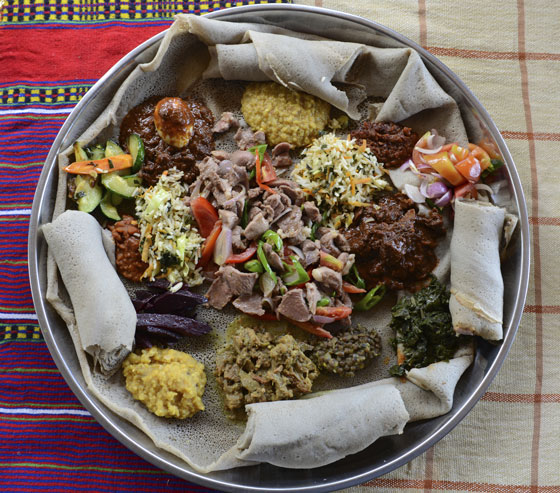
<p>Ethiopian meals are served on a big central platter over <em>injera</em> bread&#8212;a sour, porous flat bread that is made from teff flour and used to scoop the dishes that are served directly on top of it.  Individual plates and cutlery are not used.</p>
<div id="attachment_23242" style="width: 460px" class="wp-caption aligncenter"><img loading="lazy" decoding="async" aria-describedby="caption-attachment-23242" class="wp-image-23242" src="https://www.oh-i-see.com/blog/wp-content/uploads/2015/06/452732099sized.jpg" alt="A traditional Ethiopian meal served on injera bread, illustrating different cultural do's and taboos at lunch around the world. (Image © Tendur / iStock)" width="450" height="396" srcset="https://www.oh-i-see.com/blog/wp-content/uploads/2015/06/452732099sized.jpg 560w, https://www.oh-i-see.com/blog/wp-content/uploads/2015/06/452732099sized-300x264.jpg 300w, https://www.oh-i-see.com/blog/wp-content/uploads/2015/06/452732099sized-207x182.jpg 207w" sizes="auto, (max-width: 450px) 100vw, 450px" /><p id="caption-attachment-23242" class="wp-caption-text">A traditional Ethiopian meal&#8212;the injera bread serves as <br />both the dish and the utensils! <br /> © Tendur / iStock</p></div>
<h4>#7 Spain: Acknowledge Other Diners</h4>
<p>In the US, it&#8217;s not unusual to enter a restaurant, isolate your party at a table, and leave as a group.  But when you exit a restaurant or are leaving a meal in Spain, wish the other diners who are still eating <em>buen provecho. </em></p>
<h4>#8 Japan and China: Make Some Noise</h4>
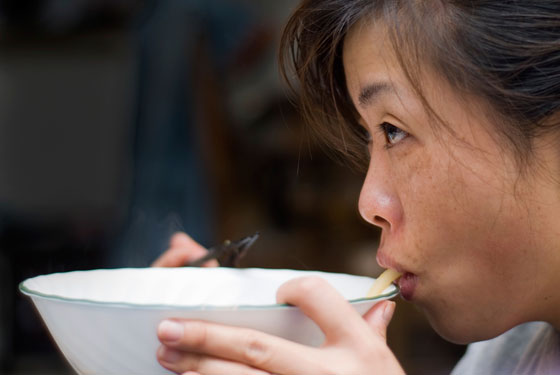
<p>Making noises while you eat, considered rude in some cultures, is a sign of meal appreciation in most Asian countries. Slurping soup and noodles in Japan and belching in China are compliments to the chef.</p>
<div id="attachment_23240" style="width: 460px" class="wp-caption aligncenter"><img loading="lazy" decoding="async" aria-describedby="caption-attachment-23240" class="wp-image-23240" src="https://www.oh-i-see.com/blog/wp-content/uploads/2015/06/115932887sized.jpg" alt="A woman slurping a noodle from a soup bowl, demonstrating different cultural do's and taboos at lunch around the world. (Image © Sean Barley / iStock)" width="450" height="301" srcset="https://www.oh-i-see.com/blog/wp-content/uploads/2015/06/115932887sized.jpg 560w, https://www.oh-i-see.com/blog/wp-content/uploads/2015/06/115932887sized-300x201.jpg 300w, https://www.oh-i-see.com/blog/wp-content/uploads/2015/06/115932887sized-207x139.jpg 207w" sizes="auto, (max-width: 450px) 100vw, 450px" /><p id="caption-attachment-23240" class="wp-caption-text">Listen for the slurp&#8212;it&#8217;s a compliment! <br /> © Sean Barley / iStock</p></div>
<h4>#9 China: Leave a Little on Your Plate</h4>
<p>By leaving a little bit of food on your plate in China, you are signaling to the hosts that they have provided you with plenty of food&#8212;a sign of abundance&#8212;which is considered a good thing.</p>
<h4>#10 France and Spain: Don&#8217;t Rush the Coffee</h4>
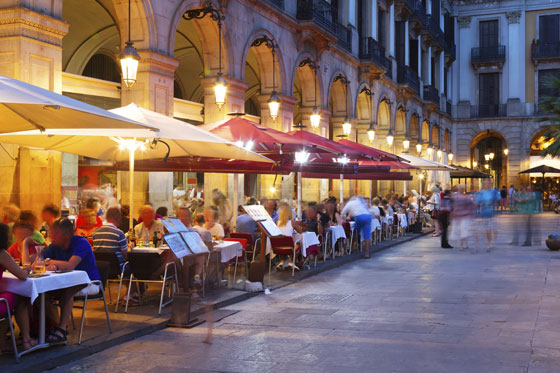
<p>You may like to have a coffee with dessert after your meal.  But asking for coffee and dessert together in Spain or France signals that you&#8217;re in a rush.  Wait for the coffee, and you&#8217;ll fit right in with friends who value the long after-dinner linger in France and the <em>sobremesa, </em>the slow conversation that carries on at the table after the meal in Spain.</p>
<div id="attachment_23241" style="width: 570px" class="wp-caption aligncenter"><img loading="lazy" decoding="async" aria-describedby="caption-attachment-23241" class="wp-image-23241 size-full" src="https://www.oh-i-see.com/blog/wp-content/uploads/2015/06/514441739sized.jpg" alt="A plaza full of diners at dinner enjoying the slow, post-meal conversation, illustrating how cultural do's and taboos vary by country. (Image © JackF / iStock)" width="560" height="373" srcset="https://www.oh-i-see.com/blog/wp-content/uploads/2015/06/514441739sized.jpg 560w, https://www.oh-i-see.com/blog/wp-content/uploads/2015/06/514441739sized-300x200.jpg 300w, https://www.oh-i-see.com/blog/wp-content/uploads/2015/06/514441739sized-207x138.jpg 207w" sizes="auto, (max-width: 560px) 100vw, 560px" /><p id="caption-attachment-23241" class="wp-caption-text">Whether at lunch or dinner in Spain, the end of dessert is never the end of the meal. <br /> © JackF / iStock</p></div>
<h4>Dining Around the World Is Easy!</h4>
<p>Sharing a meal is one of the most beautiful experiences about traveling. All you need is an appetite and the savvy to navigate each country&#8217;s cultural do&#8217;s and taboos. A little research before you visit a new place will likely increase your worldwide dining wisdom. Surely, it will lead to some <strong>&#8220;Oh, I see&#8221; moments </strong>and a good time at lunch!</p>
<p><em>For more tips on navigating lunch around the world, see these infographics from <a href="http://blog.chefworks.com/uniforms/dining-ettiquette-around-the-world-infographic/" target="_blank" rel="noopener">Chef Works</a> and <a href="http://www.foodbeast.com/news/this-infographic-explains-how-to-politely-dine-out-around-the-world/" target="_blank" rel="noopener">Foodbeast</a>. For broader information on different cultures, see the country guides at <a href="http://www.everyculture.com" target="_blank" rel="noopener">Everyculture</a> and <a href="http://www.kwintessential.co.uk/resources/country-profiles.html">Kwintessential</a>. </em></p>
<p><i><a title="Creative Inspiration Flows In Underwater Photographs" href="#comments">Comment</a></i><em> on this post below, or inspire insight with your own OIC Moment </em><a href="https://www.oh-i-see.com/blog/your-oic-moments/"><em>here</em></a><em>.</em></p>
{"id":23155,"date":"2015-06-29T03:00:06","date_gmt":"2015-06-29T10:00:06","guid":{"rendered":"http:\/\/ohisee.genweb.site\/blog\/?p=23155"},"modified":"2021-07-20T07:58:15","modified_gmt":"2021-07-20T14:58:15","slug":"at-lunch-in-the-world-how-to-stay-out-of-the-soup","status":"publish","type":"post","link":"https:\/\/www.oh-i-see.com\/blog\/at-lunch-in-the-world-how-to-stay-out-of-the-soup\/","title":{"rendered":"At Lunch in the World\u2014How to Stay Out of the Soup"},"content":{"rendered":"<div id=\"attachment_23187\" style=\"width: 570px\" class=\"wp-caption aligncenter\"><img loading=\"lazy\" decoding=\"async\" aria-describedby=\"caption-attachment-23187\" class=\"wp-image-23187 size-full\" src=\"https:\/\/www.oh-i-see.com\/blog\/wp-content\/uploads\/2015\/06\/501364919sized.jpg\" alt=\"The continents depicted in cream in a bowl of tomato soup, illustrating that people at lunch around the world have different cultural do's and taboos. (Image \u00a9 eyegelb \/ iStock)\" width=\"560\" height=\"474\" srcset=\"https:\/\/www.oh-i-see.com\/blog\/wp-content\/uploads\/2015\/06\/501364919sized.jpg 560w, https:\/\/www.oh-i-see.com\/blog\/wp-content\/uploads\/2015\/06\/501364919sized-300x254.jpg 300w, https:\/\/www.oh-i-see.com\/blog\/wp-content\/uploads\/2015\/06\/501364919sized-207x175.jpg 207w\" sizes=\"auto, (max-width: 560px) 100vw, 560px\" \/><p id=\"caption-attachment-23187\" class=\"wp-caption-text\">Places to eat, and people to meet. Do you know what&#8217;s taboo?<br \/> \u00a9 eyegelb \/ iStock<\/p><\/div>\n<h2>10 Cultural Do&#8217;s &amp; Taboos at the Table<\/h2>\n<p>When you travel the world, there&#8217;s much more to dining than tasting the food. \u00a0In fact, it&#8217;s the cultural dimension of the dining table (or mat) that often makes or breaks the meal.\u00a0Here are <strong>10 cultural do&#8217;s and taboos<\/strong> to keep you out of the soup when you&#8217;re at lunch in the world.<\/p>\n<h4>#1 Chile: Respect the Mealtime<\/h4>\n<p>In many places in Latin America, the working lunch just doesn&#8217;t work. \u00a0On a business trip to Santiago, Chile, a\u00a0colleague suggested that we save time by continuing our meeting over lunch.<\/p>\n<p>Much to her surprise, a Paraguayan man in the meeting stood up, puffed out his chest, and insisted that lunch was the time to socialize with\u00a0his colleagues, to learn about their families and their health, and actually eat his meal in peace.<\/p>\n<p>We followed his lead\u00a0and enjoyed the people and the pisco sour at lunch that day.<\/p>\n<div id=\"attachment_23165\" style=\"width: 460px\" class=\"wp-caption aligncenter\"><img loading=\"lazy\" decoding=\"async\" aria-describedby=\"caption-attachment-23165\" class=\"wp-image-23165\" src=\"https:\/\/www.oh-i-see.com\/blog\/wp-content\/uploads\/2015\/06\/DSC023932-1024x746.jpg\" alt=\"Two business colleagues at lunch in a restaurant in Santiago, Chile, enjoying each other rather than working over lunch, a cultural taboo in Chile. (Image \u00a9 Sally Baho )\" width=\"450\" height=\"328\" srcset=\"https:\/\/www.oh-i-see.com\/blog\/wp-content\/uploads\/2015\/06\/DSC023932-1024x746.jpg 1024w, https:\/\/www.oh-i-see.com\/blog\/wp-content\/uploads\/2015\/06\/DSC023932-300x219.jpg 300w, https:\/\/www.oh-i-see.com\/blog\/wp-content\/uploads\/2015\/06\/DSC023932-600x437.jpg 600w, https:\/\/www.oh-i-see.com\/blog\/wp-content\/uploads\/2015\/06\/DSC023932-207x151.jpg 207w, https:\/\/www.oh-i-see.com\/blog\/wp-content\/uploads\/2015\/06\/DSC023932-900x656.jpg 900w\" sizes=\"auto, (max-width: 450px) 100vw, 450px\" \/><p id=\"caption-attachment-23165\" class=\"wp-caption-text\">Taking time for people at lunch in\u00a0Santiago, Chile. <br \/> \u00a9 Sally Baho<\/p><\/div>\n<h4>#2 Romania, France, and Spain: Wait for the Cue<\/h4>\n<p>In Romania, only when\u00a0the host(ess) says\u00a0<em>pofta buna<\/em>\u00a0may you begin eating.\u00a0Similar wishes to enjoy the meal are common signals in other countries, too. In France, it&#8217;s\u00a0<em>bon app\u00e9tit<\/em>. \u00a0In Spain, it&#8217;s\u00a0<em>buen provecho. \u00a0<\/em>And it&#8217;s taboo to start before the wish is spoken.<\/p>\n<h4>#3 Morocco: Be a Grateful Guest<\/h4>\n<p>A friend and I stayed with a family in Morocco. \u00a0When it came time to take a meal, we all ate off of one central plate. \u00a0The family would not eat the meat from the platter, and instead\u00a0pushed it to our side.<\/p>\n<p>We pantomimed that they eat the meat, too. \u00a0They refused. We were their guests, and we soon learned that our role was to show how much we enjoyed and appreciated the dish, their company, and the environment.<\/p>\n<p>Many cultures may wish to honor the\u00a0guests by giving a toast, serving them\u00a0first, or insisting they\u00a0eat the best food. \u00a0Graciously accept.<\/p>\n<h4>#4 Korea: Offer and Accept with Both Hands<\/h4>\n<p>In Korea, when offered or offering something&#8212;whether it be a cup, a dish, a napkin, money or pouring a drink&#8212;hold the item with both hands or at least touch your second hand to the arm carrying the item to show full intention and dedication to the act you are doing.<\/p>\n<div id=\"attachment_23193\" style=\"width: 460px\" class=\"wp-caption aligncenter\"><img loading=\"lazy\" decoding=\"async\" aria-describedby=\"caption-attachment-23193\" class=\"wp-image-23193\" src=\"https:\/\/www.oh-i-see.com\/blog\/wp-content\/uploads\/2015\/06\/20150622_110418-1024x576.jpg\" alt=\"A young lady using both hands to pour soju for her father at lunch, illustrating respect for cultural do's and taboos. (Image \u00a9 Sally Baho)\" width=\"450\" height=\"253\" srcset=\"https:\/\/www.oh-i-see.com\/blog\/wp-content\/uploads\/2015\/06\/20150622_110418-1024x576.jpg 1024w, https:\/\/www.oh-i-see.com\/blog\/wp-content\/uploads\/2015\/06\/20150622_110418-300x169.jpg 300w, https:\/\/www.oh-i-see.com\/blog\/wp-content\/uploads\/2015\/06\/20150622_110418-600x338.jpg 600w, https:\/\/www.oh-i-see.com\/blog\/wp-content\/uploads\/2015\/06\/20150622_110418-207x116.jpg 207w, https:\/\/www.oh-i-see.com\/blog\/wp-content\/uploads\/2015\/06\/20150622_110418-900x506.jpg 900w\" sizes=\"auto, (max-width: 450px) 100vw, 450px\" \/><p id=\"caption-attachment-23193\" class=\"wp-caption-text\">Pouring a drink with two hands shows respect. <br \/> \u00a9 Sally Baho<\/p><\/div>\n<h4>#5 Chile: Always Use Utensils<\/h4>\n<p>In Chile, it is considered rude to eat with your hands. Use your utensils for everything, even something you may think of as finger food, like\u00a0French fries.<\/p>\n<h4>#6 Ethiopia: Never Use Utensils<\/h4>\n<p>Ethiopian meals are served on a big central platter over\u00a0<em>injera<\/em> bread&#8212;a sour, porous flat bread that is made from teff flour and\u00a0used to scoop the dishes that are served directly on top of it. \u00a0Individual plates and cutlery are not used.<\/p>\n<div id=\"attachment_23242\" style=\"width: 460px\" class=\"wp-caption aligncenter\"><img loading=\"lazy\" decoding=\"async\" aria-describedby=\"caption-attachment-23242\" class=\"wp-image-23242\" src=\"https:\/\/www.oh-i-see.com\/blog\/wp-content\/uploads\/2015\/06\/452732099sized.jpg\" alt=\"A traditional Ethiopian meal served on injera bread, illustrating different cultural do's and taboos at lunch around the world. (Image \u00a9 Tendur \/ iStock)\" width=\"450\" height=\"396\" srcset=\"https:\/\/www.oh-i-see.com\/blog\/wp-content\/uploads\/2015\/06\/452732099sized.jpg 560w, https:\/\/www.oh-i-see.com\/blog\/wp-content\/uploads\/2015\/06\/452732099sized-300x264.jpg 300w, https:\/\/www.oh-i-see.com\/blog\/wp-content\/uploads\/2015\/06\/452732099sized-207x182.jpg 207w\" sizes=\"auto, (max-width: 450px) 100vw, 450px\" \/><p id=\"caption-attachment-23242\" class=\"wp-caption-text\">A traditional Ethiopian meal&#8212;the injera bread serves as <br \/>both the dish and the utensils! <br \/> \u00a9 Tendur \/ iStock<\/p><\/div>\n<h4>#7 Spain: Acknowledge Other Diners<\/h4>\n<p>In the US, it&#8217;s not unusual to enter a restaurant, isolate your party at a table, and leave as a group. \u00a0But when you exit a restaurant or are leaving a meal in Spain, wish the other diners who are still eating\u00a0<em>buen provecho.\u00a0<\/em><\/p>\n<h4>#8 Japan and China:\u00a0Make Some Noise<\/h4>\n<p>Making noises while you eat, considered rude in some\u00a0cultures, is a sign of meal\u00a0appreciation in most Asian countries. Slurping soup and noodles in Japan and belching in China are compliments to the chef.<\/p>\n<div id=\"attachment_23240\" style=\"width: 460px\" class=\"wp-caption aligncenter\"><img loading=\"lazy\" decoding=\"async\" aria-describedby=\"caption-attachment-23240\" class=\"wp-image-23240\" src=\"https:\/\/www.oh-i-see.com\/blog\/wp-content\/uploads\/2015\/06\/115932887sized.jpg\" alt=\"A woman slurping a noodle from a soup bowl, demonstrating different cultural do's and taboos at lunch around the world. (Image \u00a9 Sean Barley \/ iStock)\" width=\"450\" height=\"301\" srcset=\"https:\/\/www.oh-i-see.com\/blog\/wp-content\/uploads\/2015\/06\/115932887sized.jpg 560w, https:\/\/www.oh-i-see.com\/blog\/wp-content\/uploads\/2015\/06\/115932887sized-300x201.jpg 300w, https:\/\/www.oh-i-see.com\/blog\/wp-content\/uploads\/2015\/06\/115932887sized-207x139.jpg 207w\" sizes=\"auto, (max-width: 450px) 100vw, 450px\" \/><p id=\"caption-attachment-23240\" class=\"wp-caption-text\">Listen for the slurp&#8212;it&#8217;s a compliment! <br \/> \u00a9 Sean Barley \/ iStock<\/p><\/div>\n<h4>#9 China: Leave a Little on Your Plate<\/h4>\n<p>By leaving a little bit of food on your plate in China, you are signaling to the hosts that they have provided you with plenty of food&#8212;a sign of abundance&#8212;which is considered a good thing.<\/p>\n<h4>#10 France and Spain: Don&#8217;t Rush the Coffee<\/h4>\n<p>You may like to have a coffee with dessert after your meal. \u00a0But asking for coffee and dessert together in Spain or France signals that you&#8217;re in a rush. \u00a0Wait for the coffee, and you&#8217;ll fit right in with friends who value the long after-dinner linger in France and the\u00a0<em>sobremesa,\u00a0<\/em>the slow conversation that carries\u00a0on at the table after the meal in Spain.<\/p>\n<div id=\"attachment_23241\" style=\"width: 570px\" class=\"wp-caption aligncenter\"><img loading=\"lazy\" decoding=\"async\" aria-describedby=\"caption-attachment-23241\" class=\"wp-image-23241 size-full\" src=\"https:\/\/www.oh-i-see.com\/blog\/wp-content\/uploads\/2015\/06\/514441739sized.jpg\" alt=\"A plaza full of diners at dinner enjoying the slow, post-meal conversation, illustrating how cultural do's and taboos vary by country. (Image \u00a9 JackF \/ iStock)\" width=\"560\" height=\"373\" srcset=\"https:\/\/www.oh-i-see.com\/blog\/wp-content\/uploads\/2015\/06\/514441739sized.jpg 560w, https:\/\/www.oh-i-see.com\/blog\/wp-content\/uploads\/2015\/06\/514441739sized-300x200.jpg 300w, https:\/\/www.oh-i-see.com\/blog\/wp-content\/uploads\/2015\/06\/514441739sized-207x138.jpg 207w\" sizes=\"auto, (max-width: 560px) 100vw, 560px\" \/><p id=\"caption-attachment-23241\" class=\"wp-caption-text\">Whether at lunch or dinner in Spain, the end of dessert is never the end of the meal. <br \/> \u00a9 JackF \/ iStock<\/p><\/div>\n<h4>Dining Around the World Is\u00a0Easy!<\/h4>\n<p>Sharing a meal is one of the most beautiful experiences about traveling. All you need is an appetite and the savvy to navigate each country&#8217;s cultural do&#8217;s and taboos.\u00a0A\u00a0little research before you visit a new place will likely increase\u00a0your worldwide dining\u00a0wisdom. Surely, it will\u00a0lead to some\u00a0<strong>&#8220;Oh, I see&#8221; moments\u00a0<\/strong>and\u00a0a good time at lunch!<\/p>\n<p><em>For more tips on navigating lunch around the world, see these\u00a0infographics\u00a0from <a href=\"http:\/\/blog.chefworks.com\/uniforms\/dining-ettiquette-around-the-world-infographic\/\" target=\"_blank\" rel=\"noopener\">Chef Works<\/a> and <a href=\"http:\/\/www.foodbeast.com\/news\/this-infographic-explains-how-to-politely-dine-out-around-the-world\/\" target=\"_blank\" rel=\"noopener\">Foodbeast<\/a>. For broader information on different cultures, see the country guides at\u00a0<a href=\"http:\/\/www.everyculture.com\" target=\"_blank\" rel=\"noopener\">Everyculture<\/a> and\u00a0<a href=\"http:\/\/www.kwintessential.co.uk\/resources\/country-profiles.html\">Kwintessential<\/a>.\u00a0<\/em><\/p>\n<p><i><a title=\"Creative Inspiration Flows In Underwater Photographs\" href=\"#comments\">Comment<\/a><\/i><em>\u00a0on this post below, or inspire insight with your own\u00a0OIC Moment\u00a0<\/em><a href=\"https:\/\/www.oh-i-see.com\/blog\/your-oic-moments\/\"><em>here<\/em><\/a><em>.<\/em><\/p>\n","protected":false},"excerpt":{"rendered":null,"protected":false},"author":14,"featured_media":23187,"comment_status":"closed","ping_status":"open","sticky":false,"template":"","format":"standard","meta":{"footnotes":""},"categories":[98,100,227],"tags":[],"class_list":["post-23155","post","type-post","status-publish","format-standard","has-post-thumbnail","hentry","category-crossing-culture","category-taboos-culture","category-worldwide-mappoints"],"aioseo_notices":[],"_links":{"self":[{"href":"https:\/\/www.oh-i-see.com\/blog\/wp-json\/wp\/v2\/posts\/23155","targetHints":{"allow":["GET"]}}],"collection":[{"href":"https:\/\/www.oh-i-see.com\/blog\/wp-json\/wp\/v2\/posts"}],"about":[{"href":"https:\/\/www.oh-i-see.com\/blog\/wp-json\/wp\/v2\/types\/post"}],"author":[{"embeddable":true,"href":"https:\/\/www.oh-i-see.com\/blog\/wp-json\/wp\/v2\/users\/14"}],"replies":[{"embeddable":true,"href":"https:\/\/www.oh-i-see.com\/blog\/wp-json\/wp\/v2\/comments?post=23155"}],"version-history":[{"count":74,"href":"https:\/\/www.oh-i-see.com\/blog\/wp-json\/wp\/v2\/posts\/23155\/revisions"}],"predecessor-version":[{"id":40758,"href":"https:\/\/www.oh-i-see.com\/blog\/wp-json\/wp\/v2\/posts\/23155\/revisions\/40758"}],"wp:featuredmedia":[{"embeddable":true,"href":"https:\/\/www.oh-i-see.com\/blog\/wp-json\/wp\/v2\/media\/23187"}],"wp:attachment":[{"href":"https:\/\/www.oh-i-see.com\/blog\/wp-json\/wp\/v2\/media?parent=23155"}],"wp:term":[{"taxonomy":"category","embeddable":true,"href":"https:\/\/www.oh-i-see.com\/blog\/wp-json\/wp\/v2\/categories?post=23155"},{"taxonomy":"post_tag","embeddable":true,"href":"https:\/\/www.oh-i-see.com\/blog\/wp-json\/wp\/v2\/tags?post=23155"}],"curies":[{"name":"wp","href":"https:\/\/api.w.org\/{rel}","templated":true}]}}