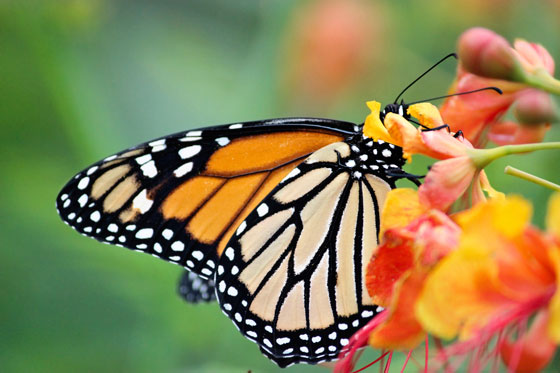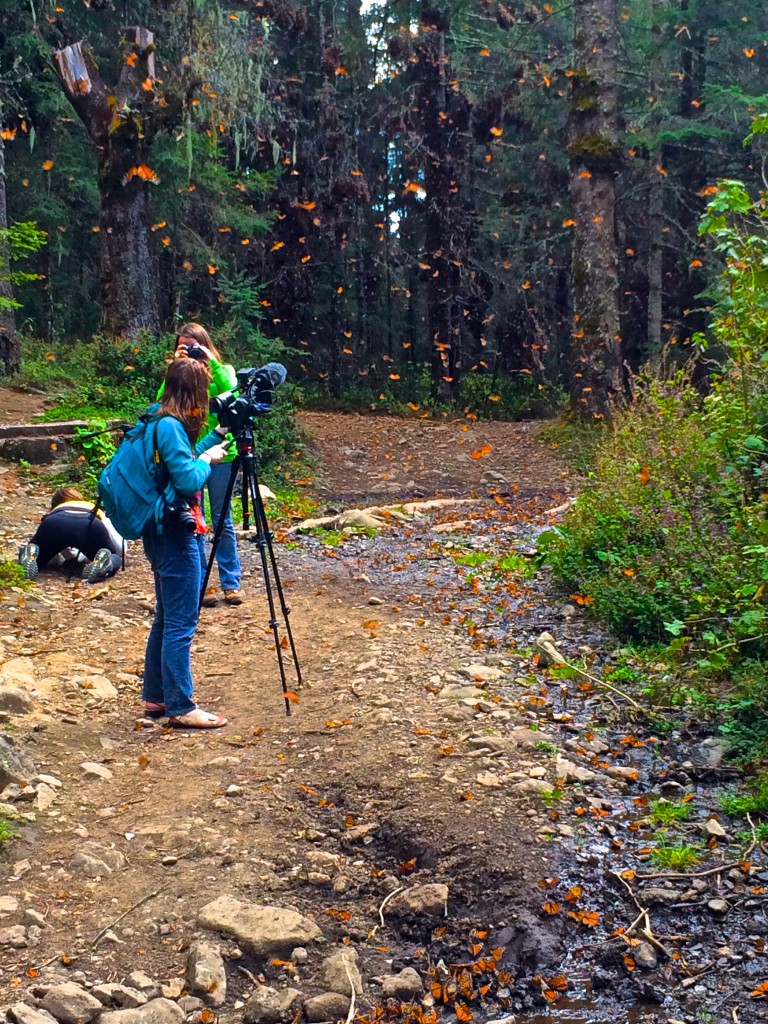
<div id="attachment_21908" style="width: 570px" class="wp-caption aligncenter"><img loading="lazy" decoding="async" aria-describedby="caption-attachment-21908" class="wp-image-21908 size-large" src="https://www.oh-i-see.com/blog/wp-content/uploads/2015/03/IMG_3744-768x1024.jpg" alt="Students photographing monarch butterflies at their winter home in central Mexico, illustrating the impact that global citizens can have against the threats to the monarch butterfly. (Image © Carol Starr)" width="560" height="747" srcset="https://www.oh-i-see.com/blog/wp-content/uploads/2015/03/IMG_3744-768x1024.jpg 768w, https://www.oh-i-see.com/blog/wp-content/uploads/2015/03/IMG_3744-225x300.jpg 225w, https://www.oh-i-see.com/blog/wp-content/uploads/2015/03/IMG_3744-600x800.jpg 600w, https://www.oh-i-see.com/blog/wp-content/uploads/2015/03/IMG_3744-155x207.jpg 155w, https://www.oh-i-see.com/blog/wp-content/uploads/2015/03/IMG_3744-300x400.jpg 300w, https://www.oh-i-see.com/blog/wp-content/uploads/2015/03/IMG_3744-900x1200.jpg 900w" sizes="auto, (max-width: 560px) 100vw, 560px" /><p id="caption-attachment-21908" class="wp-caption-text">Documentary filmmakers meet a golden subject in the central highlands of Mexico.<br /> © Carol Starr</p></div>
<h2>Global Citizens Fly High, Too</h2>
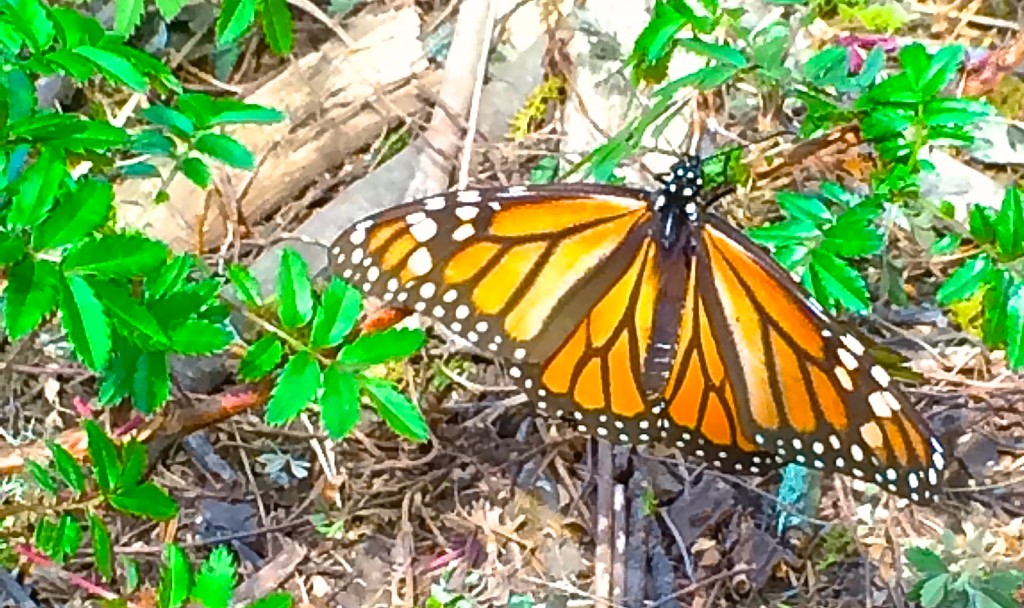
<p>Any day now, the eastern monarchs will leave their winter home in the Sierra Madre mountains of central Mexico and begin their epic journey across the US to Canada. Theirs is a know-no-boundaries <em>flight pattern.</em></p>
<p>These pollinators are crucial to a continued food supply. Yet, like the honeybees, their numbers are dwindling: the 2014&#8211;15 <a href="http://monarchjointventure.org/news-events/news/2015-population-update-and-estimating-the-number-of-overwintering-monarchs" target="_blank" rel="noopener">estimate</a> is about 56.5 million, a fraction of the 1 billion monarch butterflies that wintered in Mexico in 1996&#8211;97.</p>
<p>Who can help these fragile long-distance travelers? Global citizens, who work for monarch conservation with a know-no-boundaries <em>fight pattern.</em></p>
<p>&nbsp;</p>
<div id="attachment_22033" style="width: 410px" class="wp-caption aligncenter"><img loading="lazy" decoding="async" aria-describedby="caption-attachment-22033" class="wp-image-22033" src="https://www.oh-i-see.com/blog/wp-content/uploads/2015/03/IMG_37281-1024x608.jpg" alt="Monarch butterfly showing off its wing span, a sight that global citizens work to protect. (Image © Carol Starr)" width="400" height="238" srcset="https://www.oh-i-see.com/blog/wp-content/uploads/2015/03/IMG_37281-1024x608.jpg 1024w, https://www.oh-i-see.com/blog/wp-content/uploads/2015/03/IMG_37281-300x178.jpg 300w, https://www.oh-i-see.com/blog/wp-content/uploads/2015/03/IMG_37281-600x356.jpg 600w, https://www.oh-i-see.com/blog/wp-content/uploads/2015/03/IMG_37281-207x123.jpg 207w, https://www.oh-i-see.com/blog/wp-content/uploads/2015/03/IMG_37281-900x534.jpg 900w" sizes="auto, (max-width: 400px) 100vw, 400px" /><p id="caption-attachment-22033" class="wp-caption-text">The fragile wings of an adult monarch propel it on a <br /> migration of up to 2,800-miles (4,500 km).<br /> © Carol Starr</p></div>
<h4>The Mysterious Monarch</h4>
<p>Scientists still don&#8217;t know how monarch butterflies know where to go, though the mystery of their winter home was solved in 1975 when the decades-long work of Fred Urquhart, a Canadian zoologist, came to fruition.</p>
<p>Urquhart began a tagging and tracking program that pointed to a diagonal flight pattern northeast to southwest across the US, but he lost track of the butterflies once they crossed the border into Mexico. Help came in the form of Ken Brugger (and his dog Kola), who traversed the Mexican countryside in a motor home.</p>
<p>Brugger looked for monarchs in areas where a tagged butterfly had been found, and he researched reports of sightings. Following the lead of Mexican woodcutters, who had spotted swarming butterflies, Brugger stepped into a forested highland valley and saw an awe-inspiring sight:</p>
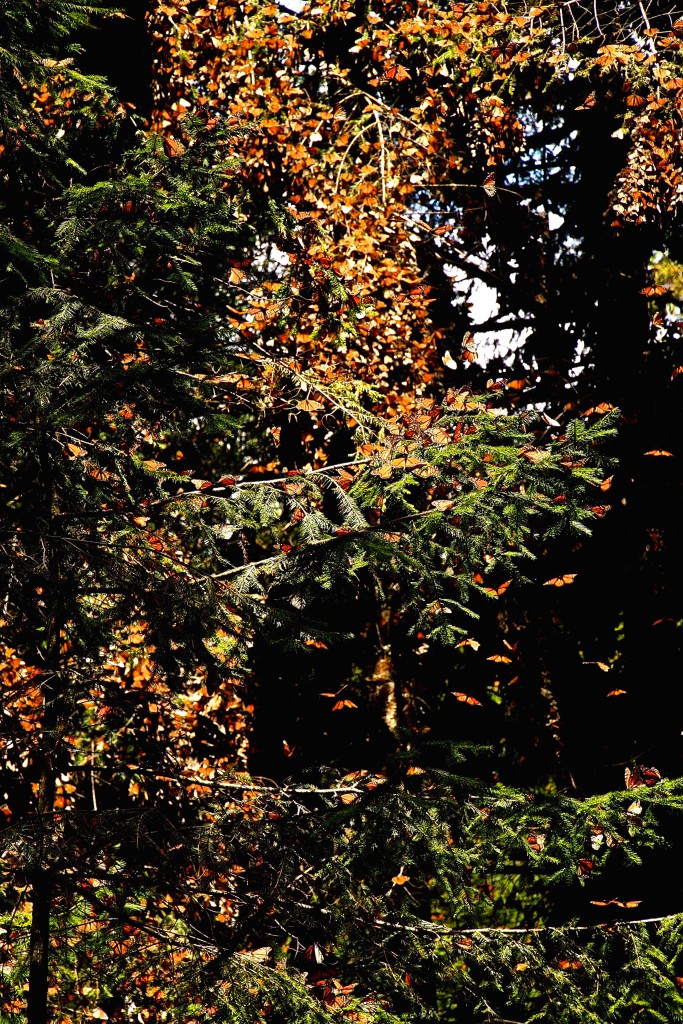
<p style="text-align: center;"><em>Millions of monarch butterflies hanging in clusters from the oyamel trees! </em></p>
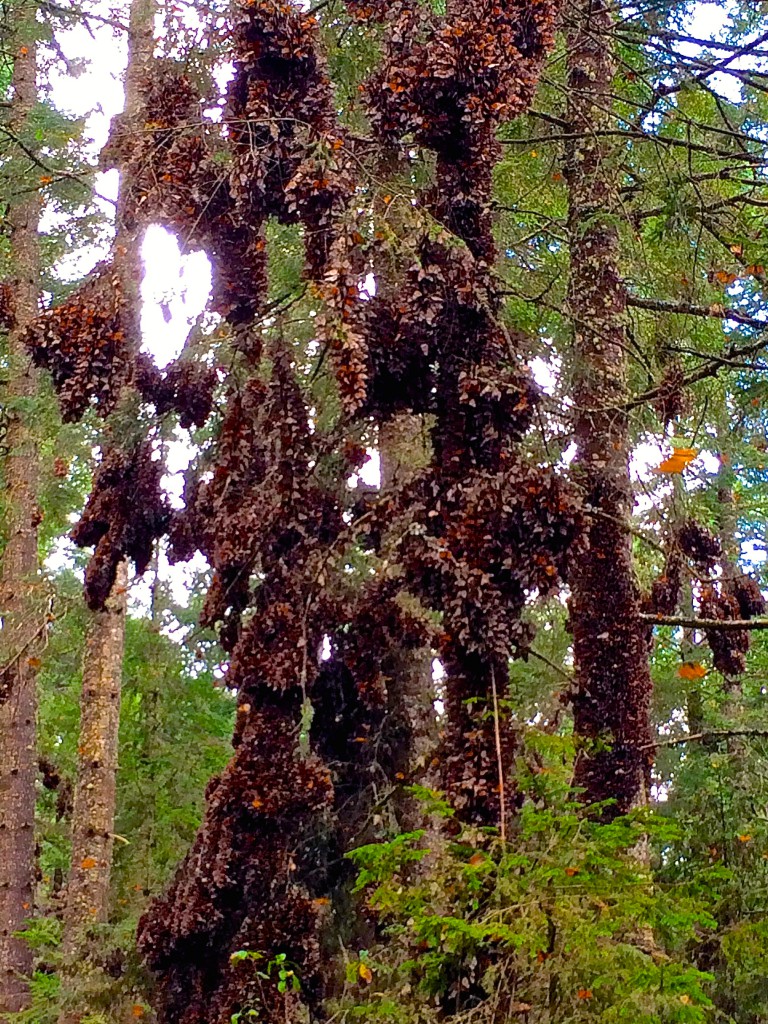
<div id="attachment_21909" style="width: 570px" class="wp-caption aligncenter"><img loading="lazy" decoding="async" aria-describedby="caption-attachment-21909" class="wp-image-21909" src="https://www.oh-i-see.com/blog/wp-content/uploads/2015/03/IMG_3746-768x1024.jpg" alt="Thousands of monarch butterflies hanging in clusters from oyamel trees, a sight that global citizens work to protect. (Image © Carol Starr)" width="560" height="747" srcset="https://www.oh-i-see.com/blog/wp-content/uploads/2015/03/IMG_3746-768x1024.jpg 768w, https://www.oh-i-see.com/blog/wp-content/uploads/2015/03/IMG_3746-225x300.jpg 225w, https://www.oh-i-see.com/blog/wp-content/uploads/2015/03/IMG_3746-600x800.jpg 600w, https://www.oh-i-see.com/blog/wp-content/uploads/2015/03/IMG_3746-155x207.jpg 155w, https://www.oh-i-see.com/blog/wp-content/uploads/2015/03/IMG_3746-300x400.jpg 300w, https://www.oh-i-see.com/blog/wp-content/uploads/2015/03/IMG_3746-900x1200.jpg 900w" sizes="auto, (max-width: 560px) 100vw, 560px" /><p id="caption-attachment-21909" class="wp-caption-text">The semi-dormant monarchs hang together to conserve heat during cold nights. <br /> With thousands of butterflies in a cluster, some become so heavy that branches break. <br /> © Carol Starr</p></div>
<p>Because they reached across borders, Brugger and Urquhart solved the mystery of the monarch&#8217;s winter home. For the full and fascinating story, see <em><a href="http://ngm.nationalgeographic.com/1976/08/monarch-butterflies/urquhart-text/1" target="_blank" rel="noopener">Found at Last</a></em>, published in August 1976 by National Geographic.</p>
<h4>The Monarch in Mexican Culture</h4>
<p>Though the winter home had remained a mystery until 1975, people in the central highlands of Mexico had long experienced the fall arrival of the monarchs. Among the Purépecha, the indigenous word for the monarch means &#8220;harvest butterfly&#8221; because the butterflies reliably arrived at harvest time.</p>
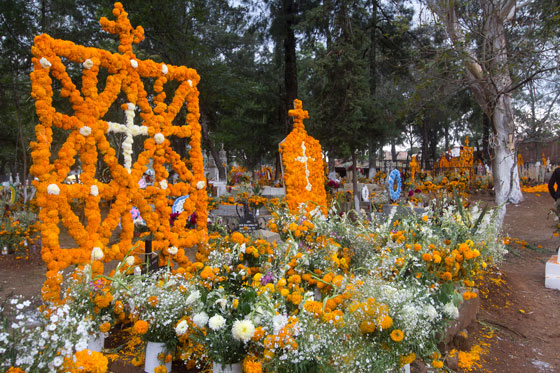
<p>Coinciding with harvest time are celebrations on November 1 and 2, marking the <em>Día de los Muertos</em> (Day of the Dead), when Mexicans decorate the graves of their ancestors and honor them with feasts and offerings. The butterflies came to symbolize the souls of ancestors returning for a visit on these special days.</p>
<div id="attachment_21885" style="width: 570px" class="wp-caption aligncenter"><img loading="lazy" decoding="async" aria-describedby="caption-attachment-21885" class="wp-image-21885 size-full" src="https://www.oh-i-see.com/blog/wp-content/uploads/2015/03/162358407sized.jpg" alt="Decorated gravesites in a Mexican cemetery, illustrating Mexican traditions to celebrate the Day of the Dead and the butterfly as a cultural symbol of departed ancestors. (Image © Arturo Peña Romano Medina / iStock)" width="560" height="373" srcset="https://www.oh-i-see.com/blog/wp-content/uploads/2015/03/162358407sized.jpg 560w, https://www.oh-i-see.com/blog/wp-content/uploads/2015/03/162358407sized-300x200.jpg 300w, https://www.oh-i-see.com/blog/wp-content/uploads/2015/03/162358407sized-207x138.jpg 207w" sizes="auto, (max-width: 560px) 100vw, 560px" /><p id="caption-attachment-21885" class="wp-caption-text">Fall colors brighten the graves in a Mexican cemetery for the <br /> traditional celebration of <em>Día de los muertos.</em><br /> © Arturo Peña Romano Medina / iStock</p></div>
<p>Traditions are meant to continue, but in fall 2013, the butterflies did not show up on time, and that year the overwintering population dropped to a new low&#8212;about 33 million monarchs.</p>
<h4>Challenges to the Fragile Flyers</h4>
<p>Though weather and temperatures are factors, habitat loss is the most significant. In Mexico&#8217;s forest habitat:</p>
<ul>
<li>The human population also depends on the oyamel forests for survival, and this leads to unsustainable and illegal logging.</li>
<li>Increased tourism to view the amazing colonies of overwintering butterflies has raised awareness of the monarchs&#8217; plight, but it has also degraded the habitat.</li>
</ul>
<div id="attachment_21912" style="width: 510px" class="wp-caption aligncenter"><img loading="lazy" decoding="async" aria-describedby="caption-attachment-21912" class="wp-image-21912" src="https://www.oh-i-see.com/blog/wp-content/uploads/2015/03/IMG_4037-683x1024.jpg" alt="Monarch butterflies in oyamel trees, a type of fir on which they depend for survival, illustrating the need for forest conservation by global citizens. (Image © Carol Starr)  " width="500" height="750" srcset="https://www.oh-i-see.com/blog/wp-content/uploads/2015/03/IMG_4037-683x1024.jpg 683w, https://www.oh-i-see.com/blog/wp-content/uploads/2015/03/IMG_4037-200x300.jpg 200w, https://www.oh-i-see.com/blog/wp-content/uploads/2015/03/IMG_4037-600x900.jpg 600w, https://www.oh-i-see.com/blog/wp-content/uploads/2015/03/IMG_4037-138x207.jpg 138w, https://www.oh-i-see.com/blog/wp-content/uploads/2015/03/IMG_4037-300x450.jpg 300w, https://www.oh-i-see.com/blog/wp-content/uploads/2015/03/IMG_4037-900x1350.jpg 900w" sizes="auto, (max-width: 500px) 100vw, 500px" /><p id="caption-attachment-21912" class="wp-caption-text">The fluttering, flitting flecks of gold and orange and black attract <br />about 150,000 tourists per year. <br /> © Carol Starr</p></div>
<p>In the flyway habitat through the US, the monarchs lay their eggs on the milkweed plant, vital food for the caterpillars, but milkweed is disappearing at a rapid pace:</p>
<ul>
<li>Since federal subsidies for biofuels have driven up the price of corn, farmers have converted open acreage, where native plants like milkweed grow, to fields and fields of corn.</li>
<li>Use of herbicides, like Roundup, have wiped out much of the milkweed.</li>
<li>When roads, parking lots, grass lawns, and ornamental landscapes go in, native plants go out. Food&#8212;milkweed for caterpillars and nectar plants for adult monarchs&#8212;is lost.</li>
</ul>
<h4>Solutions from Global Citizens</h4>
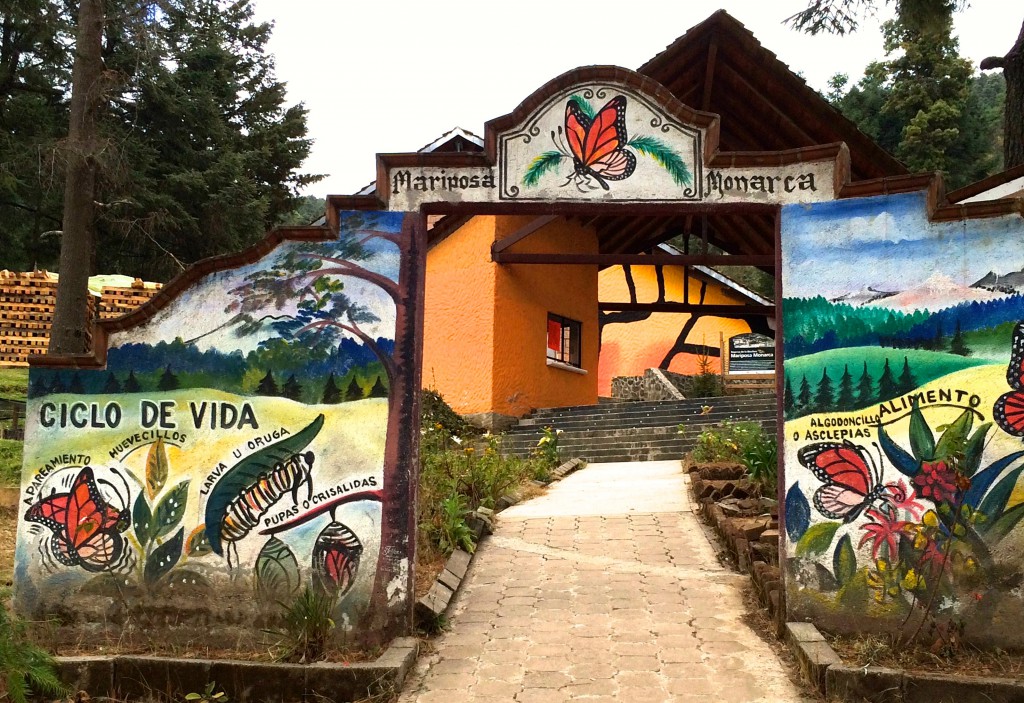
<p>In 1986, Mexico established the Monarch Butterfly Biosphere Reserve, now over 200 square miles, and in 2007 it outlawed logging. The area is now also a <a href="http://whc.unesco.org/en/list/1290" target="_blank" rel="noopener">Unesco World Heritage</a> site.</p>
<div id="attachment_21910" style="width: 570px" class="wp-caption aligncenter"><img loading="lazy" decoding="async" aria-describedby="caption-attachment-21910" class="wp-image-21910 size-large" src="https://www.oh-i-see.com/blog/wp-content/uploads/2015/03/IMG_3756-1024x703.jpg" alt="Entrance to Mexico's El Rosario sanctuary for the monarch butterfly, illustrating the important work of global citizens in monarch conservation. (Image © Carol Starr)" width="560" height="384" srcset="https://www.oh-i-see.com/blog/wp-content/uploads/2015/03/IMG_3756-1024x703.jpg 1024w, https://www.oh-i-see.com/blog/wp-content/uploads/2015/03/IMG_3756-300x206.jpg 300w, https://www.oh-i-see.com/blog/wp-content/uploads/2015/03/IMG_3756-600x412.jpg 600w, https://www.oh-i-see.com/blog/wp-content/uploads/2015/03/IMG_3756-207x142.jpg 207w, https://www.oh-i-see.com/blog/wp-content/uploads/2015/03/IMG_3756-900x618.jpg 900w" sizes="auto, (max-width: 560px) 100vw, 560px" /><p id="caption-attachment-21910" class="wp-caption-text">The entrance to El Rosario sanctuary leads to a steep climb, but the <br /> kaleidoscope of butterflies you see at the top is worth it! <br /> © Carol Starr</p></div>
<p>The <a href="https://www.worldwildlife.org/species/monarch-butterfly" target="_blank" rel="noopener">World Wildlife Fund</a> (WWF) and the <a href="http://monarchbutterflyfund.org/conservation-strategy" target="_blank" rel="noopener">Monarch Butterfly Fund</a> (MBF) work with Mexico to seek solutions to habitat loss. Recognizing the economic dependence of the human population on the same land, these groups help villagers establish income-producing alternatives to logging, with jobs in mushroom cultivation and at nurseries that grow trees for reforestation.</p>
<p>The <a href="http://monarchsisterschools.org/about-us.htm" target="_blank" rel="noopener">Monarch Sister Schools Program</a> connects schools in the US and Mexico that work together to restore the monarchs&#8217; habitats and engage in cultural exchange.</p>
<div id="attachment_22011" style="width: 360px" class="wp-caption aligncenter"><img loading="lazy" decoding="async" aria-describedby="caption-attachment-22011" class="wp-image-22011" src="https://www.oh-i-see.com/blog/wp-content/uploads/2015/03/IMG_3779-768x1024.jpg" alt="Young student dressed up like a monarch butterfly, illustrating school efforts to develop global citizens who care about the monarchs' decline. (Image © Carol Starr)" width="350" height="467" srcset="https://www.oh-i-see.com/blog/wp-content/uploads/2015/03/IMG_3779-768x1024.jpg 768w, https://www.oh-i-see.com/blog/wp-content/uploads/2015/03/IMG_3779-225x300.jpg 225w, https://www.oh-i-see.com/blog/wp-content/uploads/2015/03/IMG_3779-600x800.jpg 600w, https://www.oh-i-see.com/blog/wp-content/uploads/2015/03/IMG_3779-155x207.jpg 155w, https://www.oh-i-see.com/blog/wp-content/uploads/2015/03/IMG_3779-300x400.jpg 300w, https://www.oh-i-see.com/blog/wp-content/uploads/2015/03/IMG_3779-900x1200.jpg 900w" sizes="auto, (max-width: 350px) 100vw, 350px" /><p id="caption-attachment-22011" class="wp-caption-text">Monarch festivals at sister schools in the US and Mexico <br /> invite kids to walk in a monarch&#8217;s shoes, er&#8212;wings!<br /> © Carol Starr</p></div>
<p>The work of such organizations proceeds from a global mindset, but citizens who buy into &#8220;Think Global, Act Local&#8221; can make a difference, too.  Here are six ways:</p>
<p><strong>#1.  Spread the word </strong>like the students from American University and Technológico de Monterrey (see first photo) whose documentary will give others an <strong>&#8220;Oh, I see&#8221; moment</strong> or two about the butterflies&#8217; plight. It premiers at the <a href="http://www.instituteofmexicodc.org" target="_blank" rel="noopener">Mexican Cultural Institute</a> of Washington, D.C., on April 28.</p>
<p><strong>#2.  Reestablish milkweed habitats </strong>like the senior living <a href="http://www.listfree.org/146347-monarch-landing-at-morning-pointe-of-lexington-east.html" target="_blank" rel="noopener">community</a>  and the Soil Mates <a href="http://www.gardenclubky.org" target="_blank" rel="noopener">Garden Club</a> in Lexington, KY, who planted milkweed and other natives in their courtyard to create Monarch Butterfly Waystation #8781. Visit <a href="http://www.monarchwatch.org/waystations/" target="_blank" rel="noopener">Monarch Watch</a> for seeds and all you need to create and certify a waystation.</p>
<p><strong>#3.  Grow native nectar plants </strong>to feed adult monarchs on their migratory journey. Plantbutterflies.org offers <a href="http://plantbutterflies.org/plant-chart.html" target="_blank" rel="noopener">plant charts</a> and <a href="http://plantbutterflies.org/instructions.html" target="_blank" rel="noopener">planting instructions</a>.</p>
<div id="attachment_22031" style="width: 410px" class="wp-caption aligncenter"><img loading="lazy" decoding="async" aria-describedby="caption-attachment-22031" class="wp-image-22031" src="https://www.oh-i-see.com/blog/wp-content/uploads/2015/03/523428305sized.jpg" alt="Monarch butterfly sipping nectar from a wildflower, illustrating the need for global citizens to work for monarch conservation. (Image © Rafael Cespedes / iStock)" width="400" height="266" srcset="https://www.oh-i-see.com/blog/wp-content/uploads/2015/03/523428305sized.jpg 560w, https://www.oh-i-see.com/blog/wp-content/uploads/2015/03/523428305sized-300x200.jpg 300w, https://www.oh-i-see.com/blog/wp-content/uploads/2015/03/523428305sized-207x138.jpg 207w" sizes="auto, (max-width: 400px) 100vw, 400px" /><p id="caption-attachment-22031" class="wp-caption-text">Invite a monarch to lunch!<br /> © Rafael Cespedes / iStock</p></div>
<p><strong>#4.  Report sightings </strong>with the Journey North <a href="https://www.learner.org/jnorth/mobile/index.html" target="_blank" rel="noopener">app</a> to help scientists unravel more monarch mysteries and track numbers.</p>
<p><strong>#5.</strong>  <strong>Advocate for &#8220;fueling stations&#8221; on public lands </strong>with help from Pollinator Partnership&#8217;s <a href="http://www.pollinator.org/PDFs/Monarchs/Monarch.Habitat.Manual.ROW.SWest.ver1.pdf" target="_blank" rel="noopener">manuals</a> on planting a utility right of way.</p>
<p><strong>#6.  Reward the good actors </strong>by eating organic or by buying lumber that is Forest Stewardship Certified (FSC) and not taken through illegal logging.</p>
<p>Global citizens appreciate how what happens in one part of the world affects another. Like the monarch butterflies, they go beyond borders. May the populations of both increase!</p>
<p style="text-align: center;"><strong>⊂∫⊃</strong></p>
<p><em>Experience the movement of the monarch butterfly and learn more about the mysteries surrounding them in this new <span style="color: #3366ff;"><a style="color: #3366ff;" href="https://youtu.be/Q2iEyQThr6k" target="_blank" rel="noopener">video</a></span> from WWF. Hear about the <span style="color: #3366ff;"><a style="color: #3366ff;" href="https://youtu.be/fh42KGh-TkE" target="_blank" rel="noopener">challenges</a></span> ahead from Professor Chip Taylor, who also directs MonarchWatch.</em></p>
<p><a href="#comments"><i>Comment</i></a><em> on this post below, or inspire insight with your own OIC Moment </em><a href="https://www.oh-i-see.com/blog/your-oic-moments/"><em>here</em></a><em>.</em></p>
{"id":21886,"date":"2015-03-24T03:00:50","date_gmt":"2015-03-24T10:00:50","guid":{"rendered":"http:\/\/ohisee.genweb.site\/blog\/?p=21886"},"modified":"2021-07-20T07:56:58","modified_gmt":"2021-07-20T14:56:58","slug":"mexico-in-march-monarch-butterflies-take-wing","status":"publish","type":"post","link":"https:\/\/www.oh-i-see.com\/blog\/mexico-in-march-monarch-butterflies-take-wing\/","title":{"rendered":"Mexico in March&#8212;Monarch Butterflies Take Wing"},"content":{"rendered":"<div id=\"attachment_21908\" style=\"width: 570px\" class=\"wp-caption aligncenter\"><img loading=\"lazy\" decoding=\"async\" aria-describedby=\"caption-attachment-21908\" class=\"wp-image-21908 size-large\" src=\"https:\/\/www.oh-i-see.com\/blog\/wp-content\/uploads\/2015\/03\/IMG_3744-768x1024.jpg\" alt=\"Students photographing monarch butterflies at their winter home in central Mexico, illustrating the impact that global citizens can have against the threats to the monarch butterfly. (Image \u00a9 Carol Starr)\" width=\"560\" height=\"747\" srcset=\"https:\/\/www.oh-i-see.com\/blog\/wp-content\/uploads\/2015\/03\/IMG_3744-768x1024.jpg 768w, https:\/\/www.oh-i-see.com\/blog\/wp-content\/uploads\/2015\/03\/IMG_3744-225x300.jpg 225w, https:\/\/www.oh-i-see.com\/blog\/wp-content\/uploads\/2015\/03\/IMG_3744-600x800.jpg 600w, https:\/\/www.oh-i-see.com\/blog\/wp-content\/uploads\/2015\/03\/IMG_3744-155x207.jpg 155w, https:\/\/www.oh-i-see.com\/blog\/wp-content\/uploads\/2015\/03\/IMG_3744-300x400.jpg 300w, https:\/\/www.oh-i-see.com\/blog\/wp-content\/uploads\/2015\/03\/IMG_3744-900x1200.jpg 900w\" sizes=\"auto, (max-width: 560px) 100vw, 560px\" \/><p id=\"caption-attachment-21908\" class=\"wp-caption-text\">Documentary filmmakers meet a golden subject in the central highlands of Mexico.<br \/> \u00a9 Carol Starr<\/p><\/div>\n<h2>Global Citizens Fly High, Too<\/h2>\n<p>Any day now, the eastern monarchs will leave their winter home in the Sierra Madre mountains of central Mexico and begin their epic journey\u00a0across the US to Canada. Theirs is a know-no-boundaries <em>flight pattern.<\/em><\/p>\n<p>These pollinators are crucial to a continued\u00a0food supply. Yet, like the honeybees, their numbers are dwindling: the 2014&#8211;15 <a href=\"http:\/\/monarchjointventure.org\/news-events\/news\/2015-population-update-and-estimating-the-number-of-overwintering-monarchs\" target=\"_blank\" rel=\"noopener\">estimate<\/a>\u00a0is\u00a0about 56.5 million,\u00a0a fraction of the 1 billion monarch butterflies that wintered in Mexico\u00a0in 1996&#8211;97.<\/p>\n<p>Who\u00a0can help these fragile long-distance travelers? Global citizens,\u00a0who work for monarch conservation with a\u00a0know-no-boundaries <em>fight pattern.<\/em><\/p>\n<p>&nbsp;<\/p>\n<div id=\"attachment_22033\" style=\"width: 410px\" class=\"wp-caption aligncenter\"><img loading=\"lazy\" decoding=\"async\" aria-describedby=\"caption-attachment-22033\" class=\"wp-image-22033\" src=\"https:\/\/www.oh-i-see.com\/blog\/wp-content\/uploads\/2015\/03\/IMG_37281-1024x608.jpg\" alt=\"Monarch butterfly showing off its wing span, a sight that global citizens work to protect. (Image \u00a9 Carol Starr)\" width=\"400\" height=\"238\" srcset=\"https:\/\/www.oh-i-see.com\/blog\/wp-content\/uploads\/2015\/03\/IMG_37281-1024x608.jpg 1024w, https:\/\/www.oh-i-see.com\/blog\/wp-content\/uploads\/2015\/03\/IMG_37281-300x178.jpg 300w, https:\/\/www.oh-i-see.com\/blog\/wp-content\/uploads\/2015\/03\/IMG_37281-600x356.jpg 600w, https:\/\/www.oh-i-see.com\/blog\/wp-content\/uploads\/2015\/03\/IMG_37281-207x123.jpg 207w, https:\/\/www.oh-i-see.com\/blog\/wp-content\/uploads\/2015\/03\/IMG_37281-900x534.jpg 900w\" sizes=\"auto, (max-width: 400px) 100vw, 400px\" \/><p id=\"caption-attachment-22033\" class=\"wp-caption-text\">The fragile wings of an adult monarch propel it on a <br \/> migration of up to 2,800-miles (4,500 km).<br \/> \u00a9 Carol Starr<\/p><\/div>\n<h4>The Mysterious Monarch<\/h4>\n<p>Scientists still don&#8217;t know\u00a0how monarch\u00a0butterflies know where to go, though the mystery of their winter home was solved in\u00a01975 when the decades-long work of\u00a0Fred Urquhart, a Canadian zoologist,\u00a0came to fruition.<\/p>\n<p>Urquhart began a tagging and tracking program that pointed to a\u00a0diagonal flight pattern northeast to southwest across the US, but he lost track of the butterflies once they crossed\u00a0the border into Mexico.\u00a0Help came in the form of Ken Brugger (and his\u00a0dog Kola), who traversed\u00a0the Mexican countryside in a\u00a0motor home.<\/p>\n<p>Brugger\u00a0looked for monarchs in areas where a tagged butterfly\u00a0had been found, and he researched\u00a0reports of sightings. Following the lead of Mexican woodcutters, who had spotted\u00a0swarming butterflies, Brugger stepped into a forested highland valley and saw an awe-inspiring sight:<\/p>\n<p style=\"text-align: center;\"><em>Millions of\u00a0monarch\u00a0butterflies hanging in clusters\u00a0from the oyamel\u00a0trees!\u00a0<\/em><\/p>\n<div id=\"attachment_21909\" style=\"width: 570px\" class=\"wp-caption aligncenter\"><img loading=\"lazy\" decoding=\"async\" aria-describedby=\"caption-attachment-21909\" class=\"wp-image-21909\" src=\"https:\/\/www.oh-i-see.com\/blog\/wp-content\/uploads\/2015\/03\/IMG_3746-768x1024.jpg\" alt=\"Thousands of monarch butterflies hanging in clusters from oyamel trees, a sight that global citizens work to protect. (Image \u00a9 Carol Starr)\" width=\"560\" height=\"747\" srcset=\"https:\/\/www.oh-i-see.com\/blog\/wp-content\/uploads\/2015\/03\/IMG_3746-768x1024.jpg 768w, https:\/\/www.oh-i-see.com\/blog\/wp-content\/uploads\/2015\/03\/IMG_3746-225x300.jpg 225w, https:\/\/www.oh-i-see.com\/blog\/wp-content\/uploads\/2015\/03\/IMG_3746-600x800.jpg 600w, https:\/\/www.oh-i-see.com\/blog\/wp-content\/uploads\/2015\/03\/IMG_3746-155x207.jpg 155w, https:\/\/www.oh-i-see.com\/blog\/wp-content\/uploads\/2015\/03\/IMG_3746-300x400.jpg 300w, https:\/\/www.oh-i-see.com\/blog\/wp-content\/uploads\/2015\/03\/IMG_3746-900x1200.jpg 900w\" sizes=\"auto, (max-width: 560px) 100vw, 560px\" \/><p id=\"caption-attachment-21909\" class=\"wp-caption-text\">The semi-dormant monarchs hang together to conserve heat during cold nights. <br \/> With thousands of butterflies in a cluster, some become so heavy that branches break. <br \/> \u00a9 Carol Starr<\/p><\/div>\n<p>Because they reached across borders, Brugger and Urquhart solved the mystery of the monarch&#8217;s winter home. For the full and fascinating story, see\u00a0<em><a href=\"http:\/\/ngm.nationalgeographic.com\/1976\/08\/monarch-butterflies\/urquhart-text\/1\" target=\"_blank\" rel=\"noopener\">Found at Last<\/a><\/em>, published in August 1976 by National Geographic.<\/p>\n<h4>The Monarch\u00a0in Mexican Culture<\/h4>\n<p>Though the winter home had remained a mystery until 1975, people in the central highlands of Mexico had long experienced the fall arrival of the monarchs. Among the Pur\u00e9pecha, the indigenous word for the monarch means &#8220;harvest butterfly&#8221; because the butterflies reliably arrived at harvest time.<\/p>\n<p>Coinciding with harvest time are celebrations on November 1 and 2,\u00a0marking\u00a0the <em>D\u00eda de los Muertos<\/em> (Day of the Dead), when Mexicans\u00a0decorate the graves of their ancestors and honor them with feasts and offerings. The butterflies came to symbolize the\u00a0souls of ancestors returning for a visit on these special days.<\/p>\n<div id=\"attachment_21885\" style=\"width: 570px\" class=\"wp-caption aligncenter\"><img loading=\"lazy\" decoding=\"async\" aria-describedby=\"caption-attachment-21885\" class=\"wp-image-21885 size-full\" src=\"https:\/\/www.oh-i-see.com\/blog\/wp-content\/uploads\/2015\/03\/162358407sized.jpg\" alt=\"Decorated gravesites in a Mexican cemetery, illustrating Mexican traditions to celebrate the Day of the Dead and the butterfly as a cultural symbol of departed ancestors. (Image \u00a9 Arturo Pe\u00f1a Romano Medina \/ iStock)\" width=\"560\" height=\"373\" srcset=\"https:\/\/www.oh-i-see.com\/blog\/wp-content\/uploads\/2015\/03\/162358407sized.jpg 560w, https:\/\/www.oh-i-see.com\/blog\/wp-content\/uploads\/2015\/03\/162358407sized-300x200.jpg 300w, https:\/\/www.oh-i-see.com\/blog\/wp-content\/uploads\/2015\/03\/162358407sized-207x138.jpg 207w\" sizes=\"auto, (max-width: 560px) 100vw, 560px\" \/><p id=\"caption-attachment-21885\" class=\"wp-caption-text\">Fall colors brighten the graves in a Mexican cemetery for the <br \/> traditional celebration of <em>D\u00eda de los muertos.<\/em><br \/> \u00a9 Arturo Pe\u00f1a Romano Medina \/ iStock<\/p><\/div>\n<p>Traditions are meant to continue, but in fall 2013, the butterflies did not show up on time, and that year the overwintering population dropped to a new low&#8212;about 33 million monarchs.<\/p>\n<h4>Challenges to the Fragile Flyers<\/h4>\n<p>Though weather and temperatures are factors, habitat loss\u00a0is the most significant.\u00a0In Mexico&#8217;s forest habitat:<\/p>\n<ul>\n<li>The\u00a0human population also depends on the oyamel forests for\u00a0survival, and this leads to unsustainable and illegal logging.<\/li>\n<li>Increased tourism to view the amazing colonies of overwintering butterflies has\u00a0raised awareness of the monarchs&#8217; plight, but it has\u00a0also degraded the\u00a0habitat.<\/li>\n<\/ul>\n<div id=\"attachment_21912\" style=\"width: 510px\" class=\"wp-caption aligncenter\"><img loading=\"lazy\" decoding=\"async\" aria-describedby=\"caption-attachment-21912\" class=\"wp-image-21912\" src=\"https:\/\/www.oh-i-see.com\/blog\/wp-content\/uploads\/2015\/03\/IMG_4037-683x1024.jpg\" alt=\"Monarch butterflies in oyamel trees, a type of fir on which they depend for survival, illustrating the need for forest conservation by global citizens. (Image \u00a9 Carol Starr)  \" width=\"500\" height=\"750\" srcset=\"https:\/\/www.oh-i-see.com\/blog\/wp-content\/uploads\/2015\/03\/IMG_4037-683x1024.jpg 683w, https:\/\/www.oh-i-see.com\/blog\/wp-content\/uploads\/2015\/03\/IMG_4037-200x300.jpg 200w, https:\/\/www.oh-i-see.com\/blog\/wp-content\/uploads\/2015\/03\/IMG_4037-600x900.jpg 600w, https:\/\/www.oh-i-see.com\/blog\/wp-content\/uploads\/2015\/03\/IMG_4037-138x207.jpg 138w, https:\/\/www.oh-i-see.com\/blog\/wp-content\/uploads\/2015\/03\/IMG_4037-300x450.jpg 300w, https:\/\/www.oh-i-see.com\/blog\/wp-content\/uploads\/2015\/03\/IMG_4037-900x1350.jpg 900w\" sizes=\"auto, (max-width: 500px) 100vw, 500px\" \/><p id=\"caption-attachment-21912\" class=\"wp-caption-text\">The fluttering, flitting flecks of gold and orange and black attract <br \/>about 150,000 tourists per year. <br \/> \u00a9 Carol Starr<\/p><\/div>\n<p>In the flyway habitat\u00a0through\u00a0the US, the monarchs lay their eggs on the milkweed plant, vital food for\u00a0the caterpillars, but\u00a0milkweed\u00a0is disappearing at a rapid pace:<\/p>\n<ul>\n<li>Since federal subsidies for biofuels have driven up the price of corn, farmers have converted open acreage, where native plants like milkweed grow, to fields and fields of corn.<\/li>\n<li>Use of herbicides, like Roundup, have wiped out much of the milkweed.<\/li>\n<li>When roads, parking lots, grass lawns, and ornamental landscapes\u00a0go in,\u00a0native plants go\u00a0out. Food&#8212;milkweed for caterpillars and nectar plants for adult monarchs&#8212;is lost.<\/li>\n<\/ul>\n<h4>Solutions from Global Citizens<\/h4>\n<p>In 1986, Mexico established the\u00a0Monarch Butterfly Biosphere Reserve, now\u00a0over 200 square miles, and in 2007 it outlawed logging. The area is now also a <a href=\"http:\/\/whc.unesco.org\/en\/list\/1290\" target=\"_blank\" rel=\"noopener\">Unesco World Heritage<\/a> site.<\/p>\n<div id=\"attachment_21910\" style=\"width: 570px\" class=\"wp-caption aligncenter\"><img loading=\"lazy\" decoding=\"async\" aria-describedby=\"caption-attachment-21910\" class=\"wp-image-21910 size-large\" src=\"https:\/\/www.oh-i-see.com\/blog\/wp-content\/uploads\/2015\/03\/IMG_3756-1024x703.jpg\" alt=\"Entrance to Mexico's El Rosario sanctuary for the monarch butterfly, illustrating the important work of global citizens in monarch conservation. (Image \u00a9 Carol Starr)\" width=\"560\" height=\"384\" srcset=\"https:\/\/www.oh-i-see.com\/blog\/wp-content\/uploads\/2015\/03\/IMG_3756-1024x703.jpg 1024w, https:\/\/www.oh-i-see.com\/blog\/wp-content\/uploads\/2015\/03\/IMG_3756-300x206.jpg 300w, https:\/\/www.oh-i-see.com\/blog\/wp-content\/uploads\/2015\/03\/IMG_3756-600x412.jpg 600w, https:\/\/www.oh-i-see.com\/blog\/wp-content\/uploads\/2015\/03\/IMG_3756-207x142.jpg 207w, https:\/\/www.oh-i-see.com\/blog\/wp-content\/uploads\/2015\/03\/IMG_3756-900x618.jpg 900w\" sizes=\"auto, (max-width: 560px) 100vw, 560px\" \/><p id=\"caption-attachment-21910\" class=\"wp-caption-text\">The entrance to El Rosario sanctuary leads to a steep climb, but the <br \/> kaleidoscope of butterflies you see at the top is worth it! <br \/> \u00a9 Carol Starr<\/p><\/div>\n<p>The <a href=\"https:\/\/www.worldwildlife.org\/species\/monarch-butterfly\" target=\"_blank\" rel=\"noopener\">World Wildlife Fund<\/a> (WWF) and the <a href=\"http:\/\/monarchbutterflyfund.org\/conservation-strategy\" target=\"_blank\" rel=\"noopener\">Monarch Butterfly Fund<\/a> (MBF) work with Mexico to seek solutions to habitat loss.\u00a0Recognizing the\u00a0economic dependence of the human population on the same land, these groups\u00a0help villagers establish\u00a0income-producing\u00a0alternatives to logging, with jobs in\u00a0mushroom cultivation and at\u00a0nurseries that grow trees for reforestation.<\/p>\n<p>The <a href=\"http:\/\/monarchsisterschools.org\/about-us.htm\" target=\"_blank\" rel=\"noopener\">Monarch Sister Schools Program<\/a> connects schools in the US and Mexico that work together to restore the monarchs&#8217; habitats and engage in cultural exchange.<\/p>\n<div id=\"attachment_22011\" style=\"width: 360px\" class=\"wp-caption aligncenter\"><img loading=\"lazy\" decoding=\"async\" aria-describedby=\"caption-attachment-22011\" class=\"wp-image-22011\" src=\"https:\/\/www.oh-i-see.com\/blog\/wp-content\/uploads\/2015\/03\/IMG_3779-768x1024.jpg\" alt=\"Young student dressed up like a monarch butterfly, illustrating school efforts to develop global citizens who care about the monarchs' decline. (Image \u00a9 Carol Starr)\" width=\"350\" height=\"467\" srcset=\"https:\/\/www.oh-i-see.com\/blog\/wp-content\/uploads\/2015\/03\/IMG_3779-768x1024.jpg 768w, https:\/\/www.oh-i-see.com\/blog\/wp-content\/uploads\/2015\/03\/IMG_3779-225x300.jpg 225w, https:\/\/www.oh-i-see.com\/blog\/wp-content\/uploads\/2015\/03\/IMG_3779-600x800.jpg 600w, https:\/\/www.oh-i-see.com\/blog\/wp-content\/uploads\/2015\/03\/IMG_3779-155x207.jpg 155w, https:\/\/www.oh-i-see.com\/blog\/wp-content\/uploads\/2015\/03\/IMG_3779-300x400.jpg 300w, https:\/\/www.oh-i-see.com\/blog\/wp-content\/uploads\/2015\/03\/IMG_3779-900x1200.jpg 900w\" sizes=\"auto, (max-width: 350px) 100vw, 350px\" \/><p id=\"caption-attachment-22011\" class=\"wp-caption-text\">Monarch festivals at sister schools in the US and Mexico <br \/> invite kids to walk in a monarch&#8217;s shoes, er&#8212;wings!<br \/> \u00a9 Carol Starr<\/p><\/div>\n<p>The\u00a0work of such\u00a0organizations proceeds from a global mindset, but citizens who\u00a0buy into &#8220;Think Global, Act Local&#8221; can make a difference, too. \u00a0Here are six\u00a0ways:<\/p>\n<p><strong>#1. \u00a0Spread the word\u00a0<\/strong>like the students from American University and Technol\u00f3gico de Monterrey (see first photo) whose documentary will give others an <strong>&#8220;Oh, I see&#8221; moment<\/strong> or two about the butterflies&#8217; plight. It premiers at the <a href=\"http:\/\/www.instituteofmexicodc.org\" target=\"_blank\" rel=\"noopener\">Mexican Cultural Institute<\/a>\u00a0of Washington, D.C., on April 28.<\/p>\n<p><strong>#2. \u00a0Reestablish milkweed habitats\u00a0<\/strong>like the senior living <a href=\"http:\/\/www.listfree.org\/146347-monarch-landing-at-morning-pointe-of-lexington-east.html\" target=\"_blank\" rel=\"noopener\">community<\/a>\u00a0 and the Soil Mates <a href=\"http:\/\/www.gardenclubky.org\" target=\"_blank\" rel=\"noopener\">Garden Club<\/a> in Lexington, KY, who planted milkweed and other natives\u00a0in their courtyard to create Monarch Butterfly Waystation #8781. Visit <a href=\"http:\/\/www.monarchwatch.org\/waystations\/\" target=\"_blank\" rel=\"noopener\">Monarch Watch<\/a> for seeds and all you need to create and certify a waystation.<\/p>\n<p><strong>#3. \u00a0Grow native\u00a0nectar plants <\/strong>to feed adult monarchs on their migratory journey. Plantbutterflies.org offers <a href=\"http:\/\/plantbutterflies.org\/plant-chart.html\" target=\"_blank\" rel=\"noopener\">plant charts<\/a>\u00a0and <a href=\"http:\/\/plantbutterflies.org\/instructions.html\" target=\"_blank\" rel=\"noopener\">planting instructions<\/a>.<\/p>\n<div id=\"attachment_22031\" style=\"width: 410px\" class=\"wp-caption aligncenter\"><img loading=\"lazy\" decoding=\"async\" aria-describedby=\"caption-attachment-22031\" class=\"wp-image-22031\" src=\"https:\/\/www.oh-i-see.com\/blog\/wp-content\/uploads\/2015\/03\/523428305sized.jpg\" alt=\"Monarch butterfly sipping nectar from a wildflower, illustrating the need for global citizens to work for monarch conservation. (Image \u00a9 Rafael Cespedes \/ iStock)\" width=\"400\" height=\"266\" srcset=\"https:\/\/www.oh-i-see.com\/blog\/wp-content\/uploads\/2015\/03\/523428305sized.jpg 560w, https:\/\/www.oh-i-see.com\/blog\/wp-content\/uploads\/2015\/03\/523428305sized-300x200.jpg 300w, https:\/\/www.oh-i-see.com\/blog\/wp-content\/uploads\/2015\/03\/523428305sized-207x138.jpg 207w\" sizes=\"auto, (max-width: 400px) 100vw, 400px\" \/><p id=\"caption-attachment-22031\" class=\"wp-caption-text\">Invite a monarch to lunch!<br \/> \u00a9 Rafael Cespedes \/ iStock<\/p><\/div>\n<p><strong>#4. \u00a0Report sightings\u00a0<\/strong>with the Journey North <a href=\"https:\/\/www.learner.org\/jnorth\/mobile\/index.html\" target=\"_blank\" rel=\"noopener\">app<\/a>\u00a0to help scientists\u00a0unravel more monarch mysteries and track numbers.<\/p>\n<p><strong>#5.<\/strong>\u00a0\u00a0<strong>Advocate for &#8220;fueling stations&#8221;\u00a0on public lands\u00a0<\/strong>with help\u00a0from Pollinator Partnership&#8217;s\u00a0<a href=\"http:\/\/www.pollinator.org\/PDFs\/Monarchs\/Monarch.Habitat.Manual.ROW.SWest.ver1.pdf\" target=\"_blank\" rel=\"noopener\">manuals<\/a>\u00a0on planting a utility right of way.<\/p>\n<p><strong>#6. \u00a0Reward the good actors\u00a0<\/strong>by eating organic or\u00a0by buying lumber that is Forest Stewardship Certified (FSC) and not taken through\u00a0illegal logging.<\/p>\n<p>Global citizens appreciate how\u00a0what happens in one part of the world affects another. Like the monarch butterflies, they go beyond\u00a0borders. May the populations of both increase!<\/p>\n<p style=\"text-align: center;\"><strong>\u2282\u222b\u2283<\/strong><\/p>\n<p><em>Experience the movement of the monarch butterfly and learn more about the mysteries surrounding them in this new <span style=\"color: #3366ff;\"><a style=\"color: #3366ff;\" href=\"https:\/\/youtu.be\/Q2iEyQThr6k\" target=\"_blank\" rel=\"noopener\">video<\/a><\/span> from WWF. Hear about the <span style=\"color: #3366ff;\"><a style=\"color: #3366ff;\" href=\"https:\/\/youtu.be\/fh42KGh-TkE\" target=\"_blank\" rel=\"noopener\">challenges<\/a><\/span> ahead from Professor Chip Taylor, who also directs MonarchWatch.<\/em><\/p>\n<p><a href=\"#comments\"><i>Comment<\/i><\/a><em>\u00a0on this post below, or inspire insight with your own\u00a0OIC Moment\u00a0<\/em><a href=\"https:\/\/www.oh-i-see.com\/blog\/your-oic-moments\/\"><em>here<\/em><\/a><em>.<\/em><\/p>\n","protected":false},"excerpt":{"rendered":null,"protected":false},"author":4,"featured_media":22031,"comment_status":"closed","ping_status":"open","sticky":false,"template":"","format":"standard","meta":{"footnotes":""},"categories":[179,195,225],"tags":[],"class_list":["post-21886","post","type-post","status-publish","format-standard","has-post-thumbnail","hentry","category-symbols-culture","category-mexico-mappoints","category-nature-travel"],"aioseo_notices":[],"_links":{"self":[{"href":"https:\/\/www.oh-i-see.com\/blog\/wp-json\/wp\/v2\/posts\/21886","targetHints":{"allow":["GET"]}}],"collection":[{"href":"https:\/\/www.oh-i-see.com\/blog\/wp-json\/wp\/v2\/posts"}],"about":[{"href":"https:\/\/www.oh-i-see.com\/blog\/wp-json\/wp\/v2\/types\/post"}],"author":[{"embeddable":true,"href":"https:\/\/www.oh-i-see.com\/blog\/wp-json\/wp\/v2\/users\/4"}],"replies":[{"embeddable":true,"href":"https:\/\/www.oh-i-see.com\/blog\/wp-json\/wp\/v2\/comments?post=21886"}],"version-history":[{"count":1,"href":"https:\/\/www.oh-i-see.com\/blog\/wp-json\/wp\/v2\/posts\/21886\/revisions"}],"predecessor-version":[{"id":40741,"href":"https:\/\/www.oh-i-see.com\/blog\/wp-json\/wp\/v2\/posts\/21886\/revisions\/40741"}],"wp:featuredmedia":[{"embeddable":true,"href":"https:\/\/www.oh-i-see.com\/blog\/wp-json\/wp\/v2\/media\/22031"}],"wp:attachment":[{"href":"https:\/\/www.oh-i-see.com\/blog\/wp-json\/wp\/v2\/media?parent=21886"}],"wp:term":[{"taxonomy":"category","embeddable":true,"href":"https:\/\/www.oh-i-see.com\/blog\/wp-json\/wp\/v2\/categories?post=21886"},{"taxonomy":"post_tag","embeddable":true,"href":"https:\/\/www.oh-i-see.com\/blog\/wp-json\/wp\/v2\/tags?post=21886"}],"curies":[{"name":"wp","href":"https:\/\/api.w.org\/{rel}","templated":true}]}}