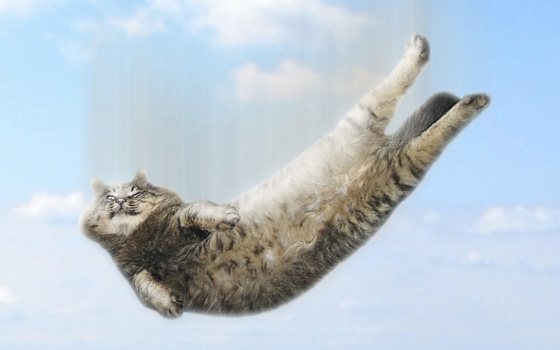
<div id="attachment_17670" style="width: 570px" class="wp-caption aligncenter"><img loading="lazy" decoding="async" aria-describedby="caption-attachment-17670" class="size-full wp-image-17670 " src="https://www.oh-i-see.com/blog/wp-content/uploads/2014/03/460102633.jpg" alt="Falling cat, illustrating animal sayings that vary in different cultures and languages. (Image © deshy / iStock)" width="560" height="350" srcset="https://www.oh-i-see.com/blog/wp-content/uploads/2014/03/460102633.jpg 560w, https://www.oh-i-see.com/blog/wp-content/uploads/2014/03/460102633-300x187.jpg 300w, https://www.oh-i-see.com/blog/wp-content/uploads/2014/03/460102633-207x129.jpg 207w" sizes="auto, (max-width: 560px) 100vw, 560px" /><p id="caption-attachment-17670" class="wp-caption-text">&#8220;If this is Life #7, I sure hope I&#8217;m an English-speaking cat!&#8221;<br />© deshy / iStock</p></div>
<h2>Animal Symbols and Sayings</h2>
<p>All over the world, cats are known for their seemingly magical ability to escape dangers that would be fatal to other, less feline species.  But different cultures and languages vary in how they talk about kitty&#8217;s special talents.</p>
<p>English speakers describe their death-defying trickiness by saying cats have nine lives. Consider 9Lives cat food, and its spokescat Morris, who vouch for the statistic.</p>
<p>Cats have the same reputation in Spanish, but in that language, they get only 7 lives. Are cats in Spanish-speaking cultures really less resilient than those where English is spoken? No, cats are cats, but the animal symbols and sayings across cultures may be quite different.</p>
<p>When you cross cultures, it&#8217;s a good idea to understand the differences so you don&#8217;t make a monkey out of yourself. Here&#8217;s some help with other critters in the animal kingdom.</p>
<h4>Who’s Wise?</h4>
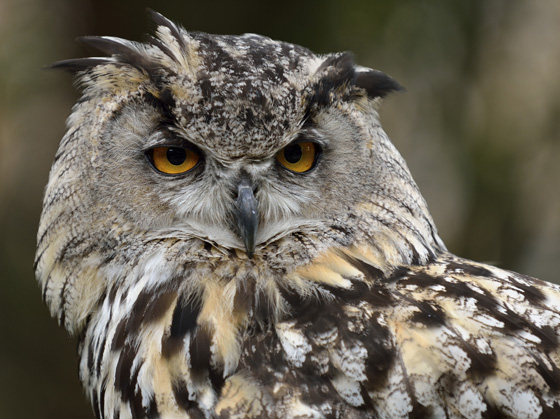
<p>In ancient Greece, the wise goddess Athena was often depicted with or represented by an owl. That literary tradition plus the stately stare of the owl made this bird a symbol for wisdom in most Western cultures.</p>
<div id="attachment_17668" style="width: 410px" class="wp-caption aligncenter"><img loading="lazy" decoding="async" aria-describedby="caption-attachment-17668" class=" wp-image-17668 " src="https://www.oh-i-see.com/blog/wp-content/uploads/2014/03/453989059.jpg" alt="Wise-looking owl, representing wisdom, an animal symbol that varies in different cultures and languages. (Image © lingkuo / iStock)" width="400" height="299" srcset="https://www.oh-i-see.com/blog/wp-content/uploads/2014/03/453989059.jpg 560w, https://www.oh-i-see.com/blog/wp-content/uploads/2014/03/453989059-300x224.jpg 300w, https://www.oh-i-see.com/blog/wp-content/uploads/2014/03/453989059-207x154.jpg 207w" sizes="auto, (max-width: 400px) 100vw, 400px" /><p id="caption-attachment-17668" class="wp-caption-text">Owl = Wisdom, right?<br />© lingkuo / iStock</p></div>
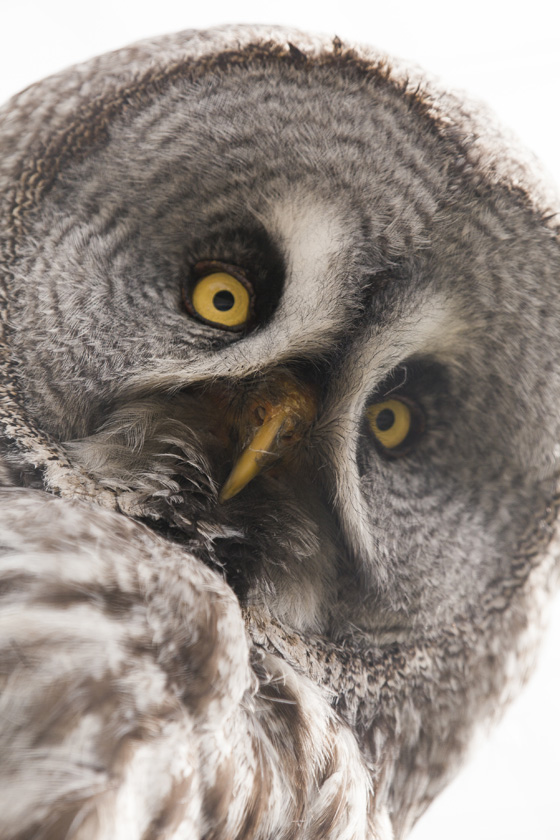
<p>But not everyone thinks owls are all that clever. In India, the owl’s stare is considered dopey rather than penetrating, leading to its reputation as a dim-wit. In fact, the Hindi word for owl— <em>oolu—</em>can also mean dolt, idiot, or fool.</p>
<div id="attachment_17671" style="width: 270px" class="wp-caption aligncenter"><img loading="lazy" decoding="async" aria-describedby="caption-attachment-17671" class=" wp-image-17671 " src="https://www.oh-i-see.com/blog/wp-content/uploads/2014/03/466921093.jpg" alt="Dopey-looking owl, reflecting an animal symbol that varies in different cultures and languages. (© Catherine Philip/iStock)" width="260" height="395" /><p id="caption-attachment-17671" class="wp-caption-text">Maybe owls aren&#8217;t super smart after all. <br />© Catherine Philip/iStock</p></div>
<p>And in the Netherlands, owls are a symbol of being stubborn, uncooperative, and inflexible. There’s a Dutch saying that goes <i>Wat baten kaars en bril, als den uil niet zienen wil?</i> (What difference do light and glasses make, if the owl doesn’t want to see?)</p>
<h4>Interpreting the Turtle</h4>
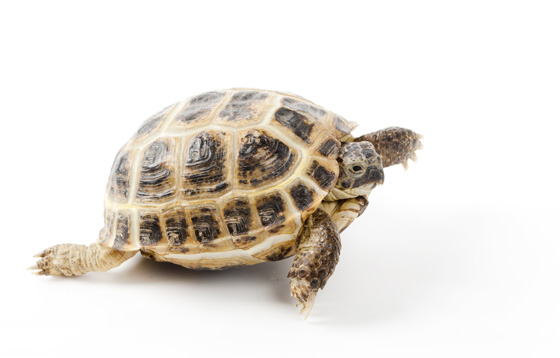
<p>For many English speakers, turtles are symbols of slowness, persistence, and determination.</p>
<div id="attachment_17667" style="width: 373px" class="wp-caption aligncenter"><img loading="lazy" decoding="async" aria-describedby="caption-attachment-17667" class=" wp-image-17667 " src="https://www.oh-i-see.com/blog/wp-content/uploads/2014/03/453771659.jpg" alt="Turtle moving slowly, reflecting an animal symbol that varies in different cultures and languages. (© nwhaa / iStock)" width="363" height="232" srcset="https://www.oh-i-see.com/blog/wp-content/uploads/2014/03/453771659.jpg 560w, https://www.oh-i-see.com/blog/wp-content/uploads/2014/03/453771659-300x191.jpg 300w, https://www.oh-i-see.com/blog/wp-content/uploads/2014/03/453771659-207x132.jpg 207w" sizes="auto, (max-width: 363px) 100vw, 363px" /><p id="caption-attachment-17667" class="wp-caption-text">Turtles always mean slow and steady, don&#8217;t they? <br />© nwhaa / iStock</p></div>
<p>But in, Thailand, turtles are associated with something very different. Watch this ad and see if you can figure out why it makes sense.</p>
<p><iframe loading="lazy" title="Mistine Force - Turtle" width="560" height="420" src="https://www.youtube.com/embed/eh77hKrOK34?feature=oembed" frameborder="0" allow="accelerometer; autoplay; clipboard-write; encrypted-media; gyroscope; picture-in-picture; web-share" referrerpolicy="strict-origin-when-cross-origin" allowfullscreen></iframe></p>
<p align="center"><i>If the video does not display, watch it <a href="http://youtu.be/eh77hKrOK34" target="_blank" rel="noopener">here. </a></i></p>
<p>Yep—that’s an ad for deodorant because <em>turtle</em> in Thai is slang for body odor.</p>
<h4>Monkey Business</h4>
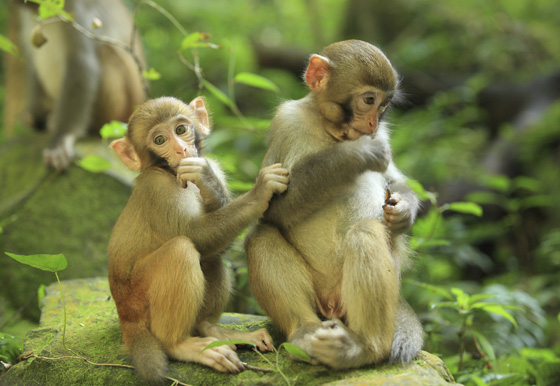
<p>In some Western countries, monkeys are playful tricksters. English speakers talk about <em>monkeying around, monkey business,</em> and <em>more fun than a barrel of monkeys.</em></p>
<div id="attachment_18540" style="width: 447px" class="wp-caption aligncenter"><img loading="lazy" decoding="async" aria-describedby="caption-attachment-18540" class="wp-image-18540" src="https://www.oh-i-see.com/blog/wp-content/uploads/2014/03/477509999sized-300x211.jpg" alt="What do you talk about when you talk about monkeys? © Hung_Chung_Chih/iStock" width="437" height="308" srcset="https://www.oh-i-see.com/blog/wp-content/uploads/2014/03/477509999sized-300x211.jpg 300w, https://www.oh-i-see.com/blog/wp-content/uploads/2014/03/477509999sized-207x146.jpg 207w, https://www.oh-i-see.com/blog/wp-content/uploads/2014/03/477509999sized.jpg 560w" sizes="auto, (max-width: 437px) 100vw, 437px" /><p id="caption-attachment-18540" class="wp-caption-text">What do you talk about when<br />you talk about monkeys?<br />© Hung_Chung_Chih/iStock</p></div>
<p>But other cultures perceive the monkey in a far different way. In Portuguese, monkeys carry an element of sudden surprise. To express astonishment, a Brazilian might say <em>Macacos me mordam!</em> (Monkeys bite me!) It’s like saying “Well, I’ll be damned!” Or, if you ever watched the old Batman TV series, think of Robin’s ever-changing catchphrase of surprise, “Holy [fill-in-the-blank], Batman!”</p>
<div id="attachment_17665" style="width: 447px" class="wp-caption aligncenter"><img loading="lazy" decoding="async" aria-describedby="caption-attachment-17665" class=" wp-image-17665 " src="https://www.oh-i-see.com/blog/wp-content/uploads/2014/03/186658351.jpg" alt="Regal monkeys, reflecting an animal symbol that varies in different cultures and languages. (© fatchoi / iStock)" width="437" height="302" srcset="https://www.oh-i-see.com/blog/wp-content/uploads/2014/03/186658351.jpg 560w, https://www.oh-i-see.com/blog/wp-content/uploads/2014/03/186658351-300x206.jpg 300w, https://www.oh-i-see.com/blog/wp-content/uploads/2014/03/186658351-207x142.jpg 207w" sizes="auto, (max-width: 437px) 100vw, 437px" /><p id="caption-attachment-17665" class="wp-caption-text">Monkeys with a regal air <br />© fatchoi / iStock</p></div>
<p>In China, however, monkeys aren&#8217;t silly or surprising. They&#8217;re clever and noble. At one time, the Chinese title <em>marquis</em> and the word for <em>monkey</em> had the same pronunciation: “hou.” So, in China, the monkey is associated with dignity, social position, and intelligence.</p>
<h4>Silken Sayings</h4>
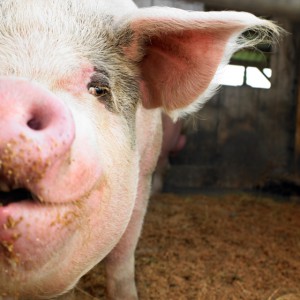
<p>Some cultures express the same advice or wisdom in an animal saying, but the animals are different. For example, in English, there&#8217;s this saying: <em>You can&#8217;t make a silk purse out of a sow&#8217;s ear.</em></p>
<div id="attachment_17663" style="width: 310px" class="wp-caption aligncenter"><img loading="lazy" decoding="async" aria-describedby="caption-attachment-17663" class="size-medium wp-image-17663 " src="https://www.oh-i-see.com/blog/wp-content/uploads/2014/03/148221808-300x300.jpg" alt="A pig's ear, reflecting animal sayings that vary in different cultures and languages. (Image © Morgan David de Lossy / iStock)" width="300" height="300" srcset="https://www.oh-i-see.com/blog/wp-content/uploads/2014/03/148221808-300x300.jpg 300w, https://www.oh-i-see.com/blog/wp-content/uploads/2014/03/148221808-150x150.jpg 150w, https://www.oh-i-see.com/blog/wp-content/uploads/2014/03/148221808-207x207.jpg 207w, https://www.oh-i-see.com/blog/wp-content/uploads/2014/03/148221808-144x144.jpg 144w, https://www.oh-i-see.com/blog/wp-content/uploads/2014/03/148221808.jpg 560w" sizes="auto, (max-width: 300px) 100vw, 300px" /><p id="caption-attachment-17663" class="wp-caption-text">Once a pig&#8217;s ear, always a pig&#8217;s ear. <br />© Morgan David de Lossy / iStock</p></div>
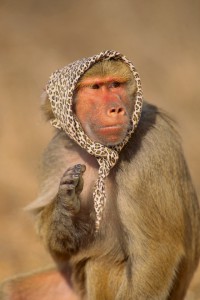
<p>In Spanish, a saying about monkeys is pretty much the same: <em>Aunque la mona se vista de seda, mona se queda. </em> (A monkey that dresses in silk is still a monkey).</p>
<div id="attachment_17661" style="width: 310px" class="wp-caption aligncenter"><img loading="lazy" decoding="async" aria-describedby="caption-attachment-17661" class=" wp-image-17661 " src="https://www.oh-i-see.com/blog/wp-content/uploads/2014/03/78778882-200x300.jpg" alt="A baboon in a scarf, reflecting animal sayings that vary in different cultures and languages. (© fuse / Thinkstock)" width="300" height="450" srcset="https://www.oh-i-see.com/blog/wp-content/uploads/2014/03/78778882-200x300.jpg 200w, https://www.oh-i-see.com/blog/wp-content/uploads/2014/03/78778882-138x207.jpg 138w, https://www.oh-i-see.com/blog/wp-content/uploads/2014/03/78778882.jpg 560w" sizes="auto, (max-width: 300px) 100vw, 300px" /><p id="caption-attachment-17661" class="wp-caption-text">Don&#8217;t you think a silk purse<br />would make this outfit complete?<br />© fuse / Thinkstock</p></div>
<h4>Animal Anticipation</h4>
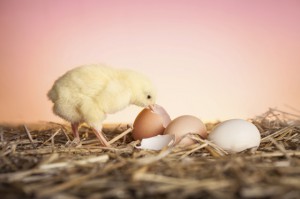
<p>In English, to caution against making plans for something good until it really happens, people say: <em>Don&#8217;t count your chickens before they hatch.</em></p>
<div id="attachment_17673" style="width: 360px" class="wp-caption aligncenter"><img loading="lazy" decoding="async" aria-describedby="caption-attachment-17673" class=" wp-image-17673 " src="https://www.oh-i-see.com/blog/wp-content/uploads/2014/03/470966301-300x199.jpg" alt="Chick and eggs, reflecting animal sayings that vary in different cultures and languages. (© gpointstudio / iStock)" width="350" height="232" srcset="https://www.oh-i-see.com/blog/wp-content/uploads/2014/03/470966301-300x199.jpg 300w, https://www.oh-i-see.com/blog/wp-content/uploads/2014/03/470966301-207x137.jpg 207w, https://www.oh-i-see.com/blog/wp-content/uploads/2014/03/470966301.jpg 560w" sizes="auto, (max-width: 350px) 100vw, 350px" /><p id="caption-attachment-17673" class="wp-caption-text">Don&#8217;t count on your friends just yet, little fellow.<br />© gpointstudio / iStock</p></div>
<p>In Russia, people express pretty much the same sentiment: не дели шкуру неубитого медведя. (Don&#8217;t sell the pelt before the bear&#8217;s been shot.) Similar sayings show up in French-Canadian, Danish, Swedish, and Polish.</p>
<div id="attachment_17672" style="width: 360px" class="wp-caption aligncenter"><img loading="lazy" decoding="async" aria-describedby="caption-attachment-17672" class=" wp-image-17672 " src="https://www.oh-i-see.com/blog/wp-content/uploads/2014/03/468730301-300x218.jpg" alt="Brown bear, illustrating animal sayings that vary in different cultures and languages. (© dgwildlife / iStock) " width="350" height="254" srcset="https://www.oh-i-see.com/blog/wp-content/uploads/2014/03/468730301-300x218.jpg 300w, https://www.oh-i-see.com/blog/wp-content/uploads/2014/03/468730301-207x150.jpg 207w, https://www.oh-i-see.com/blog/wp-content/uploads/2014/03/468730301.jpg 560w" sizes="auto, (max-width: 350px) 100vw, 350px" /><p id="caption-attachment-17672" class="wp-caption-text">Hey, I&#8217;m using this bearskin!<br />© dgwildlife / iStock</p></div>
<h4>You Don&#8217;t Have to Be Real to Play</h4>
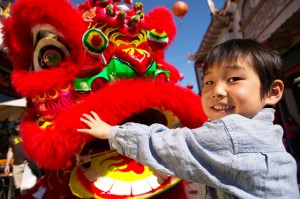
<p>Different cultures even have different views of imaginary animals. In Western countries, dragons are usually fierce fire-breathing monsters that ravage villages and torment princesses. Something worthy of slaying. But in China and many Asian countries, they&#8217;re considered very good luck. Something worthy of celebrating in joyful dances.</p>
<div id="attachment_17666" style="width: 460px" class="wp-caption aligncenter"><img loading="lazy" decoding="async" aria-describedby="caption-attachment-17666" class=" wp-image-17666 " src="https://www.oh-i-see.com/blog/wp-content/uploads/2014/03/200220451-001-300x199.jpg" alt="Boy hugging Chinese dragon, reflecting an animal symbol that varies in different cultures and languages. (© Digital Vision / Photodisc) " width="450" height="298" srcset="https://www.oh-i-see.com/blog/wp-content/uploads/2014/03/200220451-001-300x199.jpg 300w, https://www.oh-i-see.com/blog/wp-content/uploads/2014/03/200220451-001-207x137.jpg 207w, https://www.oh-i-see.com/blog/wp-content/uploads/2014/03/200220451-001.jpg 560w" sizes="auto, (max-width: 450px) 100vw, 450px" /><p id="caption-attachment-17666" class="wp-caption-text">Does this dragon look scary to you?<br />© Digital Vision / Photodisc</p></div>
<p><strong>Oh, I see</strong>&#8212; <a href="https://www.oh-i-see.com/blog/2013/11/11/20-cultural-dos-and-taboos-manners-around-the-word/" target="_blank" rel="noopener">Manners</a>, <a href="https://www.oh-i-see.com/blog/2013/03/04/10-cultural-dos-and-taboos-chatting-around-the-world/" target="_blank" rel="noopener">taboos</a>, and animals, too, are all part of understanding different cultures and languages.  The symbols and sayings that may seem universal are often not. You might think about that the next time the cat&#8217;s got your tongue—because in Spanish, they&#8217;d blame your silence on mice: <em>¿El ratón te comió la lengua?</em> (The mouse ate your tongue?)</p>
<p style="text-align: center;">♦♦♦</p>
<p><i>For more cross-cultural insights that will make you culture-smart, see &#8220;<a href="https://www.oh-i-see.com/blog/2013/10/20/culture-smart-how-much-powers-in-a-flower/" target="_blank" rel="noopener">How Much Power&#8217;s in a Flower?</a>&#8221; and &#8220;<a href="https://www.oh-i-see.com/blog/2013/11/24/culture-smart-the-musical-scale-across-cultures/" target="_blank" rel="noopener">The Musical Scale Across Cultures</a>.&#8221; To get a language fact a day, connect with </i><a style="font-style: italic;" href="https://twitter.com/Languagebandit" target="_blank" rel="noopener">@languagebandit</a><i>. </i></p>
<p><em>Video of the Thai deodorant commercial VIA <a href="http://www.zealouswaterbuffalo.com/2010/11/what-different-animals-represent-in.html" target="_blank" rel="noopener">The Zealous Water Buffalo</a>.</em></p>
<p><a title="Creative Inspiration Flows In Underwater Photographs" href="#comments"><i>Comment</i></a><em><em> </em>on this post below.</em></p>
<p>&nbsp;</p>
{"id":17675,"date":"2014-03-13T03:00:25","date_gmt":"2014-03-13T10:00:25","guid":{"rendered":"http:\/\/ohisee.genweb.site\/blog\/?p=17675"},"modified":"2021-07-26T11:16:36","modified_gmt":"2021-07-26T18:16:36","slug":"same-animal-different-cultures-surprise","status":"publish","type":"post","link":"https:\/\/www.oh-i-see.com\/blog\/same-animal-different-cultures-surprise\/","title":{"rendered":"Same Animal + Different Cultures = Surprise!"},"content":{"rendered":"<div id=\"attachment_17670\" style=\"width: 570px\" class=\"wp-caption aligncenter\"><img loading=\"lazy\" decoding=\"async\" aria-describedby=\"caption-attachment-17670\" class=\"size-full wp-image-17670 \" src=\"https:\/\/www.oh-i-see.com\/blog\/wp-content\/uploads\/2014\/03\/460102633.jpg\" alt=\"Falling cat, illustrating animal sayings that vary in different cultures and languages. (Image \u00a9 deshy \/ iStock)\" width=\"560\" height=\"350\" srcset=\"https:\/\/www.oh-i-see.com\/blog\/wp-content\/uploads\/2014\/03\/460102633.jpg 560w, https:\/\/www.oh-i-see.com\/blog\/wp-content\/uploads\/2014\/03\/460102633-300x187.jpg 300w, https:\/\/www.oh-i-see.com\/blog\/wp-content\/uploads\/2014\/03\/460102633-207x129.jpg 207w\" sizes=\"auto, (max-width: 560px) 100vw, 560px\" \/><p id=\"caption-attachment-17670\" class=\"wp-caption-text\">&#8220;If this is Life #7, I sure hope I&#8217;m an English-speaking cat!&#8221;<br \/>\u00a9 deshy \/ iStock<\/p><\/div>\n<h2>Animal Symbols and Sayings<\/h2>\n<p>All over the world, cats are known for their seemingly magical ability to escape dangers that would be fatal to other, less feline species. \u00a0But different cultures and languages vary in how they talk about kitty&#8217;s special talents.<\/p>\n<p>English speakers describe their death-defying trickiness by saying cats have nine lives. Consider 9Lives cat food, and its spokescat Morris, who vouch for the statistic.<\/p>\n<p>Cats have the same reputation in Spanish, but in that language, they get only 7 lives. Are cats in Spanish-speaking cultures really less resilient than those where English is spoken? No, cats are cats, but the animal symbols and sayings across cultures may be quite different.<\/p>\n<p>When you cross cultures, it&#8217;s a good idea to understand the differences so you don&#8217;t make a monkey out of yourself. Here&#8217;s some help with other critters in the animal kingdom.<\/p>\n<h4>Who\u2019s Wise?<\/h4>\n<p>In ancient Greece, the wise goddess Athena was often depicted with or represented by an owl. That literary tradition plus the stately stare of the owl made this bird a symbol for wisdom in most Western cultures.<\/p>\n<div id=\"attachment_17668\" style=\"width: 410px\" class=\"wp-caption aligncenter\"><img loading=\"lazy\" decoding=\"async\" aria-describedby=\"caption-attachment-17668\" class=\" wp-image-17668 \" src=\"https:\/\/www.oh-i-see.com\/blog\/wp-content\/uploads\/2014\/03\/453989059.jpg\" alt=\"Wise-looking owl, representing wisdom, an animal symbol that varies in different cultures and languages. (Image \u00a9 lingkuo \/ iStock)\" width=\"400\" height=\"299\" srcset=\"https:\/\/www.oh-i-see.com\/blog\/wp-content\/uploads\/2014\/03\/453989059.jpg 560w, https:\/\/www.oh-i-see.com\/blog\/wp-content\/uploads\/2014\/03\/453989059-300x224.jpg 300w, https:\/\/www.oh-i-see.com\/blog\/wp-content\/uploads\/2014\/03\/453989059-207x154.jpg 207w\" sizes=\"auto, (max-width: 400px) 100vw, 400px\" \/><p id=\"caption-attachment-17668\" class=\"wp-caption-text\">Owl = Wisdom, right?<br \/>\u00a9 lingkuo \/ iStock<\/p><\/div>\n<p>But not everyone thinks owls are all that clever. In India, the owl\u2019s stare is considered dopey rather than penetrating, leading to its reputation as a dim-wit. In fact, the Hindi word for owl\u2014 <em>oolu\u2014<\/em>can also mean dolt, idiot, or fool.<\/p>\n<div id=\"attachment_17671\" style=\"width: 270px\" class=\"wp-caption aligncenter\"><img loading=\"lazy\" decoding=\"async\" aria-describedby=\"caption-attachment-17671\" class=\" wp-image-17671 \" src=\"https:\/\/www.oh-i-see.com\/blog\/wp-content\/uploads\/2014\/03\/466921093.jpg\" alt=\"Dopey-looking owl, reflecting an animal symbol that varies in different cultures and languages. (\u00a9 Catherine Philip\/iStock)\" width=\"260\" height=\"395\" \/><p id=\"caption-attachment-17671\" class=\"wp-caption-text\">Maybe owls aren&#8217;t super smart after all. <br \/>\u00a9 Catherine Philip\/iStock<\/p><\/div>\n<p>And in the Netherlands, owls are a symbol of being stubborn, uncooperative, and inflexible. There\u2019s a Dutch saying that goes <i>Wat baten kaars en bril, als den uil niet zienen wil?<\/i> (What difference do light and glasses make, if the owl doesn\u2019t want to see?)<\/p>\n<h4>Interpreting the Turtle<\/h4>\n<p>For many English speakers, turtles are symbols of slowness, persistence, and determination.<\/p>\n<div id=\"attachment_17667\" style=\"width: 373px\" class=\"wp-caption aligncenter\"><img loading=\"lazy\" decoding=\"async\" aria-describedby=\"caption-attachment-17667\" class=\" wp-image-17667 \" src=\"https:\/\/www.oh-i-see.com\/blog\/wp-content\/uploads\/2014\/03\/453771659.jpg\" alt=\"Turtle moving slowly, reflecting an animal symbol that varies in different cultures and languages. (\u00a9 nwhaa \/ iStock)\" width=\"363\" height=\"232\" srcset=\"https:\/\/www.oh-i-see.com\/blog\/wp-content\/uploads\/2014\/03\/453771659.jpg 560w, https:\/\/www.oh-i-see.com\/blog\/wp-content\/uploads\/2014\/03\/453771659-300x191.jpg 300w, https:\/\/www.oh-i-see.com\/blog\/wp-content\/uploads\/2014\/03\/453771659-207x132.jpg 207w\" sizes=\"auto, (max-width: 363px) 100vw, 363px\" \/><p id=\"caption-attachment-17667\" class=\"wp-caption-text\">Turtles always mean slow and steady, don&#8217;t they? <br \/>\u00a9 nwhaa \/ iStock<\/p><\/div>\n<p>But in, Thailand, turtles are associated with something very different. Watch this ad and see if you can figure out why it makes sense.<\/p>\n<p><iframe loading=\"lazy\" title=\"Mistine Force - Turtle\" width=\"560\" height=\"420\" src=\"https:\/\/www.youtube.com\/embed\/eh77hKrOK34?feature=oembed\" frameborder=\"0\" allow=\"accelerometer; autoplay; clipboard-write; encrypted-media; gyroscope; picture-in-picture; web-share\" referrerpolicy=\"strict-origin-when-cross-origin\" allowfullscreen><\/iframe><\/p>\n<p align=\"center\"><i>If the video does not display, watch it <a href=\"http:\/\/youtu.be\/eh77hKrOK34\" target=\"_blank\" rel=\"noopener\">here. <\/a><\/i><\/p>\n<p>Yep\u2014that\u2019s an ad for deodorant because <em>turtle<\/em> in Thai is slang for body odor.<\/p>\n<h4>Monkey Business<\/h4>\n<p>In some Western countries, monkeys are playful tricksters. English speakers talk about <em>monkeying around, monkey business,<\/em> and <em>more fun than a barrel of monkeys.<\/em><\/p>\n<div id=\"attachment_18540\" style=\"width: 447px\" class=\"wp-caption aligncenter\"><img loading=\"lazy\" decoding=\"async\" aria-describedby=\"caption-attachment-18540\" class=\"wp-image-18540\" src=\"https:\/\/www.oh-i-see.com\/blog\/wp-content\/uploads\/2014\/03\/477509999sized-300x211.jpg\" alt=\"What do you talk about when you talk about monkeys? \u00a9 Hung_Chung_Chih\/iStock\" width=\"437\" height=\"308\" srcset=\"https:\/\/www.oh-i-see.com\/blog\/wp-content\/uploads\/2014\/03\/477509999sized-300x211.jpg 300w, https:\/\/www.oh-i-see.com\/blog\/wp-content\/uploads\/2014\/03\/477509999sized-207x146.jpg 207w, https:\/\/www.oh-i-see.com\/blog\/wp-content\/uploads\/2014\/03\/477509999sized.jpg 560w\" sizes=\"auto, (max-width: 437px) 100vw, 437px\" \/><p id=\"caption-attachment-18540\" class=\"wp-caption-text\">What do you talk about when<br \/>you talk about monkeys?<br \/>\u00a9 Hung_Chung_Chih\/iStock<\/p><\/div>\n<p>But other cultures perceive the monkey in a far different way. In Portuguese, monkeys carry an element of sudden surprise. To express astonishment, a Brazilian might say <em>Macacos me mordam!<\/em>\u00a0(Monkeys bite me!) It\u2019s like saying \u201cWell, I\u2019ll be damned!\u201d Or, if you ever watched the old Batman TV series, think of Robin\u2019s ever-changing catchphrase of surprise, \u201cHoly [fill-in-the-blank], Batman!\u201d<\/p>\n<div id=\"attachment_17665\" style=\"width: 447px\" class=\"wp-caption aligncenter\"><img loading=\"lazy\" decoding=\"async\" aria-describedby=\"caption-attachment-17665\" class=\" wp-image-17665 \" src=\"https:\/\/www.oh-i-see.com\/blog\/wp-content\/uploads\/2014\/03\/186658351.jpg\" alt=\"Regal monkeys, reflecting an animal symbol that varies in different cultures and languages. (\u00a9 fatchoi \/ iStock)\" width=\"437\" height=\"302\" srcset=\"https:\/\/www.oh-i-see.com\/blog\/wp-content\/uploads\/2014\/03\/186658351.jpg 560w, https:\/\/www.oh-i-see.com\/blog\/wp-content\/uploads\/2014\/03\/186658351-300x206.jpg 300w, https:\/\/www.oh-i-see.com\/blog\/wp-content\/uploads\/2014\/03\/186658351-207x142.jpg 207w\" sizes=\"auto, (max-width: 437px) 100vw, 437px\" \/><p id=\"caption-attachment-17665\" class=\"wp-caption-text\">Monkeys with a regal air <br \/>\u00a9 fatchoi \/ iStock<\/p><\/div>\n<p>In China, however, monkeys aren&#8217;t silly or surprising. They&#8217;re clever and noble. At one time, the Chinese title <em>marquis<\/em> and the word for <em>monkey<\/em> had the same pronunciation: \u201chou.\u201d So, in China, the monkey is associated with dignity, social position, and intelligence.<\/p>\n<h4>Silken Sayings<\/h4>\n<p>Some cultures express the same advice or wisdom in an animal saying, but the animals are different. For example, in English, there&#8217;s this saying: <em>You can&#8217;t make a silk purse out of a sow&#8217;s ear.<\/em><\/p>\n<div id=\"attachment_17663\" style=\"width: 310px\" class=\"wp-caption aligncenter\"><img loading=\"lazy\" decoding=\"async\" aria-describedby=\"caption-attachment-17663\" class=\"size-medium wp-image-17663 \" src=\"https:\/\/www.oh-i-see.com\/blog\/wp-content\/uploads\/2014\/03\/148221808-300x300.jpg\" alt=\"A pig's ear, reflecting animal sayings that vary in different cultures and languages. (Image \u00a9 Morgan David de Lossy \/ iStock)\" width=\"300\" height=\"300\" srcset=\"https:\/\/www.oh-i-see.com\/blog\/wp-content\/uploads\/2014\/03\/148221808-300x300.jpg 300w, https:\/\/www.oh-i-see.com\/blog\/wp-content\/uploads\/2014\/03\/148221808-150x150.jpg 150w, https:\/\/www.oh-i-see.com\/blog\/wp-content\/uploads\/2014\/03\/148221808-207x207.jpg 207w, https:\/\/www.oh-i-see.com\/blog\/wp-content\/uploads\/2014\/03\/148221808-144x144.jpg 144w, https:\/\/www.oh-i-see.com\/blog\/wp-content\/uploads\/2014\/03\/148221808.jpg 560w\" sizes=\"auto, (max-width: 300px) 100vw, 300px\" \/><p id=\"caption-attachment-17663\" class=\"wp-caption-text\">Once a pig&#8217;s ear, always a pig&#8217;s ear. <br \/>\u00a9 Morgan David de Lossy \/ iStock<\/p><\/div>\n<p>In Spanish, a saying about monkeys is pretty much the same: <em>Aunque la mona se vista de seda, mona se queda.\u00a0<\/em> (A monkey that dresses in silk is still a monkey).<\/p>\n<div id=\"attachment_17661\" style=\"width: 310px\" class=\"wp-caption aligncenter\"><img loading=\"lazy\" decoding=\"async\" aria-describedby=\"caption-attachment-17661\" class=\" wp-image-17661 \" src=\"https:\/\/www.oh-i-see.com\/blog\/wp-content\/uploads\/2014\/03\/78778882-200x300.jpg\" alt=\"A baboon in a scarf, reflecting animal sayings that vary in different cultures and languages. (\u00a9 fuse \/ Thinkstock)\" width=\"300\" height=\"450\" srcset=\"https:\/\/www.oh-i-see.com\/blog\/wp-content\/uploads\/2014\/03\/78778882-200x300.jpg 200w, https:\/\/www.oh-i-see.com\/blog\/wp-content\/uploads\/2014\/03\/78778882-138x207.jpg 138w, https:\/\/www.oh-i-see.com\/blog\/wp-content\/uploads\/2014\/03\/78778882.jpg 560w\" sizes=\"auto, (max-width: 300px) 100vw, 300px\" \/><p id=\"caption-attachment-17661\" class=\"wp-caption-text\">Don&#8217;t you think a silk purse<br \/>would make this outfit complete?<br \/>\u00a9 fuse \/ Thinkstock<\/p><\/div>\n<h4>Animal Anticipation<\/h4>\n<p>In English, to caution against making plans for something good until it really happens, people say: <em>Don&#8217;t count your chickens before they hatch.<\/em><\/p>\n<div id=\"attachment_17673\" style=\"width: 360px\" class=\"wp-caption aligncenter\"><img loading=\"lazy\" decoding=\"async\" aria-describedby=\"caption-attachment-17673\" class=\" wp-image-17673 \" src=\"https:\/\/www.oh-i-see.com\/blog\/wp-content\/uploads\/2014\/03\/470966301-300x199.jpg\" alt=\"Chick and eggs, reflecting animal sayings that vary in different cultures and languages. (\u00a9 gpointstudio \/ iStock)\" width=\"350\" height=\"232\" srcset=\"https:\/\/www.oh-i-see.com\/blog\/wp-content\/uploads\/2014\/03\/470966301-300x199.jpg 300w, https:\/\/www.oh-i-see.com\/blog\/wp-content\/uploads\/2014\/03\/470966301-207x137.jpg 207w, https:\/\/www.oh-i-see.com\/blog\/wp-content\/uploads\/2014\/03\/470966301.jpg 560w\" sizes=\"auto, (max-width: 350px) 100vw, 350px\" \/><p id=\"caption-attachment-17673\" class=\"wp-caption-text\">Don&#8217;t count on your friends just yet, little fellow.<br \/>\u00a9 gpointstudio \/ iStock<\/p><\/div>\n<p>In Russia, people express pretty much the same sentiment: \u043d\u0435 \u0434\u0435\u043b\u0438 \u0448\u043a\u0443\u0440\u0443 \u043d\u0435\u0443\u0431\u0438\u0442\u043e\u0433\u043e \u043c\u0435\u0434\u0432\u0435\u0434\u044f.\u00a0(Don&#8217;t sell the pelt before the bear&#8217;s been shot.) Similar sayings show up in French-Canadian, Danish, Swedish, and Polish.<\/p>\n<div id=\"attachment_17672\" style=\"width: 360px\" class=\"wp-caption aligncenter\"><img loading=\"lazy\" decoding=\"async\" aria-describedby=\"caption-attachment-17672\" class=\" wp-image-17672 \" src=\"https:\/\/www.oh-i-see.com\/blog\/wp-content\/uploads\/2014\/03\/468730301-300x218.jpg\" alt=\"Brown bear, illustrating animal sayings that vary in different cultures and languages. (\u00a9 dgwildlife \/ iStock) \" width=\"350\" height=\"254\" srcset=\"https:\/\/www.oh-i-see.com\/blog\/wp-content\/uploads\/2014\/03\/468730301-300x218.jpg 300w, https:\/\/www.oh-i-see.com\/blog\/wp-content\/uploads\/2014\/03\/468730301-207x150.jpg 207w, https:\/\/www.oh-i-see.com\/blog\/wp-content\/uploads\/2014\/03\/468730301.jpg 560w\" sizes=\"auto, (max-width: 350px) 100vw, 350px\" \/><p id=\"caption-attachment-17672\" class=\"wp-caption-text\">Hey, I&#8217;m using this bearskin!<br \/>\u00a9 dgwildlife \/ iStock<\/p><\/div>\n<h4>You Don&#8217;t Have to Be Real to Play<\/h4>\n<p>Different cultures even have different views of imaginary animals. In Western countries, dragons are usually fierce fire-breathing monsters that ravage villages and torment princesses. Something worthy of slaying. But in China and many Asian countries, they&#8217;re considered very good luck. Something worthy of celebrating in joyful dances.<\/p>\n<div id=\"attachment_17666\" style=\"width: 460px\" class=\"wp-caption aligncenter\"><img loading=\"lazy\" decoding=\"async\" aria-describedby=\"caption-attachment-17666\" class=\" wp-image-17666 \" src=\"https:\/\/www.oh-i-see.com\/blog\/wp-content\/uploads\/2014\/03\/200220451-001-300x199.jpg\" alt=\"Boy hugging Chinese dragon, reflecting an animal symbol that varies in different cultures and languages. (\u00a9 Digital Vision \/ Photodisc) \" width=\"450\" height=\"298\" srcset=\"https:\/\/www.oh-i-see.com\/blog\/wp-content\/uploads\/2014\/03\/200220451-001-300x199.jpg 300w, https:\/\/www.oh-i-see.com\/blog\/wp-content\/uploads\/2014\/03\/200220451-001-207x137.jpg 207w, https:\/\/www.oh-i-see.com\/blog\/wp-content\/uploads\/2014\/03\/200220451-001.jpg 560w\" sizes=\"auto, (max-width: 450px) 100vw, 450px\" \/><p id=\"caption-attachment-17666\" class=\"wp-caption-text\">Does this dragon look scary to you?<br \/>\u00a9 Digital Vision \/ Photodisc<\/p><\/div>\n<p><strong>Oh, I see<\/strong>&#8212; <a href=\"https:\/\/www.oh-i-see.com\/blog\/2013\/11\/11\/20-cultural-dos-and-taboos-manners-around-the-word\/\" target=\"_blank\" rel=\"noopener\">Manners<\/a>, <a href=\"https:\/\/www.oh-i-see.com\/blog\/2013\/03\/04\/10-cultural-dos-and-taboos-chatting-around-the-world\/\" target=\"_blank\" rel=\"noopener\">taboos<\/a>, and animals, too, are all part of understanding different cultures and languages. \u00a0The symbols and sayings that may seem universal are often not. You might think about that the next time the cat&#8217;s got your tongue\u2014because in Spanish, they&#8217;d blame your silence on mice: <em>\u00bfEl rat\u00f3n te comi\u00f3 la lengua?<\/em>\u00a0(The mouse ate your tongue?)<\/p>\n<p style=\"text-align: center;\">\u2666\u2666\u2666<\/p>\n<p><i>For more cross-cultural insights that will make you culture-smart, see &#8220;<a href=\"https:\/\/www.oh-i-see.com\/blog\/2013\/10\/20\/culture-smart-how-much-powers-in-a-flower\/\" target=\"_blank\" rel=\"noopener\">How Much Power&#8217;s in a Flower?<\/a>&#8221; and &#8220;<a href=\"https:\/\/www.oh-i-see.com\/blog\/2013\/11\/24\/culture-smart-the-musical-scale-across-cultures\/\" target=\"_blank\" rel=\"noopener\">The Musical Scale Across Cultures<\/a>.&#8221; To get a language fact a day, connect with <\/i><a style=\"font-style: italic;\" href=\"https:\/\/twitter.com\/Languagebandit\" target=\"_blank\" rel=\"noopener\">@languagebandit<\/a><i>.\u00a0<\/i><\/p>\n<p><em>Video of the Thai deodorant commercial VIA <a href=\"http:\/\/www.zealouswaterbuffalo.com\/2010\/11\/what-different-animals-represent-in.html\" target=\"_blank\" rel=\"noopener\">The Zealous Water Buffalo<\/a>.<\/em><\/p>\n<p><a title=\"Creative Inspiration Flows In Underwater Photographs\" href=\"#comments\"><i>Comment<\/i><\/a><em><em>\u00a0<\/em>on this post below.<\/em><\/p>\n<p>&nbsp;<\/p>\n","protected":false},"excerpt":{"rendered":null,"protected":false},"author":9,"featured_media":17670,"comment_status":"closed","ping_status":"open","sticky":false,"template":"","format":"standard","meta":{"footnotes":""},"categories":[97,179,102,227],"tags":[],"class_list":["post-17675","post","type-post","status-publish","format-standard","has-post-thumbnail","hentry","category-diversity-culture","category-symbols-culture","category-culture-language","category-worldwide-mappoints"],"aioseo_notices":[],"_links":{"self":[{"href":"https:\/\/www.oh-i-see.com\/blog\/wp-json\/wp\/v2\/posts\/17675","targetHints":{"allow":["GET"]}}],"collection":[{"href":"https:\/\/www.oh-i-see.com\/blog\/wp-json\/wp\/v2\/posts"}],"about":[{"href":"https:\/\/www.oh-i-see.com\/blog\/wp-json\/wp\/v2\/types\/post"}],"author":[{"embeddable":true,"href":"https:\/\/www.oh-i-see.com\/blog\/wp-json\/wp\/v2\/users\/9"}],"replies":[{"embeddable":true,"href":"https:\/\/www.oh-i-see.com\/blog\/wp-json\/wp\/v2\/comments?post=17675"}],"version-history":[{"count":5,"href":"https:\/\/www.oh-i-see.com\/blog\/wp-json\/wp\/v2\/posts\/17675\/revisions"}],"predecessor-version":[{"id":40980,"href":"https:\/\/www.oh-i-see.com\/blog\/wp-json\/wp\/v2\/posts\/17675\/revisions\/40980"}],"wp:featuredmedia":[{"embeddable":true,"href":"https:\/\/www.oh-i-see.com\/blog\/wp-json\/wp\/v2\/media\/17670"}],"wp:attachment":[{"href":"https:\/\/www.oh-i-see.com\/blog\/wp-json\/wp\/v2\/media?parent=17675"}],"wp:term":[{"taxonomy":"category","embeddable":true,"href":"https:\/\/www.oh-i-see.com\/blog\/wp-json\/wp\/v2\/categories?post=17675"},{"taxonomy":"post_tag","embeddable":true,"href":"https:\/\/www.oh-i-see.com\/blog\/wp-json\/wp\/v2\/tags?post=17675"}],"curies":[{"name":"wp","href":"https:\/\/api.w.org\/{rel}","templated":true}]}}